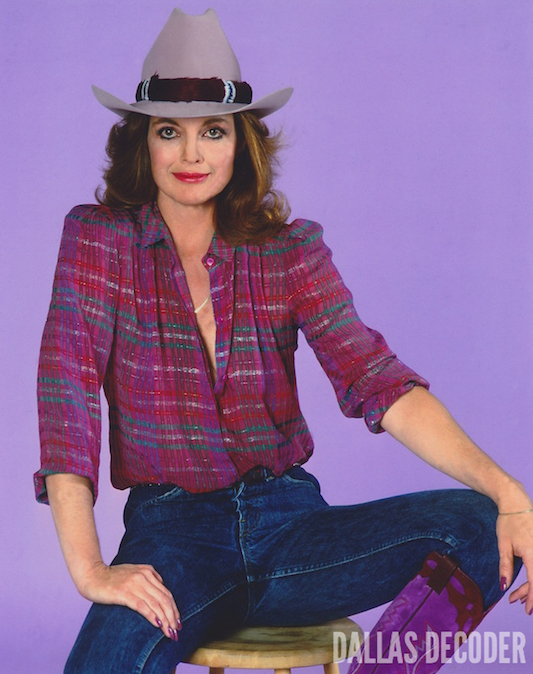
You go, girl
By today’s standards, “Dallas” isn’t a “gay” show. Southfork never hosts a “Brokeback Mountain”-esque love story. There are no same-sex office romances at Ewing Oil. Dusty Farlow wears ascots to keep dust out of his face, not because he’s fabulous.
Yet “Dallas” is very much a show with gay sensibilities. It regularly explores themes – empowerment, identity, gender roles – that resonate with gay audiences, and often in ways that are surprisingly smart.
I didn’t catch a lot of this while watching the show in the 1980s, when I was a pretty confused gay kid. But when I think about those years now, I wonder if “Dallas’s” gay subtext helps explain its appeal to me. Maybe my middle-school gaydar was stronger than I realized.
Kit, But Not Much Kaboodle
“Dallas” makes subtle references to homosexuality in early episodes like “Election,” when J.R. questions Cliff’s close relationship with his male campaign manager, and “Call Girl,” when J.R. creates a scandal by making it look like Pam is involved in a three-way relationship with a man and another woman.
The show stops dancing around the issue in “Royal Marriage,” the 1979 episode where Kit Mainwaring, an oil-and-cattle heir who is secretly gay, breaks his engagement to Lucy and comes out of the closet. This episode, which reflects the ’70s trend toward “socially conscious” television (see also: “All in the Family,” “Lou Grant,” et. al.), is handled with surprising sophistication, making Kit one of prime-time television’s breakthrough gay characters.
Kit is also a footnote: “Dallas” ran 14 seasons and produced 357 episodes, yet he is the only character whose homosexuality is ever acknowledged on the show.
There are only fleeting gay allusions in later episodes. During the sixth season, Lucy wonders if John Ross’s camp counselor Peter Richards is gay because he doesn’t want to date her (she doesn’t realize Peter is in love with Sue Ellen), but the show never again identifies a character as being gay.
This isn’t altogether surprising. Prime-time television mostly retreated to the closet during the AIDS hysteria in the 1980s. Also, once “Dallas” became television’s most-watched show, it embraced its escapist bent and pretty much stopped doing “issues” stories. Both factors probably explain why the producers notoriously dropped plans to make villainess Angelica Nero a lesbian during the 1985-86 season.
Sue Ellen: Icon – and Avatar
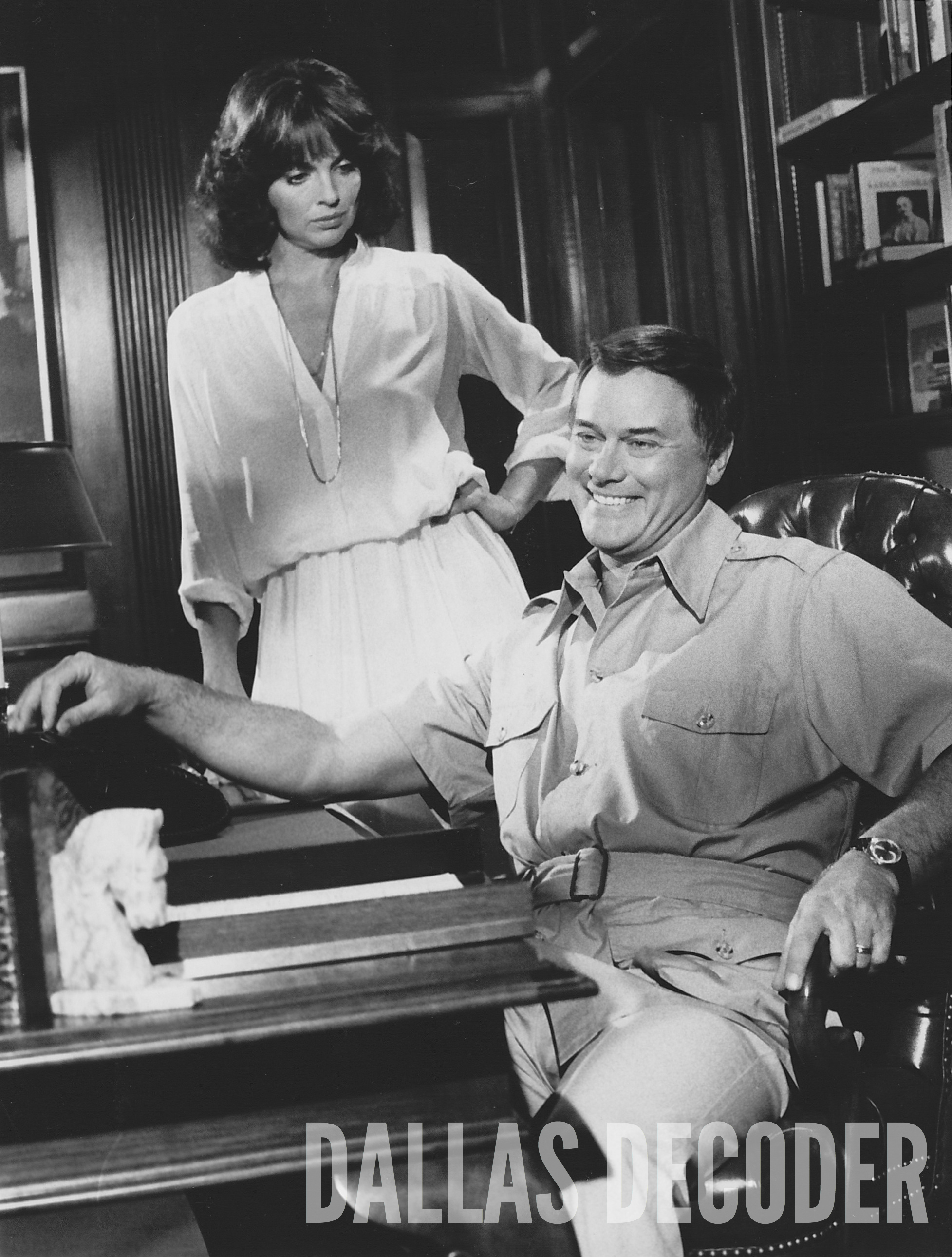
The absence of gay characters on “Dallas” doesn’t mean the show lacks characters and storylines gay audiences could identify with. Consider Sue Ellen, whose boozing, philandering and sharp tongue make her an icon among gay fans who love camp.
But Sue Ellen shouldn’t be treated only as a joke. If you consider her arc during the course of the series, she makes an ideal avatar for gay audiences.
When “Dallas” begins, Sue Ellen is the show’s most sexually repressed character. In the first-season episode “Spy in the House,” she tries to spark J.R.’s interest with a sexy negligee, only to have him cast it aside and accuse her of being unladylike. J.R.’s rejection sends Sue Ellen into the shadows, where she finds sexual fulfillment with other men and develops her drinking problem. This double life must have felt familiar to gay men and women who spent the ’70s and ’80s trapped in the closet.
By the end of the Reagan era, when AIDS was galvanizing gay people and giving the gay rights movement new momentum, Sue Ellen finally begins pulling herself together. She quits drinking, embarks on a successful business career and leaves J.R. for good.
During Linda Gray’s final appearance on the show in 1989, Sue Ellen turns the tables on J.R. and tells him off, one last time (“You will be the laughingstock of Texas.”). All “Dallas” fans cheered this moment, but for gay viewers, I suspect it had special meaning. Sue Ellen was standing up to her oppressor at a time when many gay Americans were beginning to do the same – in the voting booth, in the workplace, in the streets.
There’s Something About Gary
“Dallas’s” gay viewers might see themselves in other characters, too.
The series often explores the theme of confused identities. Two notable examples: Pam and Ray each learn they were raised by people who aren’t their biological fathers, and for both characters, this discovery triggers a lot of angst.
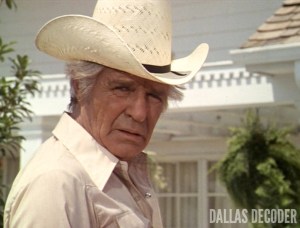
“Dallas’s” recurring theme of estranged fathers and sons is probably familiar to a lot of gay men. At various points, Jock has tense relations with each of the Ewing boys, especially Gary.
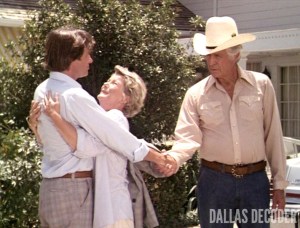
In fact, the dialogue during Gary’s homecoming in the second-season “Reunion” episodes makes me wonder if the producers were considering making the character gay. Pam points out Gary is “different.” Bobby calls him “gentle.” Lucy says she hopes Val will “straighten” him out. Was this coded language, dropped into the scripts to lay the groundwork for Gary’s eventual coming out?
Maybe, maybe not. But a gay Ewing is an interesting idea to contemplate.
Are you listening, TNT?
Do you consider “Dallas” a gay-friendly show? Share your comments below and read more opinions from Dallas Decoder.









 Dallas Decoder