Critique: ‘Dallas’ Episode 7 – ‘Reunion, Part 2’

Charlene Tilton, Dallas, David Ackroyd, Gary Ewing, Joan Van Ark, Lucy Ewing, Valene Ewing

Enter at your own risk

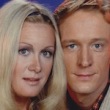
I’m not a big fan of “Reunion, Part 1,” but I love “Reunion, Part 2.” The writing and acting are beautiful.

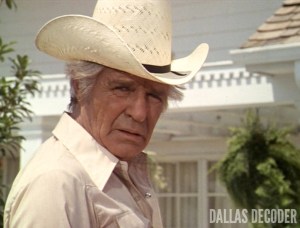
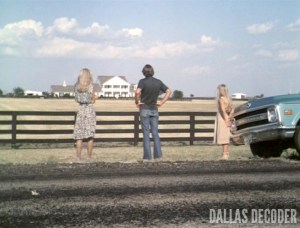
In this installment’s most memorable sequence, a drunken Digger barrels onto Southfork in his nephew Jimmy’s beat-up sports car and asks Jock to “pay” him for Pam. The Ewings watch as Jock pulls a wad of cash from his pocket and tosses a $100 bill at the feet of his onetime business partner, who scoops it up and proclaims his daughter “sold.”

The attention shifts to Pam, who is humiliated, but I find myself wondering what Gary makes of this embarrassing scene. To him, Digger must seem like a ghost from the future – a vision of the person he’ll become if he doesn’t get away from the Ewings.

Think about it: Gary is already following in Digger’s footsteps. Like Digger, Gary is an alcoholic. Like Digger, he has failed to live up to Jock’s expectations. And like Digger, he has “lost” a daughter to the Ewings.

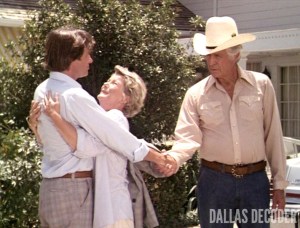
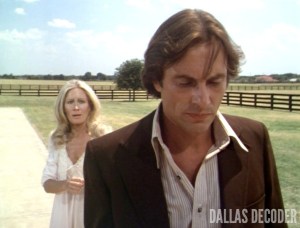
I believe Gary leaves Southfork at the end of “Reunion, Part 2” not just because he feels pressured by J.R., but also because he doesn’t want to become as embittered as Digger. He says as much when he bids farewell to Valene and tells her, “I’m alright. It took me a long time to realize that. I just don’t belong with them – and there’s nothing wrong with that.”

David Ackroyd is really good in this scene, but Joan Van Ark is magnificent. When Val tells Gary she’s never loved another man like she loved him, you feel her pain.

I also love Van Ark’s performance in the next sequence, when the actress spins on a dime and channels Val’s tears into anger at J.R., who’s been watching her from Southfork’s front porch.

“So what’s my future?” she asks him.

“None around here,” J.R. responds.

“Any choices?”

“Well, $5,000 and an escort out of the state?”

“Any others?”

“An escort out of the state.”

Dialogue this sharp – and acting this good – make me wish scriptwriter David Jacobs and Van Ark had spent more time at Southfork before heading west to “Knots Landing” during “Dallas’s” third season.

The farewell scene is also elevated by Robert Jessup’s cinematography, which makes Southfork’s blue skies and gold-green pastures look stunning. Jessup’s work here reminds us of one of “Dallas’s” great dichotomies: No matter how ugly the characters on this show behave, the scenery around them is always gorgeous.

Grade: A

________________________________________________________________________________________________________________________________________________
Dallas, David Ackroyd, Gary Ewing, Joan Van Ark, Valene Ewing

Goodbye, for now

‘REUNION, PART 2’

Season 2, Episode 2

Airdate: September 30, 1978

Audience: 9.5 million homes, ranking 59th in the weekly ratings

Writer: David Jacobs

Director: Irving J. Moore

Synopsis: Pam is humiliated when her father, Digger Barnes, asks Jock to “pay” him for her. J.R. gives Gary a Ewing Oil subsidiary to run, but when Gary feels pressured, he leaves Southfork without saying goodbye. Val also departs, and J.R. lies and tells the family she asked him for money to leave.

Cast: David Ackroyd (Gary Ewing), Barbara Bel Geddes (Miss Ellie Ewing), Sarah Cunningham (Maggie Monahan), Jim Davis (Jock Ewing), Patrick Duffy (Bobby Ewing), Linda Gray (Sue Ellen Ewing), Larry Hagman (J.R. Ewing), Steve Kanaly (Ray Krebbs), Victoria Principal (Pam Ewing), Charlene Tilton (Lucy Ewing), Joan Van Ark (Valene Ewing), David Wayne (Digger Barnes)

“Reunion, Part 2” is available on DVD and at Amazon.com and iTunes. Watch the episode and share your comments below.
‘Dallas’s’ Grand Opening

Dallas, opening credits, three-way split, title

Three, three, three

Here’s how I know “Dallas’s” opening credits are special: My husband Andrew never fast-forwards through them.

Andrew watches “Dallas” on DVD, which is how he has consumed a lot of other classic television over the years. With those other shows, whether it’s “Star Trek” or “Sex and the City,” Andrew almost never sits through the opening credits. As he puts it, once you’ve heard Captain Kirk explain the Enterprise’s five-year mission or seen Carrie Bradshaw get splashed by that bus, you really don’t need to experience it again.

For Andrew, “Dallas” is different. He says the title sequence is an essential part of the viewing experience because it puts you in the right frame of mind for each episode.

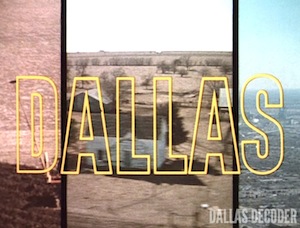
I agree, of course. For my money, “Dallas” title sequence is television’s all-time best. Jerrold Immel’s driving theme music is a huge part of the credits’ appeal, but so is the iconic three-way split screen used during most of the show’s run.

The sequence was designed by Wayne Fitzgerald, whose other credits include the opening titles for series such as “Matlock” and “Quincy” and movies like “The Godfather, Part II” and “Chinatown.”

“Dallas” is his masterpiece.

The scenes Fitzgerald chose are perfect because they depict the real-life Dallas in all its contradictory glory. He shows us how the city is big enough to host a major-league football team, but raw enough that tractors still roam its countryside. It’s home to glass skyscrapers and long stretches of highway, but it also has herds of cattle and soggy oil fields.

The three-way split screen is also ideal for the cast shots because it signals how multi-faceted the characters are. The images often change from season to season, but we usually see Linda Gray smiling nicely in one screen, while looking pensive and sultry in the other two. For several seasons, Patrick Duffy is depicted as a shirtless grimacer, a cowboy-hatted yelper and a butterfly-collared worrier.

Larry Hagman is usually all smiles in his screens — which is entirely appropriate, since J.R. grins whether he’s savoring a sweet victory or knifing an enemy in the back — while Victoria Principal’s middle screen is almost always that same shot of her walking across a Southfork pasture wearing a plaid shirt and blue jeans.

“Dallas’s” titles carry other meanings too. I don’t think it’s a coincidence the shape of each actor’s middle screen suggests the sloped angles of an oil derrick. More obviously, the titles also let the audience know which actors and characters to invest in.

For example, we know it’s time to start paying closer attention to Sue Ellen and Ray when Linda Gray and Steve Kanaly are added to the credits at the beginning of the second season. Similarly, Ken Kercheval — like Gray and Kanaly, a regular from the beginning — finally gets the title-sequence treatment during the third season.

“Dallas” throws viewers for a loop toward the end of its run, when producers abandon the split-screen in favor of a single shots. Ho-hum. Producers also begin adding actors to the credits the moment they arrive on the show. It doesn’t feel like “Dallas.”

TNT apparently hasn’t decided how to handle the opening credits for its new “Dallas” series, which will debut in June. Jason Matheson, a Minneapolis TV and radio host and a huge “Dallas” fan, raised the question on Twitter last week, prompting a debate over whether TNT should revive the sliding split-screen or find a fresh design for the titles.

I’ll respect whatever decision TNT makes, but it would be a lot of fun to see a new version of those iconic titles.

After all, the classic “Dallas” had television’s grandest opening — and that’s not the kind of thing you close the door on lightly.

What’s your favorite part of “Dallas’s” opening credits? Share your comments below and read more features from Dallas Decoder.

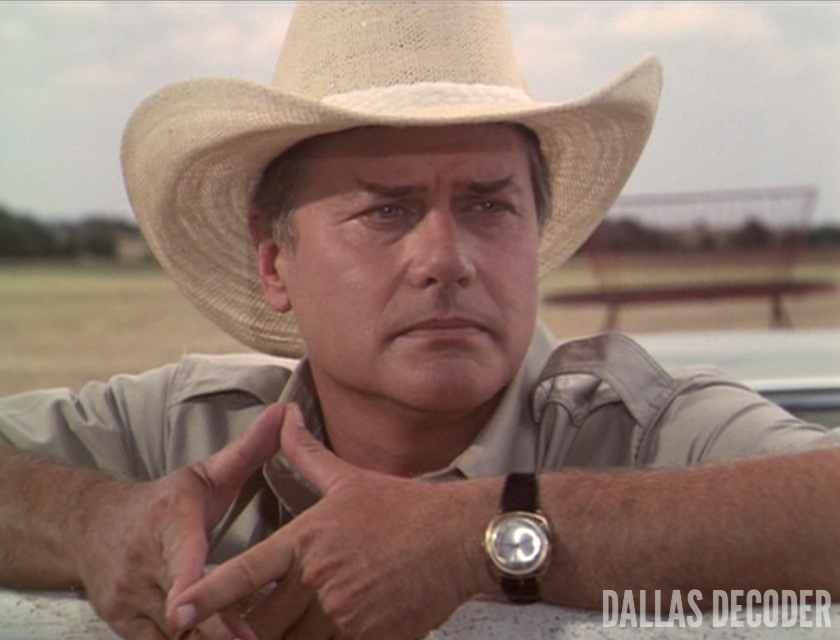
Dallas Styles: J.R.’s Safari Shirts

The shark wore epaulettes

When “Dallas’s” wardrobe designers were figuring out how to dress the Ewings, I suspect J.R. presented the toughest challenge.

I’m not referring to his office outfits. Those were easy. Put Larry Hagman in a conservative business suit and send him off to do his scenes. Done.

But J.R. wasn’t all business, all the time. How would he dress when he wasn’t at work?

“Dallas” answers this question during the second season, when J.R. begins wearing what becomes one of his signatures: the safari shirt.

The look was popularized more than a century ago by western hunters, who wore multi-pocketed jackets and vests during expeditions to Africa. The clothing was usually made of cotton or poplin and often came in muted colors – beige, brown, khaki – that allowed the adventurers to blend in with their surroundings.

This made safari shirts ideal for J.R., a character who was always on the hunt – for deals, for money, for women. The shirt’s military-style epaulettes also remind us J.R. is always at war with his enemies, while all those pockets are perfect for a man who has lots to hide.

J.R. is first seen in a safari shirt in “Reunion, Part 1,” the second-season opener, when he begins secretly plotting against his brother Gary. In later seasons, J.R. wears the shirts when he and his brothers venture into the South American jungle to search for the missing Jock and when he breaks out of an Arkansas jail. (Don’t ask.)

We also see J.R. wearing the shirts during lighter moments. In the eighth-season episode “Shadow of a Doubt,” the Ewings spend an afternoon at a waterpark, where Sue Ellen catches a safari-shirted J.R. checking out two shapely women in revealing bathing suits.

It’s one more reminder that no matter where J.R. goes, the game is on.

The Art of Dallas: ‘Reunion, Part 1’

Sue Ellen and J.R. (Linda Gray, Larry Hagman) are seen in this 1978 publicity shot from “Reunion, Part 1,” “Dallas’s” second-season opener.

Dallas Scene of the Day: ‘You Ought to Know That, Miss Ellie’

Dallas, Jim Davis, Jock Ewing, Reunion Part 1

Mr. Ewing, tear down those walls

In “Reunion, Part 1,” “Dallas’s” second-season opener, Jock (Jim Davis) is on the Southfork driveway with J.R. and Sue Ellen (Larry Hagman, Linda Gray) when Miss Ellie (Barbara Bel Geddes) comes rushing out of the house.

ELLIE: He’s coming home!

JOCK: Who’s coming home?

ELLIE: Gary.

JOCK: Gary?

ELLIE: He met Bobby and Pam in Las Vegas, and they talked – and Jock, he’s just fine – and they’re all flying home this morning. Did you hear, J.R.?

J.R.: [Smiling] Yes, Mama, I heard.

ELLIE: So you just forget about the office this morning. And Sue Ellen, you won’t wanna be going into town, either.

SUE ELLEN: Of course not, Miss Ellie.

ELLIE: Because I think we should all be here when he arrives. [Serious] I don’t want anything to go wrong. Nothing. Do you hear, Jock? Whatever is done is done. Leave it that way. He’s still our son. [To J.R.] And your brother. You give him what he needs to fit back in. [To Jock] Don’t go putting up walls – either of you.

Jock begins walking away.

ELLIE: Jock? Jock, did you hear me?

JOCK: [Stops and faces her] What kind of a man do you think I am? My son’s coming home. I hardly know him. I’m not thinking about putting up walls – I’m thinking about tearing them down. You ought to know that, Miss Ellie.

He continues walking. She follows him.

Critique: ‘Dallas’ Episode 6 – ‘Reunion, Part 1’

Barbara Bel Geddes, Dallas, David Ackroyd, Gary Ewing, Jim Davis, Jock Ewing, Miss Ellie Ewing, Reunion Part 1

Meet the parents

“Reunion, Part 1” is almost all hat and no cattle. “Dallas’s” second-season opener has a good story to tell, but it spends too much time re-introducing the audience to the Ewings, who had been off the air for four-and-a-half months when the episode debuted.

Consider the lengthy opening sequence, which finds the family lazing around the Southfork swimming pool.

Miss Ellie reminisces about growing up on the ranch and there are small moments to remind us J.R. is greedy, Lucy is bratty and Pam’s relationship with her in-laws is frosty, but nothing happens to advance the plot. Audiences might have welcomed the refresher 34 years ago, but today it looks like filler.

Even Gary, who should be this episode’s central figure, becomes a device to reacquaint us with the regular characters.

When “Dallas” begins, Gary is described as a drunk who beat his wife Valene before abandoning her and Lucy, but in this episode, he’s depicted as a recovering alcoholic who dabbles in painting and horseback riding. By making Gary a gentler soul, “Dallas” is able to draw a sharper contrast between him and his family, reminding us just how cutthroat they are.

But Gary isn’t the only Ewing to undergo a personality change.

With this episode, Sue Ellen is transformed from Southfork’s resident mouse into its version of Lady Macbeth. The scene where she lashes out at J.R. and tells him his “little brother Bobby” is taking away his power offers the first great spat between J.R. and Sue Ellen, who raise marital squabbling to an art form as “Dallas” progresses.

Of course, Southfork itself gets the biggest makeover of all.

“Reunion, Part 1” marks the first appearance of the “real” Southfork – another ranch stood in as the Ewings’ home during the first season – making this the first episode where “Dallas” really begins to look like “Dallas.”

“Reunion, Part 1” is also the first of many “Dallas” installments filmed in Texas during the summertime, and it’s nice to finally see a little sunshine on this show, even though we know the Ewings face plenty of dark days ahead.

Grade: B

________________________________________________________________________________________________________________________________________________

Dallas, David Ackroyd, Gary Ewing, Reunion Part 1

There’s something about Gary

‘REUNION, PART 1’

Season 2, Episode 1

Airdate: September 23, 1978

Audience: 9.3 million homes, ranking 56th in the weekly ratings

Writer: David Jacobs

Director: Irving J. Moore

Synopsis: In Las Vegas, Bobby and Pam run into his long-lost brother Gary and bring him home to Southfork, where Gary’s daughter Lucy is overjoyed to see him. She arranges a reunion between Gary and her mother Valene, whom Lucy has been secretly visiting. J.R., with prodding from his wife Sue Ellen, begins plotting to get rid of Gary.

Cast: David Ackroyd (Gary Ewing), Barbara Bel Geddes (Miss Ellie Ewing), Jim Davis (Jock Ewing), Patrick Duffy (Bobby Ewing), Hugh Gorrian (Tom), Linda Gray (Sue Ellen Ewing), Larry Hagman (J.R. Ewing), Steve Kanaly (Ray Krebbs), Philip Levien (Jimmy Monahan), Victoria Principal (Pam Ewing), Charlene Tilton (Lucy Ewing), Joan Van Ark (Valene Ewing)

“Reunion, Part 1” is available on DVD and at Amazon.com and iTunes. Watch the episode and share your comments below.
Pam Ewing, Prime-Time Pioneer

Dallas, Pam Ewing, Victoria Principal

O, pioneer!

If re-watching “Dallas’s” first season taught me anything, it’s this: Pam Ewing is one of prime-time television’s pioneering women.

No, really.

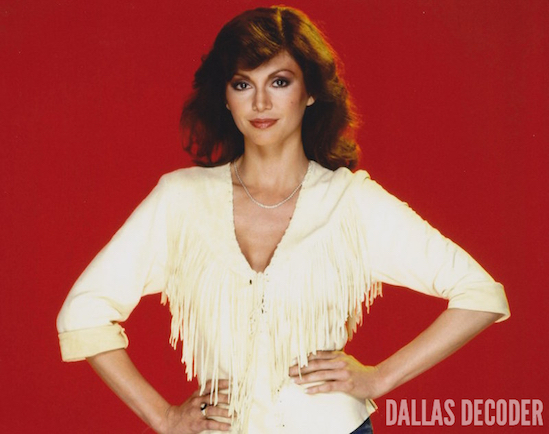
When “Dallas” begins, Pam isn’t the Miss Goody Two-Boots many of us remember from the show’s heyday. She’s spunkier, scrappier – and more sexual.

The show makes no secret of the fact Pam isn’t a virgin when she marries Bobby.

In “Digger’s Daughter,” the first episode, J.R. tells his younger brother that Ray, Pam’s ex-boyfriend, has bragged for years about her prowess in the bedroom. Later, in “Barbecue,” the season finale, J.R. ticks off a list of Pam’s past lovers (“Just offhand, she’s known Jack what’s-his-name and Ray Krebbs….”), before dismissing her as “trash, just plain trash.”

In this instance, Bobby belts J.R., but Pam’s reputation doesn’t seem to faze him otherwise. As Bobby tells Ray at the end of the first episode, “Pamela’s past is none of my business. She was not my wife in the past – but she is now.”

Bobby’s attitude is refreshing, but so is Pam’s. She’s never afraid to let her husband know she enjoys sex. In “Spy in the House,” for example, Pam suggestively invites Bobby to help her “try out” their new living quarters.

This makes Pam much different from her sister-in-law Sue Ellen, who feels sexually neglected by J.R. but is almost too afraid to tell him.

Breaking Barriers

Bobby and Pam’s healthy sex life makes them unlike most other couples on television during the 1970s – something Victoria Principal points out during the 2004 “Dallas” reunion special.

Standing next to Patrick Duffy, the actress recalls how unusual it was for them “to portray two happily married people who celebrated their physicality – and who were good vertically and horizontally.”

Yet Pam never seems to get a fair shake from television historians.  (Maybe because “Dallas” is a soap opera?)

When the barrier-breaking women of ’70s television are recalled, the focus is almost always on the characters who pursued careers (“The Mary Tyler Moore Show”), expressed opinions (“Maude”) and raised children alone (“Alice,” “One Day at a Time”).

On “All in the Family,” Gloria Stivic was pretty frisky and “The Bob Newhart Show’s” Emily Hartley seemed to enjoy having sex with her husband, but their experiences were played for laughs.

Pam Ewing is probably the first woman on a prime-time drama who was sexually fulfilled – and not ashamed of it.  She helped make possible “The Good Wife” and other contemporary shows that aren’t afraid to depict women enjoying their sex lives.

Praising Principal

In interviews over the years, Principal has suggested she likes Pam best during “Dallas’s” first season – and when you watch these episodes, it shows. The actress is wonderful – confident, relaxed, charming. She supplies “Dallas” with heart.

Pam’s independent streak continues during the second season, when the character resumes her retail career – a decision that leaves Jock aghast. (“What does she need a job for? Ewing women don’t work!”)

But Pam changes during the third season, when she embarks on an all-consuming quest to give birth – reinforcing the old-fashioned notion that a woman’s fulfillment lies in motherhood.

The evolution in Pam’s character can probably be traced to the departure of “Dallas” creator David Jacobs, who essentially handed over the show’s creative reigns to producer Leonard Katzman after its first season.

Jacobs is a genius at writing for strong women characters, as he demonstrated with his next series, the “Dallas” spinoff “Knots Landing.” Under Katzman, “Dallas’s” depiction of women’s sexuality is different. When women are seen enjoying sex, it’s often under illicit circumstances (J.R.’s mistresses, Sue Ellen’s affairs).

J.R.’s increased popularity with audiences also alters Pam’s character. As he grows nastier, the producers try to counterbalance him by making Pam nobler (read: boring).

But no matter who Pam becomes, we shouldn’t lose sight of who she is when “Dallas” begins – and the trail she blazes during those fascinating first five episodes.

How do you feel about Pam Ewing? Share your comments below and read more opinions from Dallas Decoder.

The Art of Dallas: ‘Barbecue’

Jock and Miss Ellie (Jim Davis, Barbara Bel Geddes) are seen in this 1978 publicity shot from “Barbecue,” “Dallas’s” first-season finale.

Dallas Scene of the Day: ‘She’s On the Nest — Digger’s Girl’

Barbecue, Dallas, Haskel Craver, Irma P. Hall, Jim Davis, Jock Ewing, Sam, Tilly

Tell her some news

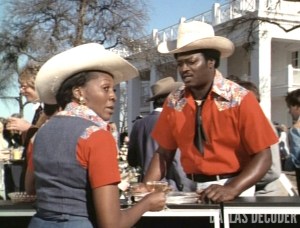
In “Barbecue,” “Dallas’s” first-season finale, Tilly (Irma P. Hall) is filling drinks at the bar when Sam (Haskel Craver) approaches with a tray and motions toward Jock (Jim Davis), who is smoking and drinking out of the view of his guests.

SAM: He’s sneaking his cigarettes early today.

TILLY: He ’s snuck three of ’em sitting there. Ain’t like him to stay away from his guests so long. [Places champagne glasses on Sam’s tray]

SAM: Digger Barnes is here!

TILLY: Say what?

SAM: You heard me. The girl Bobby married is Digger’s daughter. So it figures Jock and Digger are bound to meet again.

TILLY: Yeah, but from the looks of him, it happened a long time before he was ready. [Motions toward the crowd] How are things out there?

SAM: Crazy.

TILLY: Oh, that ain’t no news. Tell me some news.

SAM: She’s on the nest – Digger’s girl.

TILLY: Now that’s news. How’s the missus and Big Brother taking it?

SAM: I don’t think they know about it yet.

TILLY: They ain’t going to like that. Who’s going to be the first to have a fight?

SAM: Too soon to tell.

TILLY: First to get drunk?

SAM: [Motions toward Jock] He’s got the head start.

Critique: ‘Dallas’ Episode 5 – ‘Barbecue’

Barbecue, Dallas, David Wayne, Digger Barnes, Jim Davis, Jock Ewing

Best of enemies

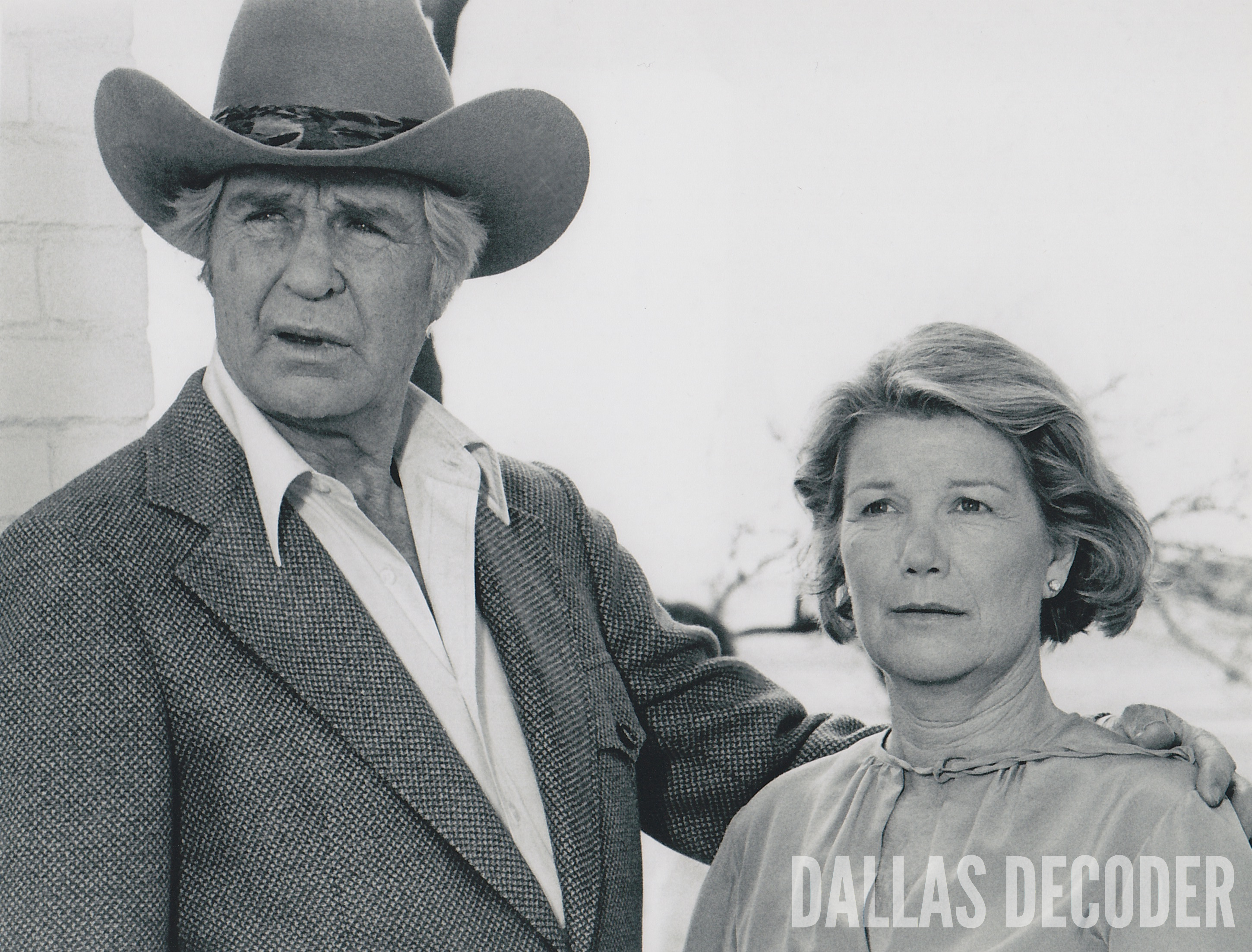
“Barbecue,” the final entry in “Dallas’s” too-brief first season, is probably best remembered as the episode where J.R. accidentally causes a pregnant Pam to fall from the hayloft and lose her baby, but I think it’s notable for other reasons.

This is one of the few “Dallas” installments set during a single day. (“Winds of Vengeance,” the previous episode, is another.) “Barbecue” is also the first time Jock and Digger come face-to-face on the show, and seeing the characters together reminds us how smartly the producers cast the roles.

More than anyone else in the “Dallas” ensemble, Jim Davis and David Wayne look like their characters. Davis is as big as Texas. Wayne is small and pitiful. They are Jock and Digger.

I also love the actors’ use of body language in “Barbecue.” Watch closely when Jock and Digger walk to the bar to toast Pam’s pregnancy. Davis strides with effortless confidence; Wayne’s gait is slowly deliberate – exactly how we expect a broken man like Digger to make his way through the world.

But as much as I enjoy Jock and Digger’s scenes together, my favorite “Barbecue” moment is the gossipy exchange between the Ewings’ caterers, Tilly and Sam.

“How are things out there?” Tilly asks.

“Crazy,” Sam responds.

“Oh that ain’t no news. Tell me some news.”

“She’s on the nest – Digger’s girl.”

“Now that’s news.”

I’ve always believed Southfork’s servants represented untapped storytelling potential. Throughout “Dallas,” we see Teresa the maid and Raoul the butler hovering in background, but they’re more like props than people.

Turning the servants into real characters could have grounded “Dallas” a bit more, allowing them to become the audience’s eyes and ears in the world of the Ewings.

Tilly and Sam fill this role in “Barbecue,” but the characters are never seen again after this episode. Too bad. Aside from being a hoot, Tilly and Sam are also among the few African American faces to appear on “Dallas.”

The good news: TNT’s forthcoming “Dallas” revival is expected to offer more of a “Downton Abbey”-ish view of life at Southfork. One of the new characters will be Carmen Ramos, the Ewings’ cook, played by Marlene Forte.

Who knows? Maybe Teresa and Raoul or even Tilly and Sam will show up to give Carmen pointers on working for those darned Ewings.

Grade: B

________________________________________________________________________________________________________________________________________________

Barbecue, Bobby Ewing, Jim Davis, Jock Ewing, Pam Ewing, Victoria Principal

Please don’t go, girl

‘BARBECUE’

Season 1, Episode 5

Airdate: April 30, 1978

Audience: 15.9 million homes, ranking 11th in the weekly ratings

Writer: David Jacobs

Director: Robert Day

Synopsis: At the Ewing barbecue, Bobby and Pam announce her pregnancy, while Jock and Digger reignite their feud. J.R. insults Pam and when he tries to apologize, she falls and suffers a miscarriage. Bobby wants to leave Southfork, but Jock persuades him and Pam to stay.

Cast: Barbara Bel Geddes (Miss Ellie Ewing), James Canning (Jimmy Monahan), Haskel Craver (Sam), Jim Davis (Jock Ewing), Patrick Duffy (Bobby Ewing), Linda Gray (Sue Ellen Ewing), Larry Hagman (J.R. Ewing), Irma P. Hall (Tilly), Steve Kanaly (Ray Krebbs), Ken Kercheval (Cliff Barnes), Jo McDonnell (Maureen), Victoria Principal (Pam Ewing), Charlene Tilton (Lucy Ewing), David Wayne (Digger Barnes)

“Barbecue” is available on DVD and at Amazon.com, iTunes and TNT.tv. Watch the episode and share your comments below.