TNT’s Dallas Styles: Marta’s Dress

Unraveled

All season long, TNT’s “Dallas” has used Marta’s hair and wardrobe to telegraph her shifting moods and evolving identity. This practice continues in “Collateral Damage,”when the bipolar vixen goes off her medication – and eventually, off the deep end.

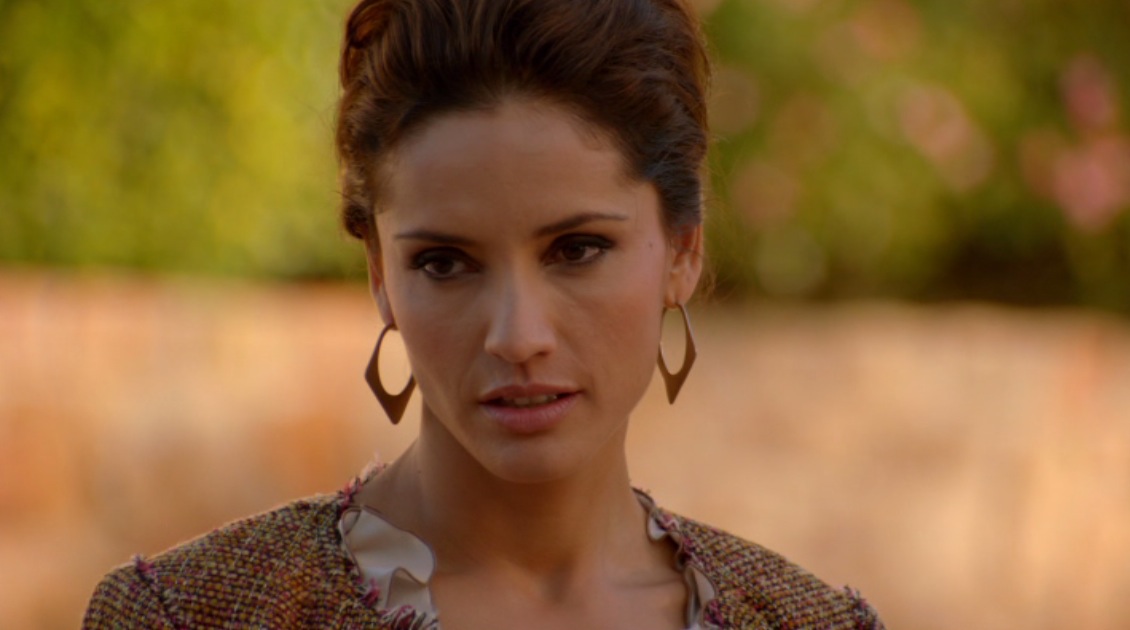
When we meet Marta in TNT’s “Dallas” pilot, “Changing of the Guard,” the character pretends to be a wealthy land conservationist who wants to buy Southfork and turn it into a nature preserve. She wears her hair up, but once her true motives are revealed – “Marta” is actually Veronica Martinez, who is secretly plotting with John Ross to seize the ranch – we begin seeing her with hair down, literally and figuratively.

By TNT’s sixth “Dallas” episode, “The Enemy of My Enemy,” Marta is in full “Fatal Attraction” mode and determined to steal John Ross from Elena. The tightly wound Marta shows up on his doorstep in a skintight dress, hoping to seduce him, only to be rejected once again.

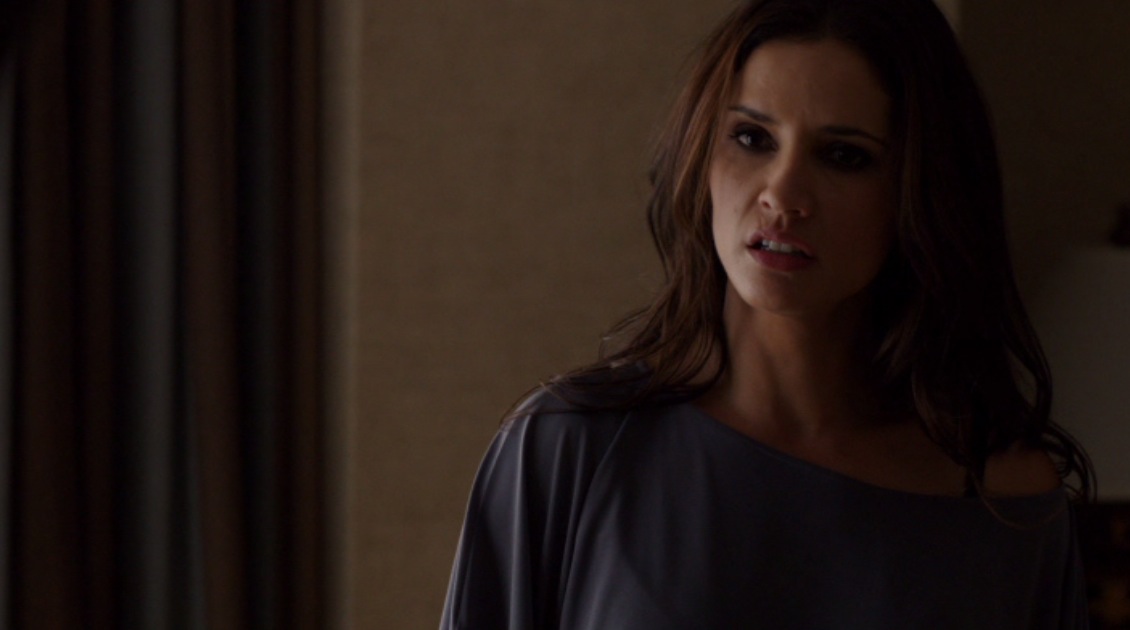
When John Ross sees Marta again in “Collateral Damage,” she has come undone. The skintight dress has been replaced by something much looser; it falls off Leonor Varela’s shoulder, which seems appropriate given how her character is falling apart.

The dress’s metallic color is also telling. Until now, Marta has been depicted as a duplicitous villainess, but in Varela’s haunting final scene, it’s hard to not feel sorry for her. Marta is neither good nor bad; like all great “Dallas” characters, she lies somewhere in between. It’s another reason why the gray dress is fitting, even if it doesn’t quite fit.
Dallas Styles: Jock’s Medallion

Lion king

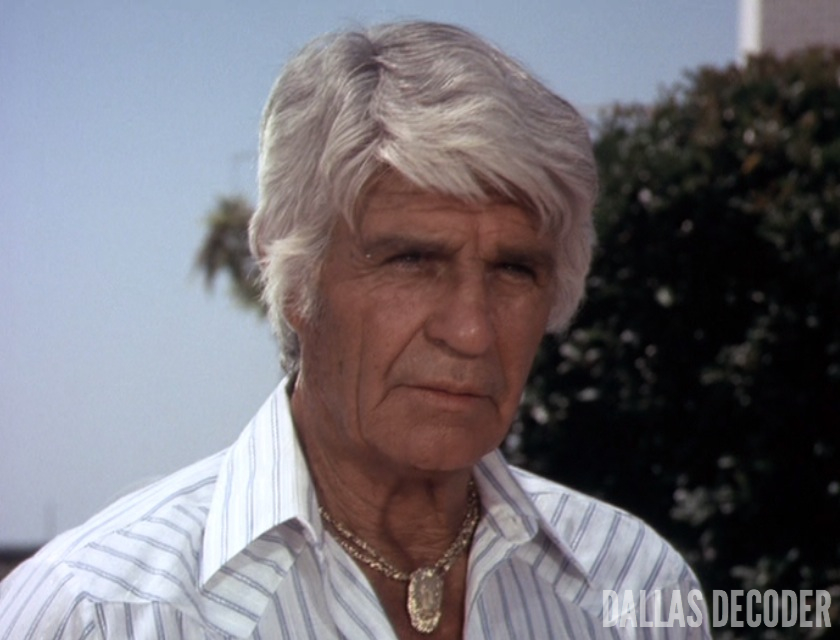
In the famous painting of Jock that hangs at Southfork (and later, Ewing Oil) after the character’s death, he wears his signature gold medallion. The lion’s head, which dangles on a chain around Jock’s neck, reminds the world of his role as father of the Ewing pride.

When Jock was alive, sometimes his own family needed the reminder.

Jim Davis is first shown wearing the lion’s head in the fourth-season episode “The Venezuelan Connection,” when an enraged Jock chases down Bobby in the Southfork driveway after discovering his youngest son has bought a refinery.

“Why in the hell didn’t you check with me first?” Jock demands.

“There wasn’t time, Daddy. I had to move fast,” Bobby responds.

“Move fast? So fast you didn’t have time to talk to me?”

Similar scenes unfold in other fourth-season episodes. In “The Prodigal Mother,” Jock is wearing the medallion when he makes a dismissive remark about Mitch and Lucy stands up to him, and in “Executive Wife,” the lion’s head is hanging around Jock’s neck when Ray suggests he should check with Bobby before taking millions of dollars out of the company to invest in a land deal.

In that instance, Jock lets Ray know he’s still top dog (er, cat) at Ewing Oil.

“Let me tell you something, Ray,” he says. “Ewing Oil is mine. I started it. I worked it. I made it what it is today. And if Bobby or anybody else don’t like the way I do things, they know what they can do.”

As Jock speaks, the medallion around his neck catches the Texas sunlight, drawing the viewer’s attention and helping to illuminate the Ewing patriarch’s message. There’s no doubt: Jock may be a lion in winter, but he’s still a lion.

TNT’s Dallas Styles: Tommy’s Hat

The outsider

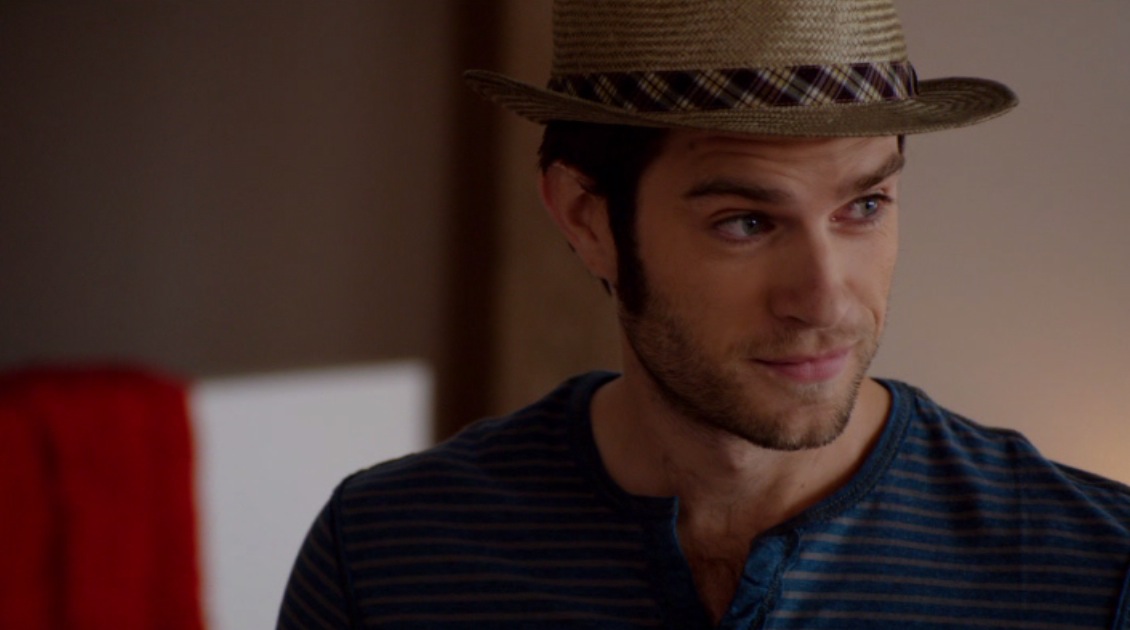
In “The Enemy of My Enemy,” Tommy comes charging into Rebecca’s apartment, grumbling about the crowd at the coffee shop he’s just returned from. “People in Texas are way too friendly. It tries my nerves,” he says.

The line reminds us that Tommy is an outsider in Dallas – and so does the hat Callard Harris wears in this scene. The headgear appears to be a straw fedora, trimmed with a plaid ribbon. Notably, it isn’t a Stetson, the style favored by the Ewing men.

In addition to offering another demonstration of Tommy’s distinctive fashion sense – he memorably wore flip-flops to Christopher and Rebecca’s wedding in “Changing of the Guard,” the first episode of TNT’s “Dallas” – the hat recalls the fedora Digger Barnes wore on the original “Dallas.”

This might be another sly homage to the old show. Like Tommy, Digger was also an outsider who coveted the Ewings’ wealth. Of course, the source of Digger’s envy was always apparent: He believed Jock “stole” Miss Ellie and cheated him out of his rightful share of Ewing Oil.

Tommy’s motivation remains a mystery – along with any other connections he and Rebecca may share with classic characters like Digger.

Dallas Styles: Sue Ellen’s ‘Who Done It?’ Dresses

Subject to contrast

When “Who Done It?” begins, Sue Ellen is at the Dallas police station, where she is being arrested for J.R.’s shooting. We see her have her mug shot taken and get fingerprinted, and then Detective Frost reads her her rights.

We also watch as Sue Ellen removes her jewelry – rings, earrings, bracelets, pearls – and passes each item to an officer seated behind a cage window.

True colors

The poignancy of this scene can’t be overstated. For Sue Ellen, these aren’t just ornaments; they’re part of her identity. Not since the first-season episode “Winds of Vengeance,” when Luther Frick forced her to wear a swimsuit, has she been this exposed.

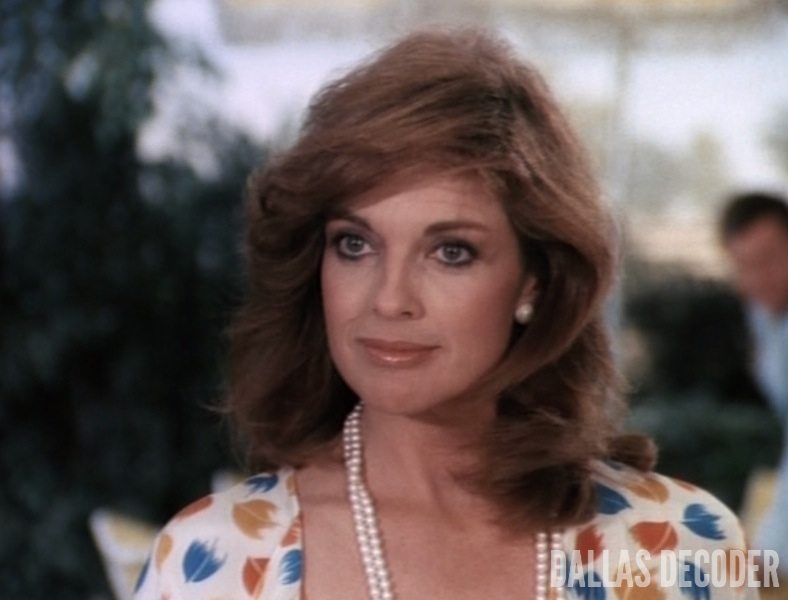
To underscore the drama of Sue Ellen’s jailhouse scenes, the “Dallas” wardrobe designers put Linda Gray in a black-and-white “dress” (it’s actually a matching blouse and skirt that give the appearance of being a single garment). The right side of the top is black and the left is white; below the black belt, the colors are reversed.

Aside from evoking prison stripes, the dress symbolizes the dichotomy of seeing this wealthy Dallas society wife being hauled off to jail. The dress also represents the mystery surrounding Sue Ellen’s role in J.R.’s shooting. She was drunk the night he was gunned down and can’t remember if she pulled the trigger, but the truth is black or white: Sue Ellen is either guilty or she isn’t. She just doesn’t know which.

By the end of the “Who Done It?” Sue Ellen figures out J.R.’s assailant was Kristin, who has been trying to frame her for the crime. In the episode’s climactic scene, a triumphant Sue Ellen goes to Southfork to confront her sister, and once again, “Dallas” uses Sue Ellen’s clothing to open a window into her mindset.

With the burden of doubt lifted, Sue Ellen’s somber black-and-white dress has been replaced with one that’s lighter and brighter, dotted with small splashes of red, blue and yellow. Unlike the earlier outfit, this dress offers a plunging neckline – perfect for a woman who is eager to expose her sister’s misdeeds.

TNT’s Dallas Styles: Ann’s Pearls

She wears them well

On the original “Dallas,” Miss Ellie’s pearl necklace symbolized her role as wife, mother and fount of wisdom. Along with the beloved matriarch’s sack dresses, those little white beads became Ellie’s most enduring signature.

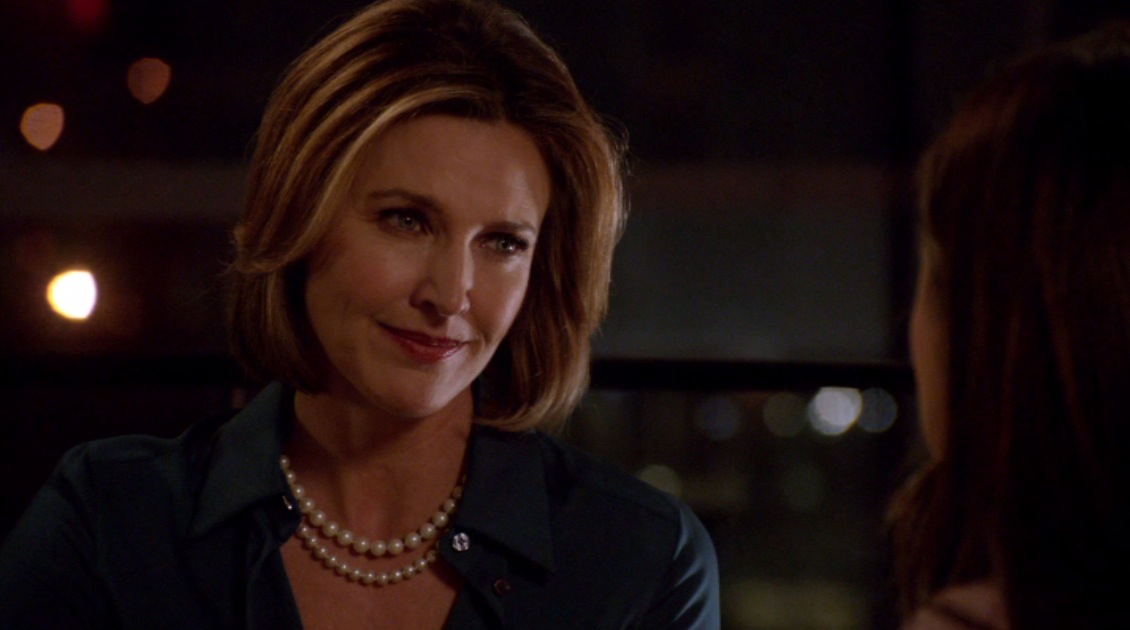
On TNT’s “Dallas,” Ann’s beads serve as visual shorthand for her role as Bobby’s wife and the new woman of Southfork. The first time we see her wearing them, during that terrific dinner scene in “Changing of the Guard,” TNT’s first “Dallas” episode, we know instantly what kind of character Ann is supposed to be.

Of course, putting Ann in pearls automatically invites comparisons to Miss Ellie, which is a bit risky since Barbara Bel Geddes is so revered among “Dallas” diehards. Indeed, while I tend to see Ann’s pearls – along with her Ellie-esque penchant for guns – as affectionate tributes to Bel Geddes’ character, some of my fellow “Dallas” fans seem to view them as cheap mimicry.

Perhaps this explains “The Last Hurrah” scene where J.R. gives Ellie’s pearl necklace to Sue Ellen. It’s as if the “Dallas” producers, anticipating there might be some Ann skeptics in the audience, wanted to make sure everyone understood the character doesn’t have a monopoly on white beads. In other words: Brenda Strong might be playing the new lady of the manor, but Linda Gray has inherited Bel Geddes’ mantle as “Dallas’s” elder stateswoman, so Sue Ellen gets the honor of possessing the pearls Ellie actually wore.

But give Ann her due. In “Truth and Consequences,” the character begins coming into her own, especially in the scene where she meets Rebecca for coffee and offers the confused young woman comfort (“You’re young, Rebecca. You make mistakes when you’re young. It doesn’t mean you can’t change.”), as well as a little tough love (“Your choices are yours.”).

Strong is terrific in this scene, which demonstrates how, even though Ann doesn’t have children of her own (that we know of, that is), she has the potential to become a significant maternal figure to “Dallas’s” younger characters.

I also think it’s notable that Ann is sans necklace when she visits ex-husband Harris Ryland in “Truth and Consequences” and asks him to help slow down the drilling on Southfork.  Since Ann’s pearls symbolize her role as Bobby’s wife – and since her meeting with Ryland takes place behind Bobby’s back – it’s probably best she leaves the beads at home.

TNT’s Dallas Styles: Bobby’s Leather Coat

Full leather jacket

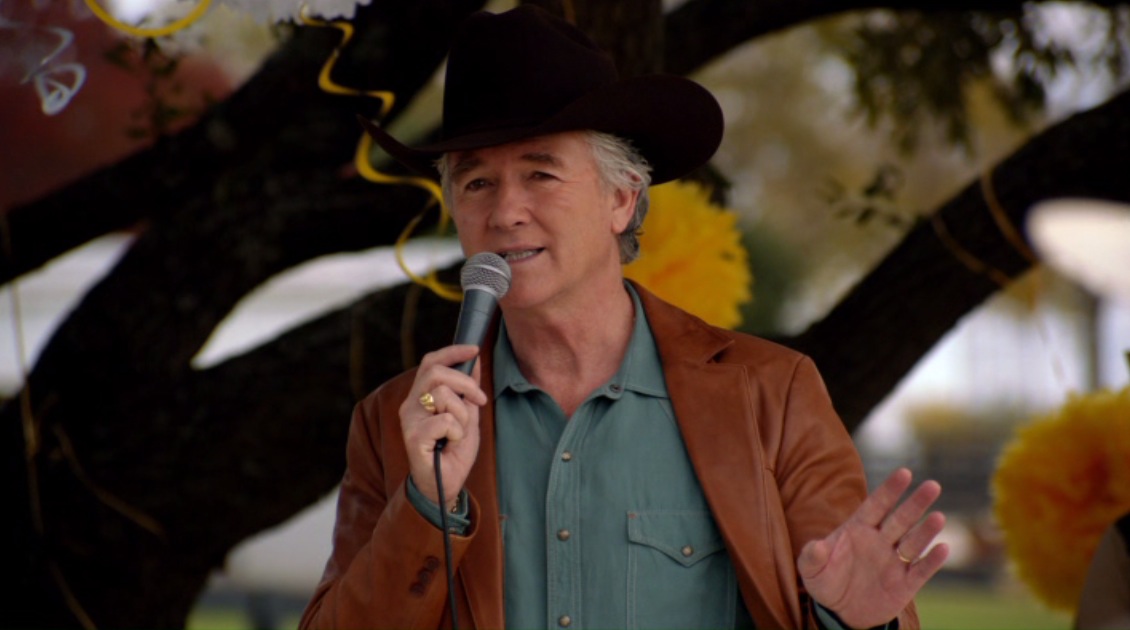
Bobby wears a brown leather coat in “The Last Hurrah,” but it’s not the same jacket he sported throughout the original “Dallas’s” 14-season run.

On the old show, Bobby rocked a snap-collared motorcross jacket that symbolized the character’s inherent coolness. The first time we see Bobby, in the first scene of “Dallas’s” first episode, “Digger’s Daughter,”he’s wearing the jacket while zooming down the highway in a red convertible with a beautiful redhead at his side. Back then, Bobby was kind of a badass; the jacket was part of that persona.

The coat Patrick Duffy wears in “The Last Hurrah” is more of a traditional western style. It drapes the actor’s broad frame, falling just past his waist. Unlike the tighter motorcross jacket from the old show, this coat is looser, reflecting Bobby’s maturity.

The new coat reminds me of the one Jim Davis wore during the original “Dallas’s” early seasons. This might not be a coincidence. Now that Bobby has succeeded Jock at the head of the Southfork dinner table, it seems possible the new coat is as much a tribute to Davis as it is to the more youthful version Duffy wore during “Dallas’s” first go round.

Dallas Styles: J.R.’s Vest

‘The Wheeler Dealer’

Is there something symbolic about the vest J.R. is wearing when he gets shot at the end of “A House Divided,”“Dallas’s” famous third-season finale?

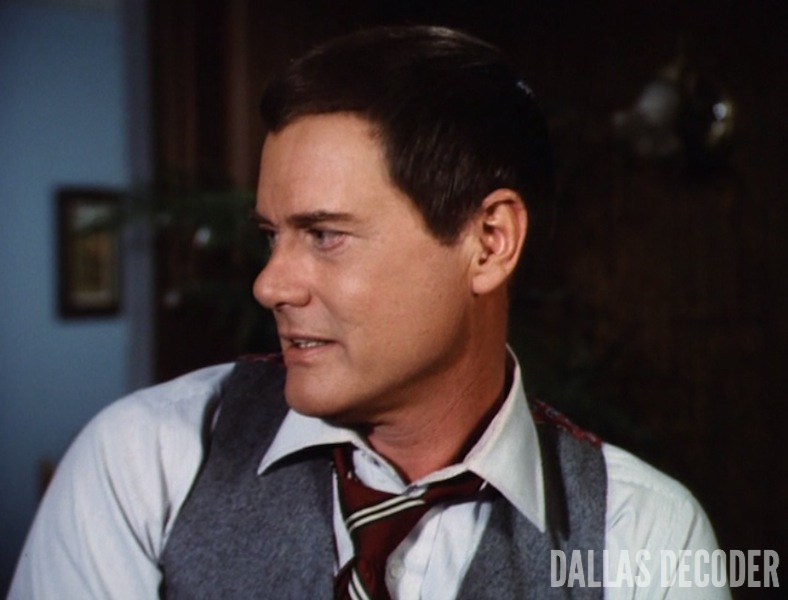
The vest, which appears to be gray flannel with a silk paisley-printed back, goes with one of J.R.’s three-piece suits, a style that had been back in vogue for awhile when this episode debuted in 1980. Three years earlier, John Travolta famously rocked a three-piece white suit in “Saturday Night Fever,” while Steve Martin adopted a similar look during many of his late ’70s standup routines.

J.R. sports several three-piece suits during “Dallas’s” third season. In “The Wheeler Dealer”and “A House Divided,” he is seen wearing a vest without the jacket, which could signify how J.R. is no one-dimensional villain. His personality, like his wardrobe, is layered. In “A House Divided,” the vest could also be seen as having an ironic effect: The garment is like an extra layer of armor, which does J.R. absolutely no good once that intruder steps out of the shadows and pumps two bullets into him.

Whatever symbolic value J.R.’s vest offers, one thing is certain: Larry Hagman has never looked better. In his 2001 autobiography “Hello Darlin’,” the actor recalls how he went on a diet on New Year’s Day 1980 and began jogging two miles daily, eventually shedding 35 pounds. By the time “A House Divided” was filmed, Hagman is noticeably thinner. The formfitting vest accentuates his newly trim frame. He looks positively dapper.

Hagman’s physique really works in his character’s favor, too. J.R. struts his way through “A House Divided,” cockier than ever. At one point, Jordan Lee, angry that J.R. has suckered him into buying worthless oil leases, bursts into his office and sneers, “You must be mighty proud J.R. You must be on top of the world!”

Jordan is right: J.R. is on top of the world – at least until the episode’s final scene, when he almost leaves it.

Dallas Styles: Miss Ellie’s Fur Coat

Warm, in more ways than one

In “The Wheeler Dealer,” Jock and Miss Ellie visit the Colorado sanitarium where Amanda, his first wife, has lived for many years. The scene is beautifully written and performed, but whenever I watch it, I find myself a little distracted by the dark brown fur coat Barbara Bel Geddes wears.

This is a decidedly un-Ellie-like look, after all. On “Dallas,” Ellie is the rancher’s daughter who never outgrew her affinity for simple skirts and blouses. For her, dressing up usually means conservative suits and a strand of pearls. What’s she doing bedecked in fur?

Perhaps the “Dallas” wardrobe designers wanted to draw a contrast between Ellie and Amanda, who wears a basic floral print dress and long sweater in this scene. The fur might also offer a window into Ellie’s state of mind, suggesting she’s still struggling to accept the fact she isn’t the first Mrs. Jock Ewing.

Remember, Ellie didn’t learn about Amanda until the eve of her cancer surgery in “Mastectomy, Part 1,” an earlier third-season episode. The shock came at a time when Ellie was worried about her health and feeling insecure about her femininity. Is the fur coat her way of asserting her role as the wife of a wealthy and powerful man?

As “Dallas” fans, we tend to put Ellie on a pedestal, but she was capable of experiencing doubts, as we saw during the “Mastectomy” episodes. Of course, Ellie is mostly strong and compassionate, which the sanitarium scene ultimately demonstrates. When Amanda sees Jock, she doesn’t recognize him and appears somewhat frightened, so Ellie approaches the woman, gently puts her hand on her shoulder and quietly says, “Hello Amanda. My name’s Ellie.”

It’s a touching moment, and even though it’s very brief, I consider it one of Bel Geddes’ best scenes. It’s also a lovely reminder that Ellie is “Dallas’s” warmest character, and not just because of the coat she wears.

TNT’s Dallas Styles: J.R.’s Sweaters

Mr. Ewing’s Neighborhood

In “The Price You Pay,”J.R. comes home to Southfork, presumably for the first time in many years. The house has changed a bit and so has J.R. – or at least that’s what he wants Bobby to think.

The older brother tricks the younger into welcoming him back to the ranch by pretending to be down and out. What Bobby doesn’t know: J.R. is secretly scheming with John Ross to seize control of Southfork and its vast oil reserves.

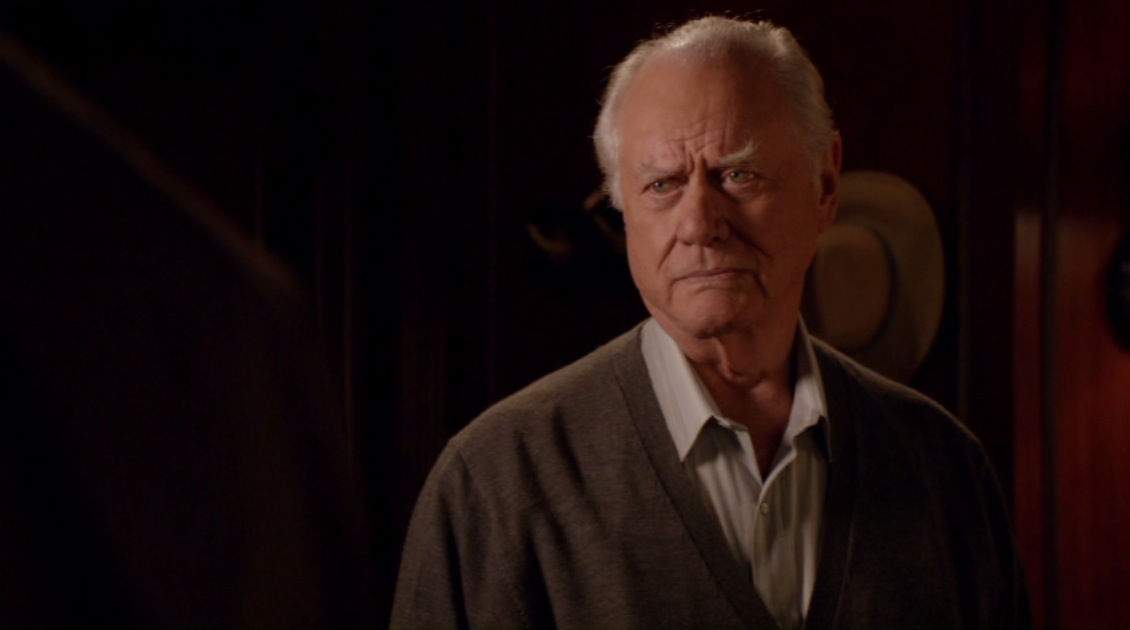
J.R.’s wardrobe appears to be part of his charade. At the ranch, he wears cardigan sweaters in muted colors, including when Ann finds him in the storage barn looking at an old family photo album and when he shuffles around the Southfork kitchen making breakfast for the family.

The Mister Rogers-style cardigans make Larry Hagman look soft, even a little cuddly. They also evoke memories of the sweater J.R. wore in “Conundrum,” the old show’s final episode, when the character was drunk, depressed and suicidal.

J.R.’s cardigans are a far cry from the days when he telegraphed his predatory nature by donning safari shirts. But don’t worry. The Mister Nice Guy act doesn’t last long; it remains to be seen if the sweaters do.

TNT’s Dallas Styles: Marta’s Hair

‘Hedging Your Bets’

On TNT’s “Dallas,” there is no greater chameleon than Marta del Sol, the sexy siren who specializes in deceiving Ewing men. Bobby believes he’s selling Southfork to Marta and J.R. believes he’s buying it from her, but neither brother knows the truth: Marta is really plotting with John Ross to seize the ranch and the ocean of oil flowing beneath it.

‘Changing of the Guard’

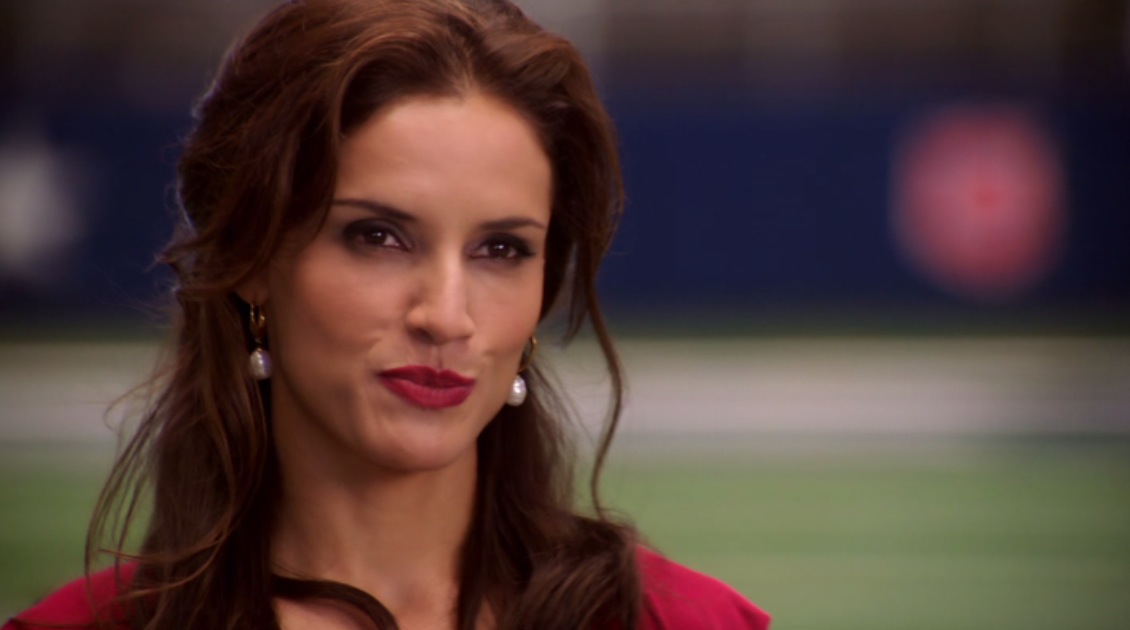
“Dallas” uses two hairstyles to showcase Marta’s two faces. When Leonor Varela appears in scenes with Larry Hagman and Patrick Duffy, her hair is usually worn up. In scenes with Josh Henderson – with whom Varela has smoking chemistry, by the way – those gorgeous tresses almost always fall onto her shoulders.

It makes sense: John Ross is the only character who knows the truth about Marta – namely, that she isn’t really Marta del Sol, which is the big secret revealed at the end of “Hedging Your Bets.” Figuratively and literally, John Ross is the only person with whom Marta can let her hair down.

I’m amazed at how different Varela looks with each style. The first time I saw Marta with her hair down, at the end of “Changing of the Guard,” it took me a minute to realize I was looking at Marta. I thought some new femme fatale was being introduced.

Regardless of how she wears her hair, one thing is certain: Beware of Marta del Sol!

(Or whoever she is.)