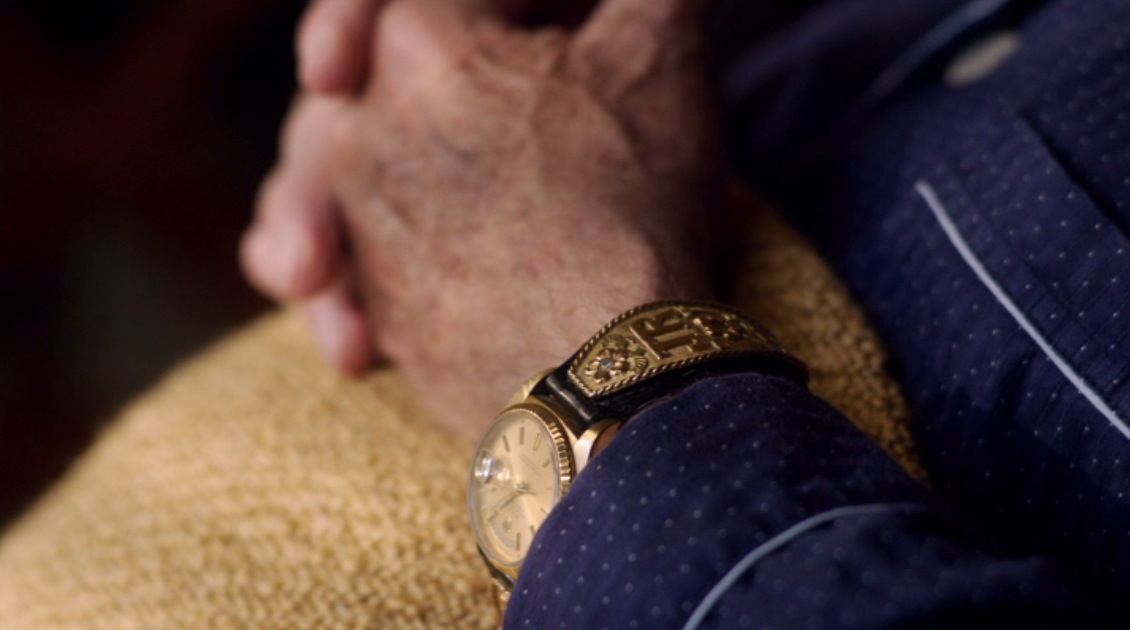
Watch out
The most poignant moment in “Changing of the Guard” finds Bobby visiting J.R. in the nursing home, where the older brother sits motionless and speechless, a captive of his own depression. Director Michael M. Robin ends the scene with a tight shot of Larry Hagman’s hands, and that’s when we see his character is wearing an elaborate gold wristwatch. Emblazoned on the band: the initials “J.R.”
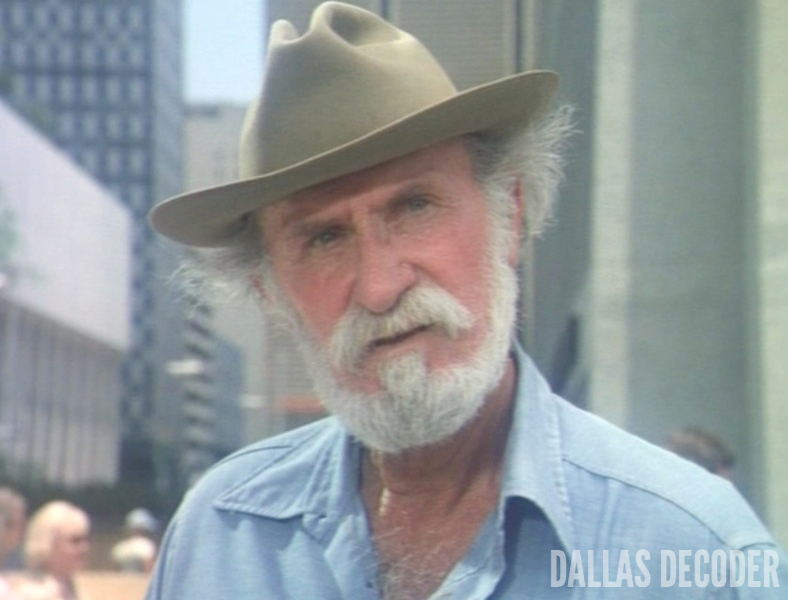
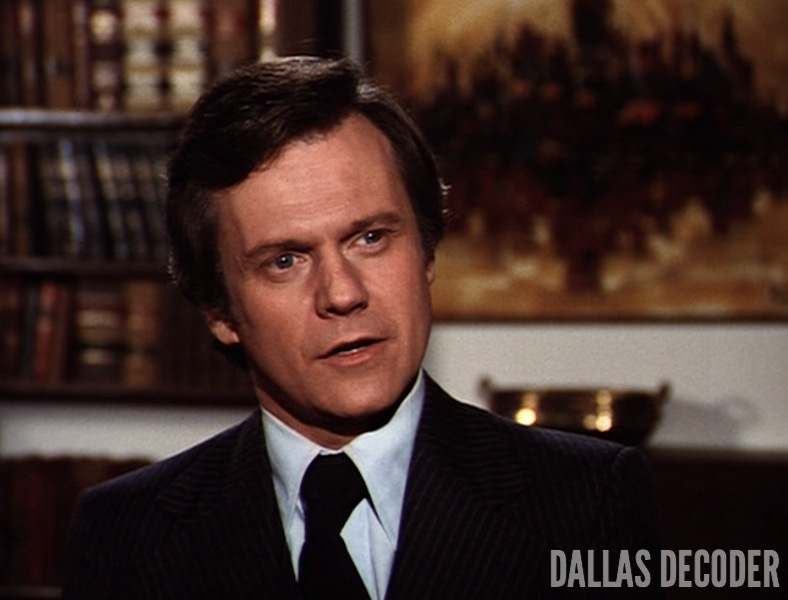
The first time I glimpsed the watch, I didn’t like it. This didn’t seem like something J.R. would wear. After a tip from a reader (see below), I realized J.R. did in fact wear this watch – or at least one similar to it – during the original “Dallas’s” later years. For much of the show’s run, though, he was among its least flashiest dressers, favoring boring business suits and nondescript neckties.
Regardless, this isn’t who J.R. is anymore. When TNT’s “Dallas” begins, his career is over. He’s lost his fortune, his family and any semblance of his youth. J.R. is old now.
The watch symbolizes this. Yes, wearing a timepiece with your own name stamped on it is pretty gauche, but maybe it’s the only way J.R. has to hold onto his identity. It reminds him of who he used to be.
The wristwatch may offer a reality check, too. Watches are clocks after all, and maybe seeing “J.R.” on his wristband helps him understand the sad truth: Even J.R. Ewing can’t control the passage of time.














 Dallas Decoder