Critique: TNT’s ‘Dallas’ Episode 8 – ‘No Good Deed’

Dallas, John Ross Ewing, Josh Henderson, No Good Deed, TNT

Up close

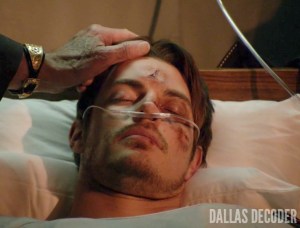
In “No Good Deed,” John Ross is jailed for a murder he didn’t commit and then savagely beaten by a couple of inmates who are connected to the real killers. The Ewings respond to this crisis by rallying around their tarnished golden boy, making this the first time the characters on TNT’s “Dallas” begin to feel like a real family. Not coincidentally, it’s also the first time the new show begins to really feel like the old one.

The original “Dallas” is often described as a series about rich people behaving badly, but the deeper truth is that “Dallas,” at its heart, was a show about family. TNT seems to fully realize this in “No Good Deed.” This is an hour of big, dramatic moments that once again demonstrate an essential “Dallas” tenet: No matter how much the Ewings fight among themselves, when outside forces descend upon Southfork, they all pull together.

Several scenes in this episode give me chills. In the first, Bobby is in the den, railing to his lawyer about J.R. and the plot to steal Southfork, when Ann enters the room with a stricken look on her face. “It’s John Ross,” she says. The goose bumps return in the next scene, when we see Bobby, Ann, Elena and Christopher burst through the emergency room doors and circle a badly shaken Sue Ellen.

As good as these moments are, “No Good Deed” also benefits from its many scenes of quiet familial warmth: J.R. arrives at John Ross’s hospital bedside in the dark of night and gently strokes his sleeping son’s hair. Bobby visits Miss Ellie’s grave and vows to protect the family, finally recognizing the people who live on the ranch matter more than the land itself. John Ross and Christopher stand in the Southfork driveway, shake hands and acknowledge they’re not that different from one another after all. “We’re both just trying to make our fathers proud,” Christopher says.

Then there are “No Good Deed’s” small but meaningful details: When a trembling Sue Ellen fumbles with a coffee dispenser in the hospital waiting room, Ann takes the cup and pumps the coffee for her. During a family conference in the Southfork living room, Ann rubs the back of a worried Elena. John Ross calls Sue Ellen “mama” when she brings him home from the hospital.

The nice thing about Julia Cohen’s script is that it doesn’t just make the Ewings feel like a real family, it also makes them feel like real individuals. “No Good Deed” is centered around the theme of sacrifice – Bobby offers to lift the ban on drilling the ranch, Sue Ellen surrenders her integrity, Christopher forgoes a piece of his gas hydrate project – and by seeing what the Ewings are willing to give up, we discover who these characters really are. (Shades of “Ellie Saves the Day,” one of the greatest episodes from the original series.)

“No Good Deed’s” most heartbreaking moment belongs to Sue Ellen, who musters the courage to bribe the medical examiner, only to discover her ethical lapse was for nothing. I can’t help but feel sorry for her when she stands at John Ross’s bedside and proudly predicts Marta’s death will be ruled a suicide, only to learn the charges against her son have been dropped because new evidence has emerged clearing him. It’s tragic stuff, but isn’t it nice to see Ann provide Sue Ellen with so much support and comfort throughout her ordeal?

Of course, the character who provides “No Good Deed” with its heart is the young man who is at the center of it all: John Ross. Yes, we feel sympathetic toward him after that savage beating, but those cuts and bruises merely symbolize how he’s finally become a flesh-and-blood character.

John Ross seems genuinely ashamed of his role in the plot to steal Southfork, as evidenced by his willingness to stay in jail rather than reveal his relationship with Marta and risk losing Elena’s faith in him. He also refuses to blame J.R. for his misfortune, another sign this is no longer the petulant brat we met in “Changing of the Guard.” I’ve been a fan of Josh Henderson’s from the beginning, but “No Good Deed” finally makes me a fan of John Ross.

“No Good Deed” is also distinguished by Michael Katleman’s arty direction, including the moody opening scene, where Henderson and Jordana Brewster’s faces fill the screen, recalling the tight close-ups that were a signature of the old “Dallas.” And while TNT’s show has a style all its own, there are times I wish it more deliberately mimicked its predecessor. How cool would it have been to hear a few notes of Jerrold Immel’s “Dallas” theme music when J.R. received the call about John Ross’s beating, the way we did in the classic episode “Swan Song,” when J.R. got the call Bobby was dying?

Katleman also does a masterful job in “No Good Deed’s” final scene, when Tommy backs Rebecca against the wall, threatens her and then plants his mouth on hers, thus revealing the Sutters aren’t siblings after all. I suspect that creepy buss will have “Dallas” fans buzzing today, but I hope they don’t allow the shock value to obscure all the warm and wonderful moments to be found in “No Good Deed.”

The Sutters may not be family, but after this episode the Ewings finally are, and my goodness, isn’t that nice to see?

Grade: A

_______________________________________________________________________________________________________________________________________________
Dallas, John Ross Ewing, Josh Henderson, J.R. Ewing, Larry Hagman, No Good Deed, TNT

Touching

‘NO GOOD DEED’

Season 1, Episode 8

Telecast: July 25, 2012

Writer: Julia Cohen

Director: Michael Katleman

Audience: 5 million viewers (including 3.3 million viewers on July 25, ranking 24th in the weekly cable ratings)

Synopsis: When Cano’s thugs beat John Ross in jail, Sue Ellen bribes the medical examiner to rule Marta’s death a suicide so her son will be freed. Her sacrifice is for naught: Christopher gives Cano the South American rights to his gas hydrate project, which prompts Cano to release evidence that clears John Ross. Christopher makes amends with John Ross and reconciles with Rebecca, who is later confronted by Tommy, who isn’t really her brother.

Cast: Amir Arison (Varun Rasmussen), Carlos Bernard (Vicente Cano), Jordana Brewster (Elena Ramos), Damon Carney (Paul Jacob), Akai Draco (Sheriff Derrick), Patrick Duffy (Bobby Ewing), Julie Gonzalo (Rebecca Ewing), Linda Gray (Sue Ellen Ewing), Larry Hagman (J.R. Ewing), Callard Harris (Tommy Sutter), Josh Henderson (John Ross Ewing), Jesse Metcalfe (Christopher Ewing), Glenn Morshower (Lou), Kevin Page (Bum), Marisol Ramirez (Detective), Brenda Strong (Ann Ewing)

“No Good Deed” is available at DallasTNT.com, Amazon.com and iTunes. Watch the episode and share your comments below.
Dallas Styles: Purple!

It’s a family thing

Pam is the focus of “Executive Wife,” and in all her scenes, she wears purple. It starts off subtly – in Victoria Principal’s first appearance in this episode, Pam sports a purple belt with a blue pantsuit – but the color becomes more prominent as the story progresses.

Perhaps the purple suggests Pam is emotionally bruised after being rejected by Rebecca in the previous episode, “The Prodigal Mother.” Or maybe it signifies Pam’s romantic state: If purple is produced by blending red with blue, then isn’t it the ideal pigmentation to represent Pam’s heart-versus-head struggle to resist Alex Ward’s temptation in this episode?

The color is frequently seen on other characters during “Dallas’s” fourth season, but “Executive Wife” might be the show’s purplest episode of all. In addition to seeing it on Pam, Sue Ellen wears a purple floral print dress when J.R. takes her ring shopping; Donna wears a purple dress when she and Cliff run into J.R. and Sue Ellen during their shopping spree; and Bobby’s secretary Connie sports a pinkish-purple blouse in “Executive Wife’s” first act.

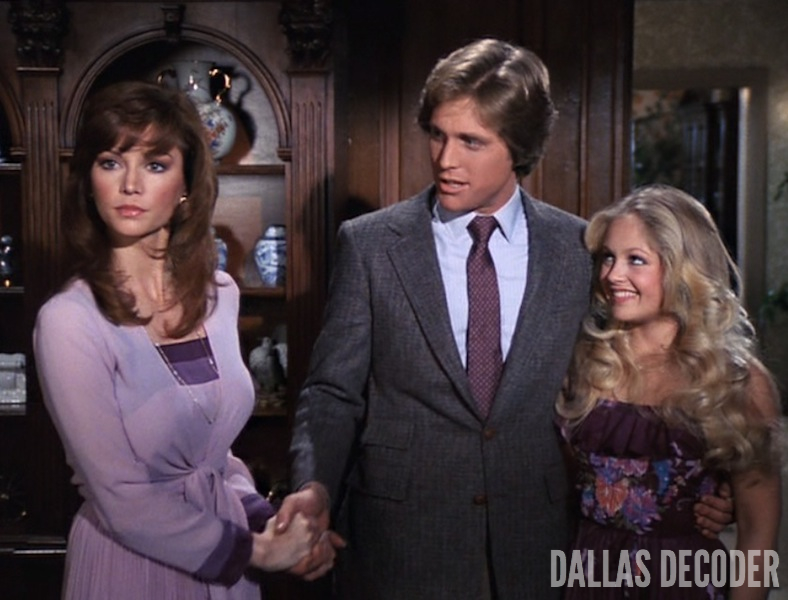
As if that wasn’t enough, when Mitch and Lucy announce their engagement to the Ewings, she wears a purple dress, while he sports a purple necktie. In Mitch’s case, the color is particularly appropriate. After all, if he survives his entry into the family Ewing, he may well qualify for a purple heart.

The Art of Dallas: ‘Executive Wife’

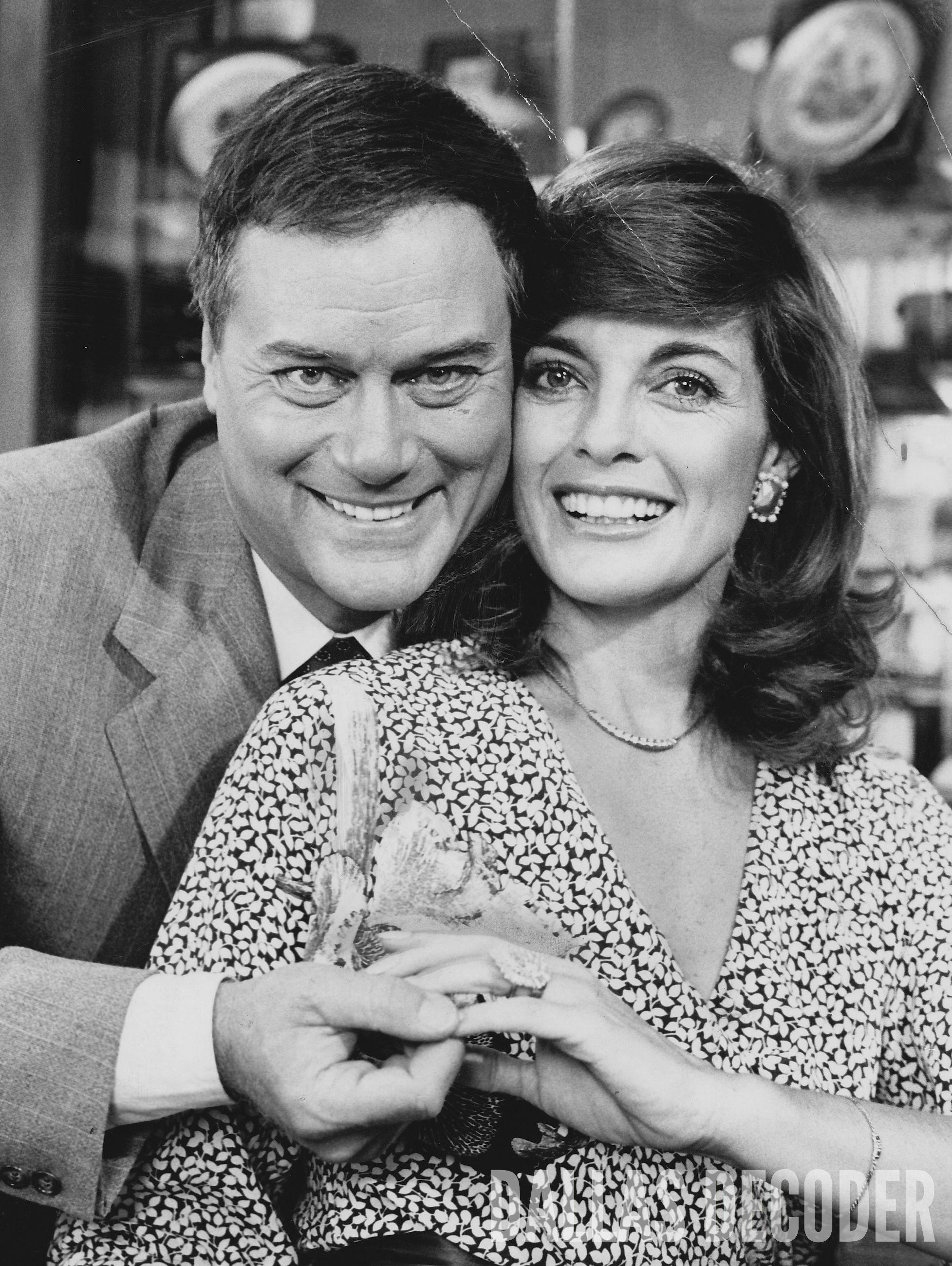
J.R. and Sue Ellen (Larry Hagman, Linda Gray) are seen in this 1981 publicity shot from “Executive Wife,” a fourth-season “Dallas” episode.

Dallas Scene of the Day: ‘Real Power is Something You Take!’

Dallas Scene of the Day - Executive Wife copy

Power tip

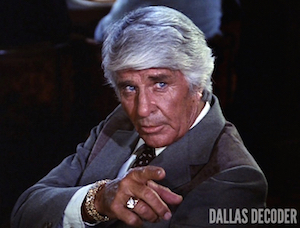
In “Dallas’s” fourth-season episode “Executive Wife,” Bobby (Patrick Duffy) enters the Cattlemen’s Club and begins questioning J.R. (Larry Hagman) about Jock’s business deal, while Jock (Jim Davis) looks on.

JOCK: Now, you just hold on Bobby. J.R. don’t discuss my business with you or anybody else unless I tell him. You understand?

BOBBY: Okay, Daddy, then why didn’t you tell me? Didn’t you think I should know?

JOCK: I was going to tell you tonight.

BOBBY: Tonight? I want those kind of things discussed with me before you act, not after! Your dealing behind my back is making me look like a fool.

JOCK: Now just what the hell are you talking about?

BOBBY: I called Les at the bank and asked him to transfer $12 million from the account.

JOCK: So what? We’ve got a hundred times that much.

BOBBY: I’m talking liquid assets. Cash, Daddy, cash — and we don’t have that amount! And you know why? Because you took $10 million.

JOCK: [Rises from his seat, faces Bobby] You damn right I took it. It’s mine!

BOBBY: That money belongs to Ewing Oil.

JOCK: And who in the hell do you think Ewing Oil is? It’s me! Ewing Oil belongs to me and don’t you forget it, boy.

BOBBY: And you gave me Ewing Oil to run, in writing! And that makes you obliged to consult me before you do anything that concerns that company.

JOCK: Obliged? You’re telling me that I’m obliged to ask you how to spend my own money any damn way I see fit?

BOBBY: That’s right. You gave me the power to run that company, and damn it, I intend to run it!

JOCK: So I gave you power, huh? Well, let me tell you something, boy. If I did give you power, you got nothing! Nobody gives you power. Real power is something you take!

BOBBY: Well, I’m going to remember that.

JOCK: You do that.

Bobby walks away.

Critique: ‘Dallas’ Episode 64 – ‘Executive Wife’

The bloom is off

The bloom is off

In “Executive Wife,” Pam feels hurt by her mother’s rejection and needs Bobby’s support, but he’s too busy running Ewing Oil to notice. For a moment, Pam allows herself to be tempted by another man: magazine publisher Alex Ward.

Sound familiar? It should. Pam and Bobby went through the same scenario in the third-season episode “Jenna’s Return,” except back then, the roles were reversed: Pam was the spouse who was preoccupied with work, which sent lonely Bobby into the arms of magazine editor Jenna Wade.

I appreciate “Executive Wife’s” attempt to depict the challenges facing dual-career couples, which were becoming more common in the 1980s, but it doesn’t change the fact this subplot is a rehash.

It isn’t “Executive Wife’s” only retread, either. Three episodes ago, in “The Fourth Son,” Bobby had to choose between keeping Jock’s commitment to Brady York and honoring a deal Bobby made himself. In “Executive Wife,” he has an opportunity to get back into business with the cartel, but he’s once again hamstrung by Ewing Oil’s commitment to Brady.

At least this time around, Bobby’s dilemma leads to one of “Dallas’s” all-time great scenes: Bobby and Jock’s showdown at the Cattleman’s Club, where the golden son confronts his beloved father over Jock’s decision to deplete Ewing Oil’s cash reserves without first checking with Bobby.

This is where Jim Davis ferociously delivers Jock’s famous line that “real power is something you take.” The dialogue perfectly encapsulates the Ewings’ approach to life, which explains why TNT’s “Dallas” had J.R. repeat the line to John Ross in its recent “The Price You Pay” episode.

“Executive Wife” also features the scene that inspired artist Ro Kim’s classic classic painting of Jock, which shows up after the character’s death during “Dallas’s” fifth season and becomes one of the show’s most enduring props.

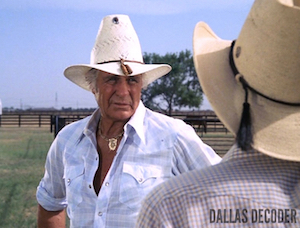
In the scene, Jock stands in a Southfork pasture with Ray and vents his frustration with Bobby’s management of Ewing Oil. Davis wears the same straw hat, blue-and-white checked shirt and gold medallion he does in the painting, so watching him here is a bit like seeing the portrait spring to life.

If only that were really possible.

Grade: B

________________________________________________________________________________________________________________________________________________

Picture perfect

Picture perfect

‘EXECUTIVE WIFE’

Season 4, Episode 10

Airdate: January 9, 1981

Audience: 26.4 million homes, ranking 1st in the weekly ratings

Writer: Rena Down

Director: Leonard Katzman

Synopsis: Jock puts Bobby in a bind when he invests in his friend Punk Anderson’s plan to build a resort at Takapa Lake, depleting Ewing Oil’s cash reserves. Bobby is too busy with work to pay attention to Pam, who allows herself to be tempted by dashing magazine publisher Alex Ward. J.R. Lucy and Mitch decide to get married before he graduates from medical school.

Cast: Barbara Babcock (Liz Craig), Bel Geddes (Miss Ellie Ewing), Michael Bell (Les Crowley), Jim Davis (Jock Ewing), Patrick Duffy (Bobby Ewing), Joel Fabiani (Alex Ward), Meg Gallagher (Louella), Ted Gehring (Brady York), Linda Gray (Sue Ellen Ewing), Larry Hagman (J.R. Ewing), Jerry Haynes (Pat Powers), Susan Howard (Donna Culver), Steve Kanaly (Ray Krebbs), Sherill Lynn Katzman (Jackie), Ken Kercheval (Cliff Barnes), Leigh McCloskey (Mitch Cooper), Jeanna Michaels (Connie), Victoria Principal (Pam Ewing), William Smithers (Jeremy Wendell), Charlene Tilton (Lucy Ewing), Morgan Woodward (Punk Anderson)

“Executive Wife” is available on DVD and at Amazon.com and iTunes. Watch the episode and share your comments below.
The Art of Dallas: ‘The Prodigal Mother’

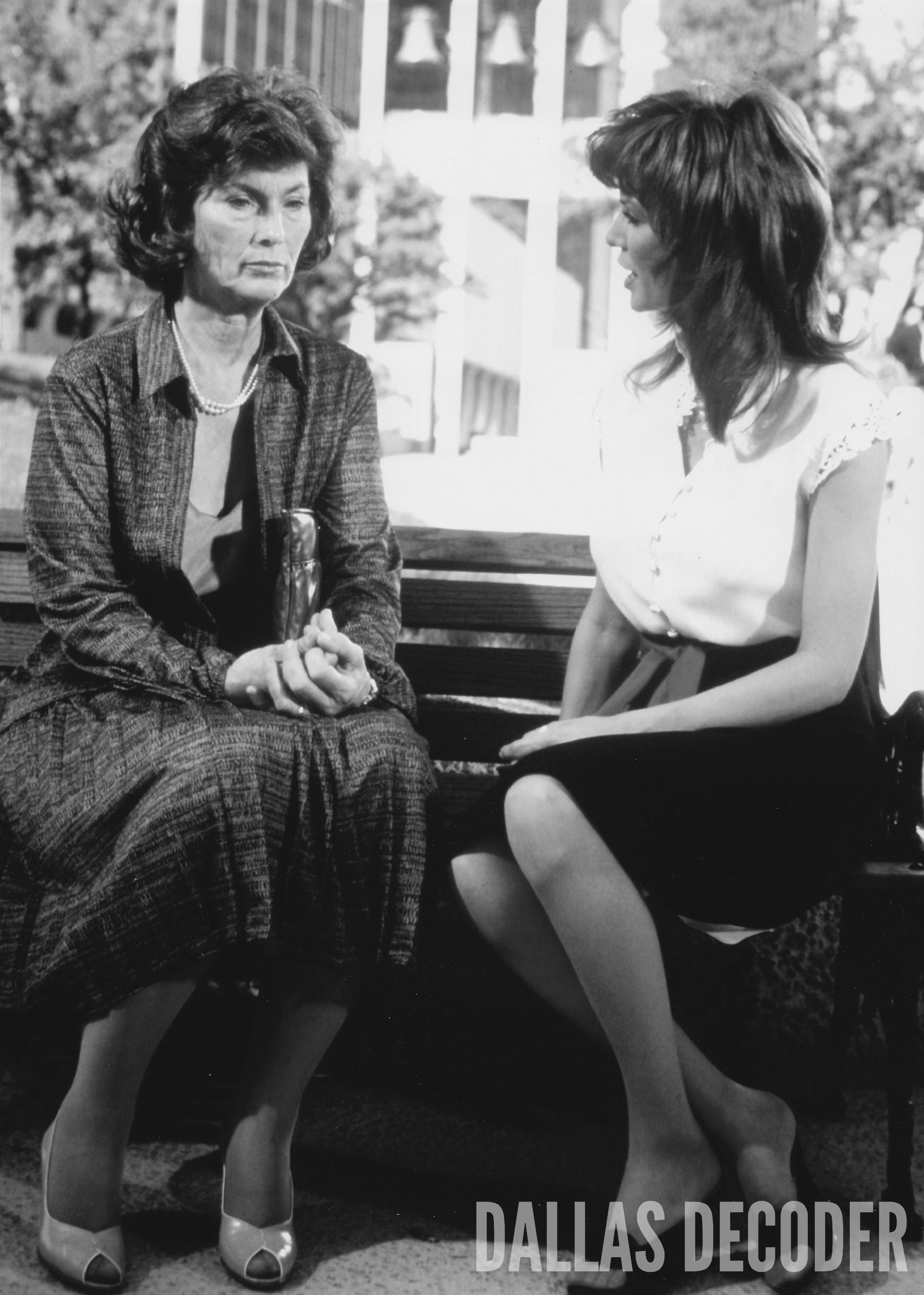
Rebecca (Priscilla Pointer) comes clean to Pam (Victoria Principal) in this 1981 publicity shot from “The Prodigal Mother,” a fourth-season “Dallas” episode.

Dallas Scene of the Day: ‘You Are My Mother’

Mama remembers

Mama remembers

In “Dallas’s” fourth-season episode “The Prodigal Mother,” Rebecca (Priscilla Pointer) approaches Pam (Victoria Principal) outside The Store and asks to walk with her.

REBECCA: Years ago, I closed a door in my mind. I sealed off a part of my life. And I thought it would be sealed off forever. It almost was. I led a comfortable life, happily married to a man that I adore. Then you phoned, making a crack in that seal I thought was so strong. We met. And the crack became larger. And then I saw you and your brother. Both of you together. And I couldn’t. [They sit on a bench.] The whole thing, the whole secret, sealed place broke open. And the past came rushing back. Digger Barnes. Hutch McKinney. And the awful, awful pain of having to abandon my own flesh and blood.

PAM: You are my mother.

REBECCA: Yes, I am.

Pam grabs Rebecca’s hand.

REBECCA: And although you haven’t known me, the newspapers have made it impossible for me to ignore you or Cliff. You can’t imagine the unhappiness of seeing one’s own children and not being able to talk to them.

PAM: That’s what I don’t understand. Why couldn’t you?

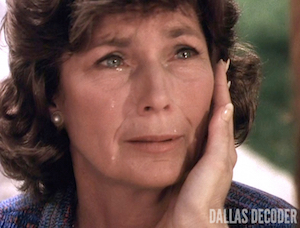
REBECCA: [Tears begin streaming down her face] My husband has no idea that I was married. Or that I have two children. He knows nothing about Hutch McKinney. He is not a well man. I think if he found out now, the shock would devastate him.

PAM: Why didn’t you tell him before?

REBECCA: I never divorced Digger. I was afraid that if I tried, he’d find me, and drag me back to that awful life. [Voice begins cracking] Pamela, I saw a chance for happiness, and I took it. Don’t blame me for that.

PAM: Do you mean that now that I’ve found you, we can’t see each other?

REBECCA: [Shakes her head no] I wanted to talk to your brother too. [Voice cracks] I don’t think I could go through this again.

PAM: Well, it’s probably best if you don’t.

REBECCA: Pamela, try to understand. To lose one family in a lifetime is horrible. To lose a second….

PAM: I’m sorry. [Touches Rebecca’s face] Oh, I’m sorry.

Critique: ‘Dallas’ Episode 63 – ‘The Prodigal Mother’

The lady in Houston

The lady in Houston

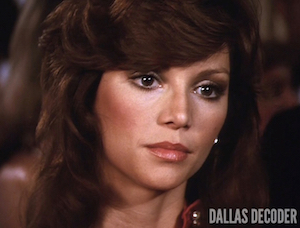
“The Prodigal Mother” reminds me of one of those “women’s pictures” from the 1950s. The episode marks the end of Pam’s search for her long-lost mother, and it’s as gorgeously soapy as anything Douglas Sirk directed. I love it.

More than anything, “The Prodigal Mother” is distinguished by two big, memorable monologues. This is the first script from David Paulsen, who became one of “Dallas’s” most prolific scribes, and boy, does he knock it out of the park with these speeches.

The first speech comes when Pam visits Rebecca Wentworth, the fabulously wealthy woman that Pam’s private detective has identified as Rebecca Barnes, whom Pam and Cliff believed died long ago. In the scene, Rebecca’s maid escorts Pam into the fern-festooned solarium inside her Houston mansion. Rebecca, draped in what appears to be sea-green satin, stands at the other end, leaning against a column. “Won’t you come in?” she says. It’s the kind of thing people only say in movies.

Victoria Principal steps forward and begins Pam’s speech, which is worth recalling it in its entirety:

I’ve rehearsed it a dozen times. Now the words just won’t come out. I know who you are. When I was a child, I used to think about you every day: My mother, who died and went to heaven. And I used to wonder what you were like. What you smelled like. Sometimes, I even thought I could remember. When Digger told us that you died, I could never really accept that. But when Digger was dying and told us about you and Hutch McKinney, I don’t exactly know why, but somehow I knew that you were still alive. And I’ve been searching for you since that day. Everybody told me I shouldn’t. That it was useless. My brother and my husband said that I’d just be more hurt when I found out that you were really dead. But I found you. You’re alive. And I’m so happy. I don’t know how to tell you how happy I am.

Principal’s delivery is really lovely. It feels very brave: With every line, the actress seems to reveal a little more of herself, so much so that by the end of the monologue, her lip looks like it’s quivering uncontrollably. Principal does this a lot during her crying scenes on “Dallas,” and while I sometimes find it a bit much, I don’t here. Here, it’s perfect.

Mama Said

The daughter in Dallas

The daughter in Dallas

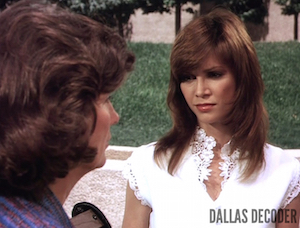
“The Prodigal Mother’s” other big speech comes toward the end of the episode, when Rebecca takes Pam on a stroll through the park and and finally admits she is her mother. I remember watching this scene as a child and being struck by Rebecca’s line about how she “closed a door” in her mind. That line has always stuck with me.

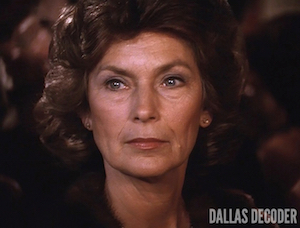
Just as Principal shines during her monologue, Priscilla Pointer does a terrific job delivering hers. Like Barbara Bel Geddes, Pointer is a New York stage veteran who knows how to tone things down for the more intimate confines of television. Pointer’s mannerisms and expressions never feel anything less than natural. She will always be one of my favorite “Dallas” actresses.

I also love how the scene between Pam and Rebecca sounds. When it begins, it’s so quiet – almost eerily so. Aside from the dialogue, the only thing we hear are the women’s heels on the sidewalk and a few birds chirping in the distance. It’s as if the whole world has come to a standstill, and for these two characters, I suppose it has.

And even though Rebecca did an awful thing by abandoning her two small children, this scene makes it impossible for me to dislike her. For this, Paulsen deserves a lot of credit. His dialogue humanizes Rebecca, particularly when she explains why she never divorced Digger. “I was afraid that if I tried, he’d find me, and drag me back to that awful life,” she says. Based on what we know about bitter, miserable Digger, can we honestly blame her? Rebecca might not deserve our respect, but after this scene, she’s at least entitled to some of our sympathy.

Of course, the most haunting part of Pam and Rebecca’s exchange is how it foreshadows Pam’s own tragic character arc, which I hope TNT’s “Dallas” will someday resolve. Imagine seeing Principal sitting on a park bench with Jesse Metcalfe as Pam explains why she abandoned Christopher and Bobby, all those years ago. If done well, it would be even more powerful than what we witness in “The Prodigal Mother.”

Party Lines

The grand sweep

The grand sweep

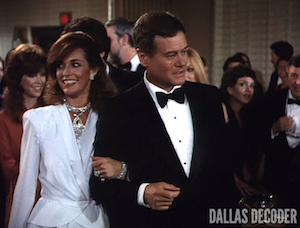
In another Sirkian masterstroke, before Rebecca comes clean to Pam, Paulsen’s script has the woman run into each in the most glamorous of settings: the black-tie fundraiser for gubernatorial candidate Dave Culver, which the Ewings attend. I love how Irving J. Moore directs the sequence, positioning his camera in the crowd as the Ewings arrive with a grand, all-smiles, glad-handing sweep through the ballroom.

Moore also allows the viewer to eavesdrop on the characters as they comment on the action around them. My favorite exchange begins when Sue Ellen slyly points out the guest of honor is “about as liberal a politician as the state of Texas allows. Ewing money usually never flows in that direction.” J.R.’s response that “Ewing money always flows in the direction of power” is perfect – and perfectly plausible.

“The Prodigal Mother’s” other great scene is its last. Pam, having just agreed to keep Rebecca’s identity secret, comes to Cliff’s apartment to tell him what she learned during her visit to Houston. As expected, Cliff, who believes Pam shouldn’t be digging up the past, doesn’t try to conceal his indifference.

“So, do we have a mother?” he asks.

Pam is silent. Cliff again asks what she learned during her trip.

Finally, she lies and tells him her detective was mistaken. Principal then delivers the episode’s final line, which is its best. “The lady in Houston,” she says, “was just a lady in Houston.”

Oh, that line gets me every time. What sacrifice! What noble suffering! What exquisite agony!

What a great episode.

Grade: A+

________________________________________________________________________________________________________________________________________________

Benchwarmers

Benchwarmers

‘THE PRODIGAL MOTHER’

Season 4, Episode 9

Airdate: January 2, 1981

Audience: 28.1 million homes, ranking 2nd in the weekly ratings

Writer: David Paulsen

Director: Irving J. Moore

Synopsis: Pam’s detective tracks down her mother: Rebecca Wentworth, the wife a wealthy Houston industrialist. Rebecca tearfully admits her real identity to Pam but says she doesn’t want her ill husband to know the truth. Lucy proposes to Mitch, who accepts.

Cast: Barbara Bel Geddes (Miss Ellie Ewing), Michael Bell (Les Crowley), Karlene Crockett (Muriel Gillis), Jim Davis (Jock Ewing), Patrick Duffy (Bobby Ewing), Tom Fuccello (Senator Dave Culver), Linda Gray (Sue Ellen Ewing), Larry Hagman (J.R. Ewing), Jerry Haynes (Pat Powers), Richard Herd (John Mackey), Susan Howard (Donna Culver), Steve Kanaly (Ray Krebbs), Ken Kercheval (Cliff Barnes), John Martin (Herbert Wentworth), Leigh McCloskey (Mitch Cooper), Priscilla Pointer (Rebecca Wentworth), Victoria Principal (Pam Ewing), Don Starr (Jordan Lee), Charlene Tilton (Lucy Ewing), Morgan Woodward (Punk Anderson)

“The Prodigal Mother” is available on DVD and at Amazon.com and iTunes. Watch the episode and share your comments below.
Dallas Drinks: The Elena

This summer, the “Dallas” fans at Dallas Decoder and Cook In/Dine Out are offering “Dallas Drinks,” a series of cocktails inspired by the characters from TNT’s new series. This week: The Elena. Like Jordana Brewster’s performance, this drink is mighty refreshing.

The Art of Dallas: ‘Trouble at Ewing 23’

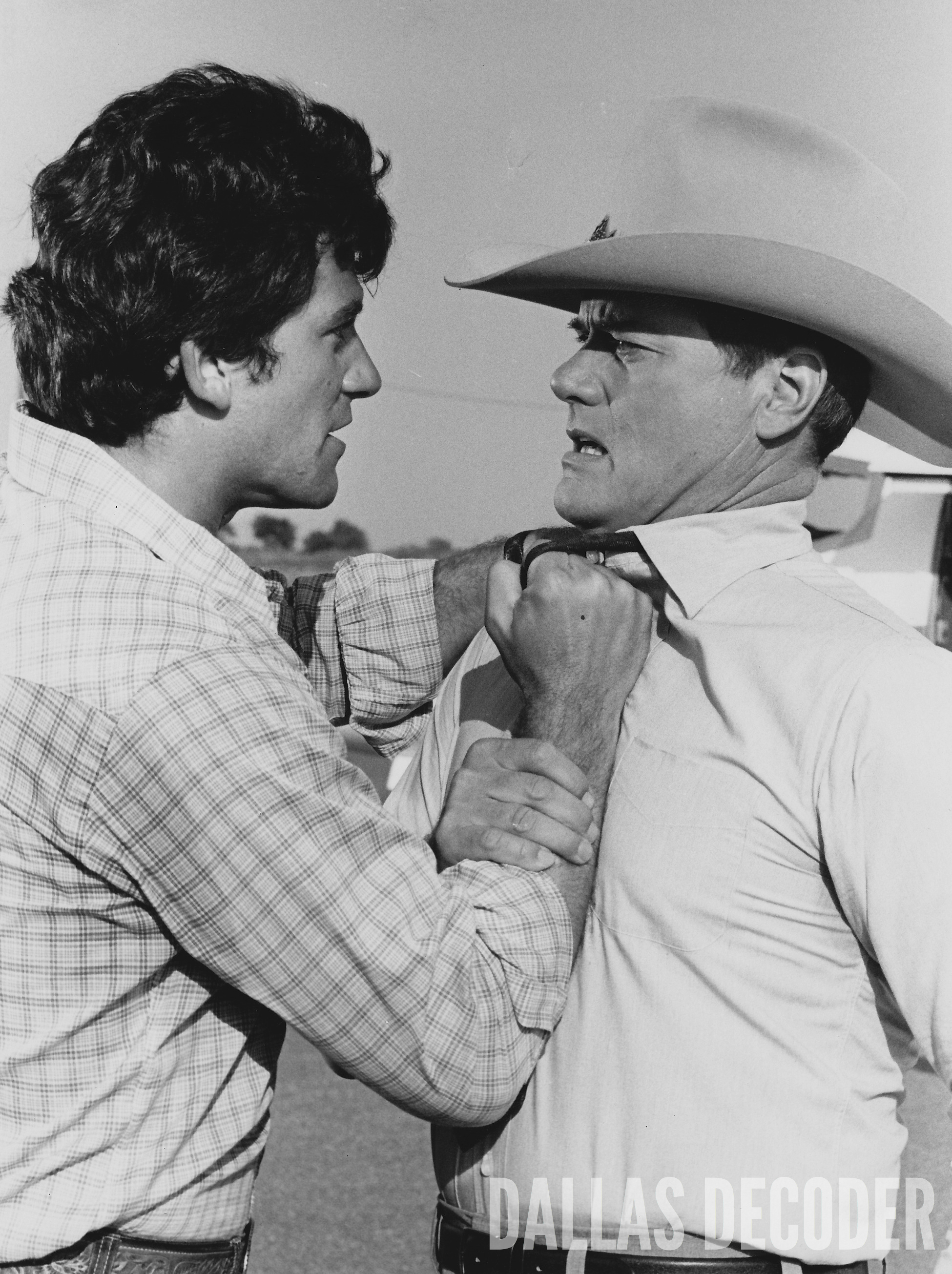
Bobby (Patrick Duffy) confronts J.R. (Larry Hagman) over the botched handling of a ransom demand in this 1980 publicity shot from “Trouble at Ewing 23,” a fourth-season “Dallas” episode.