Last stand
“Trial and Error” gives us the last scenes that Larry Hagman filmed as J.R. Ewing, including his poignant reconciliation with turncoat son John Ross, as well as a spirited clash with Sue Ellen that recalls the couple’s stormier days. But as much as I cherish these final, dwindling moments with my hero, I can’t deny that “Trial and Error” belongs to Brenda Strong. The actress is superb throughout this episode, especially when Ann testifies during her trial. Strong delivers more than 400 words of dialogue, and each one feels achingly real. It’s one of the most moving speeches in “Dallas” history.
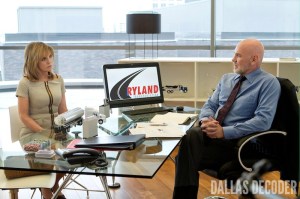
Since the new “Dallas” began I’ve rooted for Ann, a modern Texas woman who is every bit as comfortable in pearls and heels as she is in boots and jeans. One of my favorite scenes during the show’s first season was Ann’s showdown with Harris, when she tricked him into confessing to money laundering and other crimes, then slugged him and warned him to stay away from her family. This is why I was so troubled when Ann shot Harris two episodes ago. A punch is one thing, but Harris doesn’t deserve a bullet to the chest. No one does.
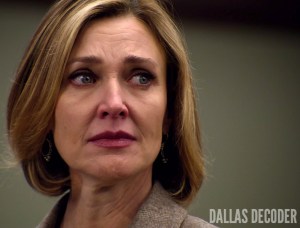
“Trial and Error” marks the beginning of Ann’s redemption, although it feels like something even bigger is happening. Ann isn’t really being tried for shooting Harris; she’s on trial for being an imperfect wife and mother. The show isn’t asking us to forgive Ann as much as it’s asking us to accept her humanity. The character’s testimony, the highlight of “Dallas” newcomer John Whelpley’s script, is the crucial moment. During the course of this four-minute scene, Ann recalls being a tall, awkward girl who found love with Harris, only to have his controlling mother Judith undermine her. She also remembers giving birth to Emma and struggling with motherhood, then having the child snatched from her during a fateful visit to the state fair. It’s wrenching.
I suspect many members of the “Dallas” audience nod silently when they watch Ann’s testimony. The situations she describes might be melodramatic, but the feelings they evoke are easily recognizable. When Ann recalls how Judith made fun of her for not going to college, or how Harris chastised her for using the wrong fork at dinner, how can you not think about a time in your own life when you were made to feel inadequate? Likewise, if you’re a mom or dad, do Ann’s memories of Emma’s abduction remind you of a time when you made a parenting mistake? You’d have to reach far back into Ewing family lore – perhaps to Sue Ellen’s sanitarium meltdown during the original show’s third season – to find a “Dallas” monologue that yields so many genuine emotions.
Strong’s beautifully measured, heartfelt delivery provides “Trial and Error” with its moment of catharsis, but there are many other scenes I like. Several involve Jesse Metcalfe and newcomer Emma Bell. No one does impassioned earnestness better than Metcalfe, as we witness in the nice sequence where Christopher urges Emma to give Ann another chance. Metcalfe is also touching when the camera cuts to Christopher during Ann’s testimony and we see that his eyes are wet, as well as in the scene where Christopher puts his hand on Pamela’s pregnant belly and feels their unborn twins. Bell, in the meantime, reveals herself to be the rare actress who requires no dialogue to shine. Emma is a mostly a silent observer in the courtroom, but never once do we question what she’s thinking. Bell lets us see the doubt and confusion tormenting her character.
Millicent Shelton, a first-time “Dallas” director, also gives us some priceless courtroom reaction shots from Judith Light, who made her own mark in television with a classic witness stand breakdown on “One Life to Live” in 1979. While Light nibbles the scenery, Mitch Pileggi goes in another direction, offering expressions and gestures that seem to reveal Harris’s humanity. Notice how Pileggi bows his head when Ann mentions how Harris’s father committed suicide before he was born. Am I the only one who feels sorry for Harris at that moment?
I’m not sure why we never see Bobby testify on his wife’s behalf (or why he isn’t facing his own obstruction of justice trial for falsely confessing to Harris’s shooting). In the same spirit, it’s tempting to knock “Dallas” for offering up Sue Ellen (a disgraced politician) and Pamela (a recent murder suspect) as Ann’s character witnesses, but I’ll resist the urge because I like how it reminds us of the parallels between these flawed heroines. An especially nice touch: When Ann mentions suffering from post-partum depression after Emma’s birth, the camera cuts to Sue Ellen, who must be one of television’s most notorious sufferer of that disorder.
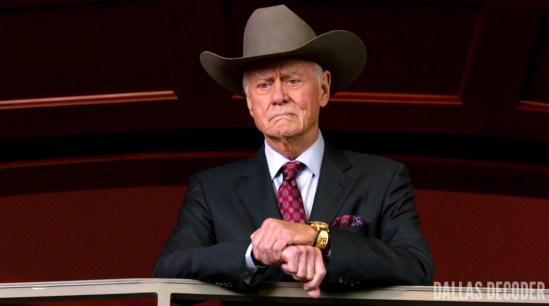
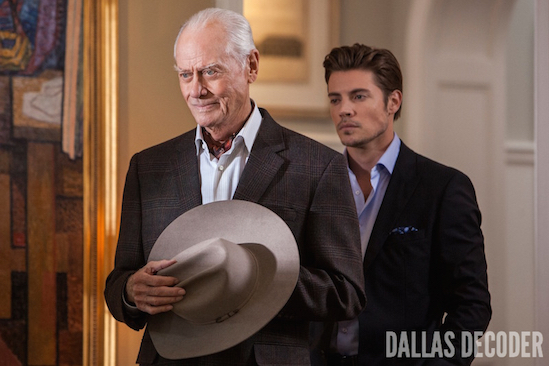
“Trial and Error” also gets a lift from Hagman, who filmed some of his scenes for this episode just days before his death last November – not that you’d know it by watching him here. Consider the shot of J.R. observing John Ross from the mezzanine inside the courthouse. Isn’t it amazing how Hagman can exert so much authority, just by standing silently? I also love J.R.’s quip-filled scene with John Ross in the men’s room (“We dinosaurs are known to bite”), even if it’s an odd place to stage their reconciliation, as well as the exchange where Sue Ellen gives her ex-husband a piece of her mind (“Fathers are supposed to take the high road when it comes to their sons. Forgive John Ross!”). J.R.’s surprise encounter with Cliff is old-school “Dallas” fun too, although I wish Hagman and Ken Kercheval could’ve done the scene face to face instead of over the phone.
This isn’t Hagman’s final “Dallas” appearance. A J.R. scene that was left over from a previous episode has reportedly been inserted into the next hour, “Blame Game,” although we probably won’t know what the moment entails until TNT telecasts it next week. This made watching “Trial and Error” a bit surreal. I wondered: Is J.R.’s exchange with Sue Ellen the last time we’ll see him share the screen with Linda Gray, or will we get one more chance to revel in their magic? What about Bobby and John Ross? Have we already seen J.R.’s final scenes with them too?
This feeling has plagued fans like me all season long, actually. Watching “Dallas” and knowing that our hero will soon go away is the worst of all possible spoilers. Part of me still refuses to believe it’s going to come true.
Grade: B
_______________________________________________________________________________________________________________________________________________
Her day in court
‘TRIAL AND ERROR’
Season 2, Episode 5
Telecast: February 18, 2013
Writer: John Whelpley
Director: Millicent Shelton
Synopsis: Ann proves she shot Ryland and goes on trial. During her testimony, she reveals her struggles as a young mother but refutes Harris’s accusation of neglecting Emma. The jury finds Ann guilty. Cliff tells J.R. that John Ross betrayed him, but Sue Ellen persuades J.R. to forgive their son. Christopher softens toward Pamela, who rejects John Ross’s romantic overtures. Drew is arrested for transporting stolen goods.
Cast: John Athas (Ellis), Kuno Becker (Drew Ramos), Emma Bell (Emma Brown), Carlos Bernard (Vicente Cano), Holt Boggs (state trooper), Jordana Brewster (Elena Ramos), Brett Brock (Clyde Marshall), Candice Coke (Tamera Carson), Patrick Duffy (Bobby Ewing), Rick Espaillat (Dr. LaFont), Wilbur Fitzgerald (Judge Wallace Tate), Julie Gonzalo (Pamela Barnes), Linda Gray (Sue Ellen Ewing), Larry Hagman (J.R. Ewing), Josh Henderson (John Ross Ewing), Ken Kercheval (Cliff Barnes), Judith Light (Judith Ryland), Jesse Metcalfe (Christopher Ewing), Glenn Morshower (Lou Bergen), Kevin Page (Bum), Mitch Pileggi (Harris Ryland), Brenda Strong (Ann Ewing), Brian Thornton (Detective Miles Danko), Rebekah Turner (jury foreman)
“Trial and Error” is available at DallasTNT.com, Amazon.com and iTunes. Watch the episode and share your comments below.
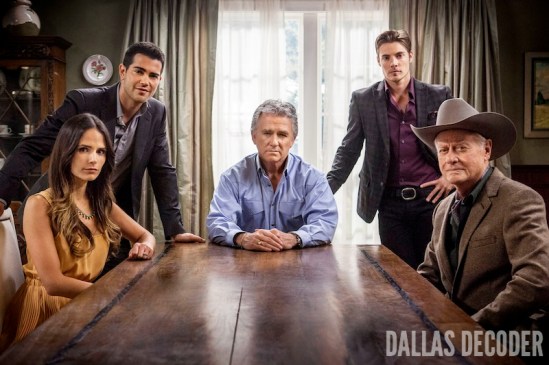
 If you need a refresher on the first season of TNT’s “Dallas,” don’t worry: the DVD will go on sale beginning January 8 (that’s just 92 days from today – again, not that we’re keeping track).







 Dallas Decoder