Critique: ‘Dallas’ Episode 65 – ‘End of the Road, Part 1’

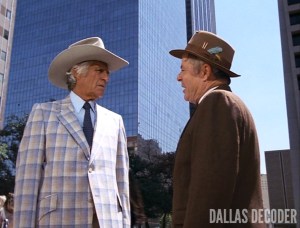
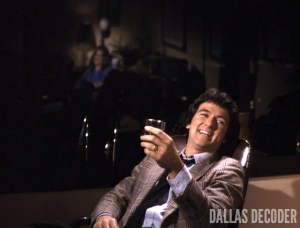
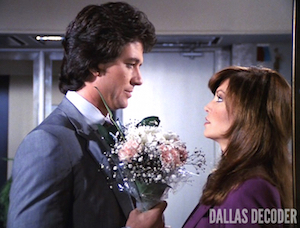
Look out, J.R.

Look out, J.R.

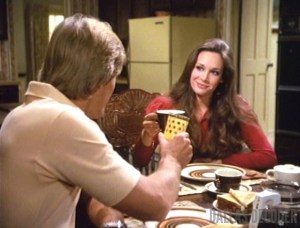
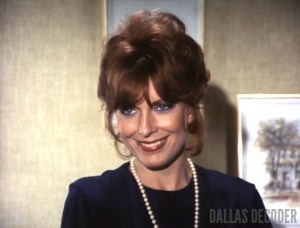
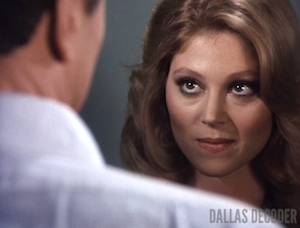
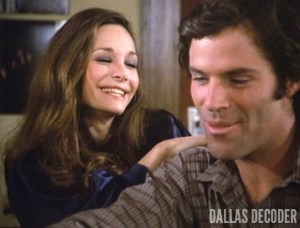
Audrey Landers makes her “Dallas” debut in “End of the Road, Part 1,” and from the moment we lay eyes on her character Afton Cooper, there’s no doubt about it: This girl is going to be trouble.

Afton eventually becomes one of “Dallas’s” most popular heroines, but that’s not how she starts out. In this episode, she comes to town to attend her brother Mitch’s wedding to Lucy but spends most of her time slinking around Southfork and flirting with J.R.

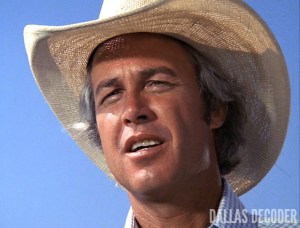
At this point during “Dallas’s” run, the show had been vixen-less since Kristin’s departure at the beginning of the fourth season, and “End of the Road, Part 1” makes it clear Afton is here to pick up the slack. J.R. himself alludes to this when he wonders aloud to Jock, “You suppose Afton can type?”

When I watched “Dallas” as a kid, I didn’t pay much attention to Landers, but seeing this episode with fresh eyes made me appreciate how good she is as Afton. Landers was still a Hollywood newcomer when she joined “Dallas,” but she more than holds her own against Larry Hagman, with whom she shares several scenes.

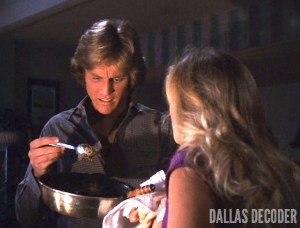
When J.R. meets Afton during a Southfork cocktail hour, he ushers her over to his side of the room. It feels a little predatory, but then I listen as Afton coos to him about the roadside alligators and Spanish moss in her native Mississippi. J.R. is charmed, and suddenly it isn’t clear who is predator and who is prey.

Afton’s arrival signals the beginning of another transitional episode during “Dallas’s” fourth season. Lucy and Mitch are about to go from mismatched college sweethearts to mismatched spouses, J.R. and Sue Ellen’s marital bliss is crumbling and Bobby’s rocky tenure as Ewing Oil’s president is winding down.

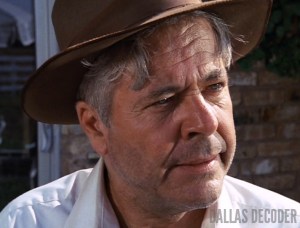
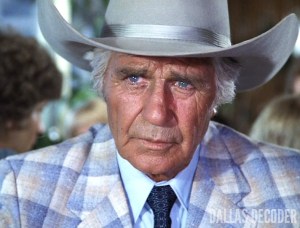
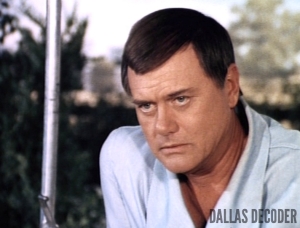
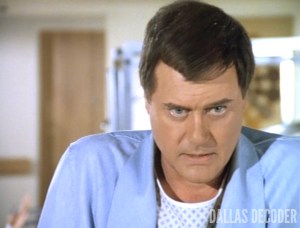
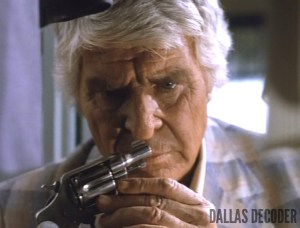
Of course, the biggest transition of all was happening behind the scenes. Jim Davis was diagnosed with inoperable brain cancer in 1980, and “End of the Road, Part 1” marks the moment his illness begins to show on-screen. The actor doesn’t look well in this episode.

I watch today knowing Davis is coming to the end of his road – and man, does that make me sad.

Grade: B

________________________________________________________________________________________________________________________________________________
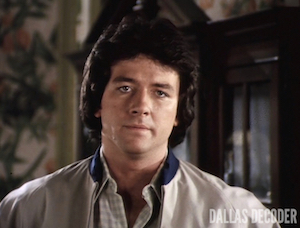
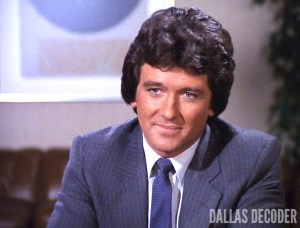
The end is nigh, Bobby

The end is nigh, Bobby

‘END OF THE ROAD, PART 1’

Season 4, Episode 11

Airdate: January 16, 1981

Audience: 26 million homes, ranking 1st in the weekly ratings

Writer: Leonard Katzman

Director: Irving J. Moore

Synopsis: Bobby does business with the cartel, even though Ewing Oil is having cash-flow problems. J.R. pulls strings to force Bobby to betray the independent gas station owners, knowing it will infuriate Jock. J.R. sleeps with his secretary Louella and flirts with Mitch’s sister Afton, who comes to town for the wedding.

Cast: Barbara Babcock (Liz Craig), Bel Geddes (Miss Ellie Ewing), Michael Bell (Les Crowley), David J. Bowman (Tom Selby), Harry Carey Jr. (Red), Jim Davis (Jock Ewing), Patrick Duffy (Bobby Ewing), Joel Fabiani (Alex Ward), Anne Francis (Arliss Cooper), Meg Gallagher (Louella), Linda Gray (Sue Ellen Ewing), Larry Hagman (J.R. Ewing), Susan Howard (Donna Culver), Steve Kanaly (Ray Krebbs), Sherill Lynn Katzman (Jackie), Ken Kercheval (Cliff Barnes), Audrey Landers (Afton Cooper), Leigh McCloskey (Mitch Cooper), Jeanna Michaels (Connie), Victoria Principal (Pam Ewing), William Smithers (Jeremy Wendell), Charlene Tilton (Lucy Ewing), Janine Turner (Susan), Morgan Woodward (Punk Anderson)

“End of the Road, Part 1” is available on DVD and at Amazon.com and iTunes. Watch the episode and share your comments below.
Critique: ‘Dallas’ Episode 64 – ‘Executive Wife’

The bloom is off

The bloom is off

In “Executive Wife,” Pam feels hurt by her mother’s rejection and needs Bobby’s support, but he’s too busy running Ewing Oil to notice. For a moment, Pam allows herself to be tempted by another man: magazine publisher Alex Ward.

Sound familiar? It should. Pam and Bobby went through the same scenario in the third-season episode “Jenna’s Return,” except back then, the roles were reversed: Pam was the spouse who was preoccupied with work, which sent lonely Bobby into the arms of magazine editor Jenna Wade.

I appreciate “Executive Wife’s” attempt to depict the challenges facing dual-career couples, which were becoming more common in the 1980s, but it doesn’t change the fact this subplot is a rehash.

It isn’t “Executive Wife’s” only retread, either. Three episodes ago, in “The Fourth Son,” Bobby had to choose between keeping Jock’s commitment to Brady York and honoring a deal Bobby made himself. In “Executive Wife,” he has an opportunity to get back into business with the cartel, but he’s once again hamstrung by Ewing Oil’s commitment to Brady.

At least this time around, Bobby’s dilemma leads to one of “Dallas’s” all-time great scenes: Bobby and Jock’s showdown at the Cattleman’s Club, where the golden son confronts his beloved father over Jock’s decision to deplete Ewing Oil’s cash reserves without first checking with Bobby.

This is where Jim Davis ferociously delivers Jock’s famous line that “real power is something you take.” The dialogue perfectly encapsulates the Ewings’ approach to life, which explains why TNT’s “Dallas” had J.R. repeat the line to John Ross in its recent “The Price You Pay” episode.

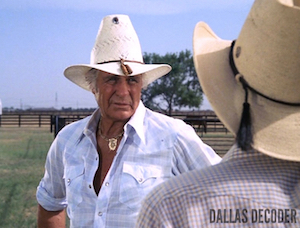
“Executive Wife” also features the scene that inspired artist Ro Kim’s classic classic painting of Jock, which shows up after the character’s death during “Dallas’s” fifth season and becomes one of the show’s most enduring props.

In the scene, Jock stands in a Southfork pasture with Ray and vents his frustration with Bobby’s management of Ewing Oil. Davis wears the same straw hat, blue-and-white checked shirt and gold medallion he does in the painting, so watching him here is a bit like seeing the portrait spring to life.

If only that were really possible.

Grade: B

________________________________________________________________________________________________________________________________________________

Picture perfect

Picture perfect

‘EXECUTIVE WIFE’

Season 4, Episode 10

Airdate: January 9, 1981

Audience: 26.4 million homes, ranking 1st in the weekly ratings

Writer: Rena Down

Director: Leonard Katzman

Synopsis: Jock puts Bobby in a bind when he invests in his friend Punk Anderson’s plan to build a resort at Takapa Lake, depleting Ewing Oil’s cash reserves. Bobby is too busy with work to pay attention to Pam, who allows herself to be tempted by dashing magazine publisher Alex Ward. J.R. Lucy and Mitch decide to get married before he graduates from medical school.

Cast: Barbara Babcock (Liz Craig), Bel Geddes (Miss Ellie Ewing), Michael Bell (Les Crowley), Jim Davis (Jock Ewing), Patrick Duffy (Bobby Ewing), Joel Fabiani (Alex Ward), Meg Gallagher (Louella), Ted Gehring (Brady York), Linda Gray (Sue Ellen Ewing), Larry Hagman (J.R. Ewing), Jerry Haynes (Pat Powers), Susan Howard (Donna Culver), Steve Kanaly (Ray Krebbs), Sherill Lynn Katzman (Jackie), Ken Kercheval (Cliff Barnes), Leigh McCloskey (Mitch Cooper), Jeanna Michaels (Connie), Victoria Principal (Pam Ewing), William Smithers (Jeremy Wendell), Charlene Tilton (Lucy Ewing), Morgan Woodward (Punk Anderson)

“Executive Wife” is available on DVD and at Amazon.com and iTunes. Watch the episode and share your comments below.
Critique: ‘Dallas’ Episode 63 – ‘The Prodigal Mother’

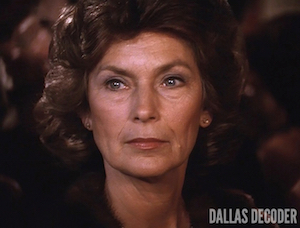
The lady in Houston

The lady in Houston

“The Prodigal Mother” reminds me of one of those “women’s pictures” from the 1950s. The episode marks the end of Pam’s search for her long-lost mother, and it’s as gorgeously soapy as anything Douglas Sirk directed. I love it.

More than anything, “The Prodigal Mother” is distinguished by two big, memorable monologues. This is the first script from David Paulsen, who became one of “Dallas’s” most prolific scribes, and boy, does he knock it out of the park with these speeches.

The first speech comes when Pam visits Rebecca Wentworth, the fabulously wealthy woman that Pam’s private detective has identified as Rebecca Barnes, whom Pam and Cliff believed died long ago. In the scene, Rebecca’s maid escorts Pam into the fern-festooned solarium inside her Houston mansion. Rebecca, draped in what appears to be sea-green satin, stands at the other end, leaning against a column. “Won’t you come in?” she says. It’s the kind of thing people only say in movies.

Victoria Principal steps forward and begins Pam’s speech, which is worth recalling it in its entirety:

I’ve rehearsed it a dozen times. Now the words just won’t come out. I know who you are. When I was a child, I used to think about you every day: My mother, who died and went to heaven. And I used to wonder what you were like. What you smelled like. Sometimes, I even thought I could remember. When Digger told us that you died, I could never really accept that. But when Digger was dying and told us about you and Hutch McKinney, I don’t exactly know why, but somehow I knew that you were still alive. And I’ve been searching for you since that day. Everybody told me I shouldn’t. That it was useless. My brother and my husband said that I’d just be more hurt when I found out that you were really dead. But I found you. You’re alive. And I’m so happy. I don’t know how to tell you how happy I am.

Principal’s delivery is really lovely. It feels very brave: With every line, the actress seems to reveal a little more of herself, so much so that by the end of the monologue, her lip looks like it’s quivering uncontrollably. Principal does this a lot during her crying scenes on “Dallas,” and while I sometimes find it a bit much, I don’t here. Here, it’s perfect.

Mama Said

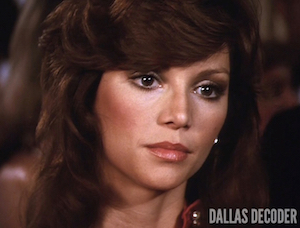
The daughter in Dallas

The daughter in Dallas

“The Prodigal Mother’s” other big speech comes toward the end of the episode, when Rebecca takes Pam on a stroll through the park and and finally admits she is her mother. I remember watching this scene as a child and being struck by Rebecca’s line about how she “closed a door” in her mind. That line has always stuck with me.

Just as Principal shines during her monologue, Priscilla Pointer does a terrific job delivering hers. Like Barbara Bel Geddes, Pointer is a New York stage veteran who knows how to tone things down for the more intimate confines of television. Pointer’s mannerisms and expressions never feel anything less than natural. She will always be one of my favorite “Dallas” actresses.

I also love how the scene between Pam and Rebecca sounds. When it begins, it’s so quiet – almost eerily so. Aside from the dialogue, the only thing we hear are the women’s heels on the sidewalk and a few birds chirping in the distance. It’s as if the whole world has come to a standstill, and for these two characters, I suppose it has.

And even though Rebecca did an awful thing by abandoning her two small children, this scene makes it impossible for me to dislike her. For this, Paulsen deserves a lot of credit. His dialogue humanizes Rebecca, particularly when she explains why she never divorced Digger. “I was afraid that if I tried, he’d find me, and drag me back to that awful life,” she says. Based on what we know about bitter, miserable Digger, can we honestly blame her? Rebecca might not deserve our respect, but after this scene, she’s at least entitled to some of our sympathy.

Of course, the most haunting part of Pam and Rebecca’s exchange is how it foreshadows Pam’s own tragic character arc, which I hope TNT’s “Dallas” will someday resolve. Imagine seeing Principal sitting on a park bench with Jesse Metcalfe as Pam explains why she abandoned Christopher and Bobby, all those years ago. If done well, it would be even more powerful than what we witness in “The Prodigal Mother.”

Party Lines

The grand sweep

The grand sweep

In another Sirkian masterstroke, before Rebecca comes clean to Pam, Paulsen’s script has the woman run into each in the most glamorous of settings: the black-tie fundraiser for gubernatorial candidate Dave Culver, which the Ewings attend. I love how Irving J. Moore directs the sequence, positioning his camera in the crowd as the Ewings arrive with a grand, all-smiles, glad-handing sweep through the ballroom.

Moore also allows the viewer to eavesdrop on the characters as they comment on the action around them. My favorite exchange begins when Sue Ellen slyly points out the guest of honor is “about as liberal a politician as the state of Texas allows. Ewing money usually never flows in that direction.” J.R.’s response that “Ewing money always flows in the direction of power” is perfect – and perfectly plausible.

“The Prodigal Mother’s” other great scene is its last. Pam, having just agreed to keep Rebecca’s identity secret, comes to Cliff’s apartment to tell him what she learned during her visit to Houston. As expected, Cliff, who believes Pam shouldn’t be digging up the past, doesn’t try to conceal his indifference.

“So, do we have a mother?” he asks.

Pam is silent. Cliff again asks what she learned during her trip.

Finally, she lies and tells him her detective was mistaken. Principal then delivers the episode’s final line, which is its best. “The lady in Houston,” she says, “was just a lady in Houston.”

Oh, that line gets me every time. What sacrifice! What noble suffering! What exquisite agony!

What a great episode.

Grade: A+

________________________________________________________________________________________________________________________________________________

Benchwarmers

Benchwarmers

‘THE PRODIGAL MOTHER’

Season 4, Episode 9

Airdate: January 2, 1981

Audience: 28.1 million homes, ranking 2nd in the weekly ratings

Writer: David Paulsen

Director: Irving J. Moore

Synopsis: Pam’s detective tracks down her mother: Rebecca Wentworth, the wife a wealthy Houston industrialist. Rebecca tearfully admits her real identity to Pam but says she doesn’t want her ill husband to know the truth. Lucy proposes to Mitch, who accepts.

Cast: Barbara Bel Geddes (Miss Ellie Ewing), Michael Bell (Les Crowley), Karlene Crockett (Muriel Gillis), Jim Davis (Jock Ewing), Patrick Duffy (Bobby Ewing), Tom Fuccello (Senator Dave Culver), Linda Gray (Sue Ellen Ewing), Larry Hagman (J.R. Ewing), Jerry Haynes (Pat Powers), Richard Herd (John Mackey), Susan Howard (Donna Culver), Steve Kanaly (Ray Krebbs), Ken Kercheval (Cliff Barnes), John Martin (Herbert Wentworth), Leigh McCloskey (Mitch Cooper), Priscilla Pointer (Rebecca Wentworth), Victoria Principal (Pam Ewing), Don Starr (Jordan Lee), Charlene Tilton (Lucy Ewing), Morgan Woodward (Punk Anderson)

“The Prodigal Mother” is available on DVD and at Amazon.com and iTunes. Watch the episode and share your comments below.
Critique: ‘Dallas’ Episode 62 – ‘Trouble at Ewing 23’

Bobby Ewing, Dallas, J.R. Ewing, Larry Hagman, Patrick Duffy, Trouble at Ewing 23

Little brother, big trouble

“Trouble at Ewing 23” is a decent “Dallas” episode until the fourth act, when everything falls apart. Or is blown apart, to be more precise.

The episode starts off strongly when Ray runs into Miss Ellie in the stable, where he thanks her for welcoming him into the family. Ellie is gracious, but she also expresses concern for Ray. “You’re a Ewing now,” she says. “That’s a lot to take on all at once. I know.” Barbara Bel Geddes and Steve Kanaly each do a nice job in this scene, which helps establish the special bond Ellie and Ray develop as “Dallas” progresses.

“Trouble at Ewing 23’s” other highlight: the scene where Pam drops by Cliff’s apartment unannounced, not knowing Donna is about to arrive for a romantic dinner. When Pam spots a bottle of imported wine chilling in the corner, she realizes Cliff is expecting a woman and teases him.

“It’s the first date,” she says. “Chinese on the second, tacos on the third. Funny how I know all this, isn’t it?” This is a cute scene, well played by Ken Kercheval and Victoria Principal, whose on-screen relationship is one of “Dallas’s” most believable.

Nice moments like these stand in contrast with the rest of “Trouble at Ewing 23,” which isn’t very good. By the fourth act, the show has abandoned everyone else’s storylines to focus on the subplot about a disgruntled Ewing Oil employee’s threat to blow up the drill site in the episode’s title, which J.R. shut in “A House Divided” to prevent Cliff from sharing in the profits.

I like the idea of showing how J.R.’s vindictiveness has unintended consequences – it turns out Gillis, the angry worker, wants revenge because he lost his job when the field closed – but the plot’s execution is lame.

Why does Gillis demand use of the Ewing jet to make his escape? Isn’t he afraid J.R. and Bobby will have police waiting to arrest him when he lands? When the field crew goes looking for Gillis’s hidden-in-plain-sight bombs, why don’t they find them? How long does it take to scour an oil field, anyway?

When the field finally goes up in flames, the special effects are spectacularly fake, but I don’t get too worked up about that. After all, this production is by Lorimar, not Lucasfilm.

Besides, by the time Gillis hits the detonator, my willingness to suspend my disbelief has long since disappeared.

Grade: C

________________________________________________________________________________________________________________________________________________

Bobby Ewing, Dallas, Patrick Duffy, Trouble at Ewing 23

Pain at the pumps

‘TROUBLE AT EWING 23’

Season 4, Episode 8

Airdate: December 19, 1980

Audience: 26.3 million homes, ranking 1st in the weekly ratings

Writer: Louie Elias

Director: Leonard Katzman

Synopsis: Miss Ellie welcomes Ray. Donna tells him she’s dating Cliff. Pam’s detective finds evidence her mother didn’t die. A disgruntled employee threatens to blow up Ewing 23 if Bobby doesn’t meet his ransom demands. J.R.’s security guards shoot the worker, who detonates the explosives before dying.

Cast: Barbara Bel Geddes (Miss Ellie Ewing), Michael Bell (Les Crowley), Ray Colbert (Gillis), Jim Davis (Jock Ewing), Patrick Duffy (Bobby Ewing), John Furlong (airport manager), Meg Gallagher (Louella), Linda Gray (Sue Ellen Ewing), Laurence Haddon (Franklin Horner), Larry Hagman (J.R. Ewing), Richard Herd (John Mackey), Susan Howard (Donna Culver), Sherril Lynn Katzman (Jackie), Ken Kercheval (Cliff Barnes), Jeanna Michaels (Connie), Victoria Principal (Pam Ewing), Charlene Tilton (Lucy Ewing), Warren Vanders (Harry Owens)

“Trouble at Ewing 23” is available on DVD and at Amazon.com and iTunes. Watch the episode and share your comments below.
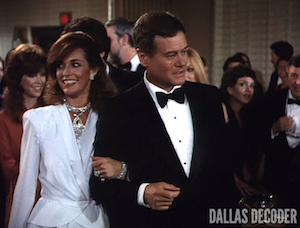
Critique: ‘Knots Landing’ Episode 18 – ‘Kristin’

Dallas, James Houghton, Kenny Ward, Knots Landing, Kristin, Kristin Shepard, Mary Crosby

Killer smile

I’ve always had a soft spot for television crossovers. When I was a kid, I loved seeing Mary Richards visit Rhoda Morgenstern in New York and watching Steve Austin and Jamie Somers fight Bigfoot together. Somehow, crossovers made television seem more real: If Mork could show up on the Cunninghams’ doorstep, why couldn’t he show up on mine?

All these years later, I still think it’s cool when Kristin Shepard pops in on Gary and Valene Ewing, even if “Kristin,” the “Knots Landing” episode that brings her to town, is a little lackluster. (Trivia: “Kristin” also features Tom Fuccello, “Dallas’s” Senator Dave Culver, although he’s somewhat confusingly cast as a different politico here.)

This episode aired about a month after Kristin was fingered as J.R.’s shooter on “Dallas,” and I’m sure that’s no coincidence. If CBS’s goal was to send Kristin to Southern California so “Knots Landing” could soak up some “Who Shot J.R.?” Nielsen afterglow, the ploy worked: On the night it debuted, “Kristin” was seen in 15.6 million homes, or about 2 million more than watched “Knots Landing” the previous week.

Too bad the show didn’t come up with something more interesting for Kristin to do. Her fling with Kenny Ward feels like more of the same. On “Dallas,” Kristin slept with J.R. and tried to seduce Bobby. Is she only capable of chasing married men?

The change of scenery does reveal another side to the character, albeit fleetingly. When Kristin confesses her pregnancy to Val, she seems genuinely frightened about her future. This might be the character’s first sincere moment since Colleen Camp played the role during “Dallas’s” second season.

Interestingly, something similar happened when Lucy visited Gary and Val in “Home is For Healing.” In that first-season “Knots Landing” episode, Lucy suddenly became a more interesting, believable character. What is it about Knots Landing that brings out the best in the women of “Dallas”?

Of course, as soon as we catch this glimpse into Kristin’s humanity, she decides she’s overstayed her welcome and departs Gary and Val’s. I understand why the show sends her packing: Kristin arrived in town on the heels of Abby Cunningham, and the cul-de-sac only had so much room for man-stealing hussies.

Still, I wish Mary Crosby had hung around a few episodes longer. With more time, “Knots Landing” might have turned Kristin into a three-dimensional character, something “Dallas” never really achieved.

Grade: B

________________________________________________________________________________________________________________________________________________

Dallas, Gary Ewing, Knots Landing, Kristin, Kristin Shepard, Mary Crosby, Ted Shackelford

Bad to the last drop

‘KRISTIN’

“Knots Landing” Season 2, Episode 5

Airdate: December 18, 1980

Audience: 15.6 million homes, ranking 29th in the weekly ratings

Writer: Diana Gould

Director: Nicholas Sgarro

Synopsis: When Kristin is arrested at a Hollywood party, she turns to Val, who invites Kristin to stay with her and Gary. Kristin has a fling with neighbor Kenny Ward, whose wife Ginger walks in on them, prompting Ginger to sue for divorce. Kristin confesses her pregnancy to Val and decides to leave, much to Gary’s relief.

Cast: Eric Coplin (Mark Russelman), Mary Crosby (Kristin Shepard), Peter Elbling (Al Tuna), Tom Fuccello (Ed Kroft), Danny Gellis (Jason Avery), David Haskell (Dr. Karl Russelman), James Houghton (Kenny Ward), Kim Lankford (Ginger Ward), Michele Lee (Karen Fairgate), Constance McCashin (Laura Avery), Donna Mills (Abby Cunningham), Don Murray (Sid Fairgate), John Pleshette (Richard Avery), Ted Shackelford (Gary Ewing), Louise Vallance (Sylvie), Joan Van Ark (Valene Ewing)

“Kristin” is available on DVD. Watch the episode and share your comments below.

Critique: ‘Dallas’ Episode 61 – ‘The Fourth Son’

Dallas, Fourth Son, Ray Krebbs, Steve Kanaly

Rising son

In “The Fourth Son’s” third act, Jock tells Ray he’s his father, a fact the Ewing patriarch didn’t discover until earlier in the episode but a truth he’s probably always known, deep down. The scene is beautifully written and performed, and no matter how often I watch it, it always moves me. “Dallas” simply doesn’t get better than this.

The sequence opens with Jock’s Lincoln Town Car kicking up dust as it comes down the gravel road toward Ray’s newly constructed rambler. Director Irving J. Moore brings us into the car for a close-up of Jim Davis, who looks serious as always but more pensive than usual. The Ewing patriarch is in the driver’s seat, but it isn’t clear where this journey is going to take him. You can feel the uncertainty.

When Jock parks the car and gets out, Ray puts down the ax he’s using to chop wood, takes the older man by the arm and leads him to the patio table. “Come on out of the sun,” Ray says, and with that single, small gesture, we’re reminded both of Jock’s mortality and the ranch foreman’s abiding affection for his boss and mentor.

Scriptwriter Howard Lakin’s dialogue in the conversation that follows is so good because it tells us so much. Almost every line signals something more than what’s actually being said.

Ray recalls his mother’s memories of her nursing days (“Seems like the only time in her life she ever felt useful.”) and we realize what a sad, unfulfilled life this woman must have led. He suggests telling the truth about his paternity could cause problems for Jock’s “family” and we known precisely what family member he’s referring to. Jock reminds Ray he’s “got a lot at stake here” and the line – along with the slight smile from Davis that accompanies it – lets us know how impressed Jock is with Ray’s willingness to sacrifice his right to share in the Ewing riches.

Davis is wonderful in this scene – strong and solemn, yet full of love and pride – and so is Steve Kanaly, who wears the mantle of plainspoken humility so convincingly, I wonder how much “acting” is taking place here. I don’t know if Davis and Kanaly were friends in real life, but my goodness, in this exchange, they make me believe in the respect their characters feel for each other.

Matters of Honor

Amos Krebbs, Dallas, Fourth Son, William Windom

She never let him forget

The crux of Jock and Ray’s conversation – Jock wants to acknowledge Ray as his son, while Ray is “happy to leave things just the way they are” – reflects “The Fourth Son’s” broader theme, which is how doing the honorable thing sometimes means hurting others.

We see this at the end of the episode, when Jock summons Ray and the Ewings to the Southfork living room and tells them the ranch’s longtime foreman is the product of a wartime affair Jock confessed to Miss Ellie long ago. For Jock, acknowledging Ray is the right thing to do, but Ellie’s stony expression makes it clear her husband’s past indiscretion still hurts.

In the same spirit, Ray’s willingness to keep his paternity secret echoes the decision his mother, Margaret, made years earlier. For her, not telling Jock about Ray was a necessary sacrifice – but how did that affect Amos?

When we meet him in “The Fourth Son,” he’s a loathsome figure – character actor William Windom is perfectly unsavory in the role – but was Amos always this awful? Lakin’s dialogue suggests the character had a hard-knock life: He was a bastard son and a “4-F” who wasn’t physically qualified to serve his country, and then his fiancée came home from the war pregnant with another man’s child.

Yet Amos married Margaret anyway. Why? Was he willing to give Margaret his name and raise Ray as his own because he felt sorry for her? Or was it because he loved her? Either way, did he end up abandoning his family because the reality of the situation proved too difficult? At one point, Amos tells Jock, “I know she was in love with you. She never let me forget it.” The mystery of what really happened in Kansas lingers.

Questions of integrity and sacrifice also figure into Bobby’s storyline, where he must choose between keeping Jock’s commitment to Mort Wilkinson, a longtime Ewing Oil client, and honoring a deal Bobby himself made with Brady York. At one point, Bobby is ready to abandon Wilkinson – until he’s told Jock sealed the deal 20 years earlier with nothing more than a handshake. “That makes it sacred,” Bobby says.

The subplot where Mr. Eugene helps Bobby expose Sally’s dirty dealings also offers a play on “The Fourth Son’s” central theme. Eugene gives Bobby “carte blanche” to seek retribution from Sally, but the old man warns him: “You remember this: I plan to keep her.” A few moments later, while gazing at a framed picture of Sally, Eugene says, “What God and money hath joined together, let no man put asunder.”

Fathers and Sons and Fathers and Sons

Dallas, Fourth Son, Jim Davis, Jock Ewing

Grand father

Ultimately, “The Fourth Son” is an episode about fatherhood, which becomes one of the “Dallas” franchise’s most resilient themes, particularly in TNT’s new series.

Interestingly, the story told here wasn’t planned: According to Barbara Curran’s 2005 book “Dallas: The Complete Story of the World’s Favorite Prime-Time Soap,” Kanaly had grown frustrated with his role by the end of the third season, so the producers decided to make his character Jock’s illegitimate son to keep the actor from leaving the show. In retrospect, it seems like this is the direction “Dallas” was headed in all along. (Remember the classic second-season episode “Triangle,” when Jock gave Ray a plot of Southfork land?)

The irony is that while the “The Fourth Son” succeeds in rooting Ray more firmly in the “Dallas” mythos, it ends up doing just as much to burnish Jock’s reputation. After this episode, there are four Ewing sons but still only one father, and watching the way he acknowledges Ray makes us better understand why Jock is so revered.

Grade: A+

________________________________________________________________________________________________________________________________________________

Amos Krebbs, Dallas, Fourth Son, Jim Davis, Jock Ewing, William Windom

His two dads

‘THE FOURTH SON’

Season 4, Episode 7

Airdate: December 12, 1980

Audience: 27.9 million homes, ranking 1st in the weekly ratings

Writer: Howard Lakin

Director: Irving J. Moore

Synopsis: The sinking of the Bullocks’ tanker almost forces Bobby to stiff one of Ewing Oil’s longtime clients. When Bobby discovers J.R. and Sally faked the loss of the oil aboard the tanker, he turns the tables on them. Ray’s father Amos arrives and announces Ray’s real father is Jock, who welcomes Ray into the family.

Cast: E.J. André (Eugene Bullock), Barbara Bel Geddes (Miss Ellie Ewing), Joanna Cassidy (Sally Bullock), John Crawford (Mort Wilkinson), Jim Davis (Jock Ewing), Patrick Duffy (Bobby Ewing), Ted Gehring (Brady York), Linda Gray (Sue Ellen Ewing), Larry Hagman (J.R. Ewing), Susan Howard (Donna Culver), Ken Kercheval (Cliff Barnes), Leigh McCloskey (Mitch Cooper), Jeanna Michaels (Connie), Victoria Principal (Pam Ewing), Charlene Tilton (Lucy Ewing), William Windom (Amos Krebbs)

“The Fourth Son” is available on DVD and at Amazon.com and iTunes. Watch the episode and share your comments below.
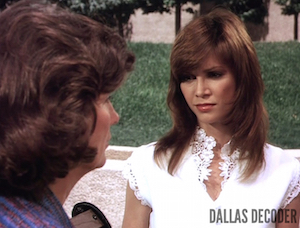
Critique: ‘Dallas’ Episode 60 – ‘The Venezuelan Connection’

Bobby Ewing, Dallas, Patrick Duffy, Venezuelan Connection

Gone with the window

“The Venezuelan Connection” feels like the first half of one of “Dallas’s” two-part episodes. There’s a lot of setup here but not a lot of payoff.

In the main storyline, Bobby hires May-December power couple Eugene and Sally Bullock to ship Venezuelan crude to Ewing Oil’s new refinery, only to learn the tanker sank en route. This is a well-executed plot twist – and there’s much more to the sinking than Bobby realizes – but he won’t discover that until the next episode.

(Quick aside: While I’m delighted to see “The Venezuelan Connection” bring back the Bullocks, who make their first appearance on “Dallas” since their debut in the third-season episode “Return Engagements,” I’m disappointed the show recasts Sally with Joanna Cassidy, who isn’t as deliciously brazen as Andra Akers, the actress who originated the role. Similarly, E.J. André isn’t quite as amusingly cantankerous in this episode as he was during his first go-round as Mr. Eugene.)

Jock and Ray’s storyline in “The Venezuelan Connection” feels incomplete, too. In the third act, a mystery man spots the Ewing patriarch and his foreman in a Fort Worth saloon and quizzes the barkeep about them, but we don’t learn the stranger’s identity – or the reason for his curiosity – until the next episode, which by the way is entitled “The Fourth Son.” (Hint, hint)

Fortunately, “The Veneuzeluean Connection” offers one genuinely satisfying moment: Lucy’s confrontation with Mitch over his abrupt departure from the Southfork pool party she threw in his honor.

In the scene, working-class Mitch tells Lucy he fled the shindig because he felt he couldn’t “compete” with her wealthy friends – an idea she finds ridiculous. “Why do you have to compete with them? They live like that. So what? Can’t you just accept it?” she asks.

This response feels mature and logical, two qualities we don’t always associate with Lucy. I also appreciate how scriptwriter Leah Markus allows the character to recognize Mitch for what he really is. As Lucy tells him, “You’re the one who’s the snob.”

Charlene Tilton is terrific in this scene, which ends with Lucy suggesting she and Mitch break up. This might make their fight seem like another one of “The Venezuelan Connection’s” unresolved plot points, but not really. For Lucy and Mitch, this is turning a point, not a cliffhanger.

Grade: B

________________________________________________________________________________________________________________________________________________

Dallas, Joanna Cassidy, Sally Bullock, Venezuelan Connection

Not the same

‘THE VENEZUELAN CONNECTION’

Season 4, Episode 6

Airdate: December 5, 1980

Audience: 29 million homes, ranking 1st in the weekly ratings

Writer: Leah Markus

Director: Leonard Katzman

Synopsis: Bobby taps Eugene and Sally Bullock to ship crude to his new refinery. Jock is impressed by Bobby’s initiative, while J.R. seethes. Pam’s detective continues searching for her mother. Mitch feels uncomfortable around Lucy’s friends. Bobby learns the Bullocks’ tanker sank en route to the refinery.

Cast: E.J. André (Eugene Bullock), Tami Barber (Bev), Barbara Bel Geddes (Miss Ellie Ewing), Joanna Cassidy (Sally Bullock), Jeff Cooper (Dr. Simon Elby), Jim Davis (Jock Ewing), Patrick Duffy (Bobby Ewing), Meg Gallagher (Louella), Ted Gehring (Brady York), Linda Gray (Sue Ellen Ewing), Larry Hagman (J.R. Ewing), Jerry Haynes (Pat Powers), Richard Herd (John Mackey), Susan Howard (Donna Culver), Ken Kercheval (Cliff Barnes), Leigh McCloskey (Mitch Cooper), Jeanna Michaels (Connie), Victoria Principal (Pam Ewing), Charlene Tilton (Lucy Ewing), Janine Turner (Susan), William Windom (stranger), Morgan Woodward (Punk Anderson)

“Taste of Success” is available on DVD and at Amazon.com and iTunes. Watch the episode and share your comments below.
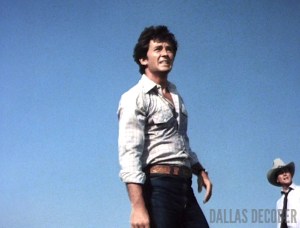
Critique: ‘Dallas’ Episode 59 – ‘Taste of Success’

Bobby Ewing, Dallas, Patrick Duffy, Taste of Success

His day has come

“Dallas” ties up the “Who Shot J.R.?” saga’s loose ends within the first 10 minutes of “Taste of Success.” Kristin confesses her crime to the Ewings, J.R. and Sue Ellen send her packing, and Miss Ellie breathes a big sigh of relief at the Southfork breakfast table. “Well, it’s over,” she says. Indeed, it is.

“Dallas” deserves praise for concluding things so elegantly. Having J.R.’s shooter turn out to be Kristin – and making her pregnant with his child – is genius because it allows “Dallas” to avoid a trial, even if courtroom scenes on this show tend to be entertaining. I also give “Dallas” credit for not trying to top itself with another sweeping storyline. The show knows it’s time to get back to normal, and in “Taste of Success,” that’s pretty much what happens.

Of all the post-“Who Shot J.R.?” plots, Bobby’s is the most interesting. His efforts to buy the Redfield refinery are surprisingly compelling, primarily because the storyline allows the character to step out of J.R.’s shadow. For once, Bobby is in charge and not merely reacting to J.R.’s schemes. It’s a nice change of pace.

“Taste of Success” also casts a new light on Lucy, who cooks dinner for Mitch, albeit with disastrous results. Besides being charming, Lucy’s efforts to woo the medical student make sense for her character. Now that this upstanding fellow has entered her life, of course she’s going to go after him with gusto.

The only Ewing who doesn’t seem to be changing is Sue Ellen. Following her triumphant confrontation with Kristin at the end of “Who Done It?” Sue Ellen reverts back to J.R.’s dutiful wife in this installment, even allowing him to “seduce” her in a scene that recalls the disturbing quasi-marital-rape sequence in “Black Market Baby.”

Sue Ellen also lets J.R. make up for his misdeeds by buying her a new car, giving the scene where he sends her out for a test drive more than a hint of irony. Her foot might be on the accelerator, but in this episode at least, Sue Ellen isn’t moving forward.

Grade: B

________________________________________________________________________________________________________________________________________________

Charlene Tilton, Dallas, Leigh McCloskey, Lucy Ewing, Mitch Cooper, Taste of Success

Doesn’t taste successful

‘TASTE OF SUCCESS’

Season 4, Episode 5

Airdate: November 28, 1980

Audience: 26.5 million homes, ranking 1st in the weekly ratings

Writer: Robert J. Shaw

Director: Irving J. Moore

Synopsis: J.R. sends Kristin to California with the promise of monthly checks when their child is born. Sue Ellen is furious at J.R. but her anger turns to passion and they reconcile. Bobby buys a refinery, arousing J.R.’s envy. Pam, who fears Bobby is on a power trip, returns to work. Cliff pursues Donna, while Lucy continues courting medical student Mitch Cooper.

Cast: Robert Ackerman (Wade Luce), Barbara Babcock (Liz Craig), Tyler Banks (John Ross Ewing), Barbara Bel Geddes (Miss Ellie Ewing), Michael Bell (Les Crowley), David J. Bowman (Tom Selby), Jeff Cooper (Dr. Simon Elby), Mary Crosby (Kristin Shepard), Jim Davis (Jock Ewing), Patrick Duffy (Bobby Ewing), Tom Fuccello (Dave Culver), Linda Gray (Sue Ellen Ewing), Laurence Haddon (Franklin Horner), Larry Hagman (J.R. Ewing), Susan Howard (Donna Culver), Ken Kercheval (Cliff Barnes), Leigh McCloskey (Mitch Cooper), Jeanna Michaels (Connie), Victoria Principal (Pam Ewing), Paul Sorensen (Andy Bradley), Don Starr (Jordan Lee), Tom Taylor (Assistant District Attorney Martin Purcell), Charlene Tilton (Lucy Ewing), Warren Vanders (Harry Owens), Gregory Walcott (Jim Redfield)

“Taste of Success” is available on DVD and at Amazon.com and iTunes. Watch the episode and share your comments below.
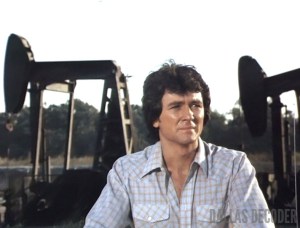
Critique: ‘Dallas’ Episode 58 – ‘Who Done It?’

Dallas, Linda Gray, Sue Ellen Ewing, Who Done It, Who Shot J.R.?

Just shoot her

“Who Done It?” brought the world to a standstill. Eighty-three million Americans, or roughly one-third of the nation’s population, watched this episode on the night it aired in 1980, a record at the time. The global audience is estimated in the hundreds of millions.

I’m sure many viewers still remember where they were and who they were with when they saw “Who Done It?” It’s less likely anyone remembers much about the episode itself. Aside from the final scene, when Kristin is finally revealed as J.R.’s shooter, this is pretty much a run-of-the-mill hour of “Dallas.”

From today’s vantage point, I find this astonishing. When “Who Done It?” was filmed, the producers must have known the broadcast would attract a huge audience, including people who’d never seen “Dallas” but wanted to witness the climactic moment in the “Who Shot J.R.?” phenomenon that had been raging for months.

You might expect the producers to craft an episode to welcome these newcomers. Instead, “Dallas” plows forward with storylines already in motion. Bobby tries to buy a refinery. Cliff hitches a ride on the Culver political bandwagon. Lucy continues wooing Mitch.

Not that I’m complaining, mind you. It’s nice to see “Dallas” conclude the “Who Shot J.R.?” mystery with an episode that’s designed to reward loyal fans.

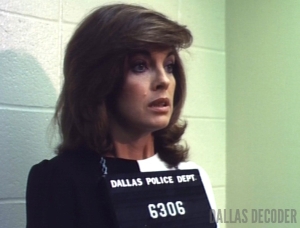
It’s also nice to see the producers showcase Linda Gray, who does some of her finest work on “Dallas” in this episode. The actress makes Sue Ellen believably desperate at the beginning of “Who Done It?” when the character, clad in that iconic black-and-white dress, is forced to spend the night behind bars because the Ewings refuse to bail her out.

It’s always worth paying attention to the details of Gray’s performances, and “Who Done It?” is no exception. Watch closely when Sue Ellen is sitting alone in the jailhouse visitation room and Cliff arrives unexpectedly. The moment she recognizes him, Gray’s posture stiffens and she begins fixing her mussed hair. It’s a small gesture, but it lets us know Sue Ellen is determined to preserve whatever dignity she has left.

I also appreciate how the “Dallas” writers allow Sue Ellen to find a little inner strength after the Ewings reject her in the aftermath of her arrest. When she’s released from jail, she doesn’t hit the bottle, as you might expect. Instead, she turns to Dr. Elby and tries to get to the bottom of what happened the night her husband was shot.

You can’t help but feel Sue Ellen’s triumph when she arrives at Southfork in the final scene, armed with the truth that Kristin is trying to frame her. In contrast, I also appreciate how we get to see a different side of J.R. at this moment. When he spots Sue Ellen, he looks genuinely frightened; director Leonard Katzman even allows the camera to linger on Larry Hagman as he fumbles to get out of his wheelchair. Brilliant.

Of course, as good as Hagman and Gray are in this scene, don’t overlook Mary Crosby. I don’t think I’ve ever found Kristin as distasteful as I do when she coos about giving birth to Jock Ewing’s “jail baby” grandchild. But watch how Crosby’s bravado melts the moment J.R. announces he’ll “handle” her his own way.

In that instant, you can almost hear the wheels turning inside J.R.’s head. Or maybe it’s just the sound the world makes as it starts spinning again.

Grade: A

________________________________________________________________________________________________________________________________________________

Dallas, J.R. Ewing, Larry Hagman, Who Done It, Who Shot J.R.?

He’ll handle it

‘WHO DONE IT?’

Season 4, Episode 4

Airdate: November 21, 1980

Audience: 41.5 million homes, ranking 1st in the weekly ratings

Writer: Loraine Despres

Director: Leonard Katzman

Synopsis: Sue Ellen is arrested and jailed. Someone posts bail, but she doesn’t know who did it. Cliff offers to help Donna’s stepson Dave Culver run for governor. Bobby wants to buy a refinery but can’t arrange the financing. After Dr. Elby hypnotizes her, Sue Ellen realizes Kristin shot J.R. and confronts her sister, who reveals she’s pregnant with J.R.’s child.

Cast: Tyler Banks (John Ross Ewing), Barbara Bel Geddes (Miss Ellie Ewing), Jeff Cooper (Dr. Simon Elby), Mary Crosby (Kristin Shepard), Jim Davis (Jock Ewing), Patrick Duffy (Bobby Ewing), Kenneth Farmer (Gil), Tom Fuccello (Dave Culver), Linda Gray (Sue Ellen Ewing), Laurence Haddon (Franklin Horner), Nik Hagler (Detective Frost), Larry Hagman (J.R. Ewing), Susan Howard (Donna Culver), Ken Kercheval (Cliff Barnes), John Lehne (Kyle Bennett), Leigh McCloskey (Mitch Cooper), Victoria Principal (Pam Ewing), Charlene Tilton (Lucy Ewing), Gregory Walcott (Jim Redfield)

“Who Done It?” is available on DVD and at Amazon.com and iTunes. Watch the episode and share your comments below.
Critique: ‘Dallas’ Episode 57 – ‘Nightmare’

Dallas, J.R. Ewing, Larry Hagman, Nightmare, Who Shot J.R.?

Exposed

“Nightmare” refers to the bad dreams that plague Sue Ellen in this episode, but the title also describes J.R.’s change of fortunes. The shooting has weakened him, physically and otherwise. His friends pity him; his enemies taunt him.

As “Nightmare” gets underway, we learn J.R.’s surgery has restored feeling to his legs, but he’ll have to learn to walk again. In the episode’s most memorable scene, Jock and Miss Ellie stand in the back of the hospital’s physical rehabilitation room and watch J.R., clad in a bathrobe and black orthopedic shoes, struggle to put one foot in front of the other. It proves too heartbreaking for Ellie, who turns away.

If J.R. knew his parents were in the room, he undoubtedly would be embarrassed, which is how he feels when Ray visits. At first, the onetime friends wax nostalgic about their days carousing and chasing skirts. Then Ray turns serious, puts his hand on J.R.’s shoulder and tells him he can count on him if he needs a friend. “Well, Ray, I don’t want to ever have to count on anybody but myself,” J.R. says before wheeling away.

The hits keep coming. Jordan, who raged at J.R. before the shooting, now provokes him. Bobby, who quit Ewing Oil in disgust over J.R.’s tactics, now runs the company. Kristin, whom J.R. tried to run out of town, now looks him up and down as he lies in his hospital bed and declares, “You’re just not man enough anymore.” (J.R.’s muttered response – “Bitch” – must have been pretty provocative back in 1980.)

You have to hand it to the “Dallas” creative team. At this point during the show’s run, J.R. was something of a national folk hero. Americans by the tens of millions watched “Dallas” each week to see him do despicable things. Exposing the character’s vulnerabilities made for rich storytelling, but there’s no doubt the show risked alienating his fans.

And the worst is yet to come. For J.R., the single silver lining since his shooting has been his reconnection with Sue Ellen, who has barely left his side. But in “Nightmare’s” final moments, that crumbles, too. On the night J.R. returns to Southfork, Horton, the cop investigating his shooting, arrives and reveals J.R.’s own gun was used in the crime – and Sue Ellen’s fingerprints are all over the weapon.

For J.R. and Sue Ellen, the nightmare is just beginning.

Grade: B

________________________________________________________________________________________________________________________________________________

Dallas, Jim Davis, Jock Ewing, Nightmare, Who Shot J.R.?

Uh-oh

‘NIGHTMARE’

Season 4, Episode 3

Airdate: November 14, 1980

Audience: 27.8 million homes, ranking 1st in the weekly ratings

Writer: Linda B. Elstad

Director: Irving J. Moore

Synopsis: J.R., while learning to walk again, interferes with Bobby’s efforts to run Ewing Oil. Cliff tells Pam he went to J.R.’s office to shoot him, only to find someone else beat him to it. The police find the gun used to shoot J.R. – and Sue Ellen’s fingerprints are on it.

Cast: Michael Alldredge (Detective Don Horton), Tyler Banks (John Ross Ewing), Barbara Babcock (Liz Craig), Barbara Bel Geddes (Miss Ellie Ewing), David J. Bowman (Tom Selby), Christopher Coffey (Professor Greg Forrester), Jeff Cooper (Dr. Simon Elby), Mary Crosby (Kristin Shepard), Jim Davis (Jock Ewing), Patrick Duffy (Bobby Ewing), Meg Gallagher (Louella), Hugh Gorrian (Gil), Linda Gray (Sue Ellen Ewing), Laurence Haddon (Franklin Horner), Larry Hagman (J.R. Ewing), Ken Kercheval (Cliff Barnes), Leigh McCloskey (Mitch Cooper), Jeanna Michaels (Connie), Victoria Principal (Pam Ewing), Don Starr (Jordan Lee), Charlene Tilton (Lucy Ewing)

“Nightmare” is available on DVD and at Amazon.com and iTunes. Watch the episode and share your comments below.