Critique: ‘Dallas’ Episode 121 — ‘Requiem’

Dallas, Pam Ewing, Priscilla Pointer, Rebecca Wentworth, Requiem, Victoria Principal

Goodbye, Mama

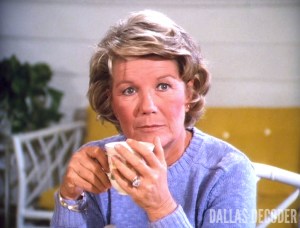
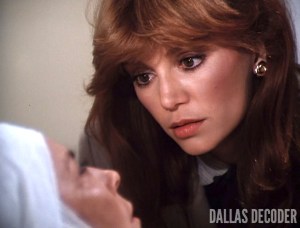
Rebecca Wentworth swept into “Dallas” like a character from a Douglas Sirk movie, so it’s only fitting that she leaves in the same manner. Her death in “Requiem” is pure soap opera. In the scene, Rebecca lies in a hospital bed after being injured in a plane crash, but except for the white bandages that frame her face, you would never know this woman had just suffered major trauma. With soft strings playing in the background, Rebecca makes Pam promise to take care of Cliff. “You’re my good girl,” she says. Through tears, mother and daughter declare their love for each other — and then the monitor flat lines, the music swells and a medical team rushes into the room. “Mama? Mama”?” Pam cries.

Larry Hagman directed “Requiem,” and I love how he pulls together all the technical aspects of this scene — the tight close-ups of Priscilla Pointer and Victoria Principal, Bruce Broughton’s dramatic underscore, the monitor’s extended beep — to create a moment that tugs at the heartstrings without apology. Pointer and Principal deserve praise too. The tears from both actresses flow freely, but neither one goes overboard. For an old-fashioned Hollywood death, the weeping feels quite real. (According to Barbara A. Curran’s “Dallas: The Complete Story of the World’s Favorite Prime-Time Soap,” Pointer’s daughter, the actress Amy Irving, was on the set the day this scene was filmed and cried along with her mother and Principal.)

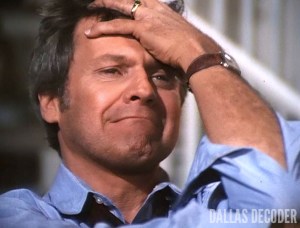
The only thing more emotional than Rebecca’s death is the scene where Cliff finds out about it. It begins when Afton arrives at his townhouse and finds him curled up on the sofa, sleeping off a hangover. He doesn’t know Rebecca was in an accident, much less that she’s gone forever. As Afton breaks the sad news, Hagman slowly zooms in on Ken Kercheval’s face until it fills the frame. His anguished expression recalls the one he wore at the end of the recent “Ewings Unite!” episode of TNT’s “Dallas,” when Cliff orders the explosion of the Ewing Energies oil rig, even though he knows his pregnant daughter Pamela is aboard. Both expressions stir strong feelings: In the 1983 scene, I want to reach through my television screen and give Cliff a hug; in 2013, I want to wring his neck. Is there any doubt Kercheval is one of “Dallas’s” most gifted actors?

Other “Dallas” cast members shine in “Requiem” too. This is the episode that brings back Morgan Brittany after an extended break (before “Requiem,” her most recent appearance came in the 101st episode, “The Investigation”), and the actress gets to show us new shades of Katherine’s persona. I believe the character’s tears are real when she comes to Southfork to comfort Pam, although we’re also left with the impression that Katherine still harbors a crush on her sister’s husband. (“Pam, it must be such a comfort for you to have someone like Bobby,” she says.) We also begin to see Katherine’s knack for duplicity. She’s nice to Cliff when Pam’s around, but the moment Katherine and Cliff are alone, Katherine unleashes her venom and blames him for their mother’s death. “You did this! You killed her!” she screams.

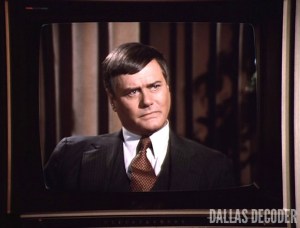
The other highlight of “Requiem” is Rebecca’s funeral, which is one of “Dallas’s” grandest. Hagman opens the sequence with a wide shot of several limousines arriving at the cemetery. Next, we watch as the door to each car opens and the various Barneses, Ewings and Wentworths exit. They all march slowly into the cemetery, along with secondary characters like Jordan Lee, Marilee Stone and Punk and Mavis Anderson. There’s even a handful of reporters present to cover the action. This feels like a funeral fit for a queen, although the emotional kicker comes in the next scene. J.R. is in his office, watching TV news coverage of the burial, when Mike Hughes bursts into the room. Hughes, whom Rebecca was on her way to see when the Wentworth jet crashed, is furious because J.R. has decided to back out of his deal to buy his refinery. Since the point of Rebecca’s trip was to talk Hughes out of selling to J.R. in the first place, this means she died in vain, no?

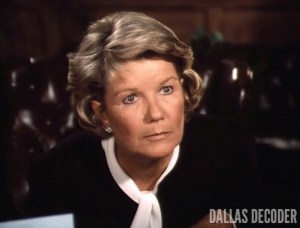
“Requiem” also includes the famous scene where Miss Ellie speaks to Sue Ellen and predicts the Ewing grandsons will one day inherit their fathers’ rivalry. When this episode debuted 30 years ago, most viewers probably didn’t pay much attention to this scene, but since the debut of TNT’s sequel series, it’s come to occupy a prominent spot in “Dallas” lore. The conversation begins with Sue Ellen drawing a parallel between Rebecca’s death and J.R. losing his variance to pump more oil than anyone else in Texas. Ellie tells Sue Ellen the comparison is ridiculous. “Think 25 or 30 years ahead,” she says. “I won’t be here then. And the fight won’t be between J.R. and Bobby. It’ll be between John Ross and Christopher. Think carefully, Sue Ellen. Your loyalty to your husband is a wonderful thing, but you’re a mother too. And where will this all end?”

The most interesting part of Ellie’s speech isn’t her prediction about her grandsons, but the challenge she lays down to her daughter-in-law. “I won’t be here,” she tells Sue Ellen. The implication: But you will be, and it might be up to you to keep the peace in this family. Are you up to the task? Indeed, to watch this scene now is to see how much Sue Ellen has changed — and how much she hasn’t. In 2013, our heroine is John Ross’s biggest champion, just like she stood in J.R.’s corner three decades ago. But Sue Ellen has outgrown many of her other tendencies. Can you imagine her making the kind of shallow observation that she does in “Requiem,” when she equates J.R.’s business setback with Rebecca’s death? Make no mistake: Sue Ellen still has her share of struggles, but she’s come a long way. Witness the recent scene where she seemed to echo Ellie’s concern about the destructive patterns within the family Ewing.

Mama was right about a lot of things in 1983, but I bet even she couldn’t have predicted how wise Sue Ellen would become.

Grade: A

_______________________________________________________________________________________________________________________________________________
Cliff Barnes, Dallas, Ken Kercheval, Requiem

Good grief

‘REQUIEM’

Season 6, Episode 18

Airdate: February 11, 1983

Audience: 15.4 million homes, ranking 16th in the weekly ratings

Writer: Linda Elstad

Director: Larry Hagman

Synopsis: Rebecca dies from injuries sustained in the plane crash. Katherine arrives for the funeral and blames Cliff for their mother’s death. Pam decides to take Christopher and leave Southfork. When the Texas Energy Commission revokes J.R.’s variance, he joins forces with Driscoll to secretly sell oil to Cuba.

Cast: John Beck (Mark Graison), Barbara Bel Geddes (Miss Ellie Ewing), Morgan Brittany (Katherine Wentworth), Lois Chiles (Holly Harwood), Roseanna Christiansen (Teresa), Patrick Duffy (Bobby Ewing), Jane D’Auvray (nurse), Fern Fitzgerald (Marilee Stone), Tom Fuccello (Senator Dave Culver), Linda Gray (Sue Ellen Ewing), Larry Hagman (J.R. Ewing), Alice Hirson (Mavis Anderson), Susan Howard (Donna Krebbs), John Ingle (surgeon), Steve Kanaly (Ray Krebbs), Howard Keel (Clayton Farlow), Ken Kercheval (Cliff Barnes), Richard Kuss (Mike Hughes), Audrey Landers (Afton Cooper), Ryan MacDonald (Casey), Ben Piazza (Priscilla Pointer (Rebecca Wentworth), Victoria Principal (Pam Ewing), Debbie Rennard (Sly), Danone Simpson (Kendall), Arlen Dean Snyder (George Hicks), Paul Sorensen (Andy Bradley), Don Starr (Jordan Lee), Charlene Tilton (Lucy Ewing), Morgan Woodward (Punk Anderson)

“Requiem” is available on DVD and at Amazon.com and iTunes. Watch the episode and share your comments below.

Tonight on #DallasChat: ‘Gone Darlin’ Gone’

Dallas, J.R. Ewing, Larry Hagman

The departed

Dallas Decoder’s next #DallasChat on Twitter will be Monday, July 22, from 9 to 10 p.m. Eastern time. Our theme: “Gone Darlin’ Gone,” which I’ll explain at the beginning of tonight’s discussion.

As usual, I’ll tweet a question roughly every five minutes. Each question will be numbered and include the hashtag #DallasChat, so your responses should do the same. A few pointers:

• During the chat, enter #DallasChat in Twitter’s search field. This will help you watch the search results so you can follow the conversation. Click “All” to see all the related tweets.

• Include the hashtag #DallasChat in each tweet you send so others can see your contributions to the conversation. Feel free to start side conversations of your own.

• Twitter limits the number of tweets each users can send an hour, so I’m unable to respond to everyone’s answers. I’ll reply to some and “favorite” the others, but please know how much I appreciate everyone’s participation.

I look forward to another lively discussion. See you tonight!

Critique: ‘Dallas’ Episode 120 — ‘Crash of ’83’

Bobby Ewing, Crash of '83, Dallas, Patrick Duffy

Welcome to the dark side

At the beginning of “Crash of ’83,” the corrupt energy commissioner George Hicks tells Bobby he’ll “never” vote to revoke J.R.’s permission to pump more oil than anyone else in Texas. Bobby’s response: “Hicks, never say never.” The line, which Patrick Duffy delivers with his trademark breathy seriousness, sets the tone for the rest of the hour. Bobby does things in “Crash of ’83” that he probably never dreamed he’d have to do, like using a hooker to snoop into Hick’s private life and then blackmailing the man when his secret addiction to cocaine is discovered. It makes me wonder: Does the title of this episode refer only to the climactic crash of the Wentworth jet, or is it also meant to describe Bobby’s descent into moral morass?

It might seem surprising to see Bobby pulling dirty tricks, but when you think about it, this isn’t altogether out of character for him. Remember when “Dallas” began, Bobby was Ewing Oil’s “roadman,” specializing in spreading around the three “b’s” — broads, booze and booty — to help the company curry favor with state politicians. Bobby also demonstrated a flair for wheeling and dealing when he took control of Ewing Oil after J.R.’s shooting, including turning the tables on devious Sally Bullock after she cooked up an insurance fraud scheme with J.R. That incident reminds me a lot of Bobby’s blackmail of Hicks in “Crash of ’83.” Yes, Bobby sets up a public official, but Hicks isn’t exactly a saint. Bobby is merely reshuffling a deck that J.R. stacked against him.

Indeed, it’s pretty easy to forgive Bobby his trespasses in this episode, even if Bobby has trouble forgiving himself. But even if you don’t like Bobby’s behavior, you can’t deny that Duffy delivers another outstanding performance. Like Barbara Bel Geddes, Duffy has mastered the ability to let us know what his character is feeling with a mere sideways glance or furrowed brow. In this episode, watch his face when Hicks tells Bobby, “Ewing, I gotta give you credit. You’re just as dirty as your famous brother.” Duffy’s pained expression lets us know how much these words sting Bobby. By the way: It’s terrific to see Duffy perform opposite Arlen Dean Snyder, whose smarminess as Hicks contrasts nicely with Bobby’s indignation. (Snyder made a career of playing sleazy southerners. Besides Hicks, my favorite Synder role is Ray Don Simpson, the gold chained jerk who makes the mistake of trying to pick up Julia Sugarbaker in the “Designing Women” pilot.)

Other “Crash of ’83” highlights include the scene where Bobby confesses his sins to Pam, who offers him no sympathy. Victoria Principal is especially good during this exchange, which mirrors a recent scene from TNT’s “Dallas” when Elena expresses her disappointment in Christopher after he crosses over to the dark side. I also admire how Linda Gray ever-so-subtly lets us know that Sue Ellen is a little jealous of Ellie’s friendship with Clayton, as well as the sense of desperation that Audrey Landers brings to the scene where Afton rushes to Southfork to tell Pam the Wentworth jet has crashed with Rebecca aboard. It’s also fun to see J.R. conduct a clandestine meeting with Walt Driscoll alongside a Texas back road; I wonder if this is the same gravelly path where J.R. and Alan Beam used to scheme together?

My other favorite “Crash of ’83” moment occurs when Pam and Rebecca bring Christopher to Cliff’s new townhouse. Pam holds aloft the child and reminds Cliff that he’s never met him (although didn’t Cliff show up at Southfork with an oversized stuffed animal under his arm for his nephew during the fifth-season episode “Waterloo at Southfork”?). Ken Kercheval then picks up little Eric Farlow, the child actor who plays Christopher, and proceeds to mug his way through a scene of Cliff feeding the baby his bottle. This moment is utterly charming, and also very revealing: Only Ken Kercheval could upstage a baby.

Grade: A

_______________________________________________________________________________________________________________________________________________

Christopher Ewing, Cliff Barnes, Dallas, Eric Farlow, Ken Kercheval

Say uncle

‘CRASH OF ’83’

Season 6, Episode 17

Airdate: February 4, 1983

Audience: 20 million homes, ranking 5th in the weekly ratings

Writer: Howard Lakin

Director: Bill Duke

Synopsis: Bobby blackmails Hicks into voting to rescind J.R.’s variance. J.R. rejects Driscoll’s offer to get involved in an illegal oil deal. Miss Ellie grows closer to Clayton, who decides to sell the Southern Cross ranch. Lucy defends Mickey to Ray. Cliff is outraged to discover Afton slept with Thurman. Rebecca takes Cliff’s place on a flight aboard the Wentworth jet, which crashes.

Cast: Barbara Bel Geddes (Miss Ellie Ewing), Roseanna Christiansen (Teresa), April Clough (Wendy), Jack Collins (Russell Slater), Patrick Duffy (Bobby Ewing), Eric Farlow (Christopher Ewing), Linda Gray (Sue Ellen Ewing), Larry Hagman (J.R. Ewing), Susan Howard (Donna Krebbs), Steve Kanaly (Ray Krebbs), Howard Keel (Clayton Farlow), Ken Kercheval (Cliff Barnes), Kenneth Kimmins (Thornton McLeish), Audrey Landers (Afton Cooper), Timothy Patrick Murphy (Mickey Trotter), Charles Napier (Carl Daggett), Ben Piazza (Walt Driscoll), Priscilla Pointer (Rebecca Wentworth), Victoria Principal (Pam Ewing), John Reilly (Roy Raltson), Albert Salmi (Gil Thurman), Arlen Dean Snyder (George Hicks), Charlene Tilton (Lucy Ewing)

“Crash of ’83” is available on DVD and at Amazon.com and iTunes. Watch the episode and share your comments below.
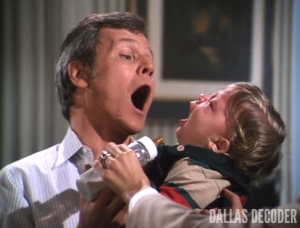
Critique: ‘Dallas’ Episode 119 — ‘A Ewing is a Ewing’

A Ewing is a Ewing, Dallas, Holly Harwood, J.R. Ewing, Larry Hagman, Lois Chiles

It’s complicated

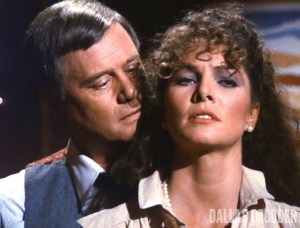
The most unsettling moment in “A Ewing is a Ewing”: Holly Harwood arrives for an after-hours meeting at J.R.’s office, where he chastises her for telling one of Harwood Oil’s top customers that J.R. has become a silent partner in the company. Holly expresses regret — not for letting the cat out of the bag, but for going into business with J.R. in the first place. She turns her back to him. J.R. approaches from behind, reaches around and slowly begins to unbutton her jacket. “No, J.R. I don’t want this,” she says. He pulls the jacket off her shoulders. “You won’t enjoy it,” she continues. His reply: “You better make damn sure I do.”

The scene ends here, but there’s no doubt intercourse occurs. (Later in “A Ewing is a Ewing,” Holly pulls a gun on J.R. and tells him what transpired in his office will never happen again.) The question is: Is this rape? I can’t decide. On the one hand, Holly tells J.R. “no,” but he has sex with her anyway. How can that be anything but assault? On the other hand, I wonder why Holly makes no attempt to run away or to fight J.R. when he begins disrobing her. This woman is no shrinking violet, as the gun scene later in the episode demonstrates.

Given the ambiguity, perhaps a better question is: What did the people who made “Dallas” want the audience to think when this scene was broadcast 30 years ago? It seems shocking to think that a network television show would allow its lead character to rape a woman (this was CBS in the 1980s, not AMC today), so I wonder if the producers and writers merely saw this as another example of J.R. running roughshod over one of his enemies? Could it be the people behind the scenes didn’t grasp that this might be construed as an act of sexual violence? To be fair, society has a greater understanding of rape today than it did three decades ago, but it’s not like nothing was known about these kinds of crimes back then. Perhaps these two facts are telling: None of the producers listed in the “Dallas” credits during the 1982-83 season are women, and of the 28 episodes produced that year, all but one were written by men. (Linda Elstad wrote “Requiem,” which aired three weeks after “A Ewing is a Ewing.”).

Regardless of what this scene is supposed to depict, I dislike it. I’m usually willing to forgive J.R. his sins, even when my conscience tries to tug me in the other direction. I’m an unapologetic J.R. apologist. J.R. is cheating in a business deal? I say: He’s just trying to make his daddy proud, and who can’t sympathize with that? J.R. is cheating on Sue Ellen? In my mind, he’s merely revealing his foibles. But even I can’t justify my hero’s behavior in this scene. Make no mistake: This is not one of J.R.’s sly seductions. I hate how he how he stands in the doorway of his office and beckons Holly into the room by saying, “Come on, hon. Come on.” He treats her like a child or worse, a pet.

The scene invites comparisons to another disturbing “Dallas” sequence — this one from the 10th episode, “Black Market Baby” — when J.R. angrily pins Sue Ellen to their bed and forces himself on her, despite her repeatedly saying, “I don’t want you.” I don’t like that scene any more than the one with Holly, but keep in mind: It was filmed in 1978, before Larry Hagman had perfected the smiling warrior routine that made him so endearing to fans like me. Other soap opera icons have similar skeletons in their closet — Luke raped Laura before they became a couple on “General Hospital,” while Blake forced himself on Krystle during an early episode of “Dynasty” — but once Luke and Blake were redeemed, their shows were loathe to remind audiences of the characters’ past sins. Why would “Dallas” want to risk the affection that fans had for J.R., unless the show was feeling long in the tooth and trying to recapture some of its earlier edge?

Of course, no matter how distressing I find J.R. and Holly’s scene, I still appreciate how good Hagman and Lois Chiles are in it. Hagman, who also directed “A Ewing is a Ewing,” wisely avoids any hint of mischief, choosing instead to play J.R. as purely menacing. Chiles, in the meantime, makes us feel Holly’s sense of trepidation when she arrives for their meeting, as well as the disgust that grips her when J.R. begins unbuttoning her jacket. Hagman and Chiles are also terrific in the scene where Holly pulls the gun on J.R. I like how he snickers when she produces the weapon, only to breathe a private sigh of relief the moment he exits the room. Frankly, it’s cathartic to see J.R. scared.

I think it’s also worth considering how J.R. treats Sue Ellen in “A Ewing is a Ewing.” At the beginning of the second act, he “confides” in Sue Ellen that he needs someone to refine his crude and suggests she could ask Clayton Farlow to do it on his behalf. Sue Ellen resists this idea, so J.R. exploits her Achilles heel: He suggests that without Clayton’s help, he might lose the contest for Ewing Oil, thus robbing John Ross of his birthright. “It’s funny, isn’t it?” J.R. says. “The one thing I need to beat Bobby, to secure our future — the future of our little boy — is in the hands of a man that despises me.”

This is the second time in recent episodes that J.R. has used Sue Ellen as a pawn in the battle for Ewing Oil: In “Fringe Benefits,” he asks her to host a dinner party for Gil Thurman, even though he knows the lecherous Thurman will make a pass at her. That scheme ends disastrously, and Sue Ellen’s appeal to Clayton in “A Ewing is a Ewing” doesn’t turn out much better. Clayton feels she’s taking advantage of their friendship by asking him to help J.R. and storms away. It makes me wonder: Was this J.R.’s goal all along, to drive a wedge between his wife and Clayton?

Like J.R., Bobby shows he’s also willing to use people to get what he wants in “A Ewing is a Ewing.” (No doubt Bobby’s emulation of his brother inspired this episode’s title.) When Bobby discovers J.R. is in cahoots with energy commissioner George Hicks, Bobby hires Wendy, one of Carl Daggett’s prostitutes, to begin dating Hicks so she can dig up dirt on him. (The seeds for this subplot were planted in “Where There’s a Will,” which introduced the terrific character actor Charles Napier as Daggett, an old friend of Bobby’s.) In “A Ewing is a Ewing’s” memorable final scene, Pam arrives for dinner with Bobby at an out-of-the-way restaurant, but she’s unaware the only reason he asked her out for the evening is so he can spy on Wendy and Hicks, who are drinking on the other side of the room. Bobby isn’t just using Wendy; he’s using his wife too.

I suppose I should be disappointed in Bobby, but I’m not. It’s rather satisfying to see him shed his good-guy veneer, at least for a little while. Or maybe it’s just that after everything else that goes down in this episode, seeing Bobby dabble in prostitution and blackmail doesn’t seem so bad.

Grade: B

_______________________________________________________________________________________________________________________________________________

A Ewing is a Ewing, Bobby Ewing, Dallas, Patrick Duffy

Yep, he’s a Ewing

‘A EWING IS A EWING’

Season 6, Episode 16

Airdate: January 28, 1983

Audience: 22.3 million homes, ranking 3rd in the weekly ratings

Writer: Frank Furino

Director: Larry Hagman

Synopsis: After J.R. pressures Holly into having sex with him, she pulls a gun on him and declares their relationship is now strictly business. Bobby discovers J.R. is in cahoots with George Hicks, a member of the Texas Energy Commission, and hires a prostitute to set up Hicks. Clayton reacts angrily when Sue Ellen asks him to refine J.R.’s crude and leaves for Galveston, where he spends time with the vacationing Miss Ellie. The cartel buys out Bobby’s share of the Wellington property. Cliff urges his party to recruit J.R. as a candidate for office. Mark continues to pursue Pam.

Cast: John Beck (Mark Graison), Barbara Bel Geddes (Miss Ellie Ewing), Ion Berger (detective), Robert Burleigh (Harry), Lois Chiles (Holly Harwood), April Clough (Wendy), Roseanna Christiansen (Teresa), John Dennis (Ned), Patrick Duffy (Bobby Ewing), Fern Fitzgerald (Marilee Stone), Linda Gray (Sue Ellen Ewing), Larry Hagman (J.R. Ewing), Susan Howard (Donna Krebbs), Steve Kanaly (Ray Krebbs), Howard Keel (Clayton Farlow), Ken Kercheval (Cliff Barnes), Audrey Landers (Afton Cooper), Paul Mantee (General Cochran), Timothy Patrick Murphy (Mickey Trotter), Charles Napier (Carl Daggett), Priscilla Pointer (Rebecca Wentworth), Victoria Principal (Pam Ewing), Debbie Rennard (Sly), Arlen Dean Snyder (George Hicks), Don Starr (Jordan Lee), Charlene Tilton (Lucy Ewing), Deborah Tranelli (Phyllis)

“A Ewing is a Ewing” is available on DVD and at Amazon.com and iTunes. Watch the episode and share your comments below.
Tonight on #DallasChat: ‘The Envelope, Please’

Ann Ewing, Bobby Ewing, Brenda Strong, Dallas, Patrick Duffy

Encore! Encore!

Dallas Decoder’s next #DallasChat on Twitter will be Monday, July 15, from 9 to 10 p.m. Eastern time. Since the Emmy nominations will be announced later this week, our theme will be: “The Envelope, Please.”

As usual, I’ll tweet a question roughly every five minutes. Each question will be numbered and include the hashtag #DallasChat, so your responses should do the same. A sample exchange:

Q1. Which “Dallas” actor most deserves an Emmy nomination? #DallasChat

A1. Patrick Duffy deserves an Emmy! He’s terrific as Bobby Ewing. #DallasChat

You’re welcome to respond to what other people are saying about the show and to start “side conversations” of your own. Three more points to keep in mind:

• During the chat, enter #DallasChat in Twitter’s search field. This will help you watch the search results so you can follow the conversation. Click “All” to see all the related tweets.

• Don’t forget to include the hashtag #DallasChat in each tweet you send so others can see your contributions to the conversation.

• Twitter limits the number of tweets each users can send an hour, so I’m unable to respond to everyone’s answers. I’ll reply to some and “favorite” the others, but please know how much I appreciate everyone’s participation.

I look forward to another fun discussion. See you tonight!

Critique: ‘Dallas’ Episode 118 — ‘The Reckoning’

Dallas, Barbara Bel Geddes, Miss Ellie Ewing, Reckoning

Ewings divide!

Few moments on “Dallas” stir as many emotions for me as Miss Ellie’s testimony at the end of “The Reckoning.” Ellie, who is trying to overturn Jock’s will because it’s dividing her family, reads aloud one of the last letters he sent her before his death in South America. The words are sad and sentimental, written at a time when Jock was ill and missing his wife. When she’s finished, Ellie’s lawyer Brooks Oliver asks if she believes the letter shows Jock lacked mental competence at the end of his life. The Ewing matriarch tries to avoid answering the question, but Brooks persists. Ellie swallows hard. “If that’s the legal term you need to break the will,” she says, “then yes, Jock was not mentally competent.”

Does Ellie genuinely believe this? Scriptwriter Will Lorin keeps things ambiguous, which helps lend this scene its power. On the one hand, we learn from Jock’s letter that he was under the weather when he wrote the codicil that established the divisive contest for Ewing Oil. On the other hand, sick or not, pitting J.R. and Bobby against each other feels very much like something Jock would do. Is Ellie deluding herself when she declares otherwise? This wouldn’t be the first time she’s put on blinders where her late husband is concerned. Or could it be that Ellie is so desperate to end her sons’ rivalry that she’s willing to publicly question Jock’s mental competence, even though she knows deep down that he wasn’t delusional? Either way, I feel sorry for Mama at this moment.

Regardless of Ellie’s motivation, Barbara Bel Geddes does a nice job conveying her character’s torment. The actress uses her trademark halting delivery during the testimony, which works well because it suggests Ellie isn’t sure if she’s doing the right thing. Bel Geddes also allows her tears to flow freely, demonstrating again that she’s one of “Dallas’s” best criers. The testimony is also poignant because the letter that Ellie reads makes Jock seem more human than we usually think of him. He writes about getting older, using an expression — “I’m really feeling the years” — that sounds like something a man from Jock’s generation would say. You have to go back to “Dallas’s” ninth episode, “Bypass,” to see the character acknowledge his own mortality with such candor.

More than anything, this scene seems to offer a tribute to the courage that Jim Davis brought to his final days in the spring of 1981. Jock’s letter conjures images of him soldiering on through the jungle, just as Davis persevered when he continued to film scenes for “Dallas” despite the terrible toll cancer was taking on his body. Back then, the producers didn’t write Davis’s illness into the script because they wanted to give the dying actor hope that he would recover and be able to continue playing his character. Now, seeing Ellie read Jock’s letter in “The Reckoning,” it’s almost as if Bel Geddes is finally giving voice to her late co-star’s grit and determination. It’s quite touching.

This episode also shows us how Bobby is becoming more like J.R. as their battle for Ewing Oil rages. After learning that Gary and Ray would lose most of their inheritance if Jock’s will is overturned, Bobby tries to use the information to manipulate Pam into persuading Ellie to drop her legal challenge. Pam thinks Bobby’s suggestion is ridiculous and lets him know it. “Oh, Bobby, you know your mother. Never in a million years would she hurt Gary or Ray,” Pam says. Bobby can only sigh in exasperation.

“The Reckoning” also shows us a different side of Sue Ellen. She’s played the role of J.R.’s supportive spouse throughout his fight with Bobby, but twice in this episode she demonstrates some independence. In the first instance, while J.R. and Sue Ellen are alone in their bedroom, he muses how it would be good for him if Pam had a fling with Mark Graison, thus creating a distraction for Bobby. Sue Ellen is mortified. “J.R., I don’t want anything bad happening to Bobby and Pam’s marriage,” she declares. (Foreshadowing alert: Sue Ellen then adds, “Can you imagine if somebody did that to you and I?”) Later, during the courthouse sequence, J.R. stands in the hallway with Bobby and Sue Ellen and points out Pam and Miss Ellie, standing a few feet away. “Well, I see your little wife over there, giving aid and comfort to the opposition,” J.R. huffs. Sue Ellen’s response: “Opposition? J.R., that’s your mother.”

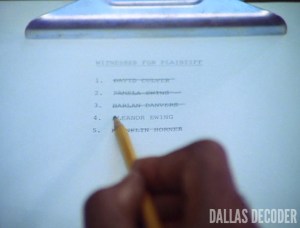
A final thought: “The Reckoning” is the first of two “Dallas” episodes helmed by Bill Duke, who would go on to become one of television’s most prolific directors. (Duke, a great character actor, also plays the sharecropper whom Jock befriends in “Dallas: The Early Years.”) “The Reckoning” is one of Duke’s first directing gigs, and his gifts are evident. Besides eliciting wonderful performances from Bel Geddes and the rest of the cast, Duke does two things during the courtroom scenes that I love. First, as each character testifies, we see the bailiff cross off that person’s name from the witness list. Duke also shows us periodic close-ups of the court reporter’s fingers as she rhythmically punches the keys of her typewriter. These are small touches, but they add so much to my enjoyment of these scenes.

I also like how Duke ends this episode with a shot of Ellie emerging from the courtroom after the judge rules against her. The other Ewings follow her lead, evoking memories of the freeze frame from “Bypass,” when everyone coalesced around the wheelchair-bound Jock as he departed the hospital. One difference: In the earlier shot, all the Ewings face forward. Now they’re all headed in different directions, a family together but no longer united.

Grade: A

_______________________________________________________________________________________________________________________________________________

Dallas, Reckoning

The ‘D’ list

‘THE RECKONING’

Season 6, Episode 15

Airdate: January 14, 1983

Audience: 22.1 million homes, ranking 4th in the weekly ratings

Writer: Will Lorin

Director: Bill Duke

Synopsis: A judge rejects Miss Ellie’s attempt to overturn Jock’s will. J.R. tells Mark that Pam is interested in him. Rebecca urges Cliff to lay off the Ewings for awhile. Donna fails again to persuade her fellow commissioners to rescind J.R.’s variance. The cartel weighs whether to uncap the Wellington property or buy out Bobby’s share.

Cast: John Beck (Mark Graison), Barbara Bel Geddes (Miss Ellie Ewing), Fred Carney (Judge Howard Mantee), Roseanna Christiansen (Teresa), Patrick Duffy (Bobby Ewing), Fern Fitzgerald (Marilee Stone), Tom Fuccello (Senator Dave Culver), Linda Gray (Sue Ellen Ewing), Laurence Haddon (Franklin Horner), Larry Hagman (J.R. Ewing), Susan Howard (Donna Krebbs), Steve Kanaly (Ray Krebbs), James Karen (Elton Lawrence), Howard Keel (Clayton Farlow), Ken Kercheval (Cliff Barnes), Audrey Landers (Afton Cooper), Julio Medina (Henry Figueroa), Donald Moffat (Brooks Oliver), George O. Petrie (Harv Smithfield), Priscilla Pointer (Rebecca Wentworth), Victoria Principal (Pam Ewing), Arlen Dean Snyder (George Hicks), Paul Sorensen (Andy Bradley), Don Starr (Jordan Lee), Charlene Tilton (Lucy Ewing), Morgan Woodward (Punk Anderson)

“The Reckoning” is available on DVD and at Amazon.com and iTunes. Watch the episode and share your comments below.
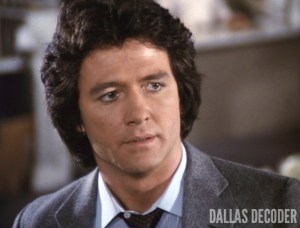
Critique: ‘Dallas’ Episode 117 — ‘The Ewing Blues’

Dallas, Ewing Blues, J.R. Ewing, Larry Hagman

Don’t box him in

“The Ewing Blues” includes one of “Dallas’s” cleverest scenes. J.R. appears on a local TV talk show to tout his new chain of cut-rate gas stations, which is turning him into a hero in the eyes of the public. Cliff is watching the interview from the living room of his new townhouse, where a deliveryman arrives with the Chinese takeout he ordered. As Cliff reaches for his wallet, the man notices what’s playing on Cliff’s TV. “That’s J.R. Ewing, ain’t it?” he asks. “I tell ya, if he ran for president tomorrow, I’d vote for him! I would!” Cliff is left shaking his head and muttering, “So much for the intelligence of the average voter.”

With this scene, “Dallas” has a little fun with its audience. For years, viewers — present company included — had been treating J.R. like a hero. Now fictional fans like Cliff’s deliveryman were doing the same thing. The line about voting for J.R. even brings to mind the “J.R. for President” buttons and bumper stickers that cropped up during the summer of 1980, when “Who Shot J.R.?” hysteria was in full swing. (I also wonder if the dialogue reflects the era’s political realities. When “The Ewing Blues” debuted in January 1983, Ronald Reagan’s approval rating had sunk to an astonishing 35 percent, the lowest level of his presidency. In those months before Reagan’s popularity rebounded, perhaps Americans really would have voted to replace him with J.R.)

J.R.’s talk show appearance also offers another reminder of Larry Hagman’s genius. J.R. tells the host, Roy Ralston, that he’s cutting gas prices because he believes the oil industry has gouged consumers for too long. We know J.R. is lying because earlier in “The Ewing Blues,” he tells little John Ross that he has become the oil industry’s version of Robin Hood (“take from the poor and give to the rich”). Yet as J.R. talks to Ralston about how “the American public deserves a better hand than they’ve been dealt,” the sincerity in Hagman’s voice kind of makes us want to believe his character. How did Hagman do that?

More than anything, I love Hagman’s scenes with Linda Gray in “The Ewing Blues,” especially J.R. and Sue Ellen’s exchange in their bedroom. After Ray punches him during a Southfork cocktail hour, J.R. sits on the bed, holding an icepack to his swollen lip as Sue Ellen caresses his face. He tells her that he’s nervous about his talk show appearance in a few days and hints he’d like her to join him — and of course the onetime Miss Texas leaps at the opportunity to take another turn in the spotlight. This might be one of the sweetest gestures J.R. ever makes toward his wife. Think about it: J.R. never loses his confidence. He’s only pretending to be anxious so he’ll have an excuse to invite Sue Ellen on the show and involve her in his life. As he puts it, “We’re partners, aren’t we?”

David Paulsen, who wrote and directed “The Ewing Blues,” doesn’t just show us a softer side of J.R.; he also lets us see Bobby’s edge. To compete with J.R.’s cut-rate gas plan, Bobby wants to uncap the Wellington field, one of the Ewing Oil properties Bobby controls during the contest for the company. The problem: The cartel members are partners in the field, and they want it to remain capped. With help from lawyer Craig Gurney, Bobby tells Jordan and Marilee that he’s prepared to exercise a clause in their contract that requires them to either uncap the field or buy out Bobby at five times market value. “That’s armed robbery!” Jordan huffs. Gurney’s response: “No, that’s Paragraph 17A, Section F.” It’s one of my favorite exchanges during the episode.

The other great scene in “The Ewing Blues” comes at the end, when Ellie and Pam visit Brooks Oliver, the lawyer who agrees to help Ellie try to overturn Jock’s will. Ellie is quite timid at the beginning of the scene, clutching the letters that Jock wrote to her from South America. Oliver predicts their lawsuit will turn ugly and wind up in “the newspapers,” which prompts Pam to rebuke him for upsetting her. “She has to know exactly what she is getting into if she wants to go to court,” Oliver explains. This is when Ellie’s fighting spirit bursts forth. “Mr. Oliver, I don’t want to go to court. I don’t want to do any of this,” she says, slapping her hand on the desk. Besides Barbara Bel Geddes’ dramatic delivery, pay attention to the gentle strings that play in the background of this scene. The score, which helped composer Bruce Broughton win an Emmy in 1983, reminds me a little of the music Rob Cairns delivers on TNT’s “Dallas.”

Finally, some casting notes: Oliver is played by the wonderful character actor Donald Moffat, possessor of the fiercest eyebrows this side of Larry Hagman. Moffat is one of several familiar faces who pop up in “The Ewing Blues.” Gurney is played by Lane Davies, who would later star on the soap opera “Santa Barbara,” while another daytime television veteran, John Reilly (“As the World Turns,” “General Hospital”), plays Ralston, the talk show host. The most significant addition to the cast, though, is John Beck, who joins “Dallas” in this episode and begins a three-season run as Mark Graison. I had forgotten that Mark was introduced as an old Ewing family friend. In one scene, when he calls Southfork and Bobby answers the phone, the two characters chat like old chums. It’s surprising to witness, but I know the glad tidings won’t last long.

Grade: A

_______________________________________________________________________________________________________________________________________________

Barbara Bel Geddes, Dallas, Ewing Blues, Miss Ellie Ewing

Mama means business

‘THE EWING BLUES’

Season 6, Episode 14

Airdate: January 7, 1983

Audience: 21.4 million homes, ranking 4th in the weekly ratings

Writer and Director: David Paulsen

Synopsis: J.R. appears on a TV talk show and is lauded for his efforts to cut gas prices. After J.R. threatens to ruin Harwood Oil if Holly doesn’t cancel her refinery contracts, she turns to Bobby for help. To get the cartel to uncap the Wellington property, Bobby threatens to exercise a legal loophole in Ewing Oil’s contract with the cartel members. Mark Graison gives Brooks, his family’s attorney, permission to take Miss Ellie’s case, and Mark grows smitten with Pam when he meets her. Cliff moves into his new townhouse, while Afton grows frustrated with the way he treats her.

Cast: Tyler Banks (John Ross Ewing), John Beck (Mark Graison), Barbara Bel Geddes (Miss Ellie Ewing), Al Checco (deliveryman), Lois Chiles (Holly Harwood), Roseanna Christiansen (Teresa), Lane Davies (Craig Gurney), Patrick Duffy (Bobby Ewing), Bobbie Ferguson (Terri), Fern Fitzgerald (Marilee Stone), Linda Gray (Sue Ellen Ewing), Larry Hagman (J.R. Ewing), Susan Howard (Donna Krebbs), Steve Kanaly (Ray Krebbs), Ken Kercheval (Cliff Barnes), Audrey Landers (Afton Cooper), Donald Moffat (Brooks Oliver), Timothy Patrick Murphy (Mickey Trotter), Scott Palmer (Farley Criswell), Robert Pinkerton (Elliot), Priscilla Pointer (Rebecca Wentworth), Victoria Principal (Pam Ewing), John Reilly (Roy Ralston), Debbie Rennard (Sly), Danone Simpson (Kendall), Paul Sorensen (Andy Bradley), Don Starr (Jordan Lee), Charlene Tilton (Lucy Ewing), Deborah Tranelli (Phyllis)

“The Ewing Blues” is available on DVD and at Amazon.com and iTunes. Watch the episode and share your comments below.
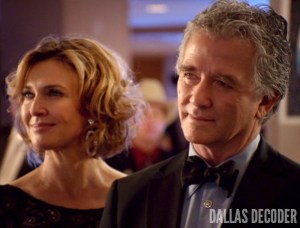
Tonight on #DallasChat: ‘The Many Wives of Bobby Ewing’

Ann Ewing, April Ewing, Bobby Ewing, Brenda Strong, Dallas, Pam Ewing, Patrick Duffy, Sheree J. Wilson, TNT, Victoria Principal

Some guys have all the luck

I’ll host Dallas Decoder’s next #DallasChat on Twitter on Monday, July 8, from 9 to 10 p.m. Eastern time. Our theme: “The Many Wives of Bobby Ewing.”

I’ll tweet a question every few minutes. Each question will be numbered and include the hashtag #DallasChat, so your responses should do the same. A sample exchange:

Q1. Which of Bobby’s wives was your favorite? #DallasChat

A1. Pam was great and Ann is cool, but my personal favorite is April. #DallasChat

You’re welcome to respond to what other people are saying about the show and to start “side conversations” of your own. Three more points to keep in mind:

• During the chat, enter #DallasChat in Twitter’s search field. This will help you watch the search results so you can follow the conversation. Click “All” to see all the related tweets.

• Don’t forget to include the hashtag #DallasChat in each tweet you send so others can see your contributions to the conversation.

• Twitter limits the number of tweets each users can send an hour, so I’m unable to respond to everyone’s answers. I’ll reply to some and “favorite” the others, but please know how much I appreciate everyone’s participation.

Let’s have another great discussion. See you tonight at 9!

Critique: ‘Dallas’ Episode 116 — ‘Mama Dearest’

Barbara Bel Geddes, Dallas, Mama Dearest, Miss Ellie Ewing

Mother knows best?

In “Mama Dearest,” Miss Ellie embarks on a quest to break Jock’s will and stop J.R. and Bobby’s contest for Ewing Oil. This causes the alliances within the family to shift, sometimes dramatically. J.R. and Bobby both oppose Ellie’s efforts, but when J.R. suggests the brothers join forces to defeat their mother, Bobby refuses. J.R. isn’t on his own, though: He gets support from Sue Ellen and Lucy, who believes the competition for the company should play out the way Jock intended. In the meantime, Pam rushes to support Ellie, which strains her marriage to Bobby.

Some of these reactions are surprising, but all of them make sense. I believe J.R. would be the first to recognize that it would be in his best interest to call a temporary truce with Bobby, just as I believe Bobby would be reluctant to join J.R. because he doesn’t trust him. Likewise, Pam’s allegiance to Ellie feels reasonable, although I suspect Pam’s response has more to do with her own opposition to the contest than it does with her concern for mother-in-law’s emotional wellbeing. More often than not, Pam is a pragmatist.

Lucy’s support for J.R. is unexpected, of course, but notice how she never lets him know she’s in his corner. Even if Lucy agrees with J.R., she isn’t going to give him the satisfaction of knowing it. Instead, Lucy confides her feelings in Ellie. This conversation occurs late at night, when Lucy sits with her grandmother at the Southfork kitchen table and gently questions her decision to break the will. Charlene Tilton, in a lovely performance, manages to convey Lucy’s almost-childlike belief in her grandfather’s infallibility, as well as her confidence that he knew what he was doing when he decided to pit J.R. and Bobby against each other. “I’m sure it’s all turning out just the way Granddaddy expected,” Lucy says. It’s nice to see this character growing up and becoming wiser.

Barbara Bel Geddes, the actress at the heart of “Mama Dearest,” is terrific in this exchange too. She avoids eye contact with Tilton, which helps convey Ellie’s uncertainty about whether her legal challenge is appropriate. Even at the end of the conversation, when Lucy reaches across the table and touches Ellie’s arm, Bel Geddes looks away. Contrast this with her performance in the scene where J.R. joins Ellie for breakfast on the Southfork patio. He tries to turn on the charm, but Mama doesn’t fall for it. “You get a good night’s sleep?” J.R. asks. Ellie looks at him and coolly says, “J.R., I don’t think you really care how I slept last night.” It’s a telling moment: Even if Ellie isn’t sure she’s doing the right thing, she’s smart enough to know she shouldn’t let J.R. know she has doubts. Mama probably would have made a good poker player.

Another great scene in “Mama Dearest” belongs to Patrick Duffy, who also directed this episode. After a frustrated Bobby takes off for a nighttime drive to collect his thoughts, he returns home and finds Pam waiting up for him. Bobby tells her that he’s upset over her decision to support Ellie, and then he explains why he wants the contest to continue. Duffy’s delivery is impassioned; he makes a fist and practically shakes it at the camera as he speaks. The words are as important as the delivery. Here’s his speech:

“Pam, you don’t understand what drove Jock Ewing. And I don’t think you really understand what drives me, either. When I was at the university, making the football team just wasn’t enough. I had to be varsity. I had to be captain. I had to make All-Southwest Conference — and I did! I did all of that. When you and I met, I wasn’t just a roadman for Ewing Oil. I was the best roadman for any oil company. Because that’s what Daddy expected. And that’s what I expect from myself. And J.R. and I are a lot alike because he’s not going to take second best either. You see, that’s why Daddy turned away from Gary. The Ewings must succeed, and Gary didn’t care about that, but Pam, J.R. and I do! Now, Daddy chose that the future of Ewing Oil is going to be in the hands of the son strong enough to run it. And that’s the way it’s gonna be.”

This monologue, besides being one of the highlights of Arthur Bernard Lewis’s script, helps demonstrate why the contest for Ewing Oil is such a satisfying storyline. Bobby is usually the yin to J.R.’s yang, but notice how he doesn’t mention J.R. until almost the end of the speech. This time, Bobby isn’t simply reacting to J.R.’s schemes. For the youngest Ewing son, the contest is as much about proving himself worthy of his father’s expectations as it is stopping J.R. from committing some heinous act. The scene reminds us that Bobby is a pretty interesting character in his own right.

Of course, J.R. remains the most fascinating figure of all in “Mama Dearest.” Throughout this episode, Larry Hagman gives us the feeling his character is genuinely frightened by the prospect that Ellie might stop the contest and sell Ewing Oil out from under him. Notice how J.R. loses his cool with Ellie at the beginning of the episode, after she’s announced her decision to challenge the will, and later when he realizes she’s getting advice from Clayton. (Is it a coincidence that the last time we saw J.R. this rattled occurred after he ran into Clayton and Rebecca at the French restaurant?) I also think it’s telling the lengths he’ll go to shore up support from the other Ewings. When J.R. is trying to persuade Bobby to join him in fighting their mother, he tells him, “We may battle a lot, but I just want you to remember: You’re my brother, and I love you.” The “l word” isn’t one J.R. uses a lot. Later, J.R. stands behind Sue Ellen as she gazes into a mirror and promises she’ll one day be mistress of Southfork and share his power. He really knows how to tell other people what they want to hear, doesn’t he?

J.R. also figures into “Mama Dearest’s” funniest scene, when he arrives at Holly’s home and discovers she runs Harwood Oil from her bedroom. (“You know as many oil deals are made in bedrooms as in boardrooms,” she purrs. The line would be a groaner if Lois Chiles didn’t look like she was having so much fun delivering it.) This is one of those “Dallas” moments that I recall watching as a kid, although my memory turned things around: I mistakenly remembered Holly keeping a bed in her office, not a desk in her bedroom. Either way, I can’t help but wonder why J.R. never followed suit. Imagine how much easier life would have been for ol’ J.R. if the Ewing Oil executive suite had come equipped with a mattress.

Grade: A

_______________________________________________________________________________________________________________________________________________

Bobby Ewing, Dallas, Mama Dearest, Patrick Duffy

Rising son?

‘MAMA DEAREST’

Season 6, Episode 13

Airdate: December 31, 1982

Audience: 15.2 million homes, ranking 24th in the weekly ratings

Writer: Arthur Bernard Lewis

Director: Patrick Duffy

Synopsis: Miss Ellie asks lawyer Brooks Oliver to help her break Jock’s will. Pam sides with Ellie, straining her marriage to Bobby. J.R. orders Holly to cancel her military contracts so she can refine his crude. Donna urges her fellow energy commissioners to not restore J.R.’s variance to pump excess oil. Bobby pressures the cartel to uncap the Wellington property so he can compete with J.R. Cliff buys a townhouse.

Cast: Barbara Bel Geddes (Miss Ellie Ewing), Paul Carr (Ted Prince), Lois Chiles (Holly Harwood), Karlene Crockett (Muriel Gillis), Patrick Duffy (Bobby Ewing), Bobbie Ferguson (Terri), Linda Gray (Sue Ellen Ewing), Larry Hagman (J.R. Ewing), Susan Howard (Donna Krebbs), Steve Kanaly (Ray Krebbs), Howard Keel (Clayton Farlow), Ken Kercheval (Cliff Barnes), Audrey Landers (Afton Cooper), James Karen (Elton Lawrence), Julio Medina (Henry Figueroa), Donald Moffat (Brooks Oliver), Timothy Patrick Murphy (Mickey Trotter), George O. Petrie (Harv Smithfield), Robert Pinkerton (Elliot), Priscilla Pointer (Rebecca Wentworth), Victoria Principal (Pam Ewing), Debbie Rennard (Sly), Danone Simpson (Kendall), Arlen Dean Snyder (George Hicks), Paul Sorensen (Andy Bradley), Joan Staley (Ms. Stockwood), Don Starr (Jordan Lee), Charlene Tilton (Lucy Ewing), Deborah Tranelli (Phyllis), Morgan Woodward (Punk Anderson)

“Mama Dearest” is available on DVD and at Amazon.com and iTunes. Watch the episode and share your comments below.
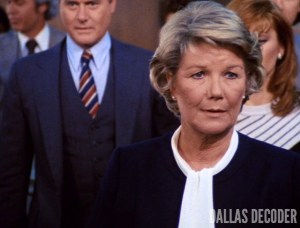
Critique: ‘Dallas’ Episode 115 — ‘Barbecue Three’

Barbecue Three, Dallas, J.R. Ewing, Larry Hagman

Mr. Right

In “Barbecue Three,” J.R. finally reveals his plan to win the contest for Ewing Oil: He begins flooding the market with cut-rate gasoline, hoping to drive up his half of the company’s profits. This ignites a firestorm within the cartel, prompting Cliff and a band of angry oilmen to come to the annual Southfork barbecue and demand J.R. stop lowering prices. The Ewings don’t like what J.R.’s doing either, but to everyone’s surprise, they close ranks around him when the confrontation with the cartel threatens to turn violent. “If you want to get to J.R., you’re going to have to come through us,” Bobby tells the group.

Like Ellie’s defense of J.R. in the fifth-season classic “Waterloo at Southfork,” this is another example of the Ewings circling the wagons against outsiders, one of “Dallas’s” hallmarks. There’s another reason this scene is satisfying: For once, J.R. isn’t wrong. Sure, he pulled some dirty tricks to get his hands on the crude he needed to produce all that cheap gas, but the cartel has no right to complain about it. J.R. is selling his product at a lower price than his competitors. Who are they to tell him to stop? (On another note: Why doesn’t Marilee Stone join her fellow cartel members in confronting J.R.? Surely it isn’t because she’s a woman. If you ask me, Marilee is much more intimidating than mild-mannered Jordan Lee, who stands alongside Cliff in this scene.)

To be fair, the other characters’ objections to J.R.’s scheme feel a little more justified than the cartel’s. Before the barbecue, Bobby complains J.R. will show “huge short-term profits and deplete our reserves,” which seems like a reasonable concern. Meanwhile, Donna, now a member of the Texas Energy Commission, becomes irritated when her fellow regulators backtrack on their opposition to J.R. As Donna explains to Punk Anderson, “Some of the members of the commission have political ambitions. They’re not about to vote against lower gasoline prices, even if it means conserving our oil reserves.” Fair enough, although the comment feels a little hypocritical coming from the widow of a governor and the stepmother of a senator.

Indeed, Arthur Bernard Lewis’s script covers so many different reactions to J.R.’s cheap gas gambit — his family, his competitors in the cartel and the politicians all weigh it —“Barbecue Three” feel like a lesson in capitalism. Lewis even manages to reflect the consumers’ point of view, albeit subtly. J.R. announces his cut-rate gas plan at the opening of the first J.R. Ewing-branded gas station, where we see a couple of attendants lowering the per-gallon price from $1.21 to 89 cents. Later, the TV news coverage shows long lines of motorists waiting to fill up. There’s also a scene where Sly, J.R.’s secretary, tells her boss she thinks what he’s doing is “terrific” and hopes he can “keep it up.” (Seeing Deborah Rennard deliver this line, I couldn’t help but imagine Sly’s everyday working-class drudgeries: fighting traffic during morning rush hour, standing in line at the bank to deposit her paycheck, shopping for bargains at The Store.)

“Barbecue Three” also delivers two Lucy/Mickey scenes that showcase the nice chemistry between Charlene Tilton and Timothy Patrick Murphy. In the first, Mickey asks Lucy on a date, only to be introduced to her cold shoulder. Later, at the barbecue, he tries again to charm her and begins to realize her snobbish demeanor masks deeper problems. Patrick Duffy also has several good moments in this episode, including a monologue in which Bobby promises Pam he won’t lose the fight for Ewing Oil: “Daddy taught me a lot of tricks in my early days with the company. Things that I hated doing. But I learned. And I learned real good. And I can get right down in the mud if I have to.” It’s a nice reminder that Bobby’s recent discovery of his inner junkyard dog on TNT’s “Dallas” has precedence.

I also appreciate the details in “Barbecue Three.” The scene leading up to the first Texas Energy Commission meeting is expertly executed. Director Leonard Katzman shows us Ray and Donna (looking chic in her red hat) arriving at the municipal building and being greeted by a throng of news reporters, which helps lend the moment a sense of drama and suspense. You get the feeling something big is about to happen, a notion that’s reinforced by the sight of so many familiar oil industry leaders in the audience. And even though the “Dallas” producers actually make us sit through the commission members reciting the pledge of allegiance, it really doesn’t slow down the momentum. Later, when J.R. is planning his press conference, I like his brief exchange with his public relations chief. Sometimes you get the feeling Ewing Oil has no other employees besides the people who work in J.R. and Bobby’s executive suite, so it’s nice to see the show acknowledge that the Ewing brothers don’t do everything themselves.

There are a couple of nice touches during the barbecue sequences too. Debra Lynn Rogers, who played Toni, the woman Ray flirted with during the previous season’s “Barbecue Two,” plays the role again in this episode, except now she’s dancing with Mickey. Meanwhile, Peyton E. Park, who played Larry, the Ewings’ caterer in “Barbecue Two,” reprises the role here. In “Barbecue Three,” we also meet a woman who appears to be Jordan’s wife. He introduces her as Evelyn, although in the third-season episode “Paternity Suit,” Jordan seemed to refer to his spouse as “Sara.” Is this a continuity error, or are they two different women? If it’s the latter, I have to wonder: Between Sara, Kristin and now Evelyn, is Jordan trying to give J.R. a run for his money as “Dallas’s” biggest lothario?

Grade: A

_______________________________________________________________________________________________________________________________________________

Barbecue Three, Dallas, J.R. Ewing, Larry Hagman

Gasman cometh

‘BARBECUE THREE’

Season 6, Episode 12

Airdate: December 17, 1982

Audience: 21.8 million homes, ranking 1st in the weekly ratings

Writer: Arthur Bernard Lewis

Director: Leonard Katzman

Synopsis: The Texas Energy Commission revokes J.R.’s variance but faces public backlash when he opens a chain of popular cut-rate gas stations. Holly asks Bobby to help her get J.R. out of her company. Mickey realizes Lucy is troubled. After angry oilmen confront J.R. at the Ewing Barbecue, Miss Ellie vows to go to court to break Jock’s will and sell Ewing Oil.

Cast: E.J. André (Eugene Bullock), Barbara Bel Geddes (Miss Ellie Ewing), Lois Chiles (Holly Harwood), Patrick Duffy (Bobby Ewing), Ken Farmer (oilman), Fern Fitzgerald (Marilee Stone), Linda Gray (Sue Ellen Ewing), Larry Hagman (J.R. Ewing), Alice Hirson (Mavis Anderson), Susan Howard (Donna Krebbs), Steve Kanaly (Ray Krebbs), James Karen (Elton Lawrence), Howard Keel (Clayton Farlow), Ken Kercheval (Cliff Barnes), Audrey Landers (Afton Cooper), Julio Medina (Henry Figueroa), Peyton E. Park (Larry), Timothy Patrick Murphy (Mickey Trotter), Priscilla Pointer (Rebecca Wentworth), Victoria Principal (Pam Ewing), Debbie Rennard (Sly), Debra Lynn Rogers (Toni), Kirk Scott (Buchanan), Danone Simpson (Kendall), Arlen Dean Snyder (George Hicks), Don Starr (Jordan Lee), Robert Swick (Ewing Oil employee), Charlene Tilton (Lucy Ewing), Deborah Tranelli (Phyllis), Morgan Woodward (Punk Anderson)

“Barbecue Three” is available on DVD and at Amazon.com and iTunes. Watch the episode and share your comments below.