Critique: TNT’s ‘Dallas’ Episode 10 – ‘Revelations’

Ann Ewing, Bobby Ewing, Brenda Strong, Dallas, Patrick Duffy, Revelations, TNT

Resolved

No one gets shot, run over or blown up at the end of “Revelations” – and for this, we should be thankful. As much fun as the original “Dallas’s” season finales were, they feel a little gimmicky in retrospect. Smart storytelling, not splashy cliffhangers, keep today’s television audiences hooked.

Cynthia Cidre, the creative force behind TNT’s “Dallas,” seems to recognize this, so instead of trying to recreate old-school theatrics, she delivers a finale that focuses on concluding most of the show’s first-season storylines. This is a wise approach, but it might also be a function of circumstance: Since “Revelations” was filmed before “Dallas’s” second season was assured, the episode was no doubt crafted so it could serve as a satisfying series finale, if need be.

Whatever the reason, Cidre and “Revelations” co-writer Robert Rovner tie up a lot of loose ends, although one or two things also unravel. Mostly, though, this is an hour of victory laps: J.R. and John Ross confess their sins and are granted immunity by the feds. Sue Ellen tells her cheering supporters she’s staying in the gubernatorial race. Bobby recovers his health and his ranch. Christopher gets the girl.

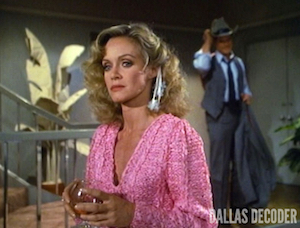
Of course, the moment that leaves me cheering loudest belongs to Ann, who wears a wire and tricks Harris into admitting his illegal schemes against Sue Ellen. When Ann reveals her sting and Harris tries to snatch the recording device hidden beneath her blouse, she pops him in the mouth and declares, “You make a move against me, Sue Ellen or any member of my family – you’re going to jail.”

What a great scene. Brenda Strong’s delivery is determined, but it also carries a hint of vulnerability. This is probably how most of us would sound if we found ourselves conducting a sting against a creepy ex, heaven forbid. We still don’t know Ann’s secret – one of the few loose ends “Revelations” leaves hanging – but no matter. We know who Ann is, and thanks to Strong, we love her.

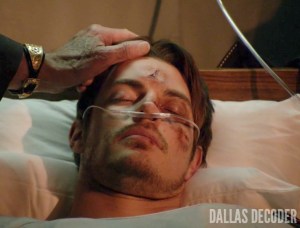
The other great scene in “Revelations” comes before the opening credits, when J.R. stands at Bobby’s hospital bedside and pleads with him to wake up after his surgery. J.R.’s speech echoes Bobby’s own soliloquy in “Changing of the Guard” but more importantly, it offers a glimpse into J.R.’s soul. “I love you, Bobby, and I don’t know who I’d be without you,” he says, gripping his brother’s hand. J.R. is finally acknowledging what the audience has known for a long time: He is incapable of checking his own impulses; he needs Bobby to do it for him.

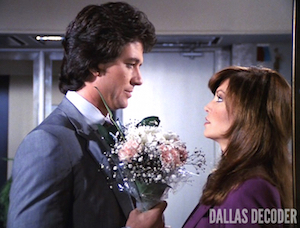
A similar dynamic exists between John Ross and Elena, as we’re reminded in the charming scene where he proposes to her in the old Ewing Oil office space. “My life and everything I want it to be is better with you,” John Ross says while on bended knee. It’s a revealing line, but when Elena accepts John Ross’s proposal, the sweet smile that spreads across Josh Henderson’s face does more to humanize his character than any of the dialogue. (By the way: Kudos to Rob Cairns for scoring the beginning of this scene with a few notes from Jerrold Immel’s “Dallas” theme music.)

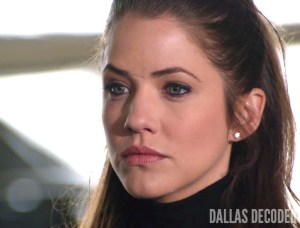
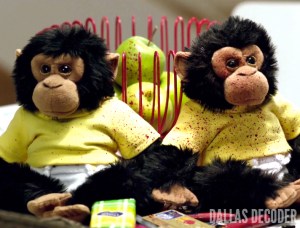
Visually, “Revelations” is another artistic achievement for the TNT series. Director Steve Robin’s opening shot of Tommy’s slow motion fall to the floor is creepily exquisite, particularly when the blood spurts out of the hole in his chest at the moment of impact. (This raises a question, though: If Tommy doesn’t start bleeding until he hits the floor, how do Rebecca and those stuffed monkeys wind up splattered?) I also love when the camera follows John Ross as he throws open the plastic tarp and sweeps into the old Ewing Oil office space with Elena in tow.

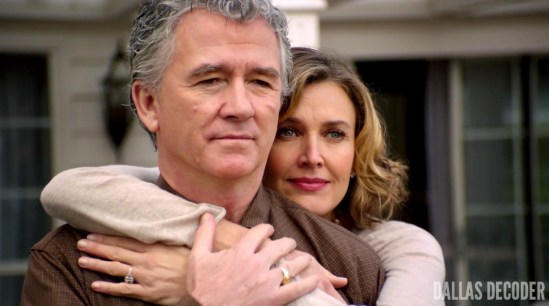
The two episode-ending montages are also fabulous. In the first, we hear Sue Ellen deliver her speech over scenes featuring other characters: When she talks about making mistakes, we see Carmen return Elena’s ring to John Ross; when the speech turns to overcoming adversity, we watch Ann embrace a wistful-looking Bobby on the Southfork patio.

The second montage – this one set to Johnny Cash’s “God’s Gonna Cut You Down” – intersperses scenes of Christopher and Elena making love with images of John Ross staring out the window of his new office. In the last shot, the camera pulls back on John Ross, now with J.R. at his side, until we get a panoramic nighttime view of the dazzling Dallas skyline.

This brings me to a gripe: In this final scene, I’m disheartened to see John Ross declare he wants J.R. to teach him “every dirty trick” he knows. I understand John Ross is angry after Elena spurns him, but as we saw in the previous episode, “Family Business,” he is more interesting when he’s rising above J.R.’s wicked ways, not embracing them. John Ross has grown so much this season; I hate to see him go backward.

I’m also troubled by the big revelation in “Revelations” – not that Rebecca is Cliff’s daughter (what “Dallas” fan didn’t see that coming?), but that he’s the mastermind behind her scheme. I can accept that Cliff, despite his wealth and success, is still hell-bent on getting revenge against the Ewings, but I have trouble believing he would use his own daughter in a plot to hurt Christopher, the son of his beloved sister Pam. (Not to mention the fact Cliff knowingly allowed Rebecca to marry her own cousin, which is pretty icky, even if they’re not blood relatives.)

Hopefully, Cliff’s motivations will become clearer when “Dallas’s” second season begins in January, along with the precise identity of Julie Gonzalo’s character: Is the actress playing Pamela Rebecca, the daughter we discovered Cliff had toward the end of the original “Dallas’s” run, or is this another daughter we never knew about?

Whoever she is, I love hearing Frank (the menacing Faran Tahir) call Gonzalo’s character “Miss Barnes.” At its best, “Dallas” has always been the story of two families whose fates are forever linked – the Ewings and the Barneses – and I’m thrilled the new show is returning to those roots.

No matter how the rest of this storyline plays out, here’s hoping the new “Dallas” will maintain the quality of its past few episodes. The show hit its stride as it barreled toward the end of the first season. Can it keep the momentum going in Season 2? That’s the real cliffhanger here.

Grade: B

_______________________________________________________________________________________________________________________________________________
Dallas, Julie Gonzalo, Pamela Rebecca Barnes, Rebecca Sutter Ewing, Revelations, TNT

Revealed

‘REVELATIONS’

Season 1, Episode 10

Telecast: August 8, 2012

Writers: Cynthia Cidre and Robert Rovner

Director: Steve Robin

Audience: 5.9 million viewers (including 4.3 million viewers on August 8, ranking 7th in the weekly cable ratings)

Synopsis: After the gunshot kills Tommy, Rebecca’s mysterious associates dispose of his body. Bobby recovers from his seizure. J.R. and John Ross confess to their fraud scheme and are granted immunity from the feds, who nab Cano. Elena accepts John Ross’s marriage proposal but returns the ring after she discovers his role in the fraud. Christopher discovers Rebecca isn’t Tommy’s sister and tells her their marriage is over, then reunites with Elena. John Ross tells J.R. to teach him to play dirty so he can take Ewing Energies away from Christopher and Elena. Rebecca apologizes for botching her scheme and pledges loyalty to the mastermind behind her plot: her father, Cliff.

Cast: Carlos Bernard (Vicente Cano), Jordana Brewster (Elena Ramos), Patrick Duffy (Bobby Ewing), Marlene Forte (Carmen Ramos), Julie Gonzalo (Rebecca Ewing), Linda Gray (Sue Ellen Ewing), Larry Hagman (J.R. Ewing), Josh Henderson (John Ross Ewing), Ken Kercheval (Cliff Barnes), Alex McKenna (Rebecca Sutter), John McIntosh (Dr. Bennett), Jesse Metcalfe (Christopher Ewing), Glenn Morshower (Lou), Kevin Page (Bum), Mitch Pileggi (Harris Ryland), Brenda Strong (Ann Ewing), Faran Tahir (Frank), Gail Washington (nurse)

“Revelations” is available at DallasTNT.com, Amazon.com  and iTunes. Watch the episode and share your comments below.

Critique: TNT’s ‘Dallas’ Episode 9 – ‘Family Business’

Dallas, Family Business, J.R. Ewing, Larry Hagman, TNT

The man who came around

“Family Business” offers nothing less than the redemption of J.R. Ewing. In this deeply poignant episode, our aging antihero is called upon to face hard truths and make tough choices, and for once in his life, he does the right thing. By the time the closing credits roll, J.R. has a grown as a person. “Dallas” has grown too.

Rather brilliantly, “Family Business” ends with Johnny Cash’s “The Man Comes Around” playing under a series of chilling scenes that leave the fates of several characters hanging in the balance. J.R. is not among them, but no matter. There’s no doubt the song is meant to evoke the journey he takes in this episode, when one by one, the three people J.R. loves most – John Ross, Sue Ellen and Bobby – persuade him to end the war for Southfork.

These are moving, meaningful scenes. In the first, John Ross pleads with J.R. to give the ranch back to Bobby, prompting J.R. to ask his son, “What’s gotten into you, anyhow?” John Ross’s cutting response: “A little decency.” Later, Sue Ellen storms into the room, slaps J.R. and reminds him how his past schemes left him with “nothing.” When J.R. remains defiant (“Well, I’m back honey, and I’m gonna be bigger than ever.”), Sue Ellen’s exasperation dissolves into pity. “And you still have nothing,” she says.

Only after J.R. speaks with Bobby does he finally, fully see the light. In the scene, Bobby sits in his sickbed and gently admonishes his oldest brother, then tells him, “J.R., I love you. No matter what. You remember that.” J.R.’s face falls – and with it, so do the last vestiges of his bravado. “Well,” he says softly, “My memory’s not what it used to be either. You’re just going to have to keep telling me.”

In each of these scenes, director Michael M. Robin’s clever staging tells us as much as scriptwriter Bruce Rasmussen’s heartfelt dialogue. J.R.’s confrontation with Sue Ellen ends with him standing in front of a mirror that reflects the back of his head, a reminder that there is another side of J.R., even when he can’t see it himself. In the exchange with John Ross, J.R. sits on his bed while the younger man stands over him, symbolizing how the son has achieved moral superiority over the father. In the third scene, the positions are reversed: Bobby is in bed, while J.R. stands. This is when we know J.R., who has always been the big brother, is about to become a bigger man.

Indeed, the next time we see J.R., he is sitting alone in his bedroom, staring at the Southfork deed, a glass of bourbon to his right, his old oil-derrick model to the left. With heavy eyes, he glances at the framed picture of Miss Ellie, sips his drink, puts pen to paper and finally returns ownership of the ranch to Bobby.

The man has come around.

‘He’s J.R. Ewing’

Dallas, Family Business, John Ross Ewing, Josh Henderson, TNT

Scarred inside, too

If there is justice in television, “Family Business” will be the episode that earns Larry Hagman an Emmy next year. The actor is full of wicked charm here, but more than anything, his performance has heart. J.R. has never felt so human.

And while we’re on the subject: Is it too much to ask for Patrick Duffy to receive some Emmy recognition too? I love the sad-eyed, world-weary demeanor he brings to his scenes with Hagman, but Duffy also deserves praise for making Bobby’s seizures look and feel frighteningly real.

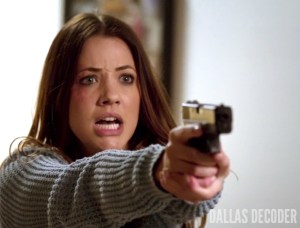
Among the younger actors, I’m most impressed by Julie Gonzalo, who knocks me out with Rebecca’s hopeless desperation in “Family Business’s” final scene, when Rebecca turns the gun on Tommy (“Please, please you have to go!”), as well as Josh Henderson, who shows us what John Ross is made of during his character’s confrontation with J.R.

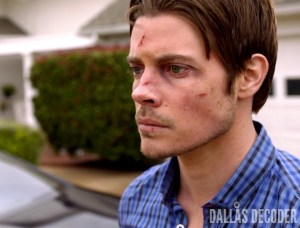
Henderson also shines when John Ross stands in the Southfork driveway and pours out his heart to Elena. “I spent my entire life missing him, wanting to be with him, wanting to be him,” John Ross says of his father. After a beat, he adds: “He’s J.R. Ewing” – letting us know the son’s mistake wasn’t that he failed to live up to his father’s legend, but that he tried in the first place. The “Dallas” makeup artists might be responsible for the cuts and bruises on John Ross’s face, but Henderson gets the credit for showing us the scars his character carries around on the inside.

Other great “Family Business” moments: Christopher reminds John Ross that Bobby was like a surrogate father to him growing up and later proposes going into business with John Ross and Elena – signaling the beginning of an intriguing story arc for the series. Meanwhile, after Harris tries to blackmail Sue Ellen – and mocks her sobriety by pouring her a glass of wine – she confides in Ann her plan to drop out of the gubernatorial race. “I would have made a good governor, don’t you think?” Sue Ellen asks through wet eyes. Has Linda Gray ever been more heartbreaking?

Speaking of Ann: Brenda Strong is wonderful in the scenes that depict her character as devoted wife and friend, but I get the biggest kick out of seeing Ann spar with her wily brother-in-law. I loved J.R. and Ann’s storage barn encounter in “The Price You Pay” and their heated exchange in “Truth and Consequences,” but the “Family Business” scene where she chases him out of Bobby’s room (“Don’t you darlin’ me!”) is the best of the lot. Strong is one of the few actors on the TNT show who can hold her own against the mighty Hagman in every way.

‘Hear the Trumpets, Hear the Pipers’

Dallas, Family Business, Julie Gonzalo, Rebecca Sutter Ewing, TNT

Have gun, will unravel

“Family Business” is a technical achievement as much as anything. Since TNT’s series began, I’ve sometimes struggled to get used to the background music, which is so different from what we heard on the old show. But the new style really works here. Rob Cairns scores several scenes in this episode with sentimental strings, which fit well with the intimate atmospherics.

Of course, “Family Business’s” standout sequence is that Johnny Cash montage. Notice how perfectly his haunting lyrics match what we see on screen. Rebecca pulls the gun out of the safe deposit box as Cash sings, “The hair on your arms will stand up.” Tommy’s face fills the frame when we hear, “Whoever is filthy, let him be filthy still.” Bobby’s monitor flatlines as Cash’s voice booms, “Hear the trumpets, hear the pipers.” And then the punctuation: the ping of the shell casing hitting the counter as blood splatters the stuffed animals Rebecca brought home at the top of the hour.

After I saw this sequence for the first time, I went back and watched it again and again, reveling in how good it is. It reminded me of how I kept “A House Divided,” the episode where J.R. gets shot, on a seemingly endless loop when I was a kid.

But the comparison goes beyond the fact both episodes end with gunshots. The original “Dallas” was never the same after “A House Divided,” and “Family Business” feels destined to become a landmark episode too. I have a hunch we’ll one day look back and remember this as the moment the TNT series became the show we always knew it could be.

Grade: A+

_______________________________________________________________________________________________________________________________________________

Dallas, Family Business, TNT

Blood monkeys

‘FAMILY BUSINESS’

Season 1, Episode 9

Telecast: August 1, 2012

Writer: Bruce Rasmussen

Director: Michael M. Robin

Audience: 4.8 million viewers (including 3.2 million viewers on August 1, ranking 17th in the weekly cable ratings)

Synopsis: After Elena discovers a way to extract Southfork oil from a neighboring property, John Ross, Christopher and Elena form a company, Ewing Energies. When Harris tries to blackmail Sue Ellen, she decides to quit the gubernatorial race rather than submit to his scheme. Bobby is diagnosed with a cerebral aneurysm, prompting J.R. to return ownership of Southfork to him. After Bobby learns he may have to incriminate J.R. in the fraud, he suffers a seizure. Tommy is revealed to be working with Frank Ashkani, Cliff’s henchman, who tells Tommy his services are no longer required. Tommy attacks a gun-wielding Rebecca; the weapon fires during their struggle.

Cast: Jordana Brewster (Elena Ramos), Mari Deese (bank manager), Patrick Duffy (Bobby Ewing), Marlene Forte (Carmen Ramos), Julie Gonzalo (Rebecca Ewing), Linda Gray (Sue Ellen Ewing), Larry Hagman (J.R. Ewing), Callard Harris (Tommy Sutter), Josh Henderson (John Ross Ewing), John McIntosh (Dr. Bennett), Jesse Metcalfe (Christopher Ewing), Glenn Morshower (Lou), Kevin Page (Bum), Mitch Pileggi (Harris Ryland), Brenda Strong (Ann Ewing), Tina Parker (nurse), Faran Tahir (Frank)

“Family Business” is available at DallasTNT.com, Amazon.com and iTunes. Watch the episode and share your comments below.
Critique: ‘Dallas’ Episode 66 – ‘End of the Road, Part 2’

Big fat Ewing wedding

Big fat Ewing wedding

“End of the Road, Part 2” aired three days after President Reagan’s inauguration, and as if on cue, the episode ushers in a bigger, glossier version of “Dallas.” The show has always been about big things (big homes, big business, big egos), but this hour seems to mark the moment the producers decide even bigger is even better.

This episode’s centerpiece is Lucy’s wedding, which demonstrates how much “Dallas’s” cast has ballooned during the fourth season. In addition to the main characters, the wedding is attended by Alex Ward, Clint Ogden and the Coopers, none of whom were around just a few episodes ago. It’s odd to see these newcomers get so much screen time at a Ewing family event.

To make matter worse, some of the familiar faces act like people we don’t know. I get that Pam feels vulnerable after her mother’s rejection, but would she really allow herself to be tempted by Alex? Likewise, Miss Ellie’s sudden resentment toward Ray feels forced, especially in light of the warm embrace she gave him in “Trouble at Ewing 23.”

It also doesn’t help that the wedding scenes are filmed on “Dallas’s” Hollywood soundstage, which looks even faker than usual. To create the illusion this is a large affair, the producers squeeze dozens of extras onto the set, but this only succeeds in making everyone look claustrophobic. In the scene where Sue Ellen and Clint sit at a table and chat, I find myself worrying the couples on the dance floor are going to waltz right over them.

Yes, there are a handful of nice moments in “End of the Road, Part 2,” including the scene where Jock, J.R. and Bobby duck out of the reception to talk shop in the living room. It evokes the opening of “The Godfather,” when Don Corleone does business on his daughter’s wedding day.

I also like how director Irving J. Moore allows us to hear the murmuring in the crowd when Lucy comes down the aisle (“Look at that dress!”), as well as when he switches perspective and shows the attendees from Lucy’s point of view.

Still, I can’t help but notice how “Dallas” seems to lose a little perspective of its own with this episode.

Grade: B

________________________________________________________________________________________________________________________________________________

Stare and stare alike

Stare and stare alike

‘END OF THE ROAD, PART 2’

Season 4, Episode 12

Airdate: January 23, 1981

Audience: 28.3 million homes, ranking 2nd in the weekly ratings

Writer: Leonard Katzman

Director: Irving J. Moore

Synopsis: Mitch and Lucy marry. During the reception, J.R. sleeps with Afton, while Sue Ellen flirts with ex-boyfriend Clint Ogden. Bobby salvages his big deals but resigns as Ewing Oil’s president.

Cast: Barbara Babcock (Liz Craig), Barbara Bel Geddes (Miss Ellie Ewing), Karlene Crockett (Muriel Gillis), Jim Davis (Jock Ewing), Patrick Duffy (Bobby Ewing), Joel Fabiani (Alex Ward), Anne Francis (Arliss Cooper), Meg Gallagher (Louella), Ted Gehring (Brady York), Linda Gray (Sue Ellen Ewing), Larry Hagman (J.R. Ewing), Susan Howard (Donna Culver), Steve Kanaly (Ray Krebbs), Sherill Lynn Katzman (Jackie), Ken Kercheval (Cliff Barnes), Audrey Landers (Afton Cooper), Monte Markham (Clint Ogden), Leigh McCloskey (Mitch Cooper), Jeanna Michaels (Connie), Victoria Principal (Pam Ewing), Robert Rockwell (minister), Ted Shackelford (Gary Ewing), William Smithers (Jeremy Wendell), Don Starr (Jordan Lee), Charlene Tilton (Lucy Cooper), Joan Van Ark (Valene Ewing)

“End of the Road, Part 2” is available on DVD and at Amazon.com and iTunes. Watch the episode and share your comments below.

Critique: ‘Knots Landing’ Episode 22 – ‘A Family Matter’

Look who's lurking

Look who’s lurking

The “Knots Landing” episode “A Family Matter” brings J.R. to Los Angeles, where he meets Abby Cunningham, his Southern California counterpart. This inaugural matchup between two of television’s greatest villains has its moments, but overall, it’s not as much fun as you might expect.

The problem: J.R. and Abby are too much alike. These characters are at their best when they’re clashing with principled do-gooders like Bobby or Karen Fairgate, not fawning over each other, which is what happens throughout “A Family Matter.” In one scene, J.R. tells Abby she is “wickedly clever.” In another, he calls her “the most delicious conniver it’s been my pleasure to encounter.” The love-fest gets boring pretty quickly.

J.R. previously visited Seaview Circle in “Community Spirit,” a first-season “Knots Landing” episode that found Gary and Karen rallying their neighbors to stop Ewing Oil from drilling near the local beach. That episode was a hoot because it took J.R. out of “Dallas’s” glamorous surroundings and plopped him into suburbia, where he was exposed to such foreign concepts as tuna fish sandwiches and housewives who pick up their husbands’ dry-cleaning.

J.R. is out of his element again in “A Family Matter,” but somehow, these scenes aren’t as much fun. A lot of this has to do with the context. In this episode, Abby is hoping to sink her claws into Gary, so she persuades J.R. to bail out his brother, who has gotten embroiled in a stolen-parts ring and needs $50,000 to pay off some underworld goons. It’s not quite as noble as stopping offshore oil drilling.

Maybe this is why my two favorite moments in “A Family Matter” don’t have much to do with the main storyline. In the first of these scenes, J.R. sits at Abby’s dinner party and boasts about how he’s going to bring Lucy’s fiancée Mitch “up to our standards,” which sends Valene off the rails. “How dare you meddle in my daughter’s life!” she fumes.

Later, Val, who doesn’t know about Gary’s underhanded dealings, visits J.R. and pleads with him to leave her and Gary alone. The insults soon start flying. J.R. declares Val is “a royal pain;” she calls him “a vile, evil man.”

Aside from showcasing the terrific chemistry between Larry Hagman and Joan Van Ark, these scenes remind us: Watching J.R. fight is much more fun than watching him fawn.

Grade: B

________________________________________________________________________________________________________________________________________________

When worlds collide

When worlds collide

‘A FAMILY MATTER’

“Knots Landing” Season 2, Episode 9

Airdate: January 22, 1981

Audience: 15.4 million homes, ranking 26th in the weekly ratings

Writer: David Paulsen

Director: Edward Parone

Synopsis: When J.R. comes to Los Angeles for a convention, Gary and Val’s neighbor Abby Cunningham asks J.R. to give Gary $50,000 so he can pay off a debt to two shady characters. Gary reluctantly takes the money, but J.R. hints he wants Gary to help him squelch Sid’s plan to build an energy-efficient car engine.

Cast: Parley Baer (old man), William Boyett (Frank Kolbert), Tonya Crowe (Olivia Cunningham), Larry Hagman (J.R. Ewing), Steven Hirsch (Roy Lance), James Houghton (Kenny Ward), Bobby Jacoby (Brian Cunningham), Kim Lankford (Ginger Ward), Michele Lee (Karen Fairgate), Claudia Lonow (Diana Fairgate), Constance McCashin (Laura Avery), Donna Mills (Abby Cunningham), Don Murray (Sid Fairgate), Pat Petersen (Michael Fairgate), John Pleshette (Richard Avery), Ted Shackelford (Gary Ewing), Louise Vallance (Sylvie), Joan Van Ark (Valene Ewing)

“A Family Matter” is available on DVD. Watch the episode and share your comments below.

Critique: ‘Dallas’ Episode 65 – ‘End of the Road, Part 1’

Look out, J.R.

Look out, J.R.

Audrey Landers makes her “Dallas” debut in “End of the Road, Part 1,” and from the moment we lay eyes on her character Afton Cooper, there’s no doubt about it: This girl is going to be trouble.

Afton eventually becomes one of “Dallas’s” most popular heroines, but that’s not how she starts out. In this episode, she comes to town to attend her brother Mitch’s wedding to Lucy but spends most of her time slinking around Southfork and flirting with J.R.

At this point during “Dallas’s” run, the show had been vixen-less since Kristin’s departure at the beginning of the fourth season, and “End of the Road, Part 1” makes it clear Afton is here to pick up the slack. J.R. himself alludes to this when he wonders aloud to Jock, “You suppose Afton can type?”

When I watched “Dallas” as a kid, I didn’t pay much attention to Landers, but seeing this episode with fresh eyes made me appreciate how good she is as Afton. Landers was still a Hollywood newcomer when she joined “Dallas,” but she more than holds her own against Larry Hagman, with whom she shares several scenes.

When J.R. meets Afton during a Southfork cocktail hour, he ushers her over to his side of the room. It feels a little predatory, but then I listen as Afton coos to him about the roadside alligators and Spanish moss in her native Mississippi. J.R. is charmed, and suddenly it isn’t clear who is predator and who is prey.

Afton’s arrival signals the beginning of another transitional episode during “Dallas’s” fourth season. Lucy and Mitch are about to go from mismatched college sweethearts to mismatched spouses, J.R. and Sue Ellen’s marital bliss is crumbling and Bobby’s rocky tenure as Ewing Oil’s president is winding down.

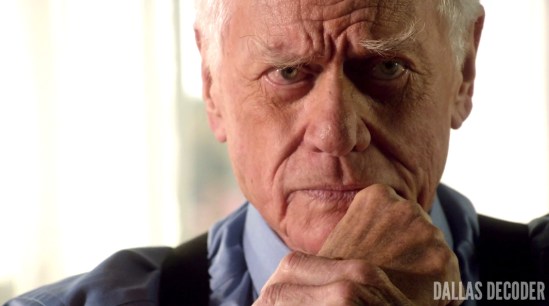
Of course, the biggest transition of all was happening behind the scenes. Jim Davis was diagnosed with inoperable brain cancer in 1980, and “End of the Road, Part 1” marks the moment his illness begins to show on-screen. The actor doesn’t look well in this episode.

I watch today knowing Davis is coming to the end of his road – and man, does that make me sad.

Grade: B

________________________________________________________________________________________________________________________________________________

The end is nigh, Bobby

The end is nigh, Bobby

‘END OF THE ROAD, PART 1’

Season 4, Episode 11

Airdate: January 16, 1981

Audience: 26 million homes, ranking 1st in the weekly ratings

Writer: Leonard Katzman

Director: Irving J. Moore

Synopsis: Bobby does business with the cartel, even though Ewing Oil is having cash-flow problems. J.R. pulls strings to force Bobby to betray the independent gas station owners, knowing it will infuriate Jock. J.R. sleeps with his secretary Louella and flirts with Mitch’s sister Afton, who comes to town for the wedding.

Cast: Barbara Babcock (Liz Craig), Bel Geddes (Miss Ellie Ewing), Michael Bell (Les Crowley), David J. Bowman (Tom Selby), Harry Carey Jr. (Red), Jim Davis (Jock Ewing), Patrick Duffy (Bobby Ewing), Joel Fabiani (Alex Ward), Anne Francis (Arliss Cooper), Meg Gallagher (Louella), Linda Gray (Sue Ellen Ewing), Larry Hagman (J.R. Ewing), Susan Howard (Donna Culver), Steve Kanaly (Ray Krebbs), Sherill Lynn Katzman (Jackie), Ken Kercheval (Cliff Barnes), Audrey Landers (Afton Cooper), Leigh McCloskey (Mitch Cooper), Jeanna Michaels (Connie), Victoria Principal (Pam Ewing), William Smithers (Jeremy Wendell), Charlene Tilton (Lucy Ewing), Janine Turner (Susan), Morgan Woodward (Punk Anderson)

“End of the Road, Part 1” is available on DVD and at Amazon.com and iTunes. Watch the episode and share your comments below.

Critique: TNT’s ‘Dallas’ Episode 8 – ‘No Good Deed’

Dallas, John Ross Ewing, Josh Henderson, No Good Deed, TNT

Up close

In “No Good Deed,” John Ross is jailed for a murder he didn’t commit and then savagely beaten by a couple of inmates who are connected to the real killers. The Ewings respond to this crisis by rallying around their tarnished golden boy, making this the first time the characters on TNT’s “Dallas” begin to feel like a real family. Not coincidentally, it’s also the first time the new show begins to really feel like the old one.

The original “Dallas” is often described as a series about rich people behaving badly, but the deeper truth is that “Dallas,” at its heart, was a show about family. TNT seems to fully realize this in “No Good Deed.” This is an hour of big, dramatic moments that once again demonstrate an essential “Dallas” tenet: No matter how much the Ewings fight among themselves, when outside forces descend upon Southfork, they all pull together.

Several scenes in this episode give me chills. In the first, Bobby is in the den, railing to his lawyer about J.R. and the plot to steal Southfork, when Ann enters the room with a stricken look on her face. “It’s John Ross,” she says. The goose bumps return in the next scene, when we see Bobby, Ann, Elena and Christopher burst through the emergency room doors and circle a badly shaken Sue Ellen.

As good as these moments are, “No Good Deed” also benefits from its many scenes of quiet familial warmth: J.R. arrives at John Ross’s hospital bedside in the dark of night and gently strokes his sleeping son’s hair. Bobby visits Miss Ellie’s grave and vows to protect the family, finally recognizing the people who live on the ranch matter more than the land itself. John Ross and Christopher stand in the Southfork driveway, shake hands and acknowledge they’re not that different from one another after all. “We’re both just trying to make our fathers proud,” Christopher says.

Then there are “No Good Deed’s” small but meaningful details: When a trembling Sue Ellen fumbles with a coffee dispenser in the hospital waiting room, Ann takes the cup and pumps the coffee for her. During a family conference in the Southfork living room, Ann rubs the back of a worried Elena. John Ross calls Sue Ellen “mama” when she brings him home from the hospital.

The nice thing about Julia Cohen’s script is that it doesn’t just make the Ewings feel like a real family, it also makes them feel like real individuals. “No Good Deed” is centered around the theme of sacrifice – Bobby offers to lift the ban on drilling the ranch, Sue Ellen surrenders her integrity, Christopher forgoes a piece of his gas hydrate project – and by seeing what the Ewings are willing to give up, we discover who these characters really are. (Shades of “Ellie Saves the Day,” one of the greatest episodes from the original series.)

“No Good Deed’s” most heartbreaking moment belongs to Sue Ellen, who musters the courage to bribe the medical examiner, only to discover her ethical lapse was for nothing. I can’t help but feel sorry for her when she stands at John Ross’s bedside and proudly predicts Marta’s death will be ruled a suicide, only to learn the charges against her son have been dropped because new evidence has emerged clearing him. It’s tragic stuff, but isn’t it nice to see Ann provide Sue Ellen with so much support and comfort throughout her ordeal?

Of course, the character who provides “No Good Deed” with its heart is the young man who is at the center of it all: John Ross. Yes, we feel sympathetic toward him after that savage beating, but those cuts and bruises merely symbolize how he’s finally become a flesh-and-blood character.

John Ross seems genuinely ashamed of his role in the plot to steal Southfork, as evidenced by his willingness to stay in jail rather than reveal his relationship with Marta and risk losing Elena’s faith in him. He also refuses to blame J.R. for his misfortune, another sign this is no longer the petulant brat we met in “Changing of the Guard.” I’ve been a fan of Josh Henderson’s from the beginning, but “No Good Deed” finally makes me a fan of John Ross.

“No Good Deed” is also distinguished by Michael Katleman’s arty direction, including the moody opening scene, where Henderson and Jordana Brewster’s faces fill the screen, recalling the tight close-ups that were a signature of the old “Dallas.” And while TNT’s show has a style all its own, there are times I wish it more deliberately mimicked its predecessor. How cool would it have been to hear a few notes of Jerrold Immel’s “Dallas” theme music when J.R. received the call about John Ross’s beating, the way we did in the classic episode “Swan Song,” when J.R. got the call Bobby was dying?

Katleman also does a masterful job in “No Good Deed’s” final scene, when Tommy backs Rebecca against the wall, threatens her and then plants his mouth on hers, thus revealing the Sutters aren’t siblings after all. I suspect that creepy buss will have “Dallas” fans buzzing today, but I hope they don’t allow the shock value to obscure all the warm and wonderful moments to be found in “No Good Deed.”

The Sutters may not be family, but after this episode the Ewings finally are, and my goodness, isn’t that nice to see?

Grade: A

_______________________________________________________________________________________________________________________________________________

Dallas, John Ross Ewing, Josh Henderson, J.R. Ewing, Larry Hagman, No Good Deed, TNT

Touching

‘NO GOOD DEED’

Season 1, Episode 8

Telecast: July 25, 2012

Writer: Julia Cohen

Director: Michael Katleman

Audience: 5 million viewers (including 3.3 million viewers on July 25, ranking 24th in the weekly cable ratings)

Synopsis: When Cano’s thugs beat John Ross in jail, Sue Ellen bribes the medical examiner to rule Marta’s death a suicide so her son will be freed. Her sacrifice is for naught: Christopher gives Cano the South American rights to his gas hydrate project, which prompts Cano to release evidence that clears John Ross. Christopher makes amends with John Ross and reconciles with Rebecca, who is later confronted by Tommy, who isn’t really her brother.

Cast: Amir Arison (Varun Rasmussen), Carlos Bernard (Vicente Cano), Jordana Brewster (Elena Ramos), Damon Carney (Paul Jacob), Akai Draco (Sheriff Derrick), Patrick Duffy (Bobby Ewing), Julie Gonzalo (Rebecca Ewing), Linda Gray (Sue Ellen Ewing), Larry Hagman (J.R. Ewing), Callard Harris (Tommy Sutter), Josh Henderson (John Ross Ewing), Jesse Metcalfe (Christopher Ewing), Glenn Morshower (Lou), Kevin Page (Bum), Marisol Ramirez (Detective), Brenda Strong (Ann Ewing)

“No Good Deed” is available at DallasTNT.com, Amazon.com and iTunes. Watch the episode and share your comments below.
Critique: ‘Dallas’ Episode 64 – ‘Executive Wife’

The bloom is off

The bloom is off

In “Executive Wife,” Pam feels hurt by her mother’s rejection and needs Bobby’s support, but he’s too busy running Ewing Oil to notice. For a moment, Pam allows herself to be tempted by another man: magazine publisher Alex Ward.

Sound familiar? It should. Pam and Bobby went through the same scenario in the third-season episode “Jenna’s Return,” except back then, the roles were reversed: Pam was the spouse who was preoccupied with work, which sent lonely Bobby into the arms of magazine editor Jenna Wade.

I appreciate “Executive Wife’s” attempt to depict the challenges facing dual-career couples, which were becoming more common in the 1980s, but it doesn’t change the fact this subplot is a rehash.

It isn’t “Executive Wife’s” only retread, either. Three episodes ago, in “The Fourth Son,” Bobby had to choose between keeping Jock’s commitment to Brady York and honoring a deal Bobby made himself. In “Executive Wife,” he has an opportunity to get back into business with the cartel, but he’s once again hamstrung by Ewing Oil’s commitment to Brady.

At least this time around, Bobby’s dilemma leads to one of “Dallas’s” all-time great scenes: Bobby and Jock’s showdown at the Cattleman’s Club, where the golden son confronts his beloved father over Jock’s decision to deplete Ewing Oil’s cash reserves without first checking with Bobby.

This is where Jim Davis ferociously delivers Jock’s famous line that “real power is something you take.” The dialogue perfectly encapsulates the Ewings’ approach to life, which explains why TNT’s “Dallas” had J.R. repeat the line to John Ross in its recent “The Price You Pay” episode.

“Executive Wife” also features the scene that inspired artist Ro Kim’s classic classic painting of Jock, which shows up after the character’s death during “Dallas’s” fifth season and becomes one of the show’s most enduring props.

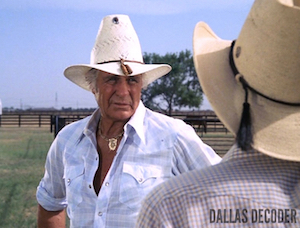
In the scene, Jock stands in a Southfork pasture with Ray and vents his frustration with Bobby’s management of Ewing Oil. Davis wears the same straw hat, blue-and-white checked shirt and gold medallion he does in the painting, so watching him here is a bit like seeing the portrait spring to life.

If only that were really possible.

Grade: B

________________________________________________________________________________________________________________________________________________

Picture perfect

Picture perfect

‘EXECUTIVE WIFE’

Season 4, Episode 10

Airdate: January 9, 1981

Audience: 26.4 million homes, ranking 1st in the weekly ratings

Writer: Rena Down

Director: Leonard Katzman

Synopsis: Jock puts Bobby in a bind when he invests in his friend Punk Anderson’s plan to build a resort at Takapa Lake, depleting Ewing Oil’s cash reserves. Bobby is too busy with work to pay attention to Pam, who allows herself to be tempted by dashing magazine publisher Alex Ward. J.R. Lucy and Mitch decide to get married before he graduates from medical school.

Cast: Barbara Babcock (Liz Craig), Bel Geddes (Miss Ellie Ewing), Michael Bell (Les Crowley), Jim Davis (Jock Ewing), Patrick Duffy (Bobby Ewing), Joel Fabiani (Alex Ward), Meg Gallagher (Louella), Ted Gehring (Brady York), Linda Gray (Sue Ellen Ewing), Larry Hagman (J.R. Ewing), Jerry Haynes (Pat Powers), Susan Howard (Donna Culver), Steve Kanaly (Ray Krebbs), Sherill Lynn Katzman (Jackie), Ken Kercheval (Cliff Barnes), Leigh McCloskey (Mitch Cooper), Jeanna Michaels (Connie), Victoria Principal (Pam Ewing), William Smithers (Jeremy Wendell), Charlene Tilton (Lucy Ewing), Morgan Woodward (Punk Anderson)

“Executive Wife” is available on DVD and at Amazon.com and iTunes. Watch the episode and share your comments below.
Critique: ‘Dallas’ Episode 63 – ‘The Prodigal Mother’

The lady in Houston

The lady in Houston

“The Prodigal Mother” reminds me of one of those “women’s pictures” from the 1950s. The episode marks the end of Pam’s search for her long-lost mother, and it’s as gorgeously soapy as anything Douglas Sirk directed. I love it.

More than anything, “The Prodigal Mother” is distinguished by two big, memorable monologues. This is the first script from David Paulsen, who became one of “Dallas’s” most prolific scribes, and boy, does he knock it out of the park with these speeches.

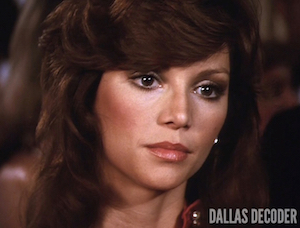
The first speech comes when Pam visits Rebecca Wentworth, the fabulously wealthy woman that Pam’s private detective has identified as Rebecca Barnes, whom Pam and Cliff believed died long ago. In the scene, Rebecca’s maid escorts Pam into the fern-festooned solarium inside her Houston mansion. Rebecca, draped in what appears to be sea-green satin, stands at the other end, leaning against a column. “Won’t you come in?” she says. It’s the kind of thing people only say in movies.

Victoria Principal steps forward and begins Pam’s speech, which is worth recalling it in its entirety:

I’ve rehearsed it a dozen times. Now the words just won’t come out. I know who you are. When I was a child, I used to think about you every day: My mother, who died and went to heaven. And I used to wonder what you were like. What you smelled like. Sometimes, I even thought I could remember. When Digger told us that you died, I could never really accept that. But when Digger was dying and told us about you and Hutch McKinney, I don’t exactly know why, but somehow I knew that you were still alive. And I’ve been searching for you since that day. Everybody told me I shouldn’t. That it was useless. My brother and my husband said that I’d just be more hurt when I found out that you were really dead. But I found you. You’re alive. And I’m so happy. I don’t know how to tell you how happy I am.

Principal’s delivery is really lovely. It feels very brave: With every line, the actress seems to reveal a little more of herself, so much so that by the end of the monologue, her lip looks like it’s quivering uncontrollably. Principal does this a lot during her crying scenes on “Dallas,” and while I sometimes find it a bit much, I don’t here. Here, it’s perfect.

Mama Said

The daughter in Dallas

The daughter in Dallas

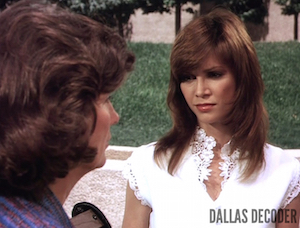
“The Prodigal Mother’s” other big speech comes toward the end of the episode, when Rebecca takes Pam on a stroll through the park and and finally admits she is her mother. I remember watching this scene as a child and being struck by Rebecca’s line about how she “closed a door” in her mind. That line has always stuck with me.

Just as Principal shines during her monologue, Priscilla Pointer does a terrific job delivering hers. Like Barbara Bel Geddes, Pointer is a New York stage veteran who knows how to tone things down for the more intimate confines of television. Pointer’s mannerisms and expressions never feel anything less than natural. She will always be one of my favorite “Dallas” actresses.

I also love how the scene between Pam and Rebecca sounds. When it begins, it’s so quiet – almost eerily so. Aside from the dialogue, the only thing we hear are the women’s heels on the sidewalk and a few birds chirping in the distance. It’s as if the whole world has come to a standstill, and for these two characters, I suppose it has.

And even though Rebecca did an awful thing by abandoning her two small children, this scene makes it impossible for me to dislike her. For this, Paulsen deserves a lot of credit. His dialogue humanizes Rebecca, particularly when she explains why she never divorced Digger. “I was afraid that if I tried, he’d find me, and drag me back to that awful life,” she says. Based on what we know about bitter, miserable Digger, can we honestly blame her? Rebecca might not deserve our respect, but after this scene, she’s at least entitled to some of our sympathy.

Of course, the most haunting part of Pam and Rebecca’s exchange is how it foreshadows Pam’s own tragic character arc, which I hope TNT’s “Dallas” will someday resolve. Imagine seeing Principal sitting on a park bench with Jesse Metcalfe as Pam explains why she abandoned Christopher and Bobby, all those years ago. If done well, it would be even more powerful than what we witness in “The Prodigal Mother.”

Party Lines

The grand sweep

The grand sweep

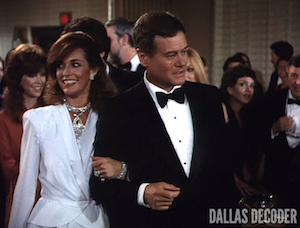
In another Sirkian masterstroke, before Rebecca comes clean to Pam, Paulsen’s script has the woman run into each in the most glamorous of settings: the black-tie fundraiser for gubernatorial candidate Dave Culver, which the Ewings attend. I love how Irving J. Moore directs the sequence, positioning his camera in the crowd as the Ewings arrive with a grand, all-smiles, glad-handing sweep through the ballroom.

Moore also allows the viewer to eavesdrop on the characters as they comment on the action around them. My favorite exchange begins when Sue Ellen slyly points out the guest of honor is “about as liberal a politician as the state of Texas allows. Ewing money usually never flows in that direction.” J.R.’s response that “Ewing money always flows in the direction of power” is perfect – and perfectly plausible.

“The Prodigal Mother’s” other great scene is its last. Pam, having just agreed to keep Rebecca’s identity secret, comes to Cliff’s apartment to tell him what she learned during her visit to Houston. As expected, Cliff, who believes Pam shouldn’t be digging up the past, doesn’t try to conceal his indifference.

“So, do we have a mother?” he asks.

Pam is silent. Cliff again asks what she learned during her trip.

Finally, she lies and tells him her detective was mistaken. Principal then delivers the episode’s final line, which is its best. “The lady in Houston,” she says, “was just a lady in Houston.”

Oh, that line gets me every time. What sacrifice! What noble suffering! What exquisite agony!

What a great episode.

Grade: A+

________________________________________________________________________________________________________________________________________________

Benchwarmers

Benchwarmers

‘THE PRODIGAL MOTHER’

Season 4, Episode 9

Airdate: January 2, 1981

Audience: 28.1 million homes, ranking 2nd in the weekly ratings

Writer: David Paulsen

Director: Irving J. Moore

Synopsis: Pam’s detective tracks down her mother: Rebecca Wentworth, the wife a wealthy Houston industrialist. Rebecca tearfully admits her real identity to Pam but says she doesn’t want her ill husband to know the truth. Lucy proposes to Mitch, who accepts.

Cast: Barbara Bel Geddes (Miss Ellie Ewing), Michael Bell (Les Crowley), Karlene Crockett (Muriel Gillis), Jim Davis (Jock Ewing), Patrick Duffy (Bobby Ewing), Tom Fuccello (Senator Dave Culver), Linda Gray (Sue Ellen Ewing), Larry Hagman (J.R. Ewing), Jerry Haynes (Pat Powers), Richard Herd (John Mackey), Susan Howard (Donna Culver), Steve Kanaly (Ray Krebbs), Ken Kercheval (Cliff Barnes), John Martin (Herbert Wentworth), Leigh McCloskey (Mitch Cooper), Priscilla Pointer (Rebecca Wentworth), Victoria Principal (Pam Ewing), Don Starr (Jordan Lee), Charlene Tilton (Lucy Ewing), Morgan Woodward (Punk Anderson)

“The Prodigal Mother” is available on DVD and at Amazon.com and iTunes. Watch the episode and share your comments below.
Critique: ‘Dallas’ Episode 62 – ‘Trouble at Ewing 23’

Bobby Ewing, Dallas, J.R. Ewing, Larry Hagman, Patrick Duffy, Trouble at Ewing 23

Little brother, big trouble

“Trouble at Ewing 23” is a decent “Dallas” episode until the fourth act, when everything falls apart. Or is blown apart, to be more precise.

The episode starts off strongly when Ray runs into Miss Ellie in the stable, where he thanks her for welcoming him into the family. Ellie is gracious, but she also expresses concern for Ray. “You’re a Ewing now,” she says. “That’s a lot to take on all at once. I know.” Barbara Bel Geddes and Steve Kanaly each do a nice job in this scene, which helps establish the special bond Ellie and Ray develop as “Dallas” progresses.

“Trouble at Ewing 23’s” other highlight: the scene where Pam drops by Cliff’s apartment unannounced, not knowing Donna is about to arrive for a romantic dinner. When Pam spots a bottle of imported wine chilling in the corner, she realizes Cliff is expecting a woman and teases him.

“It’s the first date,” she says. “Chinese on the second, tacos on the third. Funny how I know all this, isn’t it?” This is a cute scene, well played by Ken Kercheval and Victoria Principal, whose on-screen relationship is one of “Dallas’s” most believable.

Nice moments like these stand in contrast with the rest of “Trouble at Ewing 23,” which isn’t very good. By the fourth act, the show has abandoned everyone else’s storylines to focus on the subplot about a disgruntled Ewing Oil employee’s threat to blow up the drill site in the episode’s title, which J.R. shut in “A House Divided” to prevent Cliff from sharing in the profits.

I like the idea of showing how J.R.’s vindictiveness has unintended consequences – it turns out Gillis, the angry worker, wants revenge because he lost his job when the field closed – but the plot’s execution is lame.

Why does Gillis demand use of the Ewing jet to make his escape? Isn’t he afraid J.R. and Bobby will have police waiting to arrest him when he lands? When the field crew goes looking for Gillis’s hidden-in-plain-sight bombs, why don’t they find them? How long does it take to scour an oil field, anyway?

When the field finally goes up in flames, the special effects are spectacularly fake, but I don’t get too worked up about that. After all, this production is by Lorimar, not Lucasfilm.

Besides, by the time Gillis hits the detonator, my willingness to suspend my disbelief has long since disappeared.

Grade: C

________________________________________________________________________________________________________________________________________________

Bobby Ewing, Dallas, Patrick Duffy, Trouble at Ewing 23

Pain at the pumps

‘TROUBLE AT EWING 23’

Season 4, Episode 8

Airdate: December 19, 1980

Audience: 26.3 million homes, ranking 1st in the weekly ratings

Writer: Louie Elias

Director: Leonard Katzman

Synopsis: Miss Ellie welcomes Ray. Donna tells him she’s dating Cliff. Pam’s detective finds evidence her mother didn’t die. A disgruntled employee threatens to blow up Ewing 23 if Bobby doesn’t meet his ransom demands. J.R.’s security guards shoot the worker, who detonates the explosives before dying.

Cast: Barbara Bel Geddes (Miss Ellie Ewing), Michael Bell (Les Crowley), Ray Colbert (Gillis), Jim Davis (Jock Ewing), Patrick Duffy (Bobby Ewing), John Furlong (airport manager), Meg Gallagher (Louella), Linda Gray (Sue Ellen Ewing), Laurence Haddon (Franklin Horner), Larry Hagman (J.R. Ewing), Richard Herd (John Mackey), Susan Howard (Donna Culver), Sherril Lynn Katzman (Jackie), Ken Kercheval (Cliff Barnes), Jeanna Michaels (Connie), Victoria Principal (Pam Ewing), Charlene Tilton (Lucy Ewing), Warren Vanders (Harry Owens)

“Trouble at Ewing 23” is available on DVD and at Amazon.com and iTunes. Watch the episode and share your comments below.
Critique: TNT’s ‘Dallas’ Episode 7 – ‘Collateral Damage’

Christopher Ewing, Collateral Damage, Dallas, Jesse Metcalfe, TNT

Cry, cry again

“Collateral Damage” gets it right. This episode offers solid writing, stylish direction and strong performances, all while making good use of established “Dallas” lore. Overall, this is the new show’s best hour since the pilot, “Changing of the Guard.”

I’m sure many viewers will remember “Collateral Damage” as the episode where Marta meets her maker, but as haunting as the sight of her bloodied body atop that crushed car is, it’s not the image that sticks with me most. No, that distinction belongs to the scene in the doctor’s office, where Christopher and Rebecca are shown the sonogram of their unborn twins as Bobby and Ann watch silently.

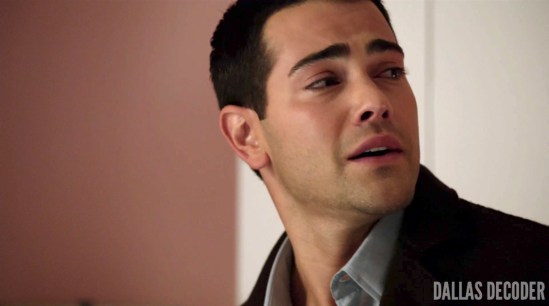
Julie Gonzalo and Brenda Strong are good here, but it’s the guys who move me most. Jesse Metcalfe is establishing himself as television’s best crier, while Patrick Duffy has matured into the rarest of Hollywood species: the actor who doesn’t need dialogue to perform. The look on Duffy’s face tells us everything we need to know about the pride and joy Bobby feels at that moment.

And while I’m sure “Dallas” newcomers appreciated this scene, it holds special meaning for me and, I suspect, other longtime fans. We once watched a twentysomething Bobby bring his young bride home to Southfork, and now we see him on the brink of becoming a grandfather. We remember Christopher arriving at the ranch as a babe-in-arms, and now he’s embarking on his own journey to fatherhood. For “Dallas” diehards, this is a big, meaningful moment, and director Steve Robin deserves our thanks for slowing things down so we could absorb the weight of it.

My other favorite “Collateral Damage” scene opens with John Ross sitting in a posh restaurant, reminiscing about the time he broke into the Southfork liquor cabinet as a child to sneak his first taste of bourbon. “That’s when you found me,” John Ross says as the camera pans across the table to reveal his dining companion: Lucy. “You were half past gone on the floor,” she quips. “And the first thing I thought was, ‘Yep, he’s his mama’s son.’”

I adore this exchange because it demonstrates how TNT’s “Dallas” can bring together younger characters and longtime favorites in ways that serve current storylines while also honoring the old show’s past. Even though we never witnessed John Ross sneaking liquor on the original “Dallas,” it isn’t hard to imagine it happening off-screen. The same thing can’t be said for many of the historical revisions TNT’s writers have made this season.

John Ross and Lucy’s scene also works well because, frankly, it’s nice to be reminded of a time when Southfork was full of family – something I hope the new series will get back to soon. Additionally, I’m happy to see TNT showcase Charlene Tilton, a onetime ingénue who now possesses a wonderfully worldly, been-there-done-that charm. I hope we see more of her in the future.

Aaron Allen’s “Collateral Damage” script also includes a nicely written scene where Sue Ellen oh-so-subtly pressures Elena to bail out John Ross. Jordana Brewster more than holds her own against Linda Gray during this exchange, particularly when Elena questions if Sue Ellen still cares about Bobby and his family – something I’ve wondered myself. Sue Ellen’s response (“Elena, when the day comes that you have to choose between your child and anybody else, I hope you choose wisely.”) illuminates the character’s thinking, reminding us that even though Sue Ellen has changed, she hasn’t lost all her old impulses.

Speaking of illumination: “Collateral Damage” sheds a little more light on the dark secret being kept by Ann, Bobby’s new wife. The evidence suggests Ann once had a daughter, although we don’t know what happened to her. According to one wild theory making the online rounds, Rebecca is Ann’s daughter, the result of a one-night stand with Cliff a quarter century ago. (Strong portrayed an unnamed woman Cliff slept with in “Cat and Mouse,” a 1987 “Dallas” episode.) I suppose anything’s possible, but for now I’m content to enjoy the mystery.

Finally, some praise for the fantastic “Collateral Damage” sequence where a frantic John Ross goes to Marta’s hotel room, believing she’s kidnapped Elena, only to discover it’s just another one of Marta’s deceptions. The whole thing plays like a fevered dream – the camerawork is shaky and the film looks like it’s been sped up – making this one of TNT’s niftiest “Dallas” scenes yet.

Until this moment, Marta seemed destined to become another crazed stalker from soap opera central casting, but Leonor Varela’s mesmerizing performance makes the character feel utterly human. Rather brilliantly, Allen’s script gives Marta a line about how she “earned” her way out of “the slums of Caracas,” a neatly efficient way to generate sympathy for the character before she dies.

From this perspective, Marta resembles another tragic “Dallas” vixen: Julie Grey, Tina Louise’s character from the old show’s early years. I don’t think it’s a coincidence Marta plunges to her death after encountering a couple of henchmen, just like Julie did during the old show’s classic “The Red File, Part 1” episode.

Clever homages like this help “Collateral Damage” earn its “A” grade, which is the first one I’ve awarded since “Changing of the Guard.” Something tells me it won’t be the last.

Grade: A

________________________________________________________________________________________________________________________________________________

Charlene Tilton, Collateral Damage, Dallas, Lucy Ewing, TNT

Missing cousin

‘COLLATERAL DAMAGE’

Season 1, Episode 7

Telecast: July 18, 2012

Writer: Aaron Allen

Director: Steve Robin

Audience: 5.2 million viewers (including 3.9 million viewers on July 18, ranking 13th in the weekly cable ratings)

Synopsis: Under pressure from Cano, John Ross invites Lucy to join him in the battle for Southfork, but she sides instead with Bobby. Ryland has Bobby arrested for assaulting him but drops the charges. Bobby tells Ann her past doesn’t matter to him. Christopher tells Elena he wants her back, but he’s at Rebecca’s side when she learns she’s pregnant with twins. Sue Ellen persuades Elena to use her oil to help John Ross, who is arrested after Marta plunges to her death from a high-rise balcony.

Cast: Carlos Bernard (Vicente Cano), Jordana Brewster (Elena Ramos), Patrick Duffy (Bobby Ewing), Julie Gonzalo (Rebecca Sutter), Linda Gray (Sue Ellen Ewing), D’Laine Gutmann (nurse), Larry Hagman (J.R. Ewing), Peyton Hayslip (Dr. Lauren Barstow), Josh Henderson (John Ross Ewing), Jesse Metcalfe (Christopher Ewing), Glenn Morshower (Lou), Kevin Page (Bum), Mitch Pileggi (Harris Ryland), Brenda Strong (Ann Ewing), Charlene Tilton (Lucy Ewing), Leonor Varela (Marta del Sol)

“Collateral Damage” is available at DallasTNT.com, Amazon.com and iTunes. Watch the episode and share your comments below.