Critique: ‘Dallas’ Episode 108 — ‘Jock’s Will’

Bobby Ewing, Dallas, Jock's Will, J.R. Ewing, Larry Hagman, Patrick Duffy

Let the games begin

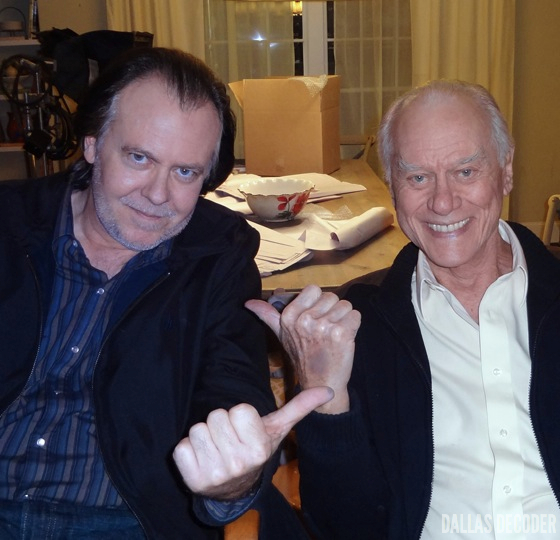
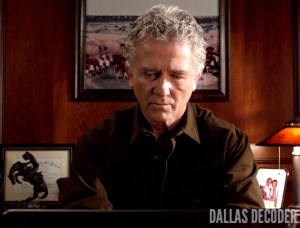
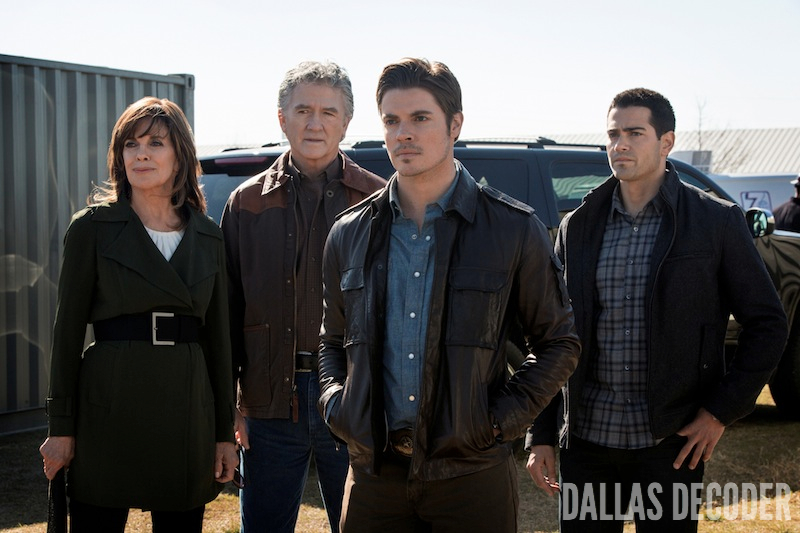
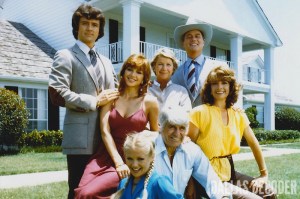
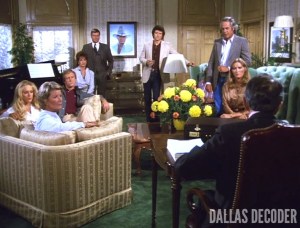
At the end of “Jock’s Will,” the Ewings gather in the Southfork living room to hear Harv Smithfield read the family patriarch’s last will and testament. Everyone is present — even Gary, who has flown in from “Knots Landing” for the occasion. The scene is tense, dramatic and historic. Besides being one of the few times we see almost all of the original cast members in the same place at the same time, this also marks the beginning of “Dallas’s” greatest storyline: J.R. and Bobby’s epic battle for control of Ewing Oil.

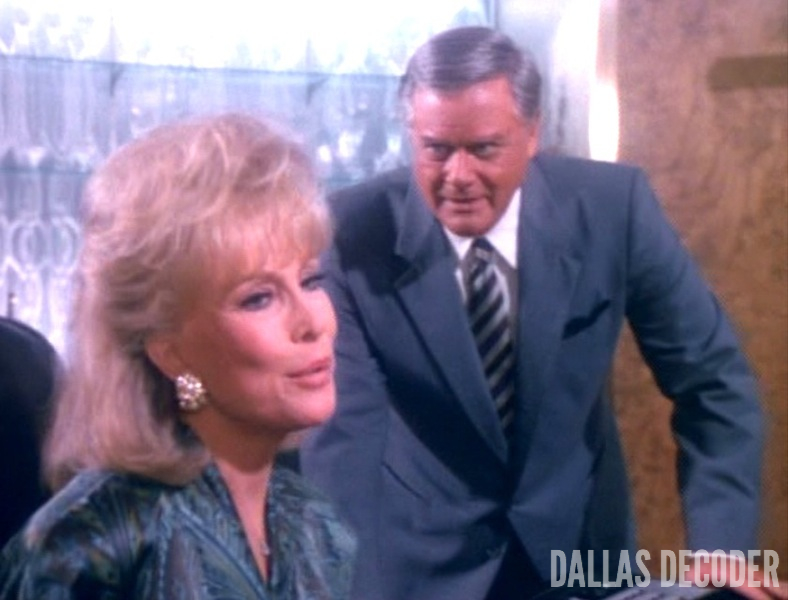
The scene, which lasts about seven minutes, is also a showcase for Michael Preece, one of the original “Dallas’s” most skilled directors. He begins with a wide shot of the actors positioned in front of George O. Petrie, who sits at a desk that seems to have magically appeared in the living room for this scene. (I suppose the desk is like the Ewings’ television set, which only pops up when the plot calls for someone in the family to watch it.) Only four actors here have dialogue: Barbara Bel Geddes, Larry Hagman, Patrick Duffy and Petrie, who delivers almost 700 words, far more than any of the others. Even though the rest of the cast is silent, we never question what their characters are thinking, thanks to Preece’s reaction shots. When Harv announces Gary’s inheritance comes with strings attached, we see Ted Shackelford clench his jaw. Charlene Tilton’s eyes bulge when Lucy learns she’s become a multi-millionaire. Victoria Principal’s jaw drops when Pam realizes Bobby is going to have to fight J.R. for the company.

Bel Geddes gets the most dramatic response. When Ellie hears Jock’s line that Ewing Oil can only be run by “the man that wants it the most,” she furrows her brow and whispers gravely, “Oh, Jock. No.” I wonder: What are Preece and scriptwriter David Paulsen are trying to convey here? Is Ellie afraid Jock is about to return control of the company to J.R., whom she recently ousted from the president’s chair? Or does she sense — even before Harv announces it — that Jock is about to pit their sons against each other?

(In the same spirit, the announcement of the contest forces us to reconsider the end of “Where There’s a Will,” when J.R. sneaks a peek at Jock’s will. In that scene, J.R.’s reaction — “Thank you, Daddy, thank you” — leads us to believe Jock has left him the company. In “Jock’s Will,” the audience finally catches up and learns what J.R. did: that Jock wants him to compete with Bobby for control of Ewing Oil. So why does J.R. thank his daddy? Is he so confident he’ll beat Bobby that he considers the contest a mere formality? Or could it be that J.R. simply loves a good fight, and he’s thanking Jock for giving him one?)

As far as the contest itself: Some might see Jock’s decision to not choose a successor as a copout, but I believe it fits his character perfectly. Of course the old man would want his sons to duke it out to determine, once and for all, who is the better businessman. The contest also ends up producing some of the best storytelling seen on “Dallas,” as well as “Knots Landing.” (But don’t take my word for it: Hill Place, an always-interesting TV and movie blog, recently published a thorough examination of the long-range ramifications of Jock’s will on both shows.)

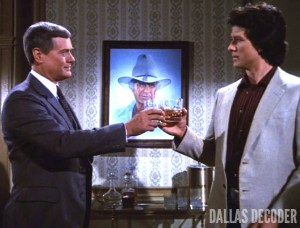
There’s also quite a bit of poignancy to the end of the will-reading scene. Jock’s final words are ominous: He declares that if J.R. or Bobby die before the contest is over, the remaining son will automatically take over the company. This prompts J.R. to turn to his younger brother, raise a glass of bourbon and say, “Well, Bobby, to your good health and very long life.” Three seasons later, after Duffy’s character had been killed off, J.R.’s toast seemed prescient. Now that Hagman is gone, the line feels bittersweet. I also can’t help but note the parallels between Jock’s will, which leads to the high point in their rivalry, and the letter that Bobby reads at the end of the new “Dallas’s” second season, which effectively brings their warring to an end.

The other highlight of “Jock’s Will” is the courtroom scene where the Ewing patriarch is declared dead. As the judge announces his decision (“The judgment of this court is that John Ross Ewing Sr. died in a place unknown, in the jungles of South America”), Preece gives us a tight shot of each Ewing seated in the gallery: First Pam, then Bobby, J.R., Sue Ellen and finally Ellie. Everyone looks stricken — and none more so than Mama, whose tears flow freely — but don’t overlook Bruce Broughton’s mournful background music, which also lends this scene power.

Other good scenes in “Jock’s Will” include the sequences set in Kansas, where Ray’s struggle to connect with cocky Mickey strains his relationship with Donna. I also like J.R. and Sue Ellen’s night on the town (especially the nifty overhead shot that Preece gives us of Hagman and Linda Gray on the nightclub dance floor), as well as the scene where the couple sets the date for their second wedding. Or, to be more precise: J.R. sets the date by presenting Sue Ellen with an invitation to their first wedding, with the original date (February 15, 1970) scratched out and the new one (December 3, 1982) penciled in.

I can’t help but think there’s plenty of room on that invitation for a third wedding date. How sad that we never got to see it.

Grade: A

_______________________________________________________________________________________________________________________________________________
Barbara Bel Geddes, Bobby Ewing, Charlene Tilton, Dallas, Donna Krebbs, Gary Ewing, George O. Petrie, Harv Smithfield, J.R. Ewing, Linda Gray, Larry Hagman, Lucy Cooper, Miss Ellie Ewing, Patrick Duffy, Ray Krebbs, Steve Kanaly, Sue Ellen Ewing, Susan Howard, Ted Shackelfod

Gang’s all here

‘JOCK’S WILL’

Season 6, Episode 5

Airdate: October 29, 1982

Audience: 23.6 million homes, ranking 1st in the weekly ratings

Writer: David Paulsen

Director: Michael Preece

Synopsis: The Ewings have Jock declared legally dead and learn his will sets up a yearlong contest between J.R. and Bobby for control of Ewing Oil. J.R. and Sue Ellen set a wedding date. Ray and Donna bring Mickey home with them to Southfork. Pam urges Lucy to snap out of her depression.

Cast: Robert Ackerman (Wade Luce), Tyler Banks (John Ross Ewing), Barbara Bel Geddes (Miss Ellie Ewing), Roseanna Christiansen (Teresa), George Cooper (Lee Evans), Patrick Duffy (Bobby Ewing), Phyllis Flax (Mrs. Chambers), Linda Gray (Sue Ellen Ewing), Larry Hagman (J.R. Ewing), Alice Hirson (Mavis Anderson), Peter Hobbs (Judge Karns), Susan Howard (Donna Krebbs), Steve Kanaly (Ray Krebbs), Ken Kercheval (Cliff Barnes), Kenneth Kimmins (Thornton McLeish), Audrey Landers (Afton Cooper), Timothy Patrick Murphy (Mickey Trotter), George O. Petrie (Harv Smithfield), Priscilla Pointer (Rebecca Wentworth), Victoria Principal (Pam Ewing), Kate Reid (Lil Trotter), Dale Robertson (Frank Crutcher), Ted Shackelford (Gary Ewing), Don Starr (Jordan Lee), Charlene Tilton (Lucy Cooper), Morgan Woodward (Punk Anderson)

“Jock’s Will” is available on DVD and at Amazon.com and iTunes. Watch the episode and share your comments below.
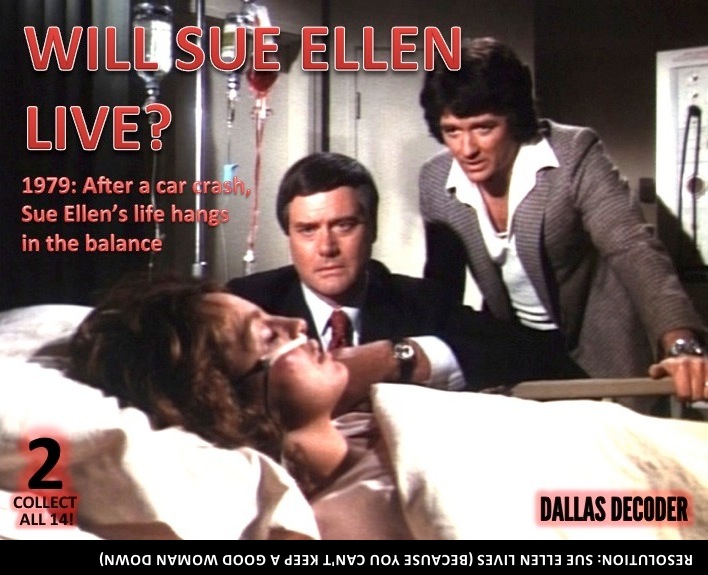
Dallas Cliffhanger Classics: Season 2

Dallas Decoder celebrates “Dallas’s” classic cliffhangers with weekly summertime flashbacks. Collect all 14 images and share them with your friends.

Dallas Cliffhanger Classics 2

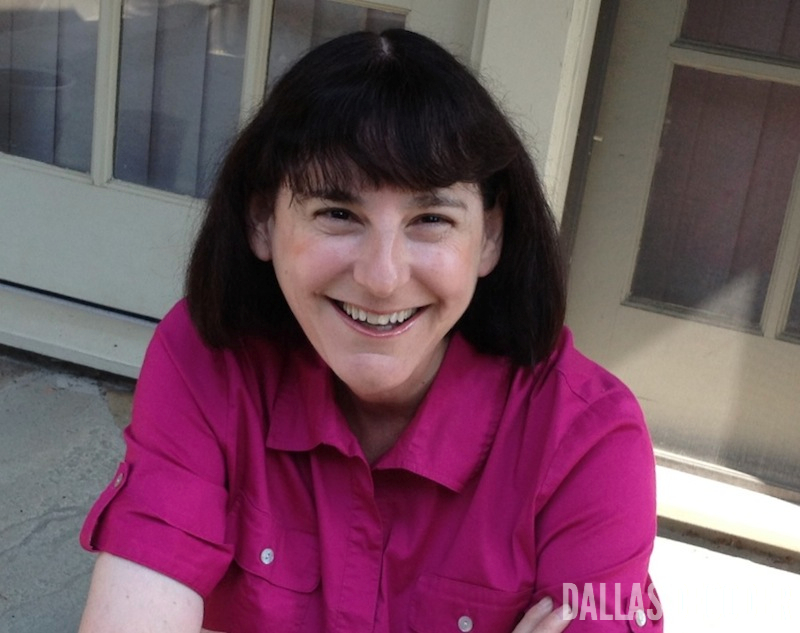
The Dallas Decoder Interview: Lisa Seidman

Lisa Seidman

Lisa Seidman

Lisa Seidman was a writer on the original “Dallas” during its final two seasons and penned many of the show’s best episodes from that era. She later wrote for “Knots Landing” and now serves as associate head writer for “The Young and the Restless.” I was thrilled when she agreed to answer some of my questions about writing for three of my favorite TV series.

“Dallas” was one of the first shows you ever wrote for. How did you get the job?  Howard Lakin and I worked together on “Falcon Crest.” He moved on to “Dallas” and when CBS told Len Katzman, the executive producer, they wanted a female writer on the show, Howard recommended me. Len read and liked a spec script I had written, a murder mystery that Patrick Duffy eventually optioned, which he planned to direct and star in, but alas, he moved on to “Step by Step” so it fell through. I met with Len, he liked me, and the rest as they say….

Bobby and J.R. in “Cry Me a River of Oil,” Seidman’s first “Dallas” episode

Bobby and J.R. in “Cry Me a River of Oil,” Seidman’s first “Dallas” episode

History, indeed! What was it like to work on “Dallas” as it was nearing the end of its run? Was it a struggle to come up with new things for the characters to do?

At the time, we didn’t know the show was nearing the end of its run. We were hoping the show would be picked up for another year but knowing there was a possibility it would not be, the mood was wistful, bittersweet. While I remember days when we struggled to come up with story, I don’t think it was any more difficult than any other show I’d been on before or after — except for the final, two-hour show. Now that was a struggle. Len really wanted to go out with a bang and I remember long, frustrating story meetings where we were really trying to find that great hook.

Oh, wow. Do you remember the other ideas for the series finale that you considered but discarded? And what did you think of the final product?

Unfortunately, I don’t remember the other ideas, although I remember exactly where I was sitting in Len’s office as we plotted out the “It’s a Wonderful Life”-themed finale: on his sofa, which is a strange thing to remember as I usually sat in the chair next to him while Howard sat on the sofa and [producer] Ken Horton was in the armchair across from Len and me. As far as the final product: At the time, I thought it was a terrific idea, but in retrospect I see the flaws. J.R. learns that people led happier lives without him so he was going to kill himself in despair and Bobby had to save his life. It was an anti-J.R. story.

Cliff in “The Decline and Fall of the Ewing Empire,” Seidman’s final “Dallas”

Cliff in “The Decline and Fall of the Ewing Empire,” Seidman’s final “Dallas”

Did you have a favorite character to write for? 

Cliff Barnes. What a kick! The character would do or say anything. He had no filters. I loved it. I loved him. I also loved writing the female characters: Cally, April, Michelle, Lucy. Sadly, Linda Gray left the season before I came on so I never got to write Sue Ellen. I was always sorry about that.

Are there any scenes or episodes that you are particularly proud of? 

The scene between J.R. and Lee Ann De La Vega in “Designing Women.” First, I got to write for Larry Hagman and Barbara Eden, who had both been in “I Dream of Jeannie,” a show I loved as a kid. What a thrill! Second, Lee Ann is confronting J.R. about their shared past, and I remember how much I loved her getting back at J.R. for how he screwed up her life. I watched them shoot the scene and it was exciting to see how they both got into it.

Lee Ann and J.R. in “Designing Women”

Lee Ann and J.R. in “Designing Women”

That scene contains one of my favorite J.R. quotes. I love when he tells Lee Ann and Michelle, “You two belong together, hatching your silly little plots in your silly little heads.” I’ve been quoting that line for 22 years!

Funny you should bring that up. I have all drafts of the script in front of me. In the writer’s draft, J.R. said, “Hatching your puny little plots in that empty brain of yours.” In the first draft it became, “Hatching your puny little plots in that empty head of yours” — suggested to me by Len — where it remains in the final draft, so Larry Hagman obviously changed it on set to the line you love.

After “Dallas,” you wrote for “Knots Landing.” How were those experiences similar? How were they different? 

Writing for “Knots” and “Dallas” were similar in that both shows had strong writer-producers — Ann Marcus and Len Katzman, respectively — who respected their writers and never micro-managed us. What you saw on air was the writer’s work, not a rewrite by either Ann or Len. They were different in that Len preferred to be in charge of the production of each script while Ann let each writer attend casting, tone meetings, production meetings. If the actors had concerns about their story on “Dallas” they went to Len. If the “Knots” actors had concerns they went straight to the particular writer of the script. On both shows, stories were created and laid out with all the writers in the room. While Len and Ann had the final say, they listened to all their writers’ contributions. Both were fantastic bosses!

Gary and Val in “Knots Landing: Back to the Cul-de-sac”

Gary and Val in “Knots Landing: Back to the Cul-de-Sac”

What are your memories of co-writing the “Knots Landing” reunion miniseries?

Where do I begin? Ann Marcus taught me so much about structure, high stakes, letting character drive story. We wrote the miniseries in her home office and I remember spending a lot of the time staring at her Emmy for “Mary Hartman, Mary Hartman,” feeling incredibly lucky that I was getting to write with Ann, who is still a dear friend. Ann would come in with a lot of ideas and then we would discuss each one at length, discarding what didn’t work and developing in more detail what did.

Do you watch the new “Dallas”? What’s your opinion?

Fantastic. Fun. It’s great to see how the series successfully uses J.R., Bobby, Sue Ellen and Cliff with the young ’uns. It’s a kick.

You’ve written a lot for daytime television too. How is that different from writing for prime-time television? 

Daytime TV is much harder to write than anybody thinks. You’re writing a detailed outline or a script every week while in prime time you’re writing one script a month or even less, depending on how many writers are on staff. You have two days to write an 11-page outline on daytime, whereas in primetime you have a week or a week and a half to write your script. In daytime you have many more characters to deal with — at least 10 to 15 — and you have to know all their voices, their stories. You have to know their histories from before you went on the show — and those histories are much more complicated than prime time back story because these characters have been on the air anywhere from 10 to 40 years!

In daytime, is it hard to balance giving fans what they want and trying to pursue your own artistic vision? 

Yes, absolutely, because the reality is you can’t really give the fans what they want, which is happy couples. Once a couple is happy, they’re boring. So the writers have to keep creating complications for characters that keep couples apart while at the same time keeping fans wanting to watch every day, rooting for them to get together.

You’re currently writing for “The Young and the Restless.” If J.R. Ewing had ever faced off against Victor Newman in business, who do you think would win?

Ha! Good question. Neither of them would ever have a total win. J.R. might defeat Victor in some aspect of business but then Victor would pick himself up, dust himself off and go after J.R. with a vengeance. Neither would be down for long. The battle would go on forever!

Share your comments below and read more interviews from Dallas Decoder.

Critique: ‘Dallas’ Episode 105 — ‘Where There’s a Will’

Dallas, John Baxter, J.R. Ewing, Larry Hagman, Robin Strand, Where There's a Will

Let us prey

Larry Hagman has no scenes with his main co-stars in “Where There’s a Will,” but this is still a terrific hour of “Dallas.” The fun comes from watching J.R. scheme to sneak a peek at Jock’s will before the document is unsealed for the rest of the family. Usually when J.R. hatches a plot like this, it takes a few episodes to execute it. Here, J.R. puts his plan in motion in the first scene and completes his mission right before the closing credits roll. The efficient storytelling reminds me of “Dallas’s” earliest episodes, before the show became serialized.

J.R. has two foils in “Where There’s a Will.” The first is Harv Smithfield, the Ewings’ ethical consigliere, who refuses J.R.’s demands to see Jock’s will. In one of George O. Petrie’s many great scenes during his long run on “Dallas,” Harv removes his pince-nez spectacles, looks his bull-headed client in the eye and tells him: “I was your daddy’s attorney before you were born, J.R. My allegiance is to his memory. I will follow his instructions to the letter. No one will see that will until such time as it is read to the entire family.”

J.R. pretends to respect Harv’s decision (“I admire your loyalty to my daddy. Believe me. I’ll never mention that will again.”), but the glint in Hagman’s eye lets us know J.R. isn’t going to give up that easily. Enter Foil No. 2: John Baxter, Harv’s new son-in-law and the latest addition to the Smithfield & Bennett law firm. After Harv turns J.R. down, we see J.R. call John and invite him to lunch at 1 o’clock. Seconds later, J.R. places a call to someone else — we don’t see who it is — and instructs the person on the other line to meet him at the same restaurant at 1:05. “You know what to wear,” J.R. says.

Once we see J.R.’s favorite call girl Serena show up at the restaurant and pretend to be an old Ewing family friend, we have a pretty good idea of what J.R.’s up to. Sure enough, J.R. is conveniently called away from the restaurant, leaving John and Serena alone. The next time we see them, they’re at the Ewing condo, where J.R. walks in on them in bed together. Leonard Katzman, who wrote and directed “Where There’s a Will,” gives this scene enough humor to amuse the audience without letting things devolve into slapstick. “I’m a firm believer in the sanctity of marriage — and I’m damned disappointed in you,” J.R. says before the shirtless John scoops up his clothes and dashes out of the room.

In the final act, J.R. summons John to the restaurant where this scheme began. (These scenes appear to have been filmed in a real-life white-tablecloth eatery with impressive views of downtown Dallas.) J.R. tells John he’ll keep his fling with Serena secret — if John shows him Jock’s will. Guest star Robin Strand is terrific in this scene. The boyishly handsome, fair-haired actor loosens his necktie as his character begins to feel the weight of J.R.’s pressure. When John tells J.R. that showing him the will would be “betraying a trust,” Hagman licks his lips and waits a beat before delivering J.R.’s next line: “Now, what do you call cheating on your wife? Or more to the point, what would Harv call that?”

Other highlights of “Where There’s a Will” include the scene where Ray tells Donna he’s decided to send money to his Aunt Lil, who is caring for his ill “father” Amos. Steve Kanaly does a nice job conveying Ray’s conflicted feelings, but I also love what Susan Howard does with Donna’s line, “You’re not going to call her and talk to her?” If another actress delivered this dialogue, it might make Donna seem like a nag, but Howard never makes her character seem like anything less than a wise, caring spouse. Patrick Duffy also does a nice job in the scene where Bobby politely brushes off Carl Daggett, the harmlessly sleazy chap looking to drum up business for his escort service.

This episode’s other highlight is the final sequence, when John brings Jock’s will to the darkened Ewing Oil office after hours so J.R. can finally see it. We don’t discover what the document says in this scene, but after we see J.R. smile, cast his eyes upwards and thank Jock, we know whatever’s in the will makes our hero happy. And by golly, hasn’t he earned it?

Grade: A

_______________________________________________________________________________________________________________________________________________

Dallas, Donna Krebbs, Ray Krebbs, Steve Kanaly, Susan Howard, Where There's a Will

The good wife

‘WHERE THERE’S A WILL’

Season 6, Episode 2

Airdate: October 8, 1982

Audience: 19.2 million homes, ranking 3rd in the weekly ratings

Writer and Director: Leonard Katzman

Synopsis: J.R. blackmails Harv’s son-in-law into showing him Jock’s will before the document is unsealed for the rest of the family. Lucy tells Pam she’s pregnant and that she’s decided to have an abortion. Sue Ellen visits the Southern Cross. Marilee offers Cliff a job. Ray learns Amos has fallen ill in Kansas.

Cast: Barbara Bel Geddes (Miss Ellie Ewing), Stephanie Blackmore (Serena), Patrick Duffy (Bobby Ewing), Fern Fitzgerald (Marilee Stone), Linda Gray (Sue Ellen Ewing), Larry Hagman (J.R. Ewing), Alice Hirson (Mavis Anderson), Susan Howard (Donna Krebbs), Steve Kanaly (Ray Krebbs), Howard Keel (Clayton Farlow), Ken Kercheval (Cliff Barnes), Audrey Landers (Afton Cooper), Joseph Miller (bartender), Charles Napier (Carl Daggett), George O. Petrie (Harv Smithfield), Priscilla Pointer (Rebecca Wentworth), Victoria Principal (Pam Ewing), Debbie Rennard (Sly), Danone Simpson (Kendall), Robin Strand (John Baxter), Charlene Tilton (Lucy Cooper), Deborah Tranelli (Phyllis), Aarika Wells (Millie Laverne), Morgan Woodward (Punk Anderson)

“Where There’s a Will” is available on DVD and at Amazon.com and iTunes. Watch the episode and share your comments below.
The Dallas Decoder Interview: Akai Draco

Akai Draco

Akai Draco

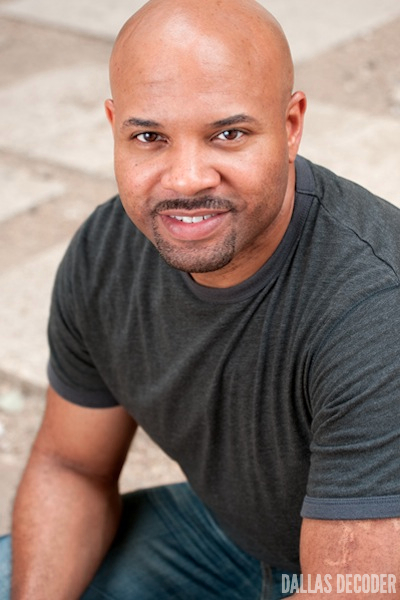
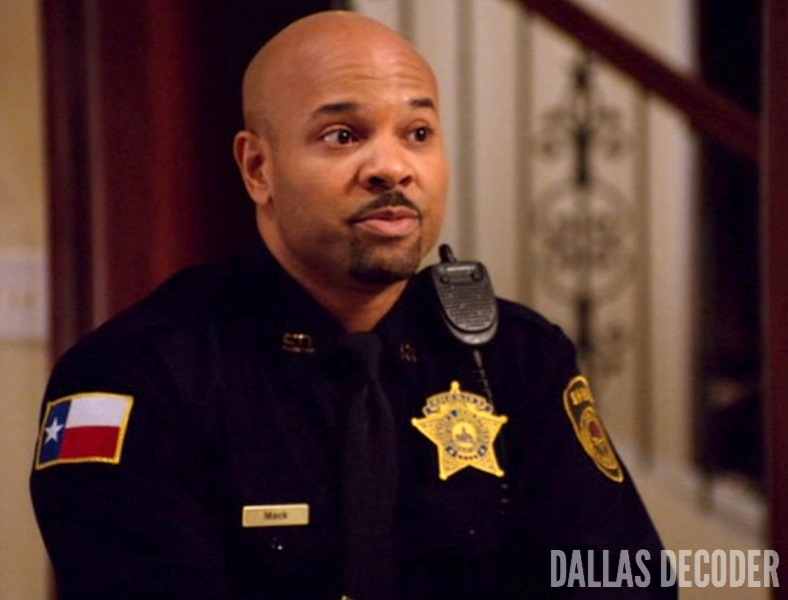
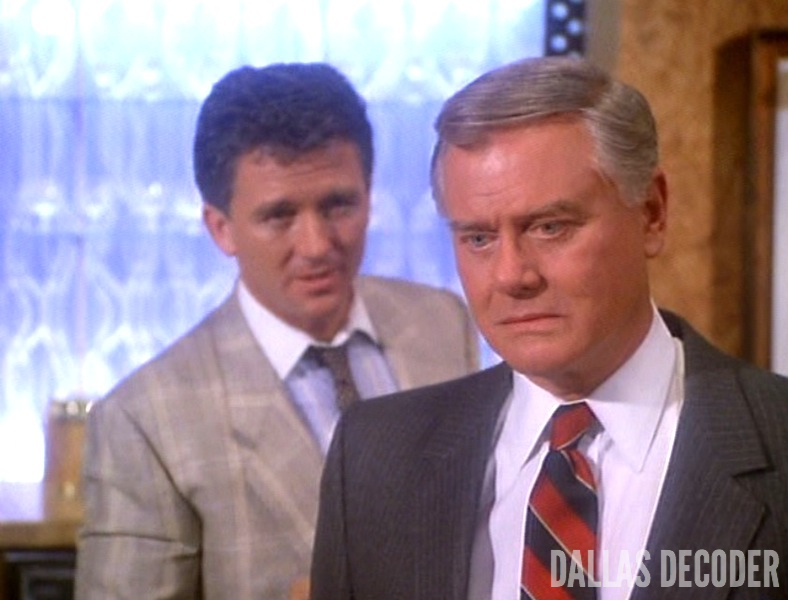
“Dallas” fans love Sheriff Derrick, the loyal Ewing friend who is forever getting the family out of trouble. I spoke recently to Texas-based actor and screenwriter Akai Draco about his role as the show’s top cop.

Sheriff Derrick has the hardest job on TV: trying to make the Ewings obey the law. Is that how you see it?

Yeah, a little bit. The nice thing is Derrick is a friend of the Ewing family, so they can call on him when they need help. He does what he can to make sure the Ewings get past the bad guys who get in their way. Sometimes he gets yelled at, but hey, it’s all in a day’s work.

Draco in “No Good Deed”

Draco in “No Good Deed”

We don’t know a lot about Derrick. What do you think he does when he isn’t rescuing the Ewings?

That’s a good question. When I got the role, I didn’t know a lot about him other than he’s a friend of the Ewings – a friend of Bobby’s, specifically. So I sort of invented my own backstory. To me, he’s just one of those good guys who plays it pretty straight and narrow, except when it comes to Bobby and the rest of the Ewing clan. He’ll do them a favor here and there. Derrick seems like a nice guy, but you never know. He could have his own aspirations. I don’t think it’s an evil agenda or anything like that, but maybe we’ll find out he has aspirations beyond being sheriff. We’ll see. I’ll leave that to the writers and producers.

I definitely want to see more of Derrick in Season 3, but I hope we never find out he’s up to something nefarious!

I hope not too! The bad guys on this show tend not to last very long, especially when they get in the way of the Ewing clan. So hopefully Derrick will stay on the good side of the law.
Did you watch “Dallas” growing up?

I did. I didn’t watch every episode, but coming up in the late ’70s and early ’80s, “Dallas” was one of the big things on TV – especially when the “Who Shot J.R.?” thing came around. So you couldn’t help but get into it. It’s kind of funny to think back to those days and realize that I’m now part of the reincarnation of the show. It’s such a pleasure and a privilege to be part of something that great actors like Larry Hagman have been part of.

What’s it like to work on the show?

This is the fifth show I’ve worked on and it’s by far the most fun I’ve had as an actor. Everyone – the cast, the crew – they’re a joy to work with. They’re all very selfless, hardworking folks. Everyone involved with the show has kind of become like a family. So I’m really excited to be a part of it.

Can you talk a little bit about how much work goes into the show? How long does it take to film a typical scene?

It really depends on the scene. A lot of different factors go into it: the location, the lighting, the camera angles. I’ve done scenes that have taken as little as 30 minutes versus scenes that have lasted a day or two.

Oh, wow. Which scene was that?

There were a couple. In one of the latter episodes from Season 2, they had me looking out for some of [Harris Ryland’s] trucks. The entire thing was shot over a couple days. You can’t always tell how long these things are going to take to shoot. Sometimes unforeseen things happen, but this show is put together by really great directors and writers and producers. It’s a really well-run show.

What goes in between takes? Do you get to spend time with the rest of the cast?

Depending on what’s going on – if it’s just a matter of moving lighting and cameras and that sort of thing – we’ll sit around and chit-chat. We’ll get on the phone and text or whatever. If there’s a long break and they’re changing locations, we might go off on our own. But usually between takes we’re kind of sitting around and shooting the breeze.

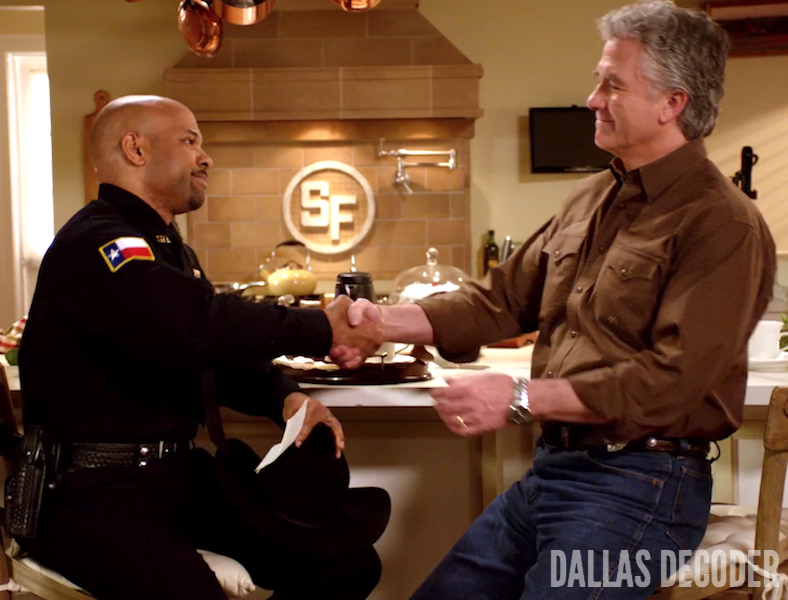
Draco and Duffy in “A Call to Arms”

Draco and Duffy in “A Call to Arms”

So tell me: Is Patrick Duffy as cool in real life as he is on the show?

He is very cool. He’s extremely down to earth. He’s a veteran. He’s been around the business a long time so he doesn’t let stuff get to him. Everyone on the show is great to work with. They’re all really nice people.

You also work in the tech sector, so acting is kind of a part-time thing for you. Is it something you’d like to do regularly?

I don’t know if I’d call it part-time. It’s one of those things that I do as much as I can. Some days, it’s full-time. Other days, it’s part-time. It’s such an unpredictable business in general. Because I’m one of the supporting characters on the show, I don’t really have a set schedule for when I’m going to be shooting. I usually find that out maybe a week in advance. But whenever I book [an acting job], I drop everything I’m doing and I’m all in. I would love to be able to be a writer and actor full-time. That’s my goal eventually. I would love to start with “Dallas” and commit more time to Sheriff Derrick and anything else that comes after that.

And “Akai Draco” is your stage name. How’d you come up with it?

When I first started acting, I knew I wanted a name that stood out. So I decided I was going to pick something that had some meaning to me. “Akai” is the Japanese word for red, which is my favorite color. And I picked a Japanese name because when I was a kid, I got into martial arts, which went on to become a big influence in my life. And “Draco” is Latin for dragon. I’ve always been a fan of dragons and I wanted a Latin name because my wife is Latina and my wife and kids are the other big influence in my life.

What do your kids think when they see you on TV?

My son’s in high school so he’s a little subdued but I can tell he likes me being on TV. He tells his friends about it. My daughter is 13 and she’s perhaps my biggest fan. Anytime she knows I’m going to be on TV, she tells her friends. She’s on Instagram. She posts pictures and stuff. All of her teachers, her friends know that Daddy is Sheriff Derrick. The other day we were in the mall at a restaurant and one of the girls behind the counter said, “Hey, are you on ‘Dallas’?” And my daughter was giggling. She loved it. We walked away and my daughter was like, “That is so cool!”

Plus, it’s got to be fun to have a dad who’s a sheriff.

Exactly. Historically, I play a lot of cops, so anytime she sees a show with a lot of police officers, she says, “Dad, you could be a better cop than him!” I’m happy being Sheriff Derrick right now. If they’d give Sheriff Derrick more screen time, I’d be even happier.

Speaking of sheriffs: Have you met Barry Corbin, who played Sheriff Washburn on the original “Dallas”?

I know of him. I’ve not met him. He recently sent me a note on Facebook, which I thought was pretty cool.

And in the small world department, it turns out you and I both grew up in Prince George’s County, Maryland.

My father is retired military, so when I was born we lived on Bolling Air Force base in Washington, D.C., and later Andrews Air Force Base in Maryland. We moved a couple of other places in between, but eventually settled in Upper Marlboro, Maryland. But for the most part I grew up in Prince George’s County. My parents are still there and my brother still lives in the area. I try to get home a couple of times a year.

Well let me say this: I’m no actor, but if ever Sheriff Derrick needs a deputy, your homeboy back here in D.C. will gladly volunteer for the part.

[Laughs] I’ll let them know.

Share your comments below and read more interviews from Dallas Decoder.

The Dallas Decoder Interview: Kevin Page

Kevin Page

Kevin Page

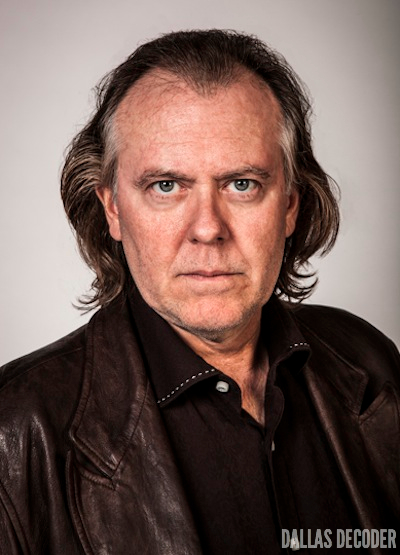
Kevin Page has charmed “Dallas” fans with his portrayal of Bum, the loyal private eye who helped J.R. execute his master plan. (Spoiler alert: This included executing J.R. himself.) I recently spoke to Page about his role on the show – and his place in TV history.

How does it feel to be the last guy who’ll ever shoot J.R.?

Well, I was honored when that script came through. It was also sort of an emotional experience because we had just finished working with Larry [Hagman], and all these issues of mortality and death were kind of fresh. So I was a little shocked. I suppose as an actor, I was also kind of pleased.

I can understand that. You’re the answer to a trivia question now.

Yes, I’ve been ribbed by a number of my friends. I’ve now become a “Jeopardy!” topic.

How did you find out Bum was going to be the triggerman?

About eight weeks before we finished the season, a director pulled me aside and said, “Do you know what’s going on with your character?” And I said, “Well, no, not really.” And in order to accomplish something that was necessary in the scene we were about to shoot, he had to tell me. He took me into my little trailer and we closed the door and he gave me about a two-line indication of what was to come.

What was your reaction? Were you shocked?

Yes, but I also had to go out and shoot a scene where I’m walking in the cold and talking on a cell phone. So I was, frankly, a little distracted. At that exact moment, I was trying to think of other things.

That’s the thing about Bum: You’re always on the phone!

[Laughs]

How do those scenes work? Does the director give you the other character’s lines and you have to react to them?

Usually you have the first assistant director who holds a copy of the script off-camera and he’ll read the other party’s lines. And you just say your lines and try not to overlap. You don’t want to be talking while they’re talking. You have to kind of concentrate as an actor because you want to make that sense of communication real.

Is it harder to do a scene like that as opposed to one where you’re face to face with another actor?

I don’t know if there’s a “harder” or “easier.” Every day as an actor is another set of challenges, problems or puzzles. And what you want to do is solve those puzzles as best you can. You want to make sure you know your lines and you can hit your marks and get the job done so the crew can go home!

Page and Larry Hagman

Page and Larry Hagman

So talk to me about working with Larry Hagman.

It was sort of like working with – this kind of sounds corny – TV royalty. I’ve read your website so I know I’m not adding anything new here, but Larry just had such an energy about him, that even in his 80s, he was just a stunning presence. He could light up a room. It was very difficult to describe, but the really big stars have some kind of quality similar to that. I guess you probably call it charisma. Larry had a lot of that. You could feel that firepower every time you spent time with him.

As a viewer, I can see that. You could feel it in his presence as well?

Oh, it was palpable. Absolutely. And he was a master actor. He was constantly cracking jokes and keeping everybody on their toes. He’d just zing you and crack up everybody. Often at your expense. I mean, the guy was a true genius comedian.

I’ve heard that one of his last scenes was the one in the courthouse men’s room during Ann’s trial.

That was the last scene he ever shot.

And you were there for that.

Absolutely.

When you think about that now, what’s it like to know you were part of Larry’s last scene?

I didn’t really know that was the case until several weeks later at the memorial. I walk in and some of the camera crew is telling me, “You shot the very last scene that Larry ever had.” … So really, honestly, I was sort of floored. It kind of gave me the chills.

It seems like there was more to that scene than what we saw. In the finished product, I don’t think you had any lines.

That happens a lot. The show is 42-and-a-half-minutes long. That’s pretty much a hard number. So I think everybody in the cast has given up pieces of scenes before. That’s just what you have to have if you want to have a rocking show that moves forward like a freight train, which is what I think we have.

Are you a fan of the show?

You know, I’ve been dying for somebody to ask me this question because I’ve thought about this a lot. I think the cast are the first fans. Because each and every one of us gets these scripts, and we’re reading them, and we’re laughing and crying and howling just like everybody else does when they watch the show at home. The cast is watching them on the TVs in our minds. I read a script and I wonder how Patrick [Duffy] is going to do that, or I wonder what Brenda [Strong] is going to do with that line. And then we get a chance to watch it when it airs. And we’re loving it and wanting to find out what happens next just like everybody else.

I want to ask you about two scenes that I loved as a fan, beginning with the one where Sue Ellen asks Bum to track down Lee Majors’ character. I think that’s the first time we saw you work with Linda Gray.

The only thing I can say about Linda Gray is that she’s just a fantastically charming and gracious woman of the cinema. She’s beyond words.

And you know, there was quite a bit of chemistry between Bum and Sue Ellen in that scene.

Are you trying to lead me somewhere, Chris? Because you know they don’t tell me nothing! I’m not going to follow you there, but you go ahead. [Laughs]

I have no inside information!

Neither do I! [Laughs]

But I thought, ‘Gosh, these two have something going here!’

Well, we absolutely have something going. Linda Gray is one of my very favorite actresses of all time and somebody I just adore working with. I hope that comes out when we share a screen together because she’s just fabulous.

Yeah, she is. Let me ask you about the big scene where it’s revealed that Bum is the “Who Killed J.R.?” triggerman. What was it like to film that?

That actually makes me recant my earlier comment about there are never any hard days as an actor because everybody on the set that day was particularly pumped up to try to make that real. Not only was it a scene that was important to the character that we all loved as “first fans,” but also it was our final salute to Larry. So we were really wound up and I spent probably eight hours that day weeping.

Oh, wow. Well, you’re fantastic in that scene.

Thank you very much. I appreciate that. I was proud of that.

And Patrick was great too.

Oh, Patrick was just off the hook. He was like a man possessed. He was amazing. It was easy to cry because you’re listening to this guy and he’s just tearing your heart out.

So that took all day to film?

Oh yeah, we were probably there six or eight hours, I think. And the whole thing was very secret. None of the crew had really seen the script, so a lot of people were really shocked that it was coming out as we were going along. Usually the crew is a pretty jocular bunch. It’s one of the great Texas crews. They’ve all worked together on various things for 25, 30 years. And everybody knows each other. We’re all pretty close, I think. But on that day, everybody was putting their head down and making it happen. Boy, I think we got results.

You sure did. So will Bum be back next season?

They literally don’t tell me anything. But I say between you, me and my mom, I’m voting he does come back!

You know, I think Bum would fit in well with the TNT lineup. I think we need a Bum spinoff.

“The Bum Chronicles”! We’ve talked about it as a joke on the set.

Kevin Page with one of his creations: a re-imagined version of Georges Seurat’s “Sunday Afternoon on the Island of La Grande Jatte”

Page with his interpretation of Georges Seurat’s “Sunday Afternoon on the Island of La Grande Jatte”

Even if it doesn’t happen, you have a nice second career going as an artist. Tell me about that.

It’s a strange story. A couple of years ago, I was presented with this opportunity by a scientist who had a robotic platform for painting in pointillism, which is a style of painting with thousands of little tiny strokes of paint that look like dots. And I thought that was so fascinating both as a business and as an artistic thing because I’ve been a painter and sculptor for years. So I took that on and ended up being the only person in the world to own this robotic platform. I now control four patents on the technology software and to my knowledge, I’m the only painter in the entire world that’s painting in monumentally scaled pointillism. So I’ve got an art dealer and I’m selling paintings. It’s been this crazy, unique thing. So that’s what I do on my off-time. I like to say that for my day job, I’m a fine art painter.

Well, between playing Bum and painting, you’re quite the renaissance man.

Yeah, who would think? Bum, a renaissance man. I love it!

Share your comments below and read more interviews from Dallas Decoder.

Tonight, Let’s Tweet About ‘Dallas’

No angry birds. Just happy tweets.

No angry birds. Just happy tweets.

“Dallas” may be over for the season, but that doesn’t mean Mondays have to be boring. Tonight, I’m inviting my fellow fans to join me on Twitter to chat about our favorite show.

Here’s how it’ll work: On Monday, April 29, from 9 to 10 p.m. Eastern time, I’ll tweet a question about TNT’s “Dallas” every five minutes or so. The theme will be a “Season 2’s Best and Worst,” so the questions will be about your favorite (and least favorite) storylines, characters, twists, et cetera. Each question will be numbered and include the hashtag #DallasChat, so your responses should do the same. A sample exchange:

Question: Q1. Who was your favorite “Dallas” guest star this season? #DallasChat

Response: A1. I loved Joan Van Ark’s return as Valene – but she didn’t have enough scenes! #DallasChat

You’re welcome to respond to what other people are saying about the show and to start “side conversations” of your own.

Two tips:

• During the chat, enter the hashtag #DallasChat in Twitter’s search field. This will help you watch the search results so you can follow the conversation. Be sure to click on “All” to see all the related tweets.

• Don’t forget to include the hashtag #DallasChat in each tweet you send so others can see your contributions to the conversation.

Hopefully we’ll have a fun, lively discussion. Who knows? If this little experiment succeeds, maybe we can do these chats on a regular basis.

So pop open a Miller Lite, grab your Microsoft Surface and head over to Twitter. See you there!

The Dal-List: 10 Reasons TNT Should Renew ‘Dallas’

Fired up! Ready to go!

Tanned. Rested. Ready.

“Dallas” fans know who killed J.R. and what happened to Pam, but one question remains unanswered: Will TNT renew the show for a third season? To help the good people at TNT make up their minds, here are 10 good reasons to give “Dallas” another year.

Ewing watch

Ewing watch

10. “Dallas” is TNT’s most-watched show (right now). TNT showed four original series this winter and spring: “Dallas,” the medical melodrama “Monday Mornings” and the cop shows “Southland” and “Boston’s Finest.” The “Dallas” telecasts averaged 2.7 million viewers, more than twice as many as any of the other shows. When you count DVR users who record “Dallas” and watch each episode within three days, the Ewings’ weekly audience rose to 3.5 million viewers. Now chew on this: the CW’s “Hart of Dixie” and “Beauty and the Beast” each average 1.5 million viewers per episode – and both shows just got renewed. What are you waiting for, TNT?

Roll on

Roll on, dude

9. Creatively, “Dallas” is on a roll. This show hit its stride in Season 2. The stories honored the classic “Dallas” themes, but with fun, fresh twists. “The Furious and the Fast” was like one of the old show’s Ewing Rodeo episodes, but with racecars instead of bucking broncos. “Who Killed J.R.?” echoed the most famous “Dallas” storyline of all time, but it was an even richer, more complex mystery. The new series has also expanded the “Dallas” universe by adding two more feuding families: the poor, proud Ramoses and the weird, wacky Rylands. The names may be new, but the conflicts – ambition, greed, lust – are “Dallas” all the way.

Love them Ewings

Love them Ewings

8. Critics love it. “Dallas” isn’t just adored by its fans; critics go gaga for the Ewings too. Season 2 scored an impressive “82” on Metacritic, which makes “Dallas” one of TV’s 10 best shows, according to the website. Variety’s hard-to-please critic Brian Lowry wrote the second-season opener “[clicks] on all cylinders, with plenty of bed-hopping, two-timing and Texas-sized dealmaking to go around.” In Entertainment Weekly, Henry Goldblatt praised the storytelling (“the plots are twistier than a fishtail braid”), while Jessica Shaw predicted viewers who watched “J.R.’s Masterpiece” would “shed enough tears to fill the TV legend’s ten-gallon hat.” She wasn’t kidding.

Agree

Consensus: “Dallas” is awesome

7. “Dallas” has something for everyone. Every Monday, I watch “Dallas” with the Twitterverse, where the kids swoon over hunks like Josh Henderson and Kuno Becker. And every Tuesday, I get a call from my mom, who wants to dish about the previous night’s episode, which she watches with her retirement community neighbors (“That Patrick Duffy is still so handsome!”). But “Dallas” doesn’t just bridge the generation gap. I talk to a lot of “Dallas” fans, and I know: This show appeals as much to blue-staters as it does to red-staters. Heck, if we want to break the gridlock in Washington, maybe we ought to make the politicians sit down and watch “Dallas” together.

Stay dry

Let the money pour in

6. The merchandising potential is enormous. The people who make the new “Dallas” have figured out something the producers of the old show never fully grasped: Fans don’t just want to watch “Dallas;” they want to experience it. HSN sells “Dallas” clothing and J.R.-branded bourbon is on the way, but that’s just scratching the surface. How about a “Dallas” soundtrack with all the cool music featured on the show? What about a line of John Ross Ewing prophylactics? Or maybe some Ann Ewing tissues, for those times when you need a good cry? Take it from me, TNT: There’s a lot more money to be made off this show. It is the Ewing way, after all.

All hail the queen

All hail the queen

5. Two words: “Linda Gray.” No one shined brighter during “Dallas’s” second season than Linda Gray, who delivered one amazing performance after another. Sue Ellen lost the election, maneuvered her way into Ewing Energies, fell off the wagon, flirted with Gary and Ken and blackmailed the governor into doing her bidding. Whew! Make no mistake: Gray has become “Dallas’s” star attraction. In the Washington Post, Hank Stuever praised Gray for discovering “new depth as an older and much wiser Sue Ellen. She is this show’s version of a dowager countess, and any scene she’s in is immediately improved.” We agree. Her performance alone merits a third season.

Mr. Cool

Mr. Cool

4. Two more words: “Patrick Duffy.” Patrick Duffy arrived on our television screens in “The Man From Atlantis” in 1977 and he’s pretty much been entertaining us nonstop ever since. “Dallas.” “Step by Step.” “The Bold and the Beautiful.” “Dallas” again. Does TNT want to be the channel to break this 36-year streak? I’m betting it doesn’t. Like Gray, Duffy just gets better with age. On the new “Dallas,” Bobby is still the good guy we know and love, but he’s also kind of a badass. Did you see that slow-mo walk he took after he set up Cliff Barnes in “Love and Family”? Bobby deserves another season to show us how friggin’ cool he is.

"Oh, my!"

“Now pick up my show.”

3. The rest of the cast rocks too. Besides Gray and Duffy, the new “Dallas” has the best cast on television. Jordana Brewster consistently delivers smart, convincing performances as Elena, Julie Gonzalo and Henderson are slyly charming as Pamela and John Ross, and as Christopher and Ann, Jesse Metcalfe and Brenda Strong are the best criers in prime time. “Dallas” is also the destination for television’s best guest stars. In Season 2, we got Judith Light as loony Judith Ryland, Lee Majors as dashing Ken Richards and Steven Weber as smirktastic Governor Sam McConaughey. Aren’t you eager to see who’ll show up next year?

TNT tradition

Traditions matter

2. “Dallas” is part of TNT’s history. In 1991, when TNT was three years old, the cable channel added “Dallas” reruns to its lineup and held a contest inviting fans to submit lyrics to the famous theme music. The winner: Brian McCullough, who I interviewed last year. His lyrics“Oh we own this / And we own that / As far as the eye can see! / From Texas soil / We pump Ewing Oil / Daddy Jock, brother Bobby / And me! / Yes, I’m J.R. / I’m known near and far / A rat in a town / That’s cat-free! / I make big deals / And I’ve got one that’s real / Merging “Dallas” with TNT!” See, TNT? “Dallas” is your heritage. And if the Ewings have taught us anything, it’s the importance of being true to your roots.

Dal-List - 10 Reasons TNT Should Renew Dallas 1

Make him proud

1. He’s watching. You know he is. Don’t disappoint him. Renew this show, TNT.             Why do you think “Dallas” should be renewed? Share your comments below and read more “Dal-Lists.”

TNT’s Dallas Scene of the Day: ‘I Shot Your Father, John Ross’

Bum, Dallas, Legacies, Kevin Page, Steve Jones, TNT

It was you, Bum

In “Legacies,” “Dallas’s” second-season finale, Bobby and Bum (Patrick Duffy, Kevin Page) visit J.R.’s gravesite.

BOBBY: Thank you, J.R., for taking care of all of us. Even from the great beyond.

A Southfork pickup truck arrives. John Ross and Christopher (Josh Henderson, Jesse Metcalfe) exit.

JOHN ROSS: Don’t you think it’s about time you told us what really happened to J.R.?

BOBBY: What do you mean?

CHRISTOPHER: You’ve been pulling our strings since the funeral, Dad. It’s time you trusted us.

BOBBY: You know basically what I know. Cliff Barnes is responsible for J.R.’s death.

JOHN ROSS: I’m not buying it, Uncle Bobby.

BOBBY: The Barnes/Ewing feud is over. You two can reset your futures. Never worry about Cliff Barnes again. What else do you need to know?

CHRISTOPHER: J.R.’s whole master scheme was in that letter. And you haven’t even come close to telling us what it really said. We’re out here now, all alone. It’s time.

BOBBY: [Looks at Bum, removes the letter from his coat pocket, begins to read as John Ross and Christopher walk closer] “Bobby, Doctors say I’ve only got a few days left. Damn cancer. I should have told you earlier, but you know how I detest pity.

JOHN ROSS: [To Christopher] My father was dying?

BOBBY: “The feud Digger Barnes started with our family caused more heartbreak than either of us has time to recount. Well, I guess you do have the time. Use it. Put an end to this feud, once and for all. I had Bum steal Cliff’s gun. That malignant little troll Barnes comes to Mexico every year for a Marlin fishing competition. I’m going to damn well stay alive long enough to be here when he arrives. Carlos del Sol will smooth out the rough edges in Mexico for you. And talk to Bum. He’s the final and most important piece of the puzzle. And the best friend I didn’t deserve to have. So remember the time that you got grounded for “borrowing” Daddy’s favorite shotgun? You swore up and down it wasn’t you but Daddy said there was no point in lying because he found those extra shells in your room. Well, we both know it was me who planted those shells. Now it’s time to play that card again. I can – ” It just goes on.

He turns away. Christopher embraces his father, takes the letter and resumes reading it.

CHRISTOPHER: “I can never make up for all the terrible, hurtful things I did to you, Bobby. And I have no excuses either one of us will believe. But I hope in the quiet place in your heart, where the truth lives, that my jealousy, as powerful as it was, was nothing compared to my love for you. Goodbye, baby brother. I guess I’ll be duck hunting with Daddy. I’ll tell him I was the one who borrowed his gun.”

JOHN ROSS: I’m sorry. I’m confused. Who shot my father, Uncle Bobby?

BUM: I shot your father, John Ross. He only had a few days left and he asked me to do it. He said that’s the way it had to be. It was the hardest thing I’ve ever had to do. Please believe that J.R.’s last act was an act of love. For his family. And for you.

John Ross walks toward Bum.

JOHN ROSS: The only person who could take down J.R. … was J.R.

John Ross shakes Bum’s hand. Bum wipes away a tear and leaves. Bobby hands John Ross the letter and walks away, leaving John Ross to kneel by the headstone.

JOHN ROSS: Thank you, Daddy, for watching over us. I love you.

Critique: TNT’s ‘Dallas’ Episode 25 – ‘Legacies’

Bobby Ewing, Dallas, Legacies, Patrick Duffy, TNT

Brother’s keeper

Will it surprise you to learn that I like “Legacies”? Probably not, judging by some of the comments I’ve received on this website and others lately. Some of you seem to think I’m too generous to the new “Dallas.” If I am, it’s only because I genuinely love the show. I’m also the first to admit it isn’t perfect, as “Legacies” demonstrates. This isn’t the finest hour in “Dallas” history, but it does a nice job resolving the “Who Killed J.R.” mystery and giving his death meaning. Ultimately, isn’t that what all of us want when we lose a loved one?

The episode’s best scene takes place in the Southfork graveyard, where John Ross and Christopher listen as Bobby finally reads aloud the letter J.R. left him. We learn J.R. was dying of cancer and put his master plan in motion because he wanted to end the Barnes/Ewing feud. The plan itself: J.R. had Bum shoot him so Cliff could be framed for J.R.’s “murder.” Outlandish? Sure, but there’s also something profound about the idea that J.R., the ultimate warrior, died wanting to make peace. It’s not out of character either. This is who J.R. was at the end of his life: a kinder, gentler scoundrel who wanted to protect his family, especially when it gave him an excuse to dig into his old bag of tricks.

The letter to Bobby is the centerpiece of Cynthia Cidre and Robert Rovner’s script. Even though Patrick Duffy and Jesse Metcalfe take turns reading the words, Larry Hagman’s voice is the one I hear. In my favorite passage, J.R. acknowledges the “terrible, hurtful” things he did to Bobby over the years, then adds: “I hope in the quiet place in your heart, where the truth lives, that my jealousy, as powerful as it was, was nothing compared to my love for you.” This isn’t the first time we’ve heard J.R. declare his love for his youngest brother, but it might be the first time Bobby has heard it. (In the past, Bobby was “dead” or unconscious when J.R. poured out his heart to him.) Anyone who has loved and lost a brother will find meaning in this moment.

The gravesite scene also gives us two unforgettable performances. The first comes from Duffy, whose tears move me like nothing else I’ve seen on “Dallas” this season. Bobby is usually such a pillar of strength; to see him lose his composure is touching. I’m also impressed with Kevin Page, who chokes up when Bum tells John Ross that he was the one who ended J.R.’s life. If you buy the premise that J.R. arranged his own death and that Bum pulled the trigger, it’s probably because Page is so convincing in this scene. Did you ever imagine you’d want to give Bum a hug?

“Legacies’” other big revelation comes at the top of the hour, when Christopher learns: a) his mother died of pancreatic cancer, and b) Cliff paid her doctor to create the illusion she was alive so Christopher couldn’t inherit her shares of Barnes Global. I wanted Victoria Principal to return to “Dallas” as much as anyone, but I also appreciate how this twist honors “Dallas” continuity. We last saw Pam in 1988, when we learned she had months to live. Now we find out she died in 1989. The math works. Much more importantly, this scenario redeems Pam. It always seemed out of character for her to abandon her family, so Cidre and Rovner’s script reveals Pam was undergoing experimental treatments so she could reunite with them. If nothing else, the new “Dallas” deserves credit for making sense of Pam’s absence, which was always one of the old show’s biggest blunders.

“Legacies” offers no such redemption for Cliff. To make the J.R.-killed-J.R. twist work, “Dallas” had to turn Cliff into a monster; otherwise, there was no chance the audience would accept the idea of the Ewings framing him for J.R.’s murder. A lot of fans are having a hard time believing Bobby would go along with this. I understand their incredulity, as well as their frustration with the historical rewriting that went into Cliff’s transformation. (His scheme to defraud Christopher must have started toward the end of the original show, when Cliff had become a pretty good guy.) Still, given the severity of Cliff’s crimes, is there any doubt he belongs in jail?

Even if you don’t like what happened to Cliff, you can’t deny Ken Kercheval gave the performance of his career this season. In “Legacies,” Kercheval makes you feel Cliff’s desperation and anger when the police drag him away in handcuffs (“I did not kill J.R.! I did not kill J.R.!”). There’s also something poignant about the scene where Bobby visits Cliff in that dingy Mexican jail. Here’s a son of Jock, giving the son of Digger one last chance to make peace. Confess to your real crimes, Bobby says, and I’ll help you beat this murder rap. But Cliff is defiant to the bitter end: “I have never done anything that the Ewings asked me to do, and I’m not going to start today.”

As far as I’m concerned, Cliff has to stay in jail for the duration of “Dallas.” If he gets out, J.R.’s master plan will fail and our hero’s final “victory” will be nullified. Of course, this doesn’t mean Kercheval can’t continue to appear in jailhouse scenes like the one we get at the end of “Legacies,” when Cliff anoints Elena (of all people!) as the Ewings’ latest antagonist by revealing J.R. cheated her father out of oil-rich land. This is an interesting twist, although the scene ends with a silly sound effect: After Kercheval delivers the last line (“Make the Ewings pay for the sins against your family”), listen closely and you’ll hear Hagman’s cackle mixed into the background music. (While we’re on the subject of poorly executed J.R. tributes, the painting of him revealed at the end of this episode is atrocious.)

“Legacies” director Steve Robin also gives us two memorable musical montages, one of the new show’s best signatures. The first sequence depicts the daughters of “Dallas” betraying their daddies: While Pamela plants the gun in Cliff’s trunk, Emma spikes Harris’s pancake batter, knocking him out long enough to sneak into his safe and swipe the evidence of his drug trafficking. These scenes play out to a reprise of “Liar,” the bluesy number from the Unknown that was previously heard in “False Confessions” when the police arrest Frank for Tommy’s murder.

The second “Legacies” montage, set to the Mavericks’ “Come Unto Me,” shows Elena visiting the heavily guarded compound of Joaquin, a mysterious friend from her childhood. Meanwhile, John Ross visits Emma, who gives him the rest of the papers she stole from Harris. I wasn’t crazy about the idea of John Ross cheating on Pamela, but once I saw the Hagman-esque glint in Josh Henderson’s eye and heard him deliver the scene’s kicker – “Just don’t tell my wife” – I was sold. (On a related note: Is that J.R.’s watch on John Ross’s wrist?)

Does “Legacies” have plot holes? You bet. It appears the police exhume J.R.’s body, pull the slugs out of the chest cavity (shouldn’t this have been done before the burial, by the way?) and match the bullets to Cliff’s gun, all in the time it takes Cliff and Pamela to fly from Dallas to Mexico and check into their hotel. That’s mighty swift police work, even by TV standards. Also, if the police decide to check out Cliff’s claims that he was framed, they could start by talking to the people who work at the bank where John Ross and Pamela planted the belt buckle in Cliff’s safe deposit box.

I suppose finding flubs like these is its own kind of joy, but I got a much bigger kick out of playing detective and trying to solve the “Who Killed J.R.” mystery. Don’t forget: This storyline was created on the fly by people who were working under tight pressure while simultaneously mourning the biggest star “Dallas” will ever know. All things considered, I think Cidre and company did a hell of a job. This was the most fun I had watching television in a long time. Isn’t that the point?

Grade: A

_______________________________________________________________________________________________________________________________________________

Cliff Barnes, Dallas, Ken Kercheval, Legacies, TNT

The bitter end

‘LEGACIES’

Season 2, Episode 15

Telecast: April 15, 2013

Writers: Cynthia Cidre and Robert Rovner

Director: Steve Robin

Audience: 2.9 million viewers on April 15

Synopsis: Christopher learns Pam died in 1989 and that Cliff has been paying her doctor to create the illusion she’s alive to prevent Christopher from inheriting her third of Barnes Global. Vickers is killed on Cliff’s orders. After John Ross and Pamela plant evidence to lead the police to Cliff, he’s arrested for J.R.’s murder. John Ross and Christopher persuade Bobby to read J.R.’s letter, which reveals he was dying of cancer and had Bum shoot him so Cliff could be framed. Harris is arrested after Emma exposes his role in the drug trafficking. Cliff sends Elena documents that prove J.R. stole oil-rich land from her father, prompting her to visit someone from her past named Joaquin. John Ross cheats with Emma, who brings him documents from Harris’s safe.

Cast: Sam Anderson (Dr. David Gordon), Emma Bell (Emma Brown), Karen Borta (reporter), Jordana Brewster (Elena Ramos), Cody Daniel (deliveryman), Akai Draco (Sheriff Derrick), Patrick Duffy (Bobby Ewing), Alex Fernandez (Roy Vickers), Marlene Forte (Carmen Ramos), Julie Gonzalo (Pamela Barnes), Linda Gray (Sue Ellen Ewing), Larry Hagman (J.R. Ewing), Josh Henderson (John Ross Ewing), Annalee Jefferies (Carina), Ken Kercheval (Cliff Barnes), Marcus M. Mauldin (Detective Bota), Benito Martinez (policeman), Jesse Metcalfe (Christopher Ewing), Kevin Page (Bum), Mitch Pileggi (Harris Ryland), Brenda Strong (Ann Ewing)

“Legacies” is available at DallasTNT.com, Amazon.com and iTunes. Watch the episode and share your comments below.