Critique: ‘Dallas’ Episode 29 – ‘John Ewing III, Part 2’

Dallas, John Ewing III Part 2, Linda Gray, Sue Ellen Ewing

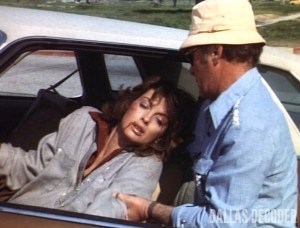
Crash test mommy

What a difference a year makes!

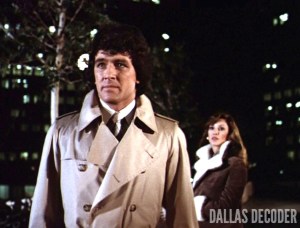
Sue Ellen has just four lines in “Digger’s Daughter,” “Dallas’s” first episode, but “John Ewing III, Part 2,” which debuted 369 days later, features the character in almost every other scene.

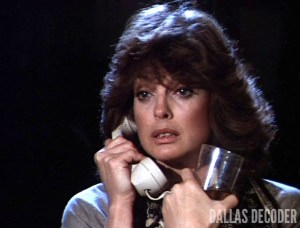
My favorite: When Sue Ellen tells Bobby that Cliff may be the father of her unborn child. This really isn’t a conversation as much as it is a monologue. For four-and-a-half uninterrupted minutes, Linda Gray delivers almost 500 words of heart-wrenching dialogue. It’s a tour-de-force performance, and it makes me appreciate how far Gray has come from those first-season episodes, when all she had to do was gaze adoringly at J.R.

The most surprising moment during Sue Ellen’s monologue comes when she kisses Bobby. No matter how many times I see the scene, the kiss is always a little startling. I used to find it odd how Patrick Duffy barely reacts to it, but I’ve decided it’s because the kiss isn’t a romantic gesture as much as it is an expression of Sue Ellen’s desperate loneliness.

Gray dominates “John Ewing III, Part 2,” but the other actors have good moments, too.

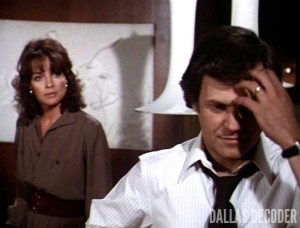
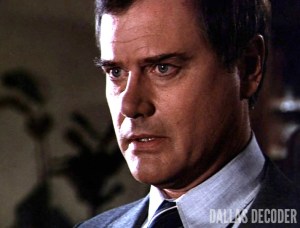
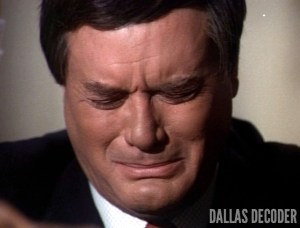
Larry Hagman’s performance in the final scene, when J.R. and Bobby sit at Sue Ellen’s bedside, is one of his most memorable. Despite all the rotten stuff J.R. does in the second season, it’s hard not to be moved when Hagman purses his lips, shuts his wet eyes and bows his head. J.R. has never seemed more human.

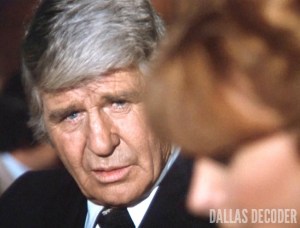
Ken Kercheval is equally moving in the penultimate scene, when Cliff sees Sue Ellen’s baby in the incubator and tearfully collapses into Pam’s arms. Like Duffy in Bobby’s scene with Sue Ellen, Victoria Principal doesn’t have much to do here, but she makes the most of it. I like how the actress moves from exasperation when Pam first spots Cliff in the hospital corridor to tears when he begins sobbing.

That Duffy and Principal shift so effortlessly from “Dallas’s” stars when the series begins to supporting roles in this episode reflect the cast’s evolution into a true ensemble.

What a difference a year makes, indeed.

Grade: A

________________________________________________________________________________________________________________________________________________
Dallas, John Ewing III Part 2, J.R. Ewing, Larry Hagman

Crying, shame

‘JOHN EWING III, PART 2’

Season 2, Episode 24

Airdate: April 6, 1979

Audience: 17.8 million homes, ranking 11th in the weekly ratings

Writer: Arthur Bernard Lewis

Director: Leonard Katzman

Synopsis: In the sanitarium, Sue Ellen bribes a nurse for booze, escapes and is injured in a car crash. Her doctors are forced to prematurely deliver her son, whom Jock names John Ross Ewing III. J.R. weeps as the lives of Sue Ellen and the baby hang in the balance.

Cast: Dimitra Arliss (Nurse Hatton), Barbara Bel Geddes (Miss Ellie Ewing), Karlene Crockett (Muriel Gillis), Jim Davis (Jock Ewing), Patrick Duffy (Bobby Ewing), Meg Gallagher (Louella), Ellen Geer (Dr. Krane), Linda Gray (Sue Ellen Ewing), Michael C. Gwynne (Dr. Rogers), Heidi Hagman (receptionist), Larry Hagman (J.R. Ewing), Peter Horton (Wayne), Dawn Jeffory (Annie Driscoll), Sherril Lynn Katzman (Susan), Ed Kenney (Senator Newberry), Ken Kercheval (Cliff Barnes), Jeanna Michaels (Connie), Victoria Principal (Pam Ewing), Alan Rachins (Dr. Miller), Charlene Tilton (Lucy Ewing)

“John Ewing III, Part 2” is available on DVD and at Amazon.com, iTunes and TNT.tv. Watch the episode and share your comments below.
Critique: ‘Dallas’ Episode 28 – ‘John Ewing III, Part 1’

Dallas, John Ewing III Part 1, Linda Gray, Sue Ellen Ewing

Indulged

To the list of recurring themes explored on “Dallas” – sibling rivalry, class warfare, the pitfalls of co-habitation – add this: the dangers of indulgence.

The Ewings enjoy life’s luxuries, but they also indulge each other’s bad behavior. This is particularly true for Sue Ellen, whose drinking problem grows progressively worse during the second season while everyone else politely looks away.

In “John Ewing III, Part 1,” the first half of the two-part season finale, we see how hard it is for the family to break this bad habit.

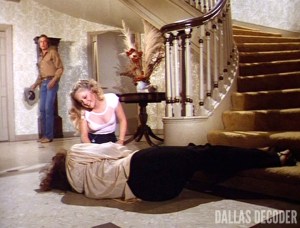
When Bobby and Pam discover Sue Ellen passed out drunk on the side of the road, they bring her home and Bobby forces the family to finally admit Sue Ellen’s drinking has gotten out of control. Jock and Miss Ellie tell J.R. he must help his wife – yet they refuse to confront Sue Ellen, even after she gets drunk again and tumbles down the Southfork stairs.

“I’ve got to stop wearing those ridiculously high-heeled shoes,” Sue Ellen says while recovering in her hospital room. “My baby’s much more important than fashion.”

“Well, sounds like a good idea to me,” Jock says.

“You must try and be more careful,” Ellie agrees.

I find myself wanting to reach through the screen and shake both Jock and Ellie. Don’t humor Sue Ellen; help her!

Not surprisingly, the family responds to Lucy’s worsening drug habit by repeating many of the mistakes they make with Sue Ellen.

When Lucy shows up on Ray’s doorstep, high-as-a-kite and slurring her words, his first instinct is to sober her up. “You don’t want Jock and Miss Ellie seeing you like this,” he says.

Ray seeks help from Bobby, who takes the same approach. Bobby stands with Lucy in the Southfork driveway and urges her to “go in that house just as if there’s nothing in the world wrong with you.”

By the end of the episode, good-guy Bobby has persuaded Lucy to stop abusing her pills. Yet I can’t help thinking if he really wanted to earn his white-knight bona fides, he’d get his family to kick their habit of enabling each other’s bad behavior.

Grade: B

________________________________________________________________________________________________________________________________________________

Charlene Tilton, Dallas, John Ewing III Part 1, Linda Gray, Lucy Ewing, Ray Krebbs, Steve Kanaly, Sue Ellen Ewing

Girls gone wild

‘JOHN EWING III, PART 1’

Season 2, Episode 23

Airdate: March 30, 1979

Audience: 17.5 million homes, ranking 14th in the weekly ratings

Writer: Camille Marchetta

Director: Leonard Katzman

Synopsis: A drunken Sue Ellen falls down the Southfork stairs but neither she nor her unborn child are hurt. J.R., realizing he can no longer ignore his wife’s alcoholism, has her committed to a sanitarium. Lucy is taking drugs, but Bobby persuades her to stop.

Cast: Barbara Bel Geddes (Miss Ellie Ewing), Jim Davis (Jock Ewing), Patrick Duffy (Bobby Ewing), Meg Gallagher (Louella), Ellen Geer (Dr. Krane), Linda Gray (Sue Ellen Ewing), Larry Hagman (J.R. Ewing), Peter Horton (Wayne), Dawn Jeffory (Annie Driscoll), Steve Kanaly (Ray Krebbs), Sherril Lynn Katzman (Susan), Ed Kenney (Senator Newberry), Ken Kercheval (Cliff Barnes), Jeanna Michaels (Connie), Victoria Principal (Pam Ewing), Charlene Tilton (Lucy Ewing)

“John Ewing III, Part 1” is available on DVD and at Amazon.com, iTunes and TNT.tv. Watch the episode and share your comments below.
Critique: ‘Dallas’ Episode 27 – ‘The Outsiders’

Dallas, Donna Culver, Outsiders, Ray Krebbs, Steve Kanaly, Susan Howard

Lady and the saddle tramp

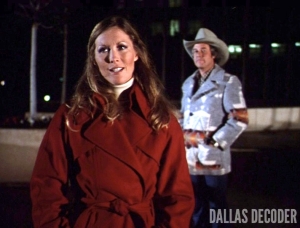
“The Outsiders” is an interesting meditation on politics and marriage. It was made more than three decades ago, but it feels refreshing in ways other “Dallas” episodes do not.

For years, we’ve watched one real-life political wife after another humiliated by their philandering husbands. “The Outsiders” offers a role reversal: Donna Culver, the young bride of political elder Sam Culver, is the cheating spouse.

Donna may not be a good wife, but she isn’t a bad person, either. She turns to Ray because she feels sexually unfulfilled. Donna is 28, while her husband is probably supposed to be in his 60s of 70s. (In real life, when “The Outsiders” debuted, Susan Howard and John McIntire, the actors who play Donna and Sam, were 35 and 71, respectively.)

I like how “Dallas” doesn’t try to justify Donna’s indiscretion by making Sam a bad guy. In fact, the show goes out of its way to depict the marriage as loving, even if it isn’t physical. Sam and Donna are also partners in a way that feels wonderfully progressive: Sam, a onetime governor who still wields a lot of influence in state politics, boasts about how he makes no decision without first consulting Donna.

(You might even say the Culvers’ marriage presages the real-life union of Bill and Hillary Clinton. Sam’s bragging about his wife’s intelligence and political savvy recalls Bill Clinton’s famous pledge in 1992 that voters who elected him would get “two for the price of one.”)

Sam and Donna’s sense of partnership isn’t lost on Sue Ellen. When J.R. suggests Donna is probably physically neglected, Sue Ellen retorts, “If they never made love, J.R., she has much more than I have. He cares about her. He takes her advice and he listens to her.”

“The Outsiders” concludes with Ray and Donna’s heart-wrenching farewell, but but my favorite moment in this episode comes in an earlier scene, when they sit in a bar and she asks him why “happy endings” seem so elusive.

This conversation is nicely written by Leonard Katzman and beautifully performed by Steve Kanaly and Susan Howard, who is rivaled only by Patrick Duffy when it comes to delivering breathy, soul-searching dialogue.

With this episode, Howard becomes a welcome addition to the “Dallas” constellation. Her performance leaves us wanting more, and fortunately, we won’t have to wait long for Donna’s return.

Grade: A

________________________________________________________________________________________________________________________________________________

Dallas, Donna Culver, John McIntire, Outsiders, Sam Culver

Old man out

‘THE OUTSIDERS’

Season 2, Episode 22

Airdate: March 16, 1979

Audience: 14.2 million homes, ranking 28th in the weekly ratings

Writer: Leonard Katzman

Director: Dennis Donnelly

Synopsis: When J.R. learns Ray is sleeping with Donna Culver, the young wife of political elder Sam Culver, he tries to blackmail her into persuading Sam to oust Cliff from his government perch. Instead, Donna ends the affair and comes clean to Sam, who forgives her and backs Cliff.

Cast: Barbara Bel Geddes (Miss Ellie Ewing), Jim Davis (Jock Ewing), Patrick Duffy (Bobby Ewing), Fern Fitzgerald (Marilee Stone), Meg Gallagher (Louella), Linda Gray (Sue Ellen Ewing), Larry Hagman (J.R. Ewing), Susan Howard (Donna Culver), Dawn Jeffory (Annie Driscoll), Steve Kanaly (Ray Krebbs), Joan Lancaster (Linda Bradley), John McIntire (Governor Sam Culver), Jeanna Michaels (Connie), Victoria Principal (Pam Ewing), Clint Ritchie (Bud Morgan), Charlene Tilton (Lucy Ewing)

“The Outsiders” is available on DVD and at Amazon.com and iTunes. Watch the episode and share your comments below.
Critique: ‘Dallas’ Episode 26 – ‘Royal Marriage’

Charlene Tilton, Dallas, Kit Mainwaring, Mark Wheeler, Royal Marriage

Beard and groom

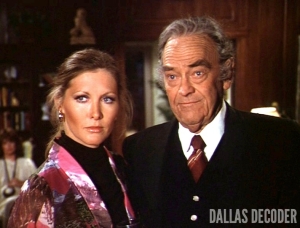
“Royal Marriage” is historically significant television. When this episode debuted in 1979, it offered one of prime time’s first positive depictions of a gay character: Kit Mainwaring, the closeted oil-and-cattle heir who becomes Lucy’s fiancée.

“Dallas” goes out of its way not to scorn Kit. This was a mark of progress in the ’70s, when gay characters were rarely seen on television, and when they did show up, they were usually depicted as clowns, freaks or sociopaths.

A year-and-a-half before “Dallas” introduced Kit, Billy Crystal’s gay character sashayed around in dresses on “Soap.” Earlier in the decade, a gay patient on “Marcus Welby, M.D.” was advised to “fight” his impulses so he could lead a “normal” life, while Angie Dickinson tangled with a trio of lesbian killers on “Police Woman.”

On “Dallas,” Kit is never depicted as comical, strange or dangerous. He becomes engaged to Lucy after a whirlwind romance, but realizes it would be wrong to marry her and comes out to Bobby, who is mostly sympathetic toward him. “Your personal life is your own business, Kit,” Bobby says. “But, damn it, why did you have to bring Lucy into it?”

Bobby is “Dallas’s” moral compass, so by making him respectful toward Kit, the show seems to instruct its audience to treat the character the same way. When Kit finally reveals the truth to Lucy, she is devastated but ultimately supportive, even telling him she’d like to remain friends.

This might seem a little pat, but Lucy probably understands Kit’s turmoil better than most. His feelings of alienation aren’t unlike Lucy’s own struggles to fit in at Southfork, where she is a young woman in a houseful of deceitful adults.

Predictably, J.R. is the only Ewing who isn’t supportive of Kit, mostly because the young man’s broken engagement to Lucy means the Ewings and Mainwarings won’t be joining forces in business. J.R. does exhibit a hint of homophobia, though, wondering if Kit is “man enough” to stand up to him. This prompts Bobby’s notable retort: “Kit Mainwaring is more a man, J.R., than you will ever be.”

Of course, the most striking part of Kit’s coming out isn’t how J.R. rejects him or Bobby and Lucy accept him – it’s how Kit accepts himself. He tells Lucy, “I’m not gonna change. I’m tired of trying. I’ve got to learn to like myself the way I am.”

Camille Marchetta’s sensitive script makes “Royal Marriage” one of “Dallas’s” classiest episodes. It’s also surprisingly durable, with one exception: Kit’s constant use of the word “homosexual” – no character in this episode ever says “gay” – makes it sound like he has a clinical condition.

“Royal Marriage” is also elevated by strong performances from Mark Wheeler and especially Charlene Tilton, who is quite touching during Kit’s coming-out scene. In interviews, Tilton has called “Royal Marriage” one of her favorite episodes, and I see why. The actress is really good here, demonstrating how interesting Lucy can be when she is given meaningful storylines.

“Royal Marriage” is a sentimental favorite of mine, too. I watched this episode for the first time in 1991, when I was a teenager struggling to accept my own homosexuality. Back then, seeing my favorite show offer a positive view of gay people meant a lot to me.

It still does.

Grade: A

________________________________________________________________________________________________________________________________________________

Dallas, Kit Mainwaring, Mark Wheeler, Royal Marriage

Prince of a gay

‘ROYAL MARRIAGE’

Season 2, Episode 21

Airdate: March 9, 1979

Audience: 15.8 million homes, ranking 20th in the weekly ratings

Writer: Camille Marchetta

Director: Gunnar Hellström

Synopsis: Lucy gets engaged to Kit Mainwaring, who is secretly gay. When Kit tells Lucy the truth and calls off the wedding, she is hurt but prevents J.R. from creating a scandal.

Cast: Robert Ackerman (Wade Luce), Barbara Bel Geddes (Miss Ellie Ewing), Linden Chiles (Chris Mainwaring), Dante D’Andre (Jesus), Jim Davis (Jock Ewing), Patrick Duffy (Bobby Ewing), Fern Fitzgerald (Marilee Stone), Linda Gray (Sue Ellen Ewing), Larry Hagman (J.R. Ewing), Steve Kanaly (Ray Krebbs), Joan Lancaster (Linda Bradley), Jay W. MacIntosh (Mrs. Mainwaring), Victoria Principal (Pam Ewing), Paul Sorensen (Andy Bradley), Charlene Tilton (Lucy Ewing), Mark Wheeler (Kit Mainwaring), Chuck Winters (Sam Gates), Buck Young (Seth Stone)

“Royal Marriage” is available on DVD and at Amazon.com and iTunes. Watch the episode and share your comments below.
Critique: ‘Dallas’ Episode 25 – ‘Call Girl’

Call Girl, Dallas, J.R. Ewing, Larry Hagman, Leanne Rees

Hooker by crook

To me, “Dallas” isn’t campy. It has silly moments, but even when the show goes over the top, it still has interesting things to say.

“Call Girl” is an exception. This episode is pure cheese, which can be fun but mostly makes me wince.

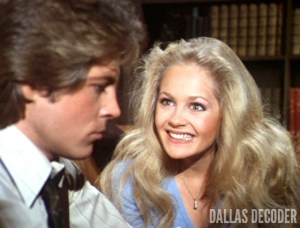
Everything about J.R.’s scheme here is absurd: the way Leanne sneaks into Pam’s bedroom and opens the drapes to give J.R.’s photographer a clear shot, Leanne’s clumsy attempt to lure the drunken Ben Maxwell into the room, Pam’s wild-eyed expression when she awakens to find him falling into her bed.

The whole thing plays like something from “Three’s Company” – only funnier.

The most ludicrous thing about Maxwell’s “threesome” is how it winds up on the Dallas Press’s front page under a Pearl Harbor-sized headline (“FINANCIER IN LOVE NEST”).

You have to wonder: Why is this newsworthy? Aren’t the Dallas Press’s editors afraid Maxwell, Pam or Leanne might sue them for libel? How did the paper manage to get the late-night “tryst” on the front page by the next morning? Was the article written by the same lightning-fast reporter behind the sensational coverage of Julie Grey’s death a few episodes ago?

Indeed, when “Call Girl” debuted, it became the latest “Dallas” episode to portray reporters as sleazy, which must have made the show seem out of step with the times.

Five years after the press brought down Nixon, journalists were being lionized in pop culture. On television, “60 Minutes” was a hit and the newspaper drama “Lou Grant” was a critical darling, while the box-office champs included “The China Syndrome,” which opened three weeks after “Call Girl’s” broadcast.

I realize “Dallas” isn’t concerned with depicting journalism fairly – on the show, the press serves as a plot device to expose the Ewings’ secrets – but as a onetime reporter, it’s disheartening to see my favorite show take a dim view of a profession I loved.

In fact, the only thing more bothersome is when “Dallas” takes a dim view of itself, which is what happens with “Call Girl.”

Grade: C

________________________________________________________________________________________________________________________________________________________________________________________________________________________

Ben Maxwell, Call Girl, Dallas, Fred Beir, Leanne Rees, Pam Ewing, Veronica Hamel, Victoria Principal

Staged bedfellows

‘CALL GIRL’

Season 2, Episode 20

Airdate: February 23, 1979

Audience: 12.7 million homes, ranking 37th in the weekly ratings

Writer: Rena Down

Director: Les Martinson

Synopsis: J.R. makes it look like Cliff’s political patron had a ménage a trios with Pam and her new roommate Leanne Rees. The man resigns but the scandal prompts Bobby and the Ewings to rally around Pam, who returns to Southfork.

Cast: Robert Ackerman (Wade Luce), Barbara Babcock (Liz Craig), Barbara Bel Geddes (Miss Ellie Ewing), Fred Beir (Ben Maxwell), Jim Davis (Jock Ewing), Patrick Duffy (Bobby Ewing), Linda Gray (Sue Ellen Ewing), Larry Hagman (J.R. Ewing), Veronica Hamel (Leanne Rees), Claude Earl Jones (Matt Henderson), Steve Kanaly (Ray Krebbs), Victoria Principal (Pam Ewing), Paul Sorensen (Andy Bradley), Charlene Tilton (Lucy Ewing), Mark Wheeler (Kit Mainwaring), Buck Young (Seth Stone)

“Call Girl” is available on DVD and at Amazon.com and iTunes. Watch the episode and share your comments below.
Critique: ‘Dallas’ Episode 24 – ‘Sue Ellen’s Sister’

Colleen Camp, Dallas, Kristin Shepard, Sue Ellen's Sister

Little sister dontcha

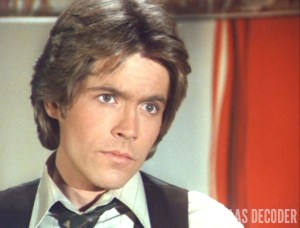
If Sue Ellen could go back in time and give her younger self a good talking-to, the conversation would probably sound a lot like the lecture she delivers to Kristin at the beginning of “Sue Ellen’s Sister.”

In the scene, Kristin is resting on a float in the Southfork swimming pool and chatting with Sue Ellen, who is lounging nearby. The topic turns to the Ewings’ wealth, and Sue Ellen warns Kristin that “money is not the most important thing in the world.”

“That isn’t what you used to think,” Kristin says.

“I thought I could save you from repeating my mistakes,” Sue Ellen responds.

“This is a mistake?” Kristin asks, surveying their surroundings.

The exchange is part of “Dallas’s” effort to make Sue Ellen a more sympathetic character than she was at the beginning of second season, when the show depicted her as Southfork’s scheming lady-in-waiting.

While “Dallas” uses Kristin to plum the depths of Sue Ellen’s regret and reveal her caring, sisterly side, Kristin isn’t just a plot device. She turns out to be a pretty interesting character in her own right.

Frankly, some of this stems from the actress’s physical appearance: Colleen Camp is beautiful but in an unconventional way, lending credence to Kristin’s complaints in this episode about growing up as Sue Ellen’s “ugly duckling” kid sister.

Kristin is also a bit ironic: She dreams of marrying a rich man, but she could probably become wealthy on her own. She is planning to go to college to study architecture – she tells Bobby she’s “a great fan” of Louis Khan and I.M. Pei – and she is also clever, declaring her ace backgammon and tennis skills stem from the “geisha training” her mother puts her through.

“Sue Ellen’s Sister” marks Kristin’s final appearance until the third season, when Mary Crosby takes over the role and the character abandons her architectural ambitions for, um, lesser pursuits.

This lends “Sue Ellen’s Sister” unexpected poignancy, particularly in the scene where Bobby and Kristin frolic in the Southfork pool and he tells her she looks like a “drowned rat.”

On this show, have more prophetic words ever been spoken?

Grade: B

________________________________________________________________________________________________________________________________________________

Colleen Camp, Dallas, Kristin Shepard, Sue Ellen's Sister

Shark!

‘SUE ELLEN’S SISTER’

Season 2, Episode 19

Airdate: February 16, 1979

Audience: 15.7 million homes, ranking 23rd in the weekly ratings

Writer: Camille Marchetta

Director: Irving J. Moore

Synopsis: J.R. pushes Sue Ellen’s visiting sister Kristin Shepard into the arms of Bobby, who gently rebuffs her. Cliff makes Pam an unwitting accomplice in his attempt to sabotage a Ewing Oil deal. Bobby salvages the deal but Pam still refuses to come home.

Cast: Barbara Bel Geddes (Miss Ellie Ewing), Colleen Camp (Kristin Shepard), Jim Davis (Jock Ewing), Patrick Duffy (Bobby Ewing), Meg Gallagher (Louella), Linda Gray (Sue Ellen Ewing), Larry Hagman (J.R. Ewing), Ken Kercheval (Cliff Barnes), John McLiam (Wally Kessel), Jeanna Michaels (Connie), Victoria Principal (Pam Ewing), Charlene Tilton (Lucy Ewing)

“Sue Ellen’s Sister” is available on DVD and at Amazon.com and iTunes. Watch the episode and share your comments below.
Critique: ‘Dallas’ Episode 23 – ‘The Red File, Part 2’

Bobby Ewing, Dallas, Pam Ewing, Patrick Duffy, Red File Part 2, Victoria Principal

Split decision

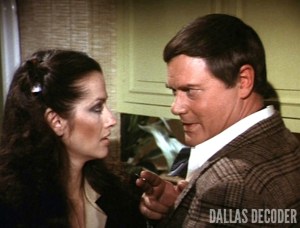
“The Red File, Part 2” plays a lot like a ’70s crime drama, with Bobby in the role of the dashing detective. He spends much of the episode tooling around town in his red convertible, chasing clues in his investigation into Julie’s death.

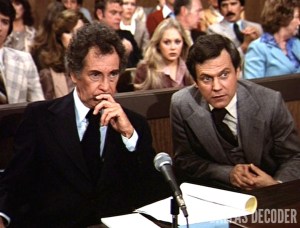
This installment also features some terrific “Perry Mason”-style legal theatrics, with the wonderful Walter Brooke commanding every courtroom scene as Cliff’s perpetually incredulous attorney, Cole Young. (Trivia: In “The Graduate,” Brooke portrayed Mr. McGuire, who famously advised Dustin Hoffman’s character to go into plastics.)

But “The Red File, Part 2” is mostly notable because the events of this episode change Bobby’s character, hardening his edges and forever altering his dynamic with J.R. The script demands a lot from Patrick Duffy, and he more than delivers. This is one of his best “Dallas” performances.

Bobby throws himself into his investigation not so much because he wants to clear Cliff’s name but because he needs to find out for himself how far J.R. is willing to sink. In the scene where Bobby confronts J.R. with the phony codicil to Jock’s will, Duffy makes Bobby’s indignation palpable. The character’s disappointment is downright heartbreaking.

The episode’s other pivotal scene comes at the end, when Bobby tells J.R., “For the first time in my life, I know exactly what you’re all about.”

This is the moment Bobby appoints himself J.R.’s guardian, the role he’ll occupy through the rest of “Dallas’s” run. It isn’t a job he wants, but after finally seeing J.R.’s red file, Bobby knows he’s the only member of the Ewing family with the moral compass – and the muscle – needed to keep his older brother in check.

It all culminates during “The Red File, Part 2’s” poignant finale, when Bobby tells Pam he isn’t willing to leave Southfork to save their marriage. The man who talked about wanting to “resign” from his family at the beginning of this episode knows that’s no longer an option, now that he’s charged himself with protecting the world from J.R.

Grade: A

________________________________________________________________________________________________________________________________________________

Cliff Barnes, Cole Young, Dallas, Ken Kercheval, Red File Part 2, Walter Brooke

Error and trial

‘THE RED FILE, PART 2’

Season 2, Episode 18

Airdate: February 9, 1979

Audience: 16.2 million homes, ranking 18th in the weekly ratings

Writer: Arthur Bernard Lewis

Director: Leonard Katzman

Synopsis: Cliff’s past is scrutinized at a hearing before his trial for Julie’s murder. Bobby uncovers J.R.’s red file and uses it to clear Cliff and squelch J.R.’s scheme to forge Jock’s will. Pam tells Bobby she isn’t ready to return to Southfork.

Cast: John Ashton (Willie Joe Garr), Barbara Bel Geddes (Miss Ellie Ewing), Walter Brooke (Cole Young), Jordan Charney (Lieutenant Sutton), Jim Davis (Jock Ewing), Patrick Duffy (Bobby Ewing), Meg Gallagher (Louella), Linda Gray (Sue Ellen Ewing), Larry Hagman (J.R. Ewing), John Harkins (Judge Potter), Ken Kercheval (Cliff Barnes), Jeanna Michaels (Connie), John Petlock (Dan Marsh), Victoria Principal (Pam Ewing), Charles Siebert (Assistant District Attorney Sloan), Charlene Tilton (Lucy Ewing), Sandy Ward (Jeb Ames)

“The Red File, Part 2” is available on DVD and at Amazon.com and iTunes. Watch the episode and share your comments below.

Critique: ‘Dallas’ Episode 22 – ‘The Red File, Part 1’

Dallas, Julie Grey, Red File Part 1, Tina Louise

Dead woman’s dive

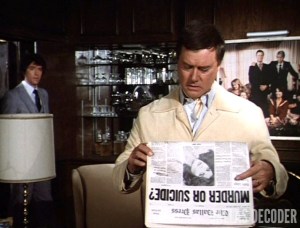
MURDER OR SUICIDE?

I love the Dallas Press’s screaming headline in “The Red File, Part 1.” When Jock sits down at the Southfork breakfast table and cracks open that newspaper, I crack up.

Why does the demise of Julie, an unemployed secretary, merit a front-page, all-caps banner? What’s with the glamour shot that accompanies the story? And what crackerjack reporter got the story of Julie’s late-night death in the paper – and on page 1, no less – in time for the next day’s morning edition?

As for the question the headline poses, we may think we know the answer – Julie’s death was neither murder nor suicide; she slipped and fell – but I’m not sure it’s that cut-and-dried.

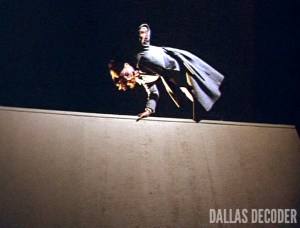
Director Leonard Katzman shoots her death scene at night, shrouding the actors in darkness, so it’s hard to see what happens in the seconds after Julie breaks out of Willie Joe’s grip and the moment she goes airborne.

What if she jumps?

Consider this: Julie is pretty distraught when she goes to the rooftop – and she knows Jeb and Willie Joe are going to kill her anyway – so what if she makes a split-second decision to do herself in?

Also, consider how Jock matter-of-factly announces her death at the Southfork breakfast table. Didn’t he almost have an affair with Julie in the previous episode?

J.R.’s reaction is also oddly muted. Yes, when he learns about Julie’s death, he retreats to the Southfork den, pours himself a stiff one (it’s breakfast time!) and looks glum, but he recovers soon enough. Within hours, J.R. is hatching a plot to frame Cliff for Julie’s death.

If he really cared about this woman, wouldn’t he want to find her real killers?

Maybe Jock and J.R.’s reactions tell us what Julie already knew: In the end, after all those years of service to the Ewings, she simply didn’t matter that much to them.

Grade: B

________________________________________________________________________________________________________________________________________________

Bobby Ewing, Dallas, J.R. Ewing, Larry Hagman, Patrick Duffy, Red File Part 1

Which is it?

‘THE RED FILE, PART 1’

Season 2, Episode 17

Airdate: February 2, 1979

Audience: 13.9 million homes, ranking 30th in the weekly ratings

Writer: Arthur Bernard Lewis

Director: Leonard Katzman

Synopsis: Cliff becomes the state’s land-use chief. Julie dies during a rooftop confrontation with Jeb and Willie Joe, who don’t want her to expose their secrets. When Cliff is arrested for Julie’s murder, Pam believes J.R. framed him and leaves Southfork.

Cast: John Ashton (Willie Joe Garr), Fred Beir (Ben Maxwell), Barbara Bel Geddes (Miss Ellie Ewing), James Brown (Detective Harry McSween), Jordan Charney (Lieutenant Sutton), Jim Davis (Jock Ewing), Patrick Duffy (Bobby Ewing), Fern Fitzgerald (Marilee Stone), Meg Gallagher (Louella), Linda Gray (Sue Ellen Ewing), Larry Hagman (J.R. Ewing), Steve Kanaly (Ray Krebbs), Ken Kercheval (Cliff Barnes), Tina Louise (Julie Grey), Jeanna Michaels (Connie), John Petlock (Dan Marsh), Victoria Principal (Pam Ewing), Charlene Tilton (Lucy Ewing), Sandy Ward (Jeb Ames), Charles Wilder Young (Charlie Waters)

“The Red File, Part 1” is available on DVD and at Amazon.com and iTunes. Watch the episode and share your comments below.
Critique: ‘Dallas’ Episode 21 – ‘Julie’s Return’

Dallas, Jim Davis, Jock Ewing, Julie Grey, Julie's Return, Tina Louise

It’s just lunch

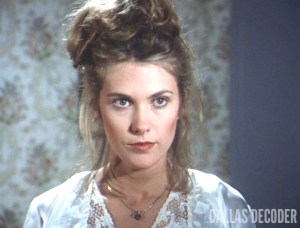
Julie Grey is “Dallas’s” most aptly named character. She inhabits a world with no absolutes, where nothing is only black or only white. Julie is all gray.

In “Julie’s Return,” J.R.’s onetime mistress and secretary blows back into town and renews her friendship with Jock. Like she did with J.R., Julie becomes Jock’s confidante, giving him the ego boost he needs as he recovers from the heart attack he suffered at the beginning of the second season.

In this episode’s best scene, Miss Ellie summons Julie to Southfork to find out why she is spending so much time with Jock. Julie tells her they are close friends.

“Our relationship is not what you thought it was,” Julie says.

“No, Julie. It’s far more serious,” Ellie responds.

Aside from being a great moment of domestic soap opera, this conversation reminds us how Julie, in the first-season episode “Spy in the House,” fails to recognize her relationship with J.R. is toxic until it’s too late. The pattern continues here: Julie refuses to acknowledge her friendship with Jock is inappropriate.

If a lesser actress played Julie, the audience would probably resent the character for coming between Jock and Ellie, but Tina Louise’s sympathetic performance makes that impossible. We don’t root for Julie here, but we recognize her humanity.

Listen to how Julie describes her relationship with Jock during her conversation with Miss Ellie: “For that man to need my friendship, to want my company, you don’t know what that means to me.” This is a woman who finds validation in her relationships with men. It’s sad.

Julie has a lot in common with another woman on “Dallas:” Sue Ellen. Is it a coincidence J.R.’s wife and mistress both suffer from such achingly low self-esteem?

Just as Julie and Sue Ellen remind me of each other, the Julie/Jock/Ellie triangle makes me realize how closely “Julie’s Return” mirrors “Old Acquaintance,” an earlier second-season episode.

In both installments, a Ewing wife (Pam in “Old Acquaintance,” Ellie in “Julie’s Return”) feels threatened when her husband (Bobby, Jock) begins spending his free time with a woman from his past (Jenna, Julie).

“Dallas” acknowledges these parallels in “Julie’s Return” when Pam confronts a weepy Ellie in her bedroom and urges her to fight for her marriage. It’s a great scene and another reason why this episode is among the second season’s strongest.

Grade: A

________________________________________________________________________________________________________________________________________________

Dallas, Julie Grey, Julie's Return, Tina Louise

She’s baaack

‘JULIE’S RETURN’

Season 2, Episode 16

Airdate: January 26, 1979

Audience: 14.8 million homes, ranking 32nd in the weekly ratings

Writer: Rena Down

Director: Les Martinson

Synopsis: Julie returns to Dallas and renews her friendship with Jock. With Miss Ellie’s prodding, Jock ends the relationship, sending Julie back into J.R.’s arms.

Cast: Barbara Bel Geddes (Miss Ellie Ewing), Jim Davis (Jock Ewing), Patrick Duffy (Bobby Ewing), Fern Fitzgerald (Marilee Stone), Meg Gallagher (Louella), Linda Gray (Sue Ellen Ewing), Larry Hagman (J.R. Ewing), Ken Kercheval (Cliff Barnes), Tina Louise (Julie Grey), Jeanna Michaels (Connie), Victoria Principal (Pam Ewing), Richard Roat (Victor), Charlene Tilton (Lucy Ewing), Kenneth White (Seth Stone)

“Julie’s Return” is available on DVD and at Amazon.com and iTunes. Watch the episode and share your comments below.

Critique: ‘Dallas’ Episode 20 – ‘For Love or Money’

Cliff Barnes, Dallas, For Love or Money, Ken Kercheval, Linda Gray, Sue Ellen Ewing

End of the affair

The theme of “For Love or Money” is how relationships are like child’s play. Throughout the episode, the Ewings and Barneses mimic schoolyard behavior – not because “Dallas” wants to trivialize the characters and their situations, but because it wants to put them in a context the audience can understand.

The story gets underway when Sue Ellen lunches with her girlfriends at a posh hotel, where she regales them with tales of her perfect marriage. Everyone knows Sue Ellen is lying, but they humor her the way amused parents indulge children who fib.

The charade continues when the women are leaving the hotel and one spots J.R. in the lobby with a pretty blonde. “You know, if Sue Ellen hadn’t told us J.R. was in Austin, I’d have sworn that was him,” one of the girlfriends “whispers” to another. Sue Ellen pretends not to hear.

That evening, Sue Ellen confronts J.R., but he refuses to agree to stop philandering, so she leaves Southfork and spends the night with Cliff. The next morning, it’s J.R.’s turn to play make-believe: Miss Ellie notices Sue Ellen’s car is missing from the driveway and asks where she has gone so early. J.R. lies and says his wife is off doing “ladies’ things” with her visiting mother, Patricia.

Allusions to other childhood pursuits abound. Sue Ellen hides in Cliff’s bathroom when Pam drops by his apartment. When Cliff buys a suit at The Store and tells Pam he wants to look like “a winner,” it’s not unlike a child playing dress-up. The building models in his office resemble toy blocks.

There’s even some follow-the-leader-style parroting: In the episode’s final moments, Cliff ends his affair with Sue Ellen by quoting J.R.

“Maybe I’ve got to learn to play the other man’s game,” Cliff says.

“So that’s what it is, just a game?” Sue Ellen tearfully asks. “The winner takes the marbles and goes home? Is that what I am – just the marbles?”

Linda Gray’s performance here is heartbreakingly beautiful, and so is Leonard Katzman’s dialogue. More than anything else in “For Love or Money,” this scene reminds us that when the Ewings play games, no one really wins.

Grade: A

________________________________________________________________________________________________________________________________________________

Dallas, For Love or Money, J.R. Ewing, Larry Hagman

Master of the game

‘FOR LOVE OR MONEY’

Season 2, Episode 15

Airdate: January 14, 1979

Audience: 14.6 million homes, ranking 33rd in the weekly ratings

Writer: Leonard Katzman

Director: Irving J. Moore

Synopsis: Sue Ellen leaves J.R. and moves in with her mother Patricia and younger sister Kristin, who’ve moved to Dallas to be close to Sue Ellen during her pregnancy. Sue Ellen reunites with Cliff, but when J.R. warns him having an affair with a married woman could ruin his political career, Cliff dumps her and she returns to J.R.

Cast: Barbara Bel Geddes (Miss Ellie Ewing), Fred Beir (Ben Maxwell), Colleen Camp (Kristin Shepard), Jim Davis (Jock Ewing), Patrick Duffy (Bobby Ewing), Fern Fitzgerald (Marilee Stone), Linda Gray (Sue Ellen Ewing), Larry Hagman (J.R. Ewing), Steve Kanaly (Ray Krebbs), Ken Kercheval (Cliff Barnes), John Petlock (Dan Marsh), Victoria Principal (Pam Ewing), Martha Scott (Patricia Shepard), Charlene Tilton (Lucy Ewing)

“For Love or Money” is available on DVD and at Amazon.com and iTunes. Watch the episode and share your comments below.