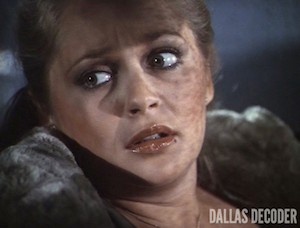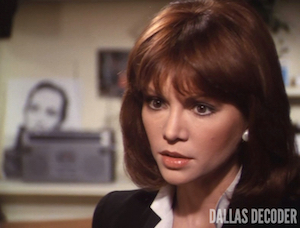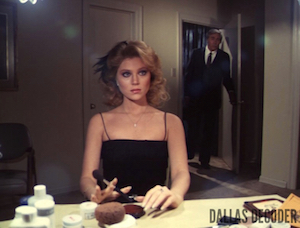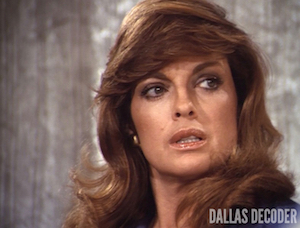
Critique: ‘Dallas’ Episode 103 – ‘Goodbye, Cliff Barnes’

Cliffhanger

Cliffhanger

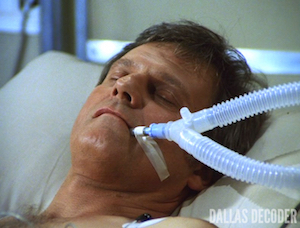
“Goodbye, Cliff Barnes” leaves the title character’s fate up in the air after he tries to kill himself, making this the most literal of all “Dallas” cliffhangers. For a long time, I also considered it one of the show’s least satisfying season finales. Was there ever any doubt Cliff would survive?

I now realize that’s not the real question here. Cliff is merely a supporting player in the bigger story of “Dallas’s” fifth season: J.R.’s fight to reclaim Sue Ellen and John Ross. As the year draws to a close, everything is going his way – until Cliff, depressed over being beaten by J.R. yet again, overdoses on tranquilizers. Suddenly, J.R.’s grand plan to reunite his family looks like it’s going to collapse.

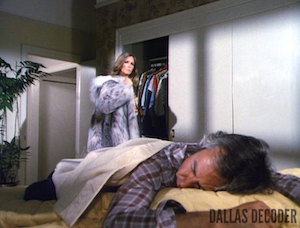
The final scene is telling. J.R. and a guilt-ridden Sue Ellen hover at the hospital bedside of the comatose Cliff. “If Cliff dies, I don’t think I’ll ever be able to marry you,” she says. Larry Hagman inhales, and as the frame freezes and the executive producer credit flashes, the image we’re left with isn’t Cliff with that tube coming out of his mouth; it’s a shot of an anxious – and possibly conscience-stricken – J.R.

You have to admit: This is a pretty nifty trick by the people who made the show. Cliff is the character who might be dying, but J.R. is the one we’re worried about. This cliffhanger is also the act of confident storytellers. Although “Dallas’s” ratings dropped during the 1981-82 season from the “Who Shot J.R.?”-inflated highs of the previous year, it was still the most popular show on television. The producers knew they didn’t need a gimmicky finale to keep the audience hooked.

Of course, even though “Goodbye, Cliff Barnes” keeps the focus on Hagman, don’t overlook Ken Kerchval. He delivers his most moving performance since Cliff’s reunion with Rebecca at the end of the previous season. Kercheval is especially heartbreaking in the scene where Cliff begs Sue Ellen to take him back. “I know I can start over. I know I can build a new life if you’ll just believe in me and love me,” he says through sobs. This is why I love Kercheval: He’s never afraid to show us Cliff at his most pathetic. Kercheval is probably “Dallas’s” bravest actor.

Linda Gray does a beautiful job in this scene too. Tears streak her face when Sue Ellen rejects Cliff’s plea and tells him she has accepted J.R.’s marriage proposal. “Cliff, I don’t want to see you again. Please go,” she says. Bruce Broughton’s background music, which includes those exquisite strings, adds to this scene’s tragic spirit. (I also love Gray’s breathy delivery in the episode’s final moments. “If Cliff dies, I don’t think I’ll ever be able to marry you” is one of those bits of “Dallas” dialogue I like to go around quoting, not because it’s such a great line but because it’s so much fun to imitate Gray’s performance. Try it yourself sometime.)

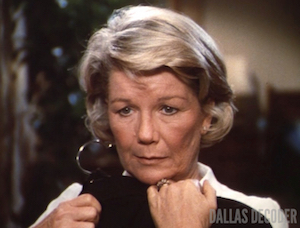
Two other scenes in “Goodbye, Cliff Barnes” mine “Dallas’s” rich history. In the first, Cliff gets drunk in a dive bar, evoking memories of Digger’s debut in “Dallas’s” first episode. Later, Rebecca storms into Southfork, confronts Miss Ellie and points out how the Barnes men always seem to end up carrying torches for Ewing women. It’s a great moment not just because Barbara Bel Geddes and Priscilla Pointer are such fun to watch, but also because it’s nice to see their characters finally acknowledge the complicated history they share.

Other highlights: The glamorous shot of J.R. and Sue Ellen kissing after a night at the symphony. The fun scenes of Bobby and Pam chasing down clues about Christopher’s paternity in Los Angeles (even if Pam forgives Bobby a little too easily for initially lying about the child’s identity). Howard Keel’s nice performance in the scene where Clayton scuttles his plan to propose to Sue Ellen.

None of this makes “Goodbye, Cliff Barnes” the show’s best cliffhanger, but it’s certainly much better than I remembered. Then again, that’s turned out to be true for much of the fifth season. These episodes are three decades old, but they still manage to surprise me. It’s another reason “Dallas” is such a durable show.

Grade: B

_______________________________________________________________________________________________________________________________________________
Dark of the moon

Dark of the moon

‘GOODBYE, CLIFF BARNES’

Season 5, Episode 26

Airdate: April 9, 1982

Audience: 27.9 million homes, ranking 1st in the weekly ratings

Writer: Arthur Bernard Lewis

Director: Irving J. Moore

Synopsis: Sue Ellen accepts J.R.’s marriage proposal and breaks the news to Cliff, who tries to kill himself by overdosing on tranquilizers. After Rebecca vows revenge, Miss Ellie promises to oust J.R. as Ewing Oil’s president. Bobby and Pam learn Farraday, not J.R., fathered Christopher. Lucy tells Muriel that Roger raped her.

Cast: Tyler Banks (John Ross Ewing), Barbara Bel Geddes (Miss Ellie Ewing), Karlene Crockett (Muriel Gillis), Patrick Duffy (Bobby Ewing), Phyllis Flax (Mrs. Chambers), Fern Fitzgerald (Marilee Stone), Linda Gray (Sue Ellen Ewing), Larry Hagman (J.R. Ewing), Susan Howard (Donna Krebbs), Bob Hoy (Detective Howard), Steve Kanaly (Ray Krebbs), Howard Keel (Clayton Farlow), Ken Kercheval (Cliff Barnes), Audrey Landers (Afton Cooper), Priscilla Pointer (Rebecca Wentworth), Victoria Principal (Pam Ewing), Charlene Tilton (Lucy Cooper)

“Goodbye, Cliff Barnes” is available on DVD and at Amazon.com and iTunes. Watch the episode and share your comments below.
Oh, ‘Pioneers’! Soaps Tribute is a Sprint Down Memory Lane

Knots Landing, Michele Lee, PBS

Along came Polly

“There’s not a show on right now, at this moment, that isn’t soap,” Joan Van Ark declares during PBS’s “Pioneers of Television” tribute to the nighttime soap operas of the 1980s. She’s referring to the emergence of serialization as the dominant form of storytelling in prime time, and so she has a point. Carrie and Brody, Walt and Jesse, Don and Peggy. On television, no one’s story ends anymore.

This would seem to be the most enduring legacy of the ’80s soaps, but Van Ark’s trenchant observation is the closest “Pioneers” comes to addressing it. The 52-minute retrospective, which most PBS stations will air tomorrow night, recalls three shows – “Dallas,” “Dynasty” and “Knots Landing” (sorry “Falcon Crest” fans) – through the usual mix of talking heads and old clips. But with lots of ground to cover and so little time to do it, the interviews become sound bites and the clips become snips. This is a sprint down memory lane.

“Dallas” fans will appreciate the prominence given to Larry Hagman, who recorded his interview before his death last fall. We also get to hear from Patrick Duffy, Linda Gray and Charlene Tilton, although some of their stories and the scenes that accompany them will be all-too-familiar to “Dallas” diehards. Prepare to see Kristin pump J.R. full of lead for the umpteenth time, and to hear again how that bogus Irish Spring commercial provided the cover to film the dead Bobby’s reanimation in Pam’s shower. Isn’t it time to let the “Dallas” cast reminisce about something other than the show’s cliffhangers?

There are a few surprises. I had forgotten how Hagman’s role as a slick Texas businessman in the 1974 flick “Stardust” helped him slide into J.R.’s boots four years later. It’s also fun to see photos of the young, dreamy Hagman, and to hear him recall how he and Joan Collins dated as teenagers. Wisely, the “Pioneers” producers also give Hagman the last word, and his too-humble assessment of his performance as J.R. allows the program to end on a graceful, poignant note.

The most interesting moment overall comes when narrator Ryan Seacrest (yes, him) points out the ’80s soap were “among the whitest shows on television.” “Dynasty” is justly praised for casting Diahann Carroll in a starring role, and we’re reminded that “Knots Landing” once moved an African American family, the Williamses, onto the cul-de-sac, only to shift the characters to the backburner. Lynne Moody, who played Pat Williams, recalls how she grew frustrated with her lack of screen time and asked the “Knots Landing” producers to let her out of her contract. They agreed. Her tone suggests she regrets that decision a little now.

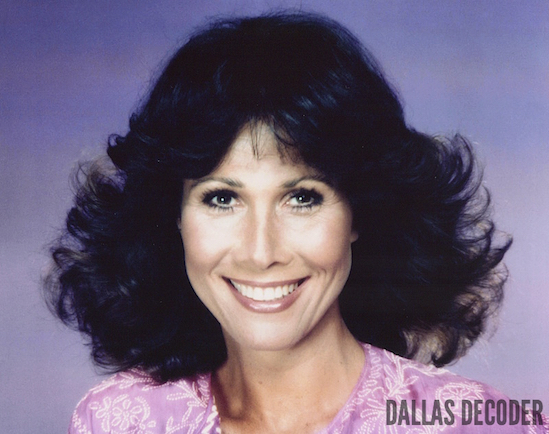
Unfortunately, “Pioneers” ignores the influence the soaps had on television’s depiction of women, which is probably the genre’s other significant legacy. Victoria Principal’s Pam Ewing was one of the medium’s first sexually liberated heroines, and “Dynasty” and “Knots Landing” deserve credit for showing women could be every bit as savvy as men in the world of big business. But “Pioneers” breezes past all that and instead gives us the usual blather about shoulder pads and catfights. At least we get to hear Michele Lee’s “Pollyanna speech” from “Knots Landing,” which feels more resonant today than it did two decades ago.

It might also have been nice if the producers had invited some of the stars of today’s prestige serials to comment on the ’80s soaps, the way Tina Fey paid tribute to Mary Tyler Moore and Lucille Ball during last week’s “Pioneers” tribute to comedic women. If nothing else, PBS should have let us hear from some of the stars of its own hit soap, “Downton Abbey.” After all, if it wasn’t for Bobby and Pam, would there be a Matthew and Mary?

Most PBS stations will broadcast “Pioneers of Television: Primetime Soaps” on Tuesday, January 22, at 8 p.m. Eastern. Watch the show, share your comments below and read more opinions from Dallas Decoder.

Critique: ‘Dallas’ Episode 102 – ‘Acceptance’

The emperor's clothes

The emperor’s clothes

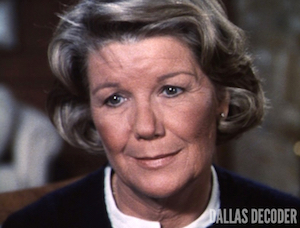
The scene everyone remembers from “Acceptance” is the one where the grieving Miss Ellie goes on a rampage in the Southfork kitchen, smashing every dish in sight before tearfully collapsing onto the floor. This is a big, dramatic moment and it never fails to give me chills, but it’s not the only great performance we get from Barbara Bel Geddes in this episode. The quiet moments that come before Ellie’s breakdown are just as moving. They deserve to be remembered too.

More than anything, “Acceptance” is about the journey Ellie takes before she comes to terms with Jock’s death. It begins when Ray visits Ellie on another rainy night at Southfork and suggests she forgive Donna for wanting to write an unflattering book about Jock. Steve Kanaly’s monologue consists of more than 350 words, and he delivers every one beautifully. I also love how Bel Geddes holds her own against Kanaly, even though she is almost completely silent. The look on Bel Geddes’ face tells us everything we need to know. Ellie isn’t really mad at Donna. She’s angry because the husband she loved has died and left her alone.

Virtually every scene that follows demonstrates how Bel Geddes can say more with a smile or a furrowed brow than most actors can with a script full of dialogue. Watch how her expression changes in the scene where Punk invites Ellie to accompany him and Mavis to the Oil Barons Ball. Bel Geddes is so sweet in the way Ellie politely declines Punk’s invitation, but once he tells her about the plan to introduce a memorial scholarship in Jock’s name, her expression shifts to shock, hurt and sadness, all within a matter of seconds. How does she do that?

The poignant moments keep coming. A pensive Ellie strolls around the Southfork grounds, recalling the walk she takes in the classic “Ellie Saves the Day.” She visits the stables and lovingly strokes Blazer, Jock’s horse. “You miss him too, don’t you?” she says. And the biggest heartbreaker of all: when Ellie stands in Jock’s bedroom closet and gently touches his clothes. (In a nice touch, the producers appear to have stocked this set with pieces from Jim Davis’s “Dallas” wardrobe, including the powder blue suit he memorably sported in “Runaway” and the white-dotted bathrobe he wore during the third season.)

Of course, as good as Bel Geddes is, she gets plenty of support from director Michael Preece, who always brings out the best in the “Dallas” cast, and Will Lorin, whose script is full of details that ring true. My favorite of these moments comes in the second act, when Lucy enters Ellie’s bedroom to announce Punk’s arrival. “Tell him I’ll be right there. Offer him a drink,” Ellie says. Offer him a drink. It’s a small line, but it tells us so much about Ellie’s devotion to keeping up appearances, even when she’s in mourning. This is exactly what we expect a woman of Ellie’s generation and stature to tell her granddaughter when company arrives.

Ellie’s struggle reaches its crescendo when she has her breakdown in the kitchen. The sequence begins with the Ewings gathered in the Southfork dining room. As the other characters chatter (listen closely and you’ll hear J.R. and Pam being cordial to each other), Preece slowly zooms in on Ellie’s face as she notices Jock’s empty chair at the other end of the table. Quickly and quietly, she excuses herself and goes into the kitchen, where she orders Teresa to leave. Suddenly, Ellie is overcome with emotion and begins smashing the dishes.

When I interviewed the wonderful Michael Preece last month, he told me Bel Geddes didn’t want to do multiple takes because the material was so gut-wrenching. When you watch the scene, you can tell the actress is taking care to hit her marks. In hindsight, her sense of caution works well. Yes, Ellie is a woman exploding with grief, but she’s also someone whose instinct is to always remain composed. Of course she’d hesitate a little before knocking over a stack of plates.

(Watching this scene, I’m also reminded of a famous sequence from the 1970s sitcom “Good Times,” when Esther Rolle’s Florida Evans, another matriarch in mourning, slams a glass punchbowl onto her kitchen floor. The dialogue is similar too. Florida: “Damn, damn, damn!” Ellie: “Damn you, Jock!”)

In “Acceptance’s” final scene, Ellie visits the Krebbses and gives Donna’s book her blessing. It brings to mind the final moments in the fourth-season episode “Ewing vs. Ewing,” when Ellie stands in Ray and Donna’s living room and asks Jock to forgive her for almost destroying their marriage. That scene, one of the last times Bel Geddes and Davis appeared together, ends with their characters declaring their love for each other. This time around, the moment of satisfaction comes when Ellie finally acknowledges that her husband is dead. “I know that Jock’s not coming back, but I have my memories of him,” she says. “And my memories are forever.”

So are great performances like this.

Grade: A

_______________________________________________________________________________________________________________________________________________

Forever

Forever

‘ACCEPTANCE’

Season 5, Episode 25

Airdate: April 2, 1982

Audience: 29.1 million homes, ranking 2nd in the weekly ratings

Writer: Will Lorin

Director: Michael Preece

Synopsis: Miss Ellie accepts Jock’s death and gives Donna’s book her blessing. Afton tries to comfort Cliff after Rebecca fires him. J.R. romances Sue Ellen. Bobby helps the police catch Farraday’s killers. Mitch moves to Atlanta.

Cast: Tyler Banks (John Ross Ewing), Barbara Bel Geddes (Miss Ellie Ewing), Patrick Duffy (Bobby Ewing), Phyllis Flax (Mrs. Chambers), Jonathan Goldsmith (Joe Smith), Linda Gray (Sue Ellen Ewing), Larry Hagman (J.R. Ewing), Susan Howard (Donna Krebbs), Bob Hoy (Detective Howard), Steve Kanaly (Ray Krebbs), Ken Kercheval (Cliff Barnes), Audrey Landers (Afton Cooper), Leigh McCloskey (Dr. Mitch Cooper), Priscilla Pointer (Rebecca Wentworth), Victoria Principal (Pam Ewing), Debbie Rennard (Sly), Tom Stern (Detective White), Charlene Tilton (Lucy Cooper), Morgan Woodward (Punk Anderson), H.M. Wynant (Ed Chapman)

“Acceptance” is available on DVD and at Amazon.com and iTunes. Watch the episode and share your comments below.
Critique: ‘Dallas’ Episode 101 – ‘The Investigation’

Revealing

Reveling

By the end of “The Investigation,” Cliff’s world is collapsing around him. He’s lost Sue Ellen and his fortune. He’s also on the verge of losing his job, now that his mother knows he’s embezzled millions of dollars from the family business. This is when J.R. arrives at Cliff’s office to revel in his misery – and to reveal he engineered Cliff’s fall.

“How does it feel, Cliff?” J.R. asks. “A couple of days ago, you owned my oilfield. You were going to marry my wife. You were expecting a big gusher. Oh yeah, millionaire time – that’s what it was. And now you’re over your head in debt and the only property you own is a dry hole north of Lubbock.” Larry Hagman pauses here before delivering J.R.’s final verbal kick in the teeth. “You have succeeded in becoming the perfect failure,” he says with a chuckle. “I don’t believe it. I just don’t believe it.”

This is the most brutal takedown on “Dallas” yet. Heaven help me, I cheer the whole time I watch it.

Maybe I love the scene because Hagman and Ken Kercheval are so good in it. The glint in Hagman’s eye has never been brighter, while Kercheval shows nice restraint as poor, defeated Cliff. Or maybe I love the scene because – despite the sympathy I feel for Cliff – he kind of has it coming. Earlier in the fifth season, when the roles were reversed and J.R. was the one who had been backed into a corner, Cliff gloated over J.R.’s misfortune. He should have known better.

But ultimately, I think the main reason I enjoy seeing J.R. destroy Cliff is because the prize isn’t the usual cocktail of wealth, power and pride. It’s love. Since Jock’s death during the middle of the season, J.R. has been fighting to win back Sue Ellen and their son. Yes, his efforts created plenty of collateral damage: J.R. drove both Dusty and Clayton out of Sue Ellen’s life, he blackmailed Bobby, and now he’s ruined Cliff. But even though his methods are harsh, J.R. is fighting for a high purpose: reuniting his family. How can you begrudge him that?

This is why I also adore the wonderful scene that closes “The Investigation,” when J.R. visits Sue Ellen and tells her it’s time to come home. Hagman shows us J.R.’s sincere side for a change, and Linda Gray does a nice job conveying Sue Ellen’s confusion, but what I like best about this scene is scriptwriter Bruce Shelly’s dialogue. “You’re a Ewing. Remember that,” J.R. tells Sue Ellen. “I’ve hurt you so much in the past, and I’m sorry. I love you. You know that. We’re the same kind. We have our shortcomings, our faults. But we look at the world the same way. There are no two people that are meant for each other more than you and I.” Have truer words been spoken on this show?

I also have to hand it to director Irving J. Moore, who generates genuine suspense during Bobby and Pam’s rescue of Lucy. The sequence where Lucy, bound and gagged in the back room of Roger’s studio, struggles to knock over the lamp and signal for help is one of those moments where I find myself talking to my TV. (“Hurry Lucy!”)

Later, Charlene Tilton is given a nice showcase when Lucy and Mitch finally acknowledge it’s time to divorce. The characters admit they were always wrong for each other and agree the marriage’s failure is no one’s fault. Shelly’s dialogue is a little hokey (Lucy: “Sometimes love isn’t enough”), but Tilton delivers it with so much heart, I don’t mind. It’s a lovely performance.

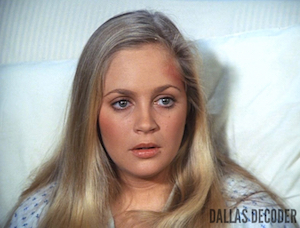
The scene takes place in Lucy’s hospital room, so Tilton doesn’t wear a lot of makeup and her hair is straight. It brings to mind the teenaged Lucy we met when “Dallas” began. The contrast is striking: Even though Tilton looks more girlish than she’s appeared in years, her character has never seemed more grownup.

Grade: A

_______________________________________________________________________________________________________________________________________________

Revealing

Revealing

‘THE INVESTIGATION’

Season 5, Episode 24

Airdate: March 26, 1982

Audience: 28 million homes, ranking 1st in the weekly ratings

Writer: Bruce Shelly

Director: Irving J. Moore

Synopsis: Cliff is rebuffed by Sue Ellen and defeated by J.R., who reclaims the original Barnes-Ewing oilfield that Cliff took from him. Bobby learns Farraday was a drug dealer who was killed by his suppliers. Bobby and Pam rescue Lucy, who says goodbye to Mitch.

Cast: Fern Fitzgerald (Marilee Stone), Barbara Bel Geddes (Miss Ellie Ewing), Morgan Brittany (Katherine Wentworth), Jack Collins (Russell Slater), Patrick Duffy (Bobby Ewing), Phyllis Flax (Mrs. Chambers), Jonathan Goldsmith (Joe Smith), Linda Gray (Sue Ellen Ewing), Larry Hagman (J.R. Ewing), Susan Howard (Donna Krebbs), Bob Hoy (Detective Howard), Steve Kanaly (Ray Krebbs), Ken Kercheval (Cliff Barnes), Arthur Malet (Forest), Leigh McCloskey (Dr. Mitch Cooper), Priscilla Pointer (Rebecca Wentworth), Victoria Principal (Pam Ewing), Dennis Redfield (Roger Larson), Tom Stern (Detective White), Charlene Tilton (Lucy Ewing), Deborah Tranelli (Phyllis)

“The Investigation” is available on DVD and at Amazon.com and iTunes. Watch the episode and share your comments below.
Critique: ‘Dallas’ Episode 100 – ‘Blackmail’

Dark room

Dark room

In “Blackmail,” J.R., armed with newly obtained evidence that suggests Christopher is his biological son, comes home to Southfork and enters the nursery. It’s a dark and stormy night, and the little boy is whimpering in his crib as thunder crackles outside. J.R. doesn’t comfort the child, though. He merely watches him. “Hello Christopher,” J.R. says. “You don’t know it, but I’m your daddy. I wonder how your Aunt Pam would feel about it, if she found out?”

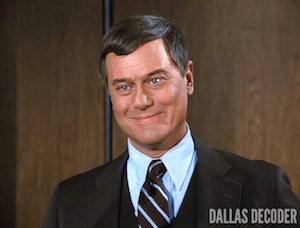
The line is made all the more ominous by the wicked smile Larry Hagman flashes after he delivers it. We don’t discover what J.R. is plotting until later in the episode, when he tells Bobby he’ll reveal the “truth” about Christopher’s paternity unless Bobby agrees to do his bidding at Ewing Oil. This is one of J.R.’s most despicable deeds, and not just because he’s using his own child to blackmail his brother. Consider: J.R. grew up with the pain that came from knowing Jock favored Bobby over him. Yet here J.R. is many years later, following in his father’s footsteps: J.R. has one son he adores (John Ross) and another (Christopher) he’s treating as a pawn in his quest for power.

In a clever touch, “Dallas” underlines J.R.’s favoritism by evoking the third-season classic “Paternity Suit.” In that episode, J.R. receives the blood test results that prove he’s John Ross’s father and visits the nursery, where he picks up the boy for the first time. This tender moment stands in sharp contrast with J.R.’s crib-side encounter with Christopher in “Blackmail.” (And even though we’ll soon learn Christopher is not J.R.’s child, “Dallas” doesn’t abandon the theme of J.R. emulating Jock’s parenting style. Toward the end of the show’s run, J.R. learns he has an illegitimate son, James, whose arrival leaves John Ross feeling like the neglected brother.)

The nursery scene isn’t the only dark moment in “Blackmail.” Bobby discovers Farraday’s dead body inside his dingy apartment, while Roger strikes Lucy and knocks her to the floor when she tries to escape from his captivity. I love the suspenseful music that composer Richard Lewis Warren uses to score both sequences, as well as the camera work from director Michael Preece. These two also collaborate nicely in the scene where the grieving Miss Ellie sits alone at the Southfork breakfast table and breaks into tears; Warren’s music grows more mournful as Preece slowly zooms in on Barbara Bel Geddes.

Bel Geddes helps supply “Blackmail” with its other highlight: the scene where Donna sits with Ellie in the Southfork kitchen and tells her the story of how Jock and Sam Culver’s land grab a half-century earlier resulted in another man’s suicide. Ellie refuses to accept the truth and threatens to sue Donna if she includes the story in the biography of Sam she’s writing. I love how Bel Geddes goes from disbelief to rage in a matter of seconds; Susan Howard’s performance is equally heartbreaking.

This scene, perhaps more so than any other in “Blackmail,” makes me appreciate how “Dallas” eschewed gimmicks during its heyday. When I was younger, I used to watch this episode and wonder why the show didn’t bring in a special guest star or deliver a major plot twist to mark its 100th hour. Now I realize: When your cast includes great actresses like Barbara Bel Geddes and Susan Howard, who needs stunts?

Grade: A

_______________________________________________________________________________________________________________________________________________

Woman alone

Woman alone

‘BLACKMAIL’

Season 5, Episode 23

Airdate: March 19, 1982

Audience: 26.9 million homes, ranking 1st in the weekly ratings

Writer: Leonard Katzman

Director: Michael Preece

Synopsis: J.R. tells Bobby he’s Christopher’s father and vows to keep quiet if Bobby cedes control of his voting shares. Cliff moves forward with his drilling project, even after J.R. reveals the land is dry. Miss Ellie explodes when Donna asks for permission to publish the story of Jock’s land grab. Roger holds Lucy captive. The police question Bobby after Farraday is discovered dead.

Cast: Tyler Banks (John Ross Ewing), Barbara Bel Geddes (Miss Ellie Ewing), Patrick Duffy (Bobby Ewing), Fern Fitzgerald (Marilee Stone), Jonathan Goldsmith (Joe Smith), Linda Gray (Sue Ellen Ewing), Larry Hagman (J.R. Ewing), Art Hindle (Jeff Farraday), Susan Howard (Donna Krebbs), Bob Hoy (Detective Howard), Steve Kanaly (Ray Krebbs), Howard Keel (Clayton Farlow), Ken Kercheval (Cliff Barnes), Leigh McCloskey (Dr. Mitch Cooper), Pamela Murphy (Marie), Victoria Principal (Pam Ewing), Dennis Redfield (Roger Larson), Debbie Rennard (Sly), Tom Stern (Detective White), Charlene Tilton (Lucy Cooper), Deborah Tranelli (Phyllis)

“Blackmail” is available on DVD and at Amazon.com and iTunes. Watch the episode and share your comments below.
Critique: ‘Dallas’ Episode 99 – ‘Vengeance’

Caught in a bad romance

Caught in a bad romance

Cliff and Sue Ellen’s renewed romance dominates “Vengeance,” but we see their affair mostly through the eyes of the other “Dallas” characters. Miss Ellie cautions Sue Ellen about the relationship and later frets about the affair during a lunch date with J.R., while Cliff gets an earful from Rebecca. No one seems to believe these two are really in love, including Sue Ellen and Cliff themselves.

Ken Kercheval and Linda Gray share one scene in “Vengeance,” when Cliff dines at Sue Ellen’s townhouse and asks her to marry him. It isn’t much of a proposal. Cliff doesn’t offer her a ring, although he promises he’ll take care of her material needs. “I’m on the verge of one of the biggest deals of my life, and I’ll be able to support you very well indeed,” Cliff says. She tells him she’ll need time to think about it, but the anguished expression on Gray’s face lets us know her character’s heart has its answer already.

Cliff also seems to know he and Sue Ellen aren’t good for each other. I believe Cliff cares for Sue Ellen, but there’s little doubt the main reason he’s gotten involved with her again is because he knows how much it will upset J.R. Notice how defensive Cliff gets when Rebecca tells him she worries her son and J.R. will “destroy each other” over Sue Ellen. “Now wait a minute, I’m supposed to give up Sue Ellen because I’m afraid of a fight with J.R.?” Cliff asks. Kercheval is always fascinating to watch, but he does an especially nice job conveying Cliff’s self-denial here.

My other favorite “Vengeance” moments include Miss Ellie’s conversations with J.R. and Sue Ellen, as well as Bobby’s confrontation with Jeff Farraday. (The latter scene is cool mainly because it takes place in the hallway outside the Ewing Oil executive suites. Who knew the geology and engineering departments were right around the corner from J.R. and Bobby’s offices?)

I also like Ellie and Rebecca’s scene in the Southfork living room, although just once I’d like to see these women stop worrying about their adult children and spend a little time talking about themselves. Both characters were central figures in the beginning of the Barnes-Ewing feud; wouldn’t it be nice to see them reflect on the history they share as the wives of Jock and Digger?

The “Vengeance” scene where Roger slips into Lucy’s car and orders her to drive away is also nicely done. Composer Bruce Broughton’s background score is chilling, and Charlene Tilton looks terrified. Of course, I can’t help but wonder why the Ewings allowed Lucy to get involved with this creep in the first place. Maybe they were too busy meddling in Sue Ellen’s love life?

Grade: B

_______________________________________________________________________________________________________________________________________________

Drive, he said

Drive, he said

‘VENGEANCE’

Season 5, Episode 22

Airdate: March 12, 1982

Audience: 27 million homes, ranking 1st in the weekly ratings

Writer: Howard Lakin

Director: Irving J. Moore

Synopsis: Cliff proposes to Sue Ellen, who tells him she needs time to think about it. J.R. spooks Clayton and sets up Cliff to take a huge financial fall. After Mitch tells Lucy their marriage is over, Roger abducts her. J.R. receives confirmation Christopher is Kristin’s son.

Cast: Barbara Bel Geddes (Miss Ellie Ewing), James Brown (Harry McSween), Patrick Duffy (Bobby Ewing), Fern Fitzgerald (Marilee Stone), Tom Fuccello (Senator Dave Culver), Linda Gray (Sue Ellen Ewing), Larry Hagman (J.R. Ewing), Art Hindle (Jeff Farraday), Susan Howard (Donna Krebbs), Steve Kanaly (Ray Krebbs), Howard Keel (Clayton Farlow), Ken Kercheval (Cliff Barnes), Audrey Landers (Afton Cooper), Arthur Malet (Mr. Forest), Leigh McCloskey (Dr. Mitch Cooper), Gary Pagett (Murphy), Priscilla Pointer (Rebecca Wentworth), Victoria Principal (Pam Ewing), Dennis Redfield (Roger Larson), Debbie Rennard (Sly), Charlene Tilton (Lucy Cooper), Ray Wise (Blair Sullivan)

“Vengeance” is available on DVD and at Amazon.com and iTunes. Watch the episode and share your comments below.
Critique: ‘Dallas’ Episode 98 – ‘The Prodigal’

Welcome back

Welcome back

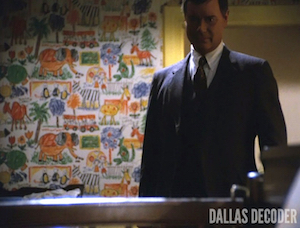
“The Prodigal” marks the triumphant return of Pam Ewing. What’s that you say? You didn’t realize she had gone away? Well, consider this: The Pam who emerges during “Dallas’s” third season – the one who cries a lot and obsesses over having children – doesn’t bear much resemblance to the strong-willed, independent-minded heroine we meet when the show begins. That’s the Pam we see again in “The Prodigal.” It’s nice to have her back.

Pam’s “return” comes toward the end of the episode, when a frightened Lucy tells her that Roger has become obsessed with her. (Lucy leaves out the detail about having sex with Roger after discovering the shrine he’s built to her.) Pam springs into action and asks for the location of Roger’s studio. “Don’t you think you should wait for Bobby?” Lucy asks. Pam ignores the question. “Lucy, what’s the address?”

The next time we see Pam, she’s entering Roger’s studio, where she introduces herself as Lucy’s aunt and explains she’s there to deliver “a warning.” Roger smirks. “A warning? You’re too pretty to give warnings,” he says. Pam tells him to “cut out the phony charm” and orders him to stay away from Lucy. He responds by asking if she plans to “sic the Ewing family” on him if he fails to obey. “Maybe, but I don’t think I’ll have to,” Pam says. “I can take care of people like you myself.”

See what I mean? This is the Pam I fell in love with during early “Dallas” episodes like “Lessons,” when she rescues Lucy from her high school blackmailer, and “Black Market Baby,” when she stands up to Bobby’s chauvinism. Victoria Principal always delivers great performances – even when Pam is weepy and preoccupied with children – but the actress is at her best during moments like these. In this scene, Pam is calm and direct, which makes her seem genuinely intimidating. Principal makes me believe Pam is a woman you don’t want to mess with.

Pam and Roger’s encounter is one of several great confrontations in “The Prodigal.” I also love when Katherine and Cliff get in a screaming match over his management of her father’s company (Katherine: “You disgusting little man!” Cliff: “I might be a disgusting little man, but I am president of Wentworth Tool and Die now!”), as well as Afton’s visit to Sue Ellen’s townhouse, where they exchange deliciously bitchy barbs (Afton: “We both do seem to have the same taste in men.” Sue Ellen: “The fact that you were sleeping with my ex-husband doesn’t mean we have the same taste in anything.”).

I also like the scene where Clayton visits Afton in her dressing room to learn more about Cliff, his rival for Sue Ellen’s affections. Howard Keel and Audrey Landers are two of my favorite “Dallas” performers, and it’s nice to see them share screen time. But I also can’t help but think: Since these two have such gorgeous singing voices, wouldn’t it have been nice if this scene had been set to music?

Grade: A

_______________________________________________________________________________________________________________________________________________

Just duet

Just duet

‘THE PRODIGAL’

Season 5, Episode 21

Airdate: March 5, 1982

Audience: 28.4 million homes, ranking 2nd in the weekly ratings

Writer: David Paulsen

Director: Michael Preece

Synopsis: J.R. uncovers evidence Christopher is his son. Bobby threatens Farraday when he returns to Dallas and demands hush money. Pam warns Roger to stay away from Lucy. While researching her new book, Donna learns Jock and Sam once staged a land grab that resulted in another man’s suicide. Afton tells Sue Ellen that Clayton is in love with her. Katherine clashes with Cliff and cozies up to J.R.

Cast: Lewis Arquette (Dr. Kensington) Tyler Banks (John Ross Ewing), Barbara Bel Geddes (Miss Ellie Ewing), Peter Brandon (Lowell Greer), Morgan Brittany (Katherine Wentworth), Patrick Duffy (Bobby Ewing), Bill Erwin (Abel Greeley), Tom Fuccello (Senator Dave Culver), Fern Fitzgerald (Marilee Stone), Phyllis Flax (Mrs. Chambers), Linda Gray (Sue Ellen Ewing), Larry Hagman (J.R. Ewing), Art Hindle (Jeff Farraday), Susan Howard (Donna Krebbs), Steve Kanaly (Ray Krebbs), Howard Keel (Clayton Farlow), Ken Kercheval (Cliff Barnes), Audrey Landers (Afton Cooper), Gary Pagett (Murphy), Priscilla Pointer (Rebecca Wentworth), Victoria Principal (Pam Ewing), Dennis Redfield (Roger Larson), Debbie Rennard (Sly), Charlene Tilton (Lucy Cooper), Deborah Tranelli (Phyllis), Ray Wise (Blair Sullivan)

“The Prodigal” is available on DVD and at Amazon.com and iTunes. Watch the episode and share your comments below.
Critique: ‘Dallas’ Episode 97 – ‘The Maelstrom’

Old habits

Old habits

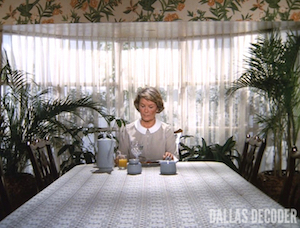
Oh, these Ewing women. How they confound me. Every time it seems like they’re about to find happiness on their own terms, they fall back into frustrating old patterns. This usually means falling back into the arms of men who are no good for them.

In “The Maelstrom,” after Sue Ellen puts the kibosh on reconciling with J.R., she sleeps with Cliff. You can’t blame Sue Ellen for being reluctant to get back together with her ex-husband, but why is she taking up with Cliff again? The last time these two had a fling, things didn’t go well: Sue Ellen wanted to leave J.R. for Cliff, but Cliff dumped her because he feared their affair would ruin his political career. Nice guy, huh? (If you haven’t watched the great scene in the second-season episode “For Love or Money” when Cliff breaks up with Sue Ellen, check it out. Linda Gray will break your heart.)

This time around, Sue Ellen is divorced and Cliff is out of politics, but they’re no better suited for each other now than they were then. It’s pretty clear Sue Ellen only wants Cliff because she knows it will make J.R. jealous. Witness “The Maelstrom” scene where she calls Cliff and, as J.R. listens, tells him how much she enjoyed spending the previous night with him. I also don’t believe for a second Cliff loves Sue Ellen. He’s chasing her for the same reason she’s chasing him: to upset J.R.

Lucy’s latest romance is odder still. Earlier in the fifth season, she sleeps with Roger, the photographer helping her get started in her modeling career, only to decide later she wants to keep their relationship strictly professional. Fair enough. But in “The Maelstrom,” obsessive Roger reveals the shrine to Lucy that he’s built inside his studio, which ought to send her scurrying from the room. Instead, Lucy and Roger fall into a passionate embrace and have sex. Huh?

The absurdity of it all makes “The Maelstrom” one of the season’s weakest entries, but the hour isn’t a total loss. Patrick Duffy, the episode’s director, delivers several clever shots. I especially like how he pans his camera above Charlene Tilton and Dennis Redfield during their love scene and zooms in on one of the glamour shots of Lucy plastering Roger’s wall. Sue Ellen’s shadowy arrival at Cliff’s apartment is also cool, and it’s nice to see Bobby and Ray branding cattle, even if the footage is recycled from the second-season episode “Bypass.”

Speaking of Ray: “The Maelstrom” scene where he breaks up with Bonnie is the episode’s highlight, thanks to sensitive performances from Steve Kanaly and Lindsay Bloom. This feels like a conversation between two people who’ve made bad choices but aren’t necessarily bad people. I also like when Donna calls home and speaks to Ray, who thanks her for sticking with him through his depression. The fact that Donna interrupts Ray while he’s shaving is significant since the stubble he’s worn since “The Search” had come to symbolize the dark cloud that enveloped him after Jock’s death.

J.R. and Katherine’s exchange in “The Maelstrom” also holds up well, and not just because this is the first time master villains Larry Hagman and Morgan Brittany appear together on “Dallas.” In the scene, Katherine, a local TV reporter (she does have a job, you know), is doing person-on-the-street interviews about the Dallas restaurant scene’s recessionary struggles when she comes across J.R., who says the economic downturn hasn’t affected his eating out habits. “My eating in habits haven’t changed much either,” he cracks.

Watching this scene recently, it occurred to me: Three decades after “The Maelstrom” was produced, people are once again watching their wallets when they go out to eat. Who knew an old “Dallas” episode could be so timely?

Grade: C

_______________________________________________________________________________________________________________________________________________

Ready for her close up

Ready for her close up

‘THE MAELSTROM’

Season 5, Episode 20

Airdate: February 26, 1982

Audience: 30 million homes, ranking 1st in the weekly ratings

Writer: Will Lorin

Director: Patrick Duffy

Synopsis: Ray sobers up and bids Bonnie farewell. Sue Ellen sleeps with Cliff, upsetting J.R. J.R.’s lawyer informs him the child that Bobby and Pam are adopting might be J.R.’s son.

Cast: Barbara Bel Geddes (Miss Ellie Ewing), Lindsay Bloom (Bonnie), Peter Brandon (Lowell Greer), Morgan Brittany (Katherine Wentworth), Patrick Duffy (Bobby Ewing), Fern Fitzgerald (Marilee Stone), Bruce French (Jerry Macon), Linda Gray (Sue Ellen Ewing), Larry Hagman (J.R. Ewing), Art Hindle (Jeff Farraday), Susan Howard (Donna Krebbs), Steve Kanaly (Ray Krebbs), Howard Keel (Clayton Farlow), Ken Kercheval (Cliff Barnes), Leigh McCloskey (Dr. Mitch Cooper), Pamela Murphy (Marie), Victoria Principal (Pam Ewing), Dennis Redfield (Roger Larson), Debbie Rennard (Sly), Joey Sheck (waiter), Don Starr (Jordan Lee), Charlene Tilton (Lucy Cooper), Deborah Tranelli (Phyllis), Ray Wise (Blair Sullivan)

“The Maelstrom” is available on DVD and at Amazon.com and iTunes. Watch the episode and share your comments below.
Dallas Decoder’s Man of the Year: Larry Hagman

Dallas, J.R. Ewing, Larry Hagman, TNT

The man

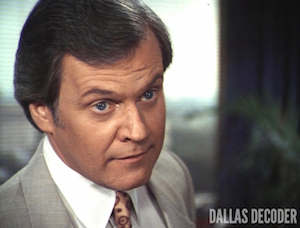
A few days after Larry Hagman’s November 23 death, his son Preston told a television interviewer that his father’s work on TNT’s new “Dallas” series extended Hagman’s life during his struggle with cancer. I believe it. I also believe the relationship between star and show was mutually beneficial. “Dallas” kept Hagman alive, but he kept “Dallas” alive too.

Two thousand twelve was the year “Dallas” became a hit all over again, and no one was more responsible for its success than Larry Hagman. The actor long ago established J.R. Ewing as one of television’s most fascinating characters, but on TNT’s “Dallas,” Hagman made J.R. even more complex. In old age, J.R. was often downright demonic, but he could also be shockingly vulnerable and at times even sweet. It was the performance of Hagman’s career.

Critics loved it, finally giving Hagman the acclaim he deserved but didn’t receive during the original “Dallas’s” heyday. Viewers embraced J.R. too, including a new generation that discovered him for the first time. More than 8 million people watched TNT’s “Dallas” opener within a week of its June 13 debut. The full 10-hour season averaged 6.1 million weekly viewers. I’m convinced Hagman is what kept people coming back. Even in the episodes where J.R. only had a scene or two, Hagman’s presence loomed large. “Dallas” was still his show.

To be fair, the actor received plenty of support from the new “Dallas’s” creative team, which gave J.R. some of his best-ever material. (“Family Business,” the first season’s penultimate episode, written by Bruce Rasmussen and directed by Michael M. Robin, is one the finest hours of “Dallas” ever made.) Hagman also got a boost from longtime friends and costars Patrick Duffy and Linda Gray, with whom his chemistry remains unrivaled, as well as from Josh Henderson, who held his own against the actor and made John Ross a terrific partner in crime for J.R.

I’m naming Hagman Dallas Decoder’s first man of the year in recognition of his crucial contributions to the “Dallas” franchise in 2012. This won’t my last tribute to the actor, either. Before Hagman’s death, he completed a handful of episodes of the new “Dallas’s” second season, which TNT will begin showing Monday, January 28. Something tells me his final performances as J.R. will be every bit as good as what we saw in 2012.

My goal is to make my man or woman of the year selection an annual tradition. Twelve months from now, I hope to honor someone else who has made a Hagman-sized contribution to “Dallas.” And make no mistake: As much as I love Hagman and J.R., “Dallas” is bigger than both of them. The themes David Jacobs established when he created the Ewings 35 years ago – family, loyalty, ambition – are timeless. If the storytelling is good, the show can go on.

In thinking about “Dallas’s” future, I keep coming back to the classic scene from the fifth-season episode “Head of the Family.” J.R., depressed over Jock’s recent death, tells his youngest brother, “It’ll never be the same, Bob.” Bobby’s response: “Maybe it won’t. [But] if this family quits just because he’s gone, he didn’t leave us very much, did he?”

My guess is these words describe how many of us feel today. We know “Dallas” won’t be the same without J.R., but we also know how much the show meant to the great actor who portrayed him. Larry Hagman kept “Dallas” alive, and now it’s up to all of us – fans and the people who make the show alike – to continue the tradition. In the end, that might be the best tribute we can offer him.

Share your comments about Larry Hagman and J.R. Ewing below and read more opinions from Dallas Decoder.

Critique: ‘Dallas’ Episode 96 – ‘Adoption’

Our heroine

Our heroine

“Adoption” is one classic scene after another, but my favorite moment is Donna’s showdown with Bonnie, the barfly who’s been sleeping with Ray. The dialogue from scriptwriter Howard Lakin is wonderfully bitchy, and Susan Howard delivers it with steely aplomb. I also have to hand it to guest star Lindsay Bloom, who manages to make Bonnie seem less like a vixen than a sad woman who makes bad choices.

The confrontation begins when Donna, clad in a full-length fur coat, enters the Longview bar and approaches Bonnie, whom Donna caught in bed with Ray at the end of the previous episode. After exchanging unpleasantries (“I wanted to see what the competition looked like – with clothes on”), Donna offers Bonnie $5,000 to leave town. “You’re crazy,” Bonnie says. Donna keeps upping the price; by the time she reaches $15,000, Bonnie is ready to pack her bags. That’s when Donna reduces her offer by a third. “Now that we know what you are, let’s haggle over your fee,” she says. Before all is said and done, Bonnie has tossed a drink in Donna’s face and Donna has struck Bonnie, sending her to the sawdust-covered floor.

It might be tempting to think of this as another soap opera catfight, but that wouldn’t do the scene justice. To begin with, Donna isn’t your typical “Dallas” heroine. She’s the show’s most consistently admirable character – always strong, always smart, always sincere. When we see Donna throw that punch, we know it’s not out of desperation. She’s fighting for Ray because she wants him, not because she needs him.

Howard deserves much credit for making her character so believable. Like Barbara Bel Geddes, Howard possesses an effortless grace; both actresses seem to have good instincts and are smart enough to trust them. And while I generally try to avoid commenting on the physical appearance of “Dallas” actors, this must be said: Howard is one of the most naturally beautiful women to ever appear on the show, and that’s another reason Donna seems like the kind of person you might know in real life. It also doesn’t hurt that Howard is an honest-to-goodness Texan, so she sounds as authentic as she looks. In the scene with Bonnie, notice how Donna’s line, “You mean go to you?” becomes “Yew mean go to yew?” The lilting drawl is almost hypnotic.

Fur Love or Money

Armor on

Armor on

Of course, as good as Howard is, don’t overlook her character’s fur coat, an essential “Dallas” prop if ever there was one. Larry Hagman, who directed this episode, does a smart thing earlier in “Adoption” when he shows Donna coming home and changing into the fur before heading to the Longview to confront Bonnie. This deliberate wardrobe change lets the audience know two things: Donna isn’t ashamed to be seen as a successful woman, and like her in-laws, she’s willing to use her wealth to intimidate an adversary.

(You might also say Donna’s clash with Bonnie is the moment she becomes a Ewing. After Donna strikes her rival, she retrieves a wad of cash from her coat pocket, peels off a bill and tosses it onto the bar. “Drinks are on Bonnie,” she says. It brings to mind the great scene from the second-season episode “Reunion, Part 2,” when Jock “buys” Pam from drunken Digger.)

As for Bloom: With her frosted bouffant and western shirts, the actress looks a bit like the country singer Barbara Mandrell, which is fitting since Donna and Bonnie’s showdown has the makings of a great country song. It would’ve been easy for Bonnie to come off as a one-note hussy, but Bloom’s performance is so nicely measured, that never happens. Lakin deserves credit here too. At the beginning of the fight scene, before Donna enters the bar, we overhear Bonnie chatting excitedly with one of her girlfriends about a new nightclub in town that has “two dance floors, one raised above the other.” The line makes us realize what a small life Bonnie leads. How can you not pity her?

Into Darkness

Shouldn't he be on the other side?

Shouldn’t he be on the other side?

Like Donna and Bonnie’s barroom brawl, almost all of the great scenes in “Adoption” arouse conflicting emotions. In the first act, J.R. has Ray tossed in the Braddock County jail, where he pressures him to sign over his Ewing Oil voting shares. Harsh? Yes, but is J.R. mistaken when he tells Ray how ashamed Jock would feel by Ray’s recent behavior?

Similarly, how do you feel at the end of the episode, when Sue Ellen tosses the necklace at J.R. and tells him their relationship is “sick, sick, sick!” Are you relieved that Sue Ellen has been reminded of her ex-husband’s sinful nature? Or are you disappointed that their reconciliation has been derailed? I feel both.

“Adoption” also offers the memorable moment when Roger, Lucy’s stalker, becomes enraged and smashes a glass of red wine against the wall of his photography studio, which he has plastered with her pictures. We’ve all seen variations of this scene in dozens of other movies and TV shows about stalkers, but I bet it didn’t seem like a cliché when this episode debuted 30 years ago. Regardless, the shot – and the chilling background music from composer Richard Lewis Warren that accompanies it – still creeps me out.

For every dark moment in “Adoption,” there’s a scene to remind us of the loving connections the Ewings share. At the top of the hour, Miss Ellie finds Donna picking up the dishes she smashed in anger after discovering Ray’s infidelity. “Over the years, I’ve thrown a few plates myself,” Ellie says. Later, Sue Ellen and Pam have a heart-to-heart of their own at Pam’s aerobics studio, where she cautions Sue Ellen about getting back together with J.R.

There’s also the sweet scene where Bobby tells Pam they’ve been granted temporary custody of Christopher, as well as the nice moment when J.R. brings surprise dinner guests Sue Ellen and John Ross into the Southfork kitchen to sample Miss Ellie’s stuffing. (“Adoption” was originally broadcast in February 1982 and isn’t a Thanksgiving episode, but the presence of that giant turkey in Ellie’s kitchen makes it the closest we ever get to seeing the Ewings celebrate the holiday.)

More and more, I’m convinced warm moments like these are one of the secrets of “Dallas’s” success. They help counter the misperception that this is merely the story of rich people behaving badly. The truth is, “Dallas” is a show with a lot heart. If it wasn’t, we never would have allowed it to occupy such a big place in ours.

Grade: A+

_______________________________________________________________________________________________________________________________________________

Father's day

Father’s day

‘ADOPTION’

Season 5, Episode 19

Airdate: February 19, 1982

Audience: 29.9 million homes, ranking 1st in the weekly ratings

Writer: Howard Lakin

Director: Larry Hagman

Synopsis: After J.R. has him jailed, Ray signs over his voting shares in Ewing Oil. Donna punches Bonnie and orders her to stay away from Ray. Bobby tells Sue Ellen that Christopher is Kristin’s son, reminding Sue Ellen of J.R.’s past infidelities. Bobby and Pam are awarded preliminary custody of Christopher. Cliff figures out J.R.’s scheme to lure him out of Dallas.

Cast: Tyler Banks (John Ross Ewing), Barbara Bel Geddes (Miss Ellie Ewing), Lindsay Bloom (Bonnie), Vivian Bonnell (clerk), Robert Alan Browne (Breslin), Patrick Duffy (Bobby Ewing), Fern Fitzgerald (Marilee Stone), Linda Gray (Sue Ellen Ewing), Larry Hagman (J.R. Ewing), Art Hindle (Jeff Farraday), Susan Howard (Donna Krebbs), Steve Kanaly (Ray Krebbs), Ken Kercheval (Cliff Barnes), Priscilla Pointer (Rebecca Wentworth), Victoria Principal (Pam Ewing), Dennis Redfield (Roger Larson), Don Starr (Jordan Lee), Charlene Tilton (Lucy Cooper), Ron Tomme (Charles Eccles), Herb Vigran (Judge Thornby), Ray Wise (Blair Sullivan)

“Adoption” is available on DVD and at Amazon.com and iTunes. Watch the episode and share your comments below.