The Best & Worst of Dallas: Season 5

“Dallas’s” fifth season was dandy, save for a few disappointments.

Performances
Barbara Bel Geddes, Dallas, Miss Ellie Ewing

Walk to remember

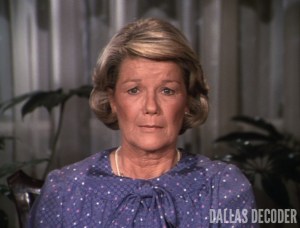
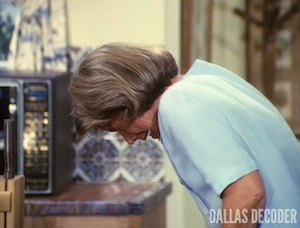
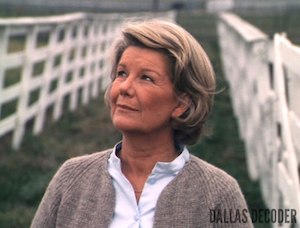
Barbara Bel Geddes delivers one tour-de-force performance after another as the grieving Miss Ellie. Everyone remembers the scene where Mama smashes the dishes in the Southfork kitchen, but Bel Geddes also shines in quiet moments like the one where Ellie takes that mournful stroll across the ranch. I’ve said it before, but it bears repeating: Bel Geddes can say more with one look than most actors can with a whole script.
Dallas, J.R. Ewing, Larry Hagman

Ewing blues

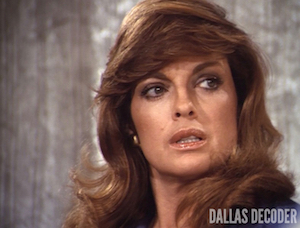
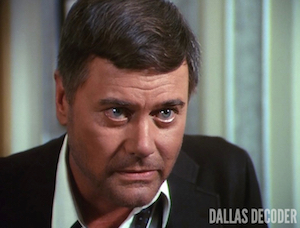
Runners up: Larry Hagman and Patrick Duffy both break my heart as the brothers Ewing struggle – in very different ways – to deal with Jock’s death (J.R. falls apart, Bobby falls in line). Meanwhile, Linda Gray does a beautiful job conveying Sue Ellen’s conflicting emotions as a recent divorcee. I understand her confusion: It’s nice to see Sue Ellen on her own, but I also want her to reunite with the soul mate she’s left behind at Southfork.

Storylines

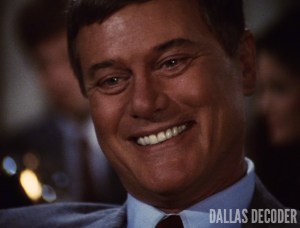
I love to watch J.R. scheme his way back into Sue Ellen’s heart. This is another fascinating performance from Hagman, who keeps us guessing about J.R.’s motivation: Does he really love his ex-wife, or is he merely trying to get his hands on John Ross’s Ewing Oil voting shares? My guess is it’s a little from Column A and a little from Column B. One thing is certain: Seeing J.R. pick off Sue Ellen’s suitors (Dusty, Clayton, Cliff), one by one, is a hoot.

Weakest storyline: Pam’s mental breakdown. Victoria Principal does a nice job depicting her character’s despair, but this isn’t the heroic Pam I fell in love with during “Dallas’s” early years. Thankfully, she gets her groove back toward the end of the season, when she lays down the law to creepy Roger and helps Bobby solve the mystery of Christopher’s paternity. And while we’re on the subject: They may not be Nick and Nora, but isn’t it fun watching Bobby and Pam figure out that J.R. didn’t father Christopher? (The season’s best plot twist, by the way.)

Episodes
Adoption, Bobby Ewing, Dallas, Linda Gray, Patrick Duffy, Sue Ellen Ewing

Adopt or cry

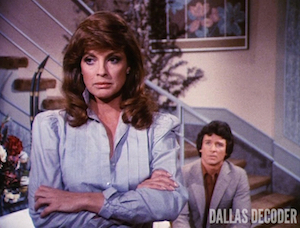
“Adoption” is one classic scene after another. Donna socks it to Bonnie. Bobby asks Sue Ellen to sign the affidavit. Sue Ellen tosses the necklace at J.R. and proclaims their relationship is “sick, sick, sick!” This is another great script from Howard Lakin, but don’t overlook Hagman, who sat in the director’s chair for this episode and once again proved he’s as gifted behind the camera as he is in front of it.

My least favorite episode: “The Maelstrom,” in which Lucy discovers Roger’s shrine to her and responds by making love to him. Come on, “Dallas.” Charlene Tilton deserves better. So do we.

Scenes

This is always the toughest category to choose a winner, and Season 5 is no exception. Among the contenders: J.R. and Dusty’s Cotton Bowl showdown, Ellie’s confrontation with the cartel and J.R.’s soliloquy in front of Jock’s painting. In the end, I’m going with “The Search” scene where the Ewing sons break the news to Mama that Daddy isn’t coming home. I don’t know who moves me more here: Bel Geddes, Hagman, Duffy or Steve Kanaly. Beautiful performances all around.

Supporting Players
Afton Cooper, Audrey Landers, Dallas

Hot stuff

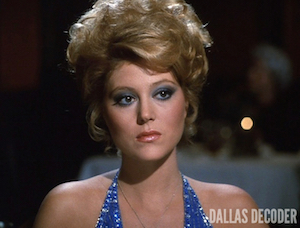
No one impresses me as much as Audrey Landers. This is the season Afton breaks J.R.’s grip and comes into her own as one of the show’s heroines. There’s no doubt she deserves a better mate than Cliff, but I love how Afton humanizes him – and you can’t deny Landers’ chemistry with Ken Kercheval. As an added bonus, Landers delivers several hot musical numbers this year, including that sultry rendition of “All of Me” in “The Phoenix.”

Runners up: Morgan Brittany, who debuts in Season 5 as scheming Katherine Wentworth and begins laying the groundwork for the havoc she’ll wreak in later years; Fern Fitzgerald, whose Marilee Stone becomes J.R.’s equal in every way; Barry Nelson as Sue Ellen’s sympathetic lawyer Arthur Elrod; Claude Earl Jones as Wally Hampton, J.R.’s co-conspirator in the plot to sabotage Cliff’s career; and Lindsay Bloom as Bonnie, the sad-sack barfly who beds Ray.

Costumes
Clayton Farlow, Dallas, Howard Keel

Hello, handsome

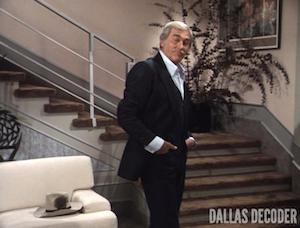
Virtually every “Dallas” diva sports a fur coat during Season 5, but the full-length number Susan Howard dons during Donna’s barroom brawl is the most meaningful. Among the dudes, no one wears suits better than dapper Howard Keel. I especially love when Clayton shows up at Sue Ellen’s townhouse in pinstripes and an open collar shirt, the same look Josh Henderson often sports on TNT’s “Dallas.”

At the other end of the spectrum: What’s with Sue Ellen’s culottes during Season 5? You get the feeling the character spent every episode standing in front of her closet, trying to decide between skirts and pants and choosing to compromise by wearing both. No wonder she became a politician.

Quips

“You getting good mileage on Donna’s car?” – J.R.’s cheery query to Ray in “Five Dollars a Barrel” cracked me up. Only Larry Hagman could turn a throwaway line into a hilarious putdown.

What do you love and loathe about “Dallas’s” fifth season? Share your comments below and read more “Best & Worst” reviews.
Oh, ‘Pioneers’! Soaps Tribute is a Sprint Down Memory Lane

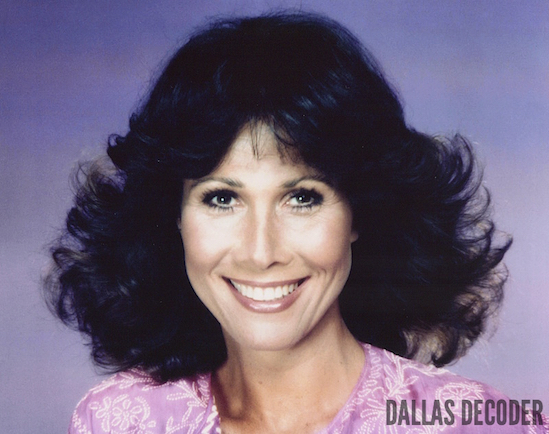
Knots Landing, Michele Lee, PBS

Along came Polly

“There’s not a show on right now, at this moment, that isn’t soap,” Joan Van Ark declares during PBS’s “Pioneers of Television” tribute to the nighttime soap operas of the 1980s. She’s referring to the emergence of serialization as the dominant form of storytelling in prime time, and so she has a point. Carrie and Brody, Walt and Jesse, Don and Peggy. On television, no one’s story ends anymore.

This would seem to be the most enduring legacy of the ’80s soaps, but Van Ark’s trenchant observation is the closest “Pioneers” comes to addressing it. The 52-minute retrospective, which most PBS stations will air tomorrow night, recalls three shows – “Dallas,” “Dynasty” and “Knots Landing” (sorry “Falcon Crest” fans) – through the usual mix of talking heads and old clips. But with lots of ground to cover and so little time to do it, the interviews become sound bites and the clips become snips. This is a sprint down memory lane.

“Dallas” fans will appreciate the prominence given to Larry Hagman, who recorded his interview before his death last fall. We also get to hear from Patrick Duffy, Linda Gray and Charlene Tilton, although some of their stories and the scenes that accompany them will be all-too-familiar to “Dallas” diehards. Prepare to see Kristin pump J.R. full of lead for the umpteenth time, and to hear again how that bogus Irish Spring commercial provided the cover to film the dead Bobby’s reanimation in Pam’s shower. Isn’t it time to let the “Dallas” cast reminisce about something other than the show’s cliffhangers?

There are a few surprises. I had forgotten how Hagman’s role as a slick Texas businessman in the 1974 flick “Stardust” helped him slide into J.R.’s boots four years later. It’s also fun to see photos of the young, dreamy Hagman, and to hear him recall how he and Joan Collins dated as teenagers. Wisely, the “Pioneers” producers also give Hagman the last word, and his too-humble assessment of his performance as J.R. allows the program to end on a graceful, poignant note.

The most interesting moment overall comes when narrator Ryan Seacrest (yes, him) points out the ’80s soap were “among the whitest shows on television.” “Dynasty” is justly praised for casting Diahann Carroll in a starring role, and we’re reminded that “Knots Landing” once moved an African American family, the Williamses, onto the cul-de-sac, only to shift the characters to the backburner. Lynne Moody, who played Pat Williams, recalls how she grew frustrated with her lack of screen time and asked the “Knots Landing” producers to let her out of her contract. They agreed. Her tone suggests she regrets that decision a little now.

Unfortunately, “Pioneers” ignores the influence the soaps had on television’s depiction of women, which is probably the genre’s other significant legacy. Victoria Principal’s Pam Ewing was one of the medium’s first sexually liberated heroines, and “Dynasty” and “Knots Landing” deserve credit for showing women could be every bit as savvy as men in the world of big business. But “Pioneers” breezes past all that and instead gives us the usual blather about shoulder pads and catfights. At least we get to hear Michele Lee’s “Pollyanna speech” from “Knots Landing,” which feels more resonant today than it did two decades ago.

It might also have been nice if the producers had invited some of the stars of today’s prestige serials to comment on the ’80s soaps, the way Tina Fey paid tribute to Mary Tyler Moore and Lucille Ball during last week’s “Pioneers” tribute to comedic women. If nothing else, PBS should have let us hear from some of the stars of its own hit soap, “Downton Abbey.” After all, if it wasn’t for Bobby and Pam, would there be a Matthew and Mary?

Most PBS stations will broadcast “Pioneers of Television: Primetime Soaps” on Tuesday, January 22, at 8 p.m. Eastern. Watch the show, share your comments below and read more opinions from Dallas Decoder.

Drill Bits: ‘Dallas’ is on DVD. Go Ahead and Get Carried Away.

Dallas, John Ross Ewing, Josh Henderson, No Good Deed, TNT

Arrested development

The first season of TNT’s “Dallas” was released on DVD last week. It has all 10 episodes and 2 hours of bonus material, including some Larry Hagman goodness you’ve never seen before.

In other words: Take a day off work. You’re going to need it.

The extras feature more than 25 deleted scenes, including three sequences starring Hagman. My favorite: a moving exchange from “Family Business” in which J.R. promises Ann he’ll protect Sue Ellen from Harris. I won’t give away anything else here, but trust me: This scene alone is worth the price of admission.

A lot of this unused footage will help you see the characters more clearly. Examples: We finally get to see the moment Sue Ellen decides to run for governor, as well as a wonderful exchange where Christopher talks about what it was like for him to grow up as Bobby’s son. The latter scene features beautiful performances from Jesse Metcalfe and Patrick Duffy, who described it as one of his favorite first-season moments during my brief chat with him last year.

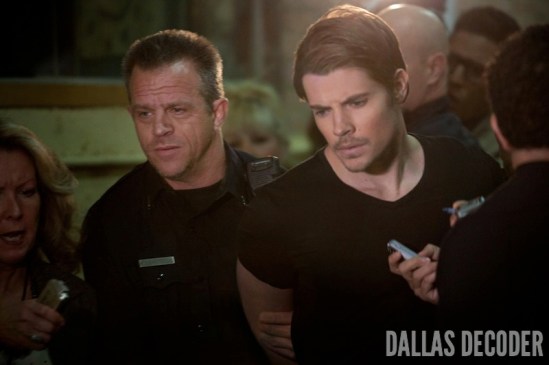
Curiously, the deleted scenes don’t include the one with Josh Henderson from the publicity shot above, which TNT released to promote “No Good Deed,” the episode where John Ross is arrested for Marta’s murder. We also don’t get to see J.R. and Sue Ellen’s dance from “The Last Hurrah,” although given the number of fans who are clamoring for it, something tells me it won’t stay buried forever.

(We do, however, get to see Elena’s visit to a bank, where she scans a plaque listing the board of directors. Sue Ellen’s name is there, along with production designer Richard Berg and other members of the “Dallas” crew.)

The DVD’s other highlight: an audio commentary from executive producers Cynthia Cidre and Michael M. Robin, who do a nice job explaining how much work – and love – went into making the “Changing of the Guard” pilot. Robin, the episode’s director, calls the scene where Bobby visits J.R. in the nursing home one of the highlights of his career, while Cidre reveals it took 10 hours to film the episode’s fantastic dinner scene.

The bonus material also includes new segments on the making of the first season and “Dallas” lore. Also included: the behind-the-scenes production videos that were posted on the “Dallas” website last year, including costume designer Rachel Sage Kunin’s fun “Dressing Dallas” piece.

I could go on, but really, why are you still reading this? Go get the DVD and see for yourself!

Life After J.R.

“Dallas’s” second season begins two weeks from tonight, and the press is beginning to publish stories about what we’ll see. The best preview so far comes from Entertainment Weekly’s Karen Valby, who reports Hagman filmed five episodes before his death on November 23. An extra scene that had been cut from an earlier episode will be inserted into the sixth installment, while Episode 7, which Cidre handwrote in the days after Hagman’s death, will explain J.R.’s absence. His funeral will be seen in Episode 8, which TNT will telecast Monday, March 11.

“Drill Bits,” a roundup of news about TNT’s “Dallas,” is published regularly. Share your comments below.

The Dallas Decoder Quiz: First-Season Follies

Bobby Ewing, Dallas, Patrick Duffy, TNT

Yes, we’re sure

TNT’s “Dallas” will begin its second season on Monday, January 28. Take this quiz to refresh your memory of Season 1. The correct answers appear at the end.

1. Which threesome controls the Southfork mineral rights?

a) J.R., Bobby and Gary

b) J.R., Bobby and Ray

c) John Ross, Christopher and Lucy

d) Jack, Janet and Chrissy

2. Which foursome owns Ewing Energies?

a) J.R., Bobby, John Ross and Christopher

b) Bobby, John Ross, Christopher and Elena

c) John Ross, Christopher, Elena and Cliff

d) John Ross, Christopher, Elena and Rebecca

3. Ann secretly recorded ex-husband Harris Ryland confessing to …

a) Counterfeiting

b) Money laundering

c) Murder

d) His commitment to a sanitarium in the early 1990s

Christopher Ewing, Dallas, Jesse Metcalfe, TNT

Wake up call

4. Christopher was shocked when he answered Tommy’s phone and heard whose voice?

a) John Ross

b) Cliff Barnes

c) Frank Ashkani, Cliff’s henchman

d) Becky Sutter, Tommy’s real sister

5. Christopher’s alternative energy technology relies on what natural resource?

a) Methane hydrate

b) Solar power

c) Wind power

d) Linda Gray’s fountain of youth

6. What did Bobby toss in the fireplace?

a) Ann’s locket

b) The Southfork deed

c) The envelope that Harris gave him

d) The painting hanging above it

7. What did Bobby tell Vicente Cano when he visited Southfork?

a) “Get the hell out of my house!”

b) “Help me put the living room and dining room back where they belong!”

c) “Help me birth this calf!”

d) “Wipe your feet!”

Dallas, Julie Gonzalo, Pamela Rebecca Barnes, Rebecca Sutter Ewing, TNT

Daughter of the Alamo

8. Who is Rebecca’s father?

a) Harris Ryland

b) Carlos del Sol

c) Cliff Barnes

d) Tommy’s Uncle Fred

9. What was the real name of the woman who impersonated Marta del Sol?

a) Andrea Barrett

b) Verna Ellers

c) Veronica Martinez

d) Ben Stivers

10. Why did Marta descend from the high-rise balcony?

a) She thought it would be faster than taking the elevator.

b) She jumped.

c) She was pushed by Vicente’s henchmen.

d) She was spooked by Julie Gray’s ghost.

11. Before he died, Elena’s father worked in what industry?

a) Oil

b) Ranching

c) Trucking

d) Cosmetics

Dallas, Elena Ramos, Jordana Brewster, TNT

Debt in the family

12. Who loaned Elena the money to buy the Henderson oil leases?

a) Harris Ryland

b) Vicente Cano

c) Franklin Horner

d) Sue Ellen

13. Who is Clyde Marshall?

a) J.R.’s lawyer

b) Bobby’s lawyer

c) John Ross’s private eye

d) The Dallas County sheriff

14. What is the name of the medical examiner that Sue Ellen blackmailed?

a) Dr. Bruce Rasmussen

b) Dr. Varun Rasmussen

c) Dr. Peyton Hayslip

d) Dr. Mitchell Ackerman

15. What is the full name of Patrick Duffy’s character?

a) Bobby James Ewing – and don’t let anyone tell you differently

Answers: 1) a. 2) b. 3) b. 4) d. 5) a. 6) c. 7) a. 8) c. 9) c. 10) c. 11) a. 12) d. 13) c. 14) b. 15) a.

How did you do? Share your score below and read more features from Dallas Decoder.

Critique: ‘Dallas’ Episode 97 – ‘The Maelstrom’

Old habits

Old habits

Oh, these Ewing women. How they confound me. Every time it seems like they’re about to find happiness on their own terms, they fall back into frustrating old patterns. This usually means falling back into the arms of men who are no good for them.

In “The Maelstrom,” after Sue Ellen puts the kibosh on reconciling with J.R., she sleeps with Cliff. You can’t blame Sue Ellen for being reluctant to get back together with her ex-husband, but why is she taking up with Cliff again? The last time these two had a fling, things didn’t go well: Sue Ellen wanted to leave J.R. for Cliff, but Cliff dumped her because he feared their affair would ruin his political career. Nice guy, huh? (If you haven’t watched the great scene in the second-season episode “For Love or Money” when Cliff breaks up with Sue Ellen, check it out. Linda Gray will break your heart.)

This time around, Sue Ellen is divorced and Cliff is out of politics, but they’re no better suited for each other now than they were then. It’s pretty clear Sue Ellen only wants Cliff because she knows it will make J.R. jealous. Witness “The Maelstrom” scene where she calls Cliff and, as J.R. listens, tells him how much she enjoyed spending the previous night with him. I also don’t believe for a second Cliff loves Sue Ellen. He’s chasing her for the same reason she’s chasing him: to upset J.R.

Lucy’s latest romance is odder still. Earlier in the fifth season, she sleeps with Roger, the photographer helping her get started in her modeling career, only to decide later she wants to keep their relationship strictly professional. Fair enough. But in “The Maelstrom,” obsessive Roger reveals the shrine to Lucy that he’s built inside his studio, which ought to send her scurrying from the room. Instead, Lucy and Roger fall into a passionate embrace and have sex. Huh?

The absurdity of it all makes “The Maelstrom” one of the season’s weakest entries, but the hour isn’t a total loss. Patrick Duffy, the episode’s director, delivers several clever shots. I especially like how he pans his camera above Charlene Tilton and Dennis Redfield during their love scene and zooms in on one of the glamour shots of Lucy plastering Roger’s wall. Sue Ellen’s shadowy arrival at Cliff’s apartment is also cool, and it’s nice to see Bobby and Ray branding cattle, even if the footage is recycled from the second-season episode “Bypass.”

Speaking of Ray: “The Maelstrom” scene where he breaks up with Bonnie is the episode’s highlight, thanks to sensitive performances from Steve Kanaly and Lindsay Bloom. This feels like a conversation between two people who’ve made bad choices but aren’t necessarily bad people. I also like when Donna calls home and speaks to Ray, who thanks her for sticking with him through his depression. The fact that Donna interrupts Ray while he’s shaving is significant since the stubble he’s worn since “The Search” had come to symbolize the dark cloud that enveloped him after Jock’s death.

J.R. and Katherine’s exchange in “The Maelstrom” also holds up well, and not just because this is the first time master villains Larry Hagman and Morgan Brittany appear together on “Dallas.” In the scene, Katherine, a local TV reporter (she does have a job, you know), is doing person-on-the-street interviews about the Dallas restaurant scene’s recessionary struggles when she comes across J.R., who says the economic downturn hasn’t affected his eating out habits. “My eating in habits haven’t changed much either,” he cracks.

Watching this scene recently, it occurred to me: Three decades after “The Maelstrom” was produced, people are once again watching their wallets when they go out to eat. Who knew an old “Dallas” episode could be so timely?

Grade: C

_______________________________________________________________________________________________________________________________________________

Ready for her close up

Ready for her close up

‘THE MAELSTROM’

Season 5, Episode 20

Airdate: February 26, 1982

Audience: 30 million homes, ranking 1st in the weekly ratings

Writer: Will Lorin

Director: Patrick Duffy

Synopsis: Ray sobers up and bids Bonnie farewell. Sue Ellen sleeps with Cliff, upsetting J.R. J.R.’s lawyer informs him the child that Bobby and Pam are adopting might be J.R.’s son.

Cast: Barbara Bel Geddes (Miss Ellie Ewing), Lindsay Bloom (Bonnie), Peter Brandon (Lowell Greer), Morgan Brittany (Katherine Wentworth), Patrick Duffy (Bobby Ewing), Fern Fitzgerald (Marilee Stone), Bruce French (Jerry Macon), Linda Gray (Sue Ellen Ewing), Larry Hagman (J.R. Ewing), Art Hindle (Jeff Farraday), Susan Howard (Donna Krebbs), Steve Kanaly (Ray Krebbs), Howard Keel (Clayton Farlow), Ken Kercheval (Cliff Barnes), Leigh McCloskey (Dr. Mitch Cooper), Pamela Murphy (Marie), Victoria Principal (Pam Ewing), Dennis Redfield (Roger Larson), Debbie Rennard (Sly), Joey Sheck (waiter), Don Starr (Jordan Lee), Charlene Tilton (Lucy Cooper), Deborah Tranelli (Phyllis), Ray Wise (Blair Sullivan)

“The Maelstrom” is available on DVD and at Amazon.com and iTunes. Watch the episode and share your comments below.

Dallas Decoder’s Man of the Year: Larry Hagman

Dallas, J.R. Ewing, Larry Hagman, TNT

The man

A few days after Larry Hagman’s November 23 death, his son Preston told a television interviewer that his father’s work on TNT’s new “Dallas” series extended Hagman’s life during his struggle with cancer. I believe it. I also believe the relationship between star and show was mutually beneficial. “Dallas” kept Hagman alive, but he kept “Dallas” alive too.

Two thousand twelve was the year “Dallas” became a hit all over again, and no one was more responsible for its success than Larry Hagman. The actor long ago established J.R. Ewing as one of television’s most fascinating characters, but on TNT’s “Dallas,” Hagman made J.R. even more complex. In old age, J.R. was often downright demonic, but he could also be shockingly vulnerable and at times even sweet. It was the performance of Hagman’s career.

Critics loved it, finally giving Hagman the acclaim he deserved but didn’t receive during the original “Dallas’s” heyday. Viewers embraced J.R. too, including a new generation that discovered him for the first time. More than 8 million people watched TNT’s “Dallas” opener within a week of its June 13 debut. The full 10-hour season averaged 6.1 million weekly viewers. I’m convinced Hagman is what kept people coming back. Even in the episodes where J.R. only had a scene or two, Hagman’s presence loomed large. “Dallas” was still his show.

To be fair, the actor received plenty of support from the new “Dallas’s” creative team, which gave J.R. some of his best-ever material. (“Family Business,” the first season’s penultimate episode, written by Bruce Rasmussen and directed by Michael M. Robin, is one the finest hours of “Dallas” ever made.) Hagman also got a boost from longtime friends and costars Patrick Duffy and Linda Gray, with whom his chemistry remains unrivaled, as well as from Josh Henderson, who held his own against the actor and made John Ross a terrific partner in crime for J.R.

I’m naming Hagman Dallas Decoder’s first man of the year in recognition of his crucial contributions to the “Dallas” franchise in 2012. This won’t my last tribute to the actor, either. Before Hagman’s death, he completed a handful of episodes of the new “Dallas’s” second season, which TNT will begin showing Monday, January 28. Something tells me his final performances as J.R. will be every bit as good as what we saw in 2012.

My goal is to make my man or woman of the year selection an annual tradition. Twelve months from now, I hope to honor someone else who has made a Hagman-sized contribution to “Dallas.” And make no mistake: As much as I love Hagman and J.R., “Dallas” is bigger than both of them. The themes David Jacobs established when he created the Ewings 35 years ago – family, loyalty, ambition – are timeless. If the storytelling is good, the show can go on.

In thinking about “Dallas’s” future, I keep coming back to the classic scene from the fifth-season episode “Head of the Family.” J.R., depressed over Jock’s recent death, tells his youngest brother, “It’ll never be the same, Bob.” Bobby’s response: “Maybe it won’t. [But] if this family quits just because he’s gone, he didn’t leave us very much, did he?”

My guess is these words describe how many of us feel today. We know “Dallas” won’t be the same without J.R., but we also know how much the show meant to the great actor who portrayed him. Larry Hagman kept “Dallas” alive, and now it’s up to all of us – fans and the people who make the show alike – to continue the tradition. In the end, that might be the best tribute we can offer him.

Share your comments about Larry Hagman and J.R. Ewing below and read more opinions from Dallas Decoder.

The Dallas Decoder Interview: Michael Preece

Michael Preece

Michael Preece

No one “shot” J.R. Ewing more often than Michael Preece, who directed more than 60 episodes of the original “Dallas” series. He graciously agreed to share some of his memories of working on the show and with its biggest star, Larry Hagman.

You probably worked with Larry Hagman more than any other director. How much direction did he need when he was playing J.R.?

There was a saying on the set that “Dallas” was director-proof. Larry knew his character. He had a tendency to go a little bigger than was needed, so you’d try to curb him a little bit. Or if he didn’t know his lines well, sometimes he would have them written on cue cards and I’d say, “Larry, you sound like you’re reading it.” But basically, he needed very little direction – and that was true of much of the cast. They made it easy.

Larry Hagman in “Changing of the Guard”

Larry Hagman in “Changing of the Guard”

Did you two ever have disagreements about how a scene should be played?

Once in awhile, but usually Larry would win. Sometimes we would need an interpretation of something and would call [executive producer] Leonard Katzman because I didn’t know what was going to happen in the next episode and Leonard did. But usually that was worked out before we started shooting. I never had an argument with Larry or Patrick [Duffy] or Linda [Gray]. Not one.

It sounds like it was a pleasant set to work on.

It was a wonderful atmosphere. And jokes, all day long. We never got a clean rehearsal, but when it came time to shoot, the cast would play it perfectly. Most television shows go to 7 o’clock or 8 o’clock at night. With “Dallas,” we’d be leaving the [studio] lot for the day when people on other shows were just breaking for lunch.

Do you have a favorite scene you remember directing?

One scene stands out to me more than any other: when Barbara Bel Geddes goes into the kitchen and throws around the pots and pans after she realizes Jock is really dead. And the dining room scene prior to that, where she’s just sitting there thinking and the other people at the table are just babbling on.

That whole episode is wonderful!

Those dining room scenes were always chaotic. The boys – I call them the boys, Larry and Patrick – would always flick food at each other during rehearsal. So the night before we did that scene, Barbara called me and said, “You know, Michael, tomorrow is going to be difficult for me. Would you ask the boys to behave?” So I made the mistake of going to Larry and Patrick the next day. I said, “You know, this is a very important scene for her, so please, no fooling around.” And they said, “Don’t worry. We’re pros.” So we start the scene – this isn’t a rehearsal, we’re rolling – and the camera’s slowly moving in on Barbara and suddenly a pea hits her. I think it was right in the forehead.

Barbara Bel Geddes in “Acceptance”

Barbara Bel Geddes in “Acceptance”

Oh no!

She never broke. She just kept on acting. And she came back later and said, “I’m going to get you boys!” She had a terrific sense of humor. She loved to swear. I mean, she wasn’t like a sailor and she didn’t swear in anger so much, but she could get her swear words out.

It’s funny to imagine Miss Ellie cursing. She must have been fun to work with.

She was very professional. I would make a point of looking up her old movies and then I’d go up to her and I’d say, “Remember you worked with so and so.” She loved it. She’d tell stories about working with Hitchcock or someone else. A lot of those pictures, I’d never seen them. I learned about them from her.

What was it like when it came time to shoot the scene of her smashing the dishes? That must have been difficult.

Yeah, but only because it had to be precise. She didn’t want to do it over and over because she was crying, and you had to build up that momentum. I remember shooting it quite simply. But “Dallas” was shot very simply anyway. It wasn’t very artistic film-wise.

Was that frustrating? Did you ever think, “Gosh, I wish I could do something more creative here”?

Yeah, very much so. But “Dallas” was basically talking heads. We were able to make a shot once of someone coming out of the elevator, and then they go into one of the offices, and then they go into another office and then they come out [to the reception area] again. All in one shot. And when you see it, you don’t think, “Oh, wow, how’d they do that?” It didn’t draw attention, but it was different.

Mary Crosby’s legs in “Full Circle”

Mary Crosby’s legs in “Full Circle”

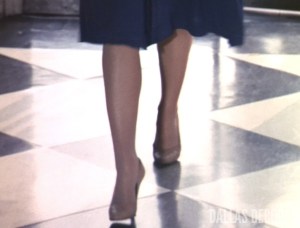
That reminds me: One of my favorite shots from one of your episodes is the scene where Mary Crosby’s character comes back to town and the first time we see her, the camera is following her legs across a hotel lobby.

I’m glad you remember that! We shot that at the Ambassador Hotel in Los Angeles. They wanted her return to be a little mysterious, so the script read something like, “She’s standing at the desk and turns and you see it’s Mary Crosby.” I remember thinking, “My, she has nice legs. Let’s follow her legs.” You don’t plan something like that.

You mentioned Leonard Katzman a little earlier. He really brought his own vision to the show, didn’t he?

Len would take situations that his family was going through and use them in the plot. I’d sit in on a story meeting and he’d say, “My daughter did this the other night. Let’s put that in a script and give it to Lucy.” Len and I were pretty close, and he would take things from my family too. He was always writing from real-life experiences, whether it was his own or mine or someone else’s. I think that’s the case with a lot of writers – they use what they know best.

It’s interesting to see “Dallas” being made without him. What do you think of the new show?

I want to see more of Larry and Patrick and Linda. I think the kids are good. I think some of them look too much alike, to be honest. [“Dallas” creator] David Jacobs said they should have switched and made Bobby’s son the bad one and J.R.’s son the good one. I thought that was a good idea when I heard it. But [the producers] wanted all-new ideas and new writers and directors, which I completely understand and kind of agree with.

Really?

Yeah. If they hired the writers and directors [from the original], you’d have a lot of, “Well, you know in the old days, we used to do it this way.” That’s the last thing you want to hear. [Laughter] I got into the business a long time ago – 1955 – and I remember hearing people say, “Oh, it’s not like the good old days.” And here it is many years later, people are still saying, “Oh, it’s not like the good old days!”

Well, I agree with you. I’d like to see more of the original stars too. It’s going to be hard to imagine “Dallas” without Larry Hagman.

He could still light up a screen. There are very few people like that. Steve McQueen, Clint Eastwood, Marlon Brando – they had that quality. Larry had it too.

Share your comments below and read more interviews from Dallas Decoder.

Dallas Scene of the Day: ‘It’ll Never Be the Same, Bob’

The mirror has two faces

The mirror has two faces

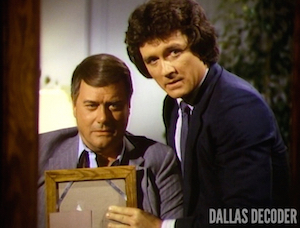
In “Dallas’s” fifth-season episode “Head of the Family,”  J.R. (Larry Hagman) sits on his bed drinking when Bobby (Patrick Duffy) enters and holds open the door.

J.R.: Well, Bob, I distinctly remember your room being down the hall. [Sips his drink]

BOBBY: Where were you tonight?

J.R.: Would you lay off about dinner?

BOBBY: It’s not about dinner. You think you’re the only one mourning Daddy, don’t you?

J.R.: Get the hell out of here, would you?

BOBBY: Well you’re not! [Slams the door behind him, steps into the room and rests his hand on a cabinet, looking away from J.R.] I miss him too. But I know what he’d want if he were alive. He’d want his boys up and doing. [Faces J.R.] And that includes running Ewing Oil the way he ran it.

J.R.: Bobby, the man is dead. It doesn’t matter anymore.

BOBBY: [Slams his fist on the cabinet] It does matter! If you let Ewing Oil die of neglect, you kill off everything he ever worked for.

J.R.: Leave me alone, will you? [Takes another sip]

BOBBY: J.R., I’m doing everything I can. I need your cooperation. [Steps closer to the bed] And I’m hamstrung by Daddy’s letter and I think you know that. And frankly, I’m sick and tired of covering up for you. So do your job, damn you. [Grabs J.R., drags him to the mirror]

J.R.: Hey, hey.

BOBBY: Come here. Now look at yourself. Daddy didn’t build this company just for you and me. [Grabs a framed photograph of John Ross, shows it to J.R.] He expected it to be around for his grandkids. Maybe their kids too. [Slams the frame against J.R.’s chest] Get off your butt, J.R. We’ve got work to do. [Walks toward the door, opens it]

J.R.: It’ll never be the same, Bob.

BOBBY: Maybe it won’t. That’s no reason to do what you’re doing. If this family quits just because he’s gone, he didn’t leave us very much, did he? Some day you may want to tell John Ross just what his granddaddy spent his whole life building. How do you plan on doing that, J.R.? [He exits, leaving J.R. looking at the picture.]

Critique: ‘Dallas’ Episode 92 – ‘Head of the Family’

Down and out

Down and out

In “Head of the Family,” J.R. is depressed over Jock’s death and getting drunk in his bedroom when Bobby barges in and tells him to snap out of it. J.R. all but ignores his brother, so Bobby yanks him off the bed, drags him across the room and makes him look at himself in the mirror. “Daddy didn’t build this company just for you and me,” Bobby says. “He expected it to be around for his grandkids. Maybe their kids too.”

This is the most pivotal scene in one of “Dallas’s” most pivotal episodes. Until now, this has been a show rooted in its own past: Almost everything that happens to the Ewings and the Barneses can be traced to Jock and Digger’s falling out decades earlier. With “Head of the Family,” “Dallas” begins to move beyond its backstory and look toward the future.

No character demonstrates this shift better than J.R. Since the scene in “Digger’s Daughter” where he gleefully tells Jock about his scheme to bribe Pam, we’ve watched J.R. struggle to make his demanding daddy proud. In “Head of the Family,” with Jock gone, J.R. is forced to find new motivation. Instead of trying to impress Jock, J.R. decides to become Jock. Just as the older man devoted his life to building a legacy for his sons, J.R. sets out to do the same thing for John Ross.

This change – which will drive J.R. for the remainder of the original series – is symbolized in “Head of the Family’s” final scene, when a beaming J.R. watches John Ross climb into Jock’s empty chair at the Southfork dinner table. The child replaces his grandfather as the source of J.R.’s ambition.

Since the first season of TNT’s “Dallas” revival focused so heavily on the relationship between J.R. and his son, “Head of the Family” now feels a little like a template for the new show. Other themes from the TNT series are also present. J.R. is immobilized by depression in “Head of the Family,” just like he is when the new “Dallas” begins. Bobby spends this episode taking charge of the Ewings, just like he does three decades later. And when the newly single Sue Ellen’s first dinner party ends in disaster and she turns to Cliff for comfort, does it not presage the two-steps-forward-one-step-back pattern she comes to exhibit on TNT?

Even without these comparisons, “Head of the Family” remains one of the strongest hours from the classic show’s fifth season. This is the second “Dallas” script from Howard Lakin (“The Fourth Son” was his “Dallas” debut), who once again demonstrates a firm grasp of the show’s mythology. Patrick Duffy also does a nice job in his second turn in the “Dallas” director’s chair; I especially like Duffy’s overhead shot of Sue Ellen’s living room during the dinner party sequence.

Duffy shines in front of the camera too. The actor delivers some of his finest performances on “Dallas” in the episodes that deal with Jock’s death, including this one. In “Head of the Family,” Duffy brings to mind the best of his TV parents: He’s as commanding as Jim Davis and as compassionate as Barbara Bel Geddes. Watching Bobby struggle to keep the Ewings together is moving.

Of course, no one touches me in this episode quite like Larry Hagman, who is downright heartbreaking when Bobby confronts the depressed J.R. At the end of the scene, J.R. slumps onto the edge of his bed and tells his younger brother, “It’ll never be the same, Bob.” Thirty years ago, the line was merely sad. Now it feels prophetic.

Grade: A

_______________________________________________________________________________________________________________________________________________

Seat of power

Seat of power

‘HEAD OF THE FAMILY’

Season 5, Episode 15

Airdate: January 22, 1982

Audience: 25.3 million homes, ranking 4th in the weekly ratings

Writer: Howard Lakin

Director: Patrick Duffy

Synopsis: Bobby tells J.R. he must pull himself together to secure John Ross’s future. Ray alienates Bobby and Donna, whose publisher wants her to write another book. At her first dinner party, a friend’s husband makes a pass at Sue Ellen.

Cast: Tyler Banks (John Ross Ewing), Barbara Bel Geddes (Miss Ellie Ewing), Stephanie Blackmore (Serena), Lindsay Bloom (Bonnie), Patrick Duffy (Bobby Ewing), Linda Gray (Sue Ellen Ewing), Larry Hagman (J.R. Ewing), Susan Howard (Donna Krebbs), Steve Kanaly (Ray Krebbs), Howard Keel (Clayton Farlow), Ken Kercheval (Cliff Barnes), Diana McBain (Dee Dee Webster), Jim McKrel (Henry Webster), George O. Petrie (Harv Smithfield), Victoria Principal (Pam Ewing), Dennis Redfield (Roger Larson), Don Starr (Jordan Lee), Barbara Stock (Heather Wilson), Charlene Tilton (Lucy Cooper), Deborah Tranelli (Phyllis), Ray Wise (Blair Sullivan), Lynn Wood (Ms. Bruce), H.M. Wynant (Ed Chapman), Gretchen Wyler (Dr. Dagmara Conrad)

“Head of the Family” is available on DVD and at Amazon.com and iTunes. Watch the episode and share your comments below.

Dallas Scene of the Day: ‘This House is Still Jock’s House’

Deny thy mama

Deny thy mama

In “Dallas’s” fifth-season episode “Denial,” Bobby (Patrick Duffy) enters the Southfork kitchen, where Miss Ellie (Barbara Bel Geddes) holds a coffee cup.

ELLIE: Good morning, Bobby. I just made some coffee. Would you like some? And there’s juice in the refrigerator if you’d like it. [Touches his shoulder]

BOBBY: [Walks away] No, Mama, thank you. I don’t want anything.

ELLIE: What’s the matter, Bobby?

BOBBY: [Sits at the table] Mama, we have to talk.

ELLIE: [Sits across from him, serious] All right. What about?

BOBBY: Mama, we have to be realistic. Daddy is not coming back. And we all have to face that. Mama, you know how proud Daddy always was of Ewing Oil. Well, we can’t continue to run it the way he would have wanted it run – unless we settle things, legally and properly.

ELLIE: What are you saying, Bobby?

BOBBY: Mama, we have to go ahead with that hearing – and have Daddy declared legally dead.

ELLIE: [Crying] No. No. [Stands, walks toward the counter, rests her hands on it, turns to Bobby] This house is still Jock’s house. [Steps away] This family is Jock’s family. [Steps closer] You’re Jock’s son. And I’m Jock’s woman. And the rules we live by are the rules he made. And that’s the way it will be. [Walks away, stops, rests on the counter] He’s alive, Bobby.

BOBBY: [Stands] Mama!

ELLIE: As long as I believe he’s alive, he’s alive.