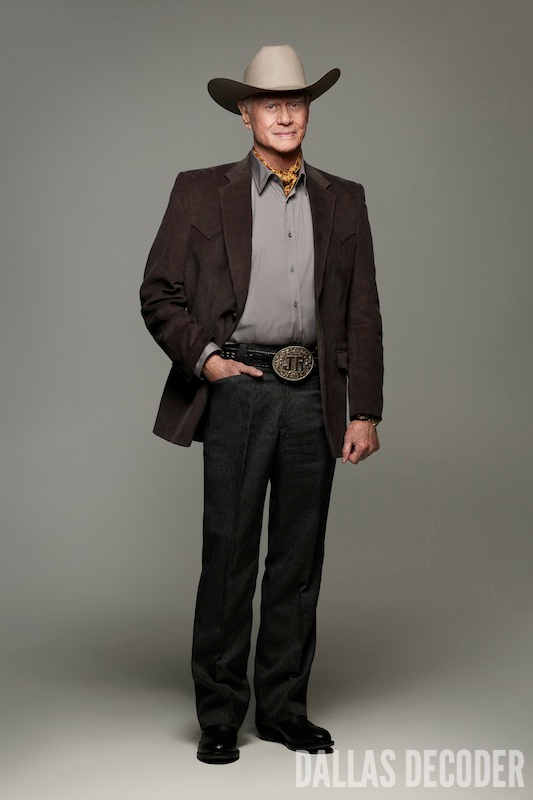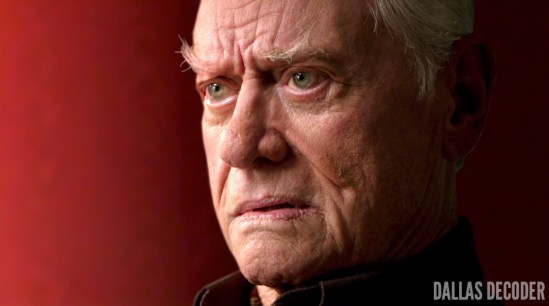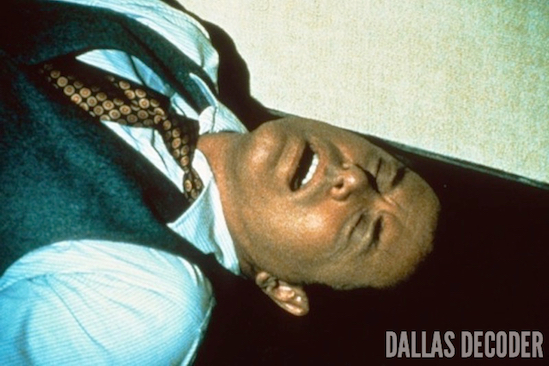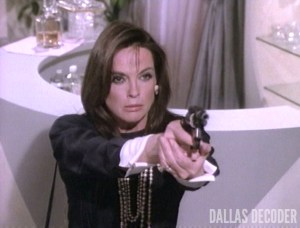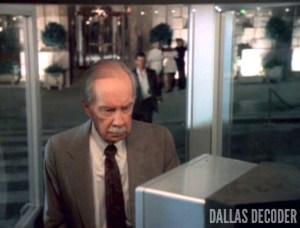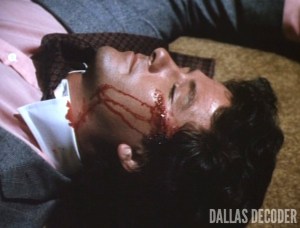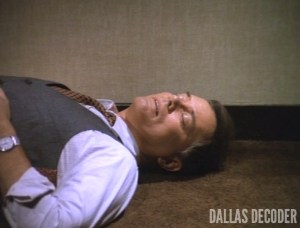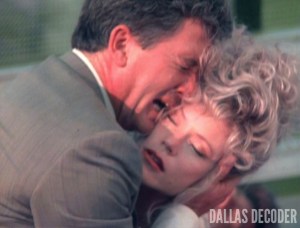
The Dal-List: Sue Ellen’s 10 Most Memorable Moments (So Far)

Dallas, J.R.'s Masterpiece, Linda Gray, Sue Ellen Ewing, TNT

Mourning star

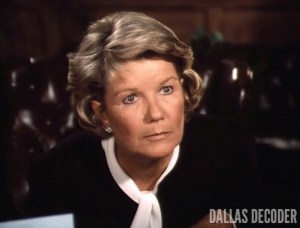
Sue Ellen WeekAs the indomitable Sue Ellen Ewing, Linda Gray has captivated television audiences since “Dallas’s” 1978 debut. Sue Ellen Week continues with this list of the character’s greatest moments from her first 35 years.

Brian Dennehy, Dallas, Linda Gray, Luther Frick, Sue Ellen Ewing, Winds of Vengeance

Command performance

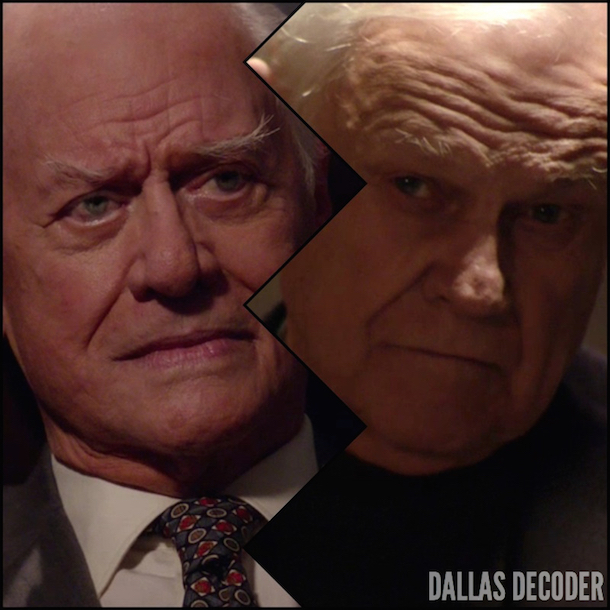
10. Lady sings the blues. Crazed cuckold Luther Frick (Brian Dennehy) holds the Ewings hostage in the Southfork living room and forces Sue Ellen to don her Miss Texas bathing suit and sing for him. Humiliating? Yes, but it also demonstrates Sue Ellen’s willingness to do what’s needed to help her family survive a crisis. Moreover, this is one of Gray’s gutsiest — and smartest — performances. I especially love the final scene: After Jock and Bobby rescue everyone, Sue Ellen grabs her coat and exits the room, head held high. It’s an early glimpse of the character’s resilience: No matter what indignities may be visited upon Sue Ellen, she almost always walks away a lady.
Dallas, Linda Gray, Mother of the Year, Sue Ellen Ewing

Mama’s here

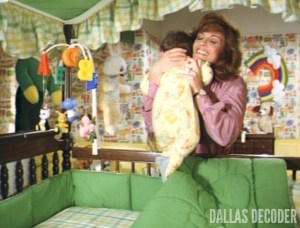
9. Embracing motherhood. When John Ross is born, Sue Ellen comes down with a Southfork-sized case of post-partum depression — and who can blame her? She’s emotionally devastated by her ongoing struggle with alcoholism, the collapse of her marriage to J.R. and her doomed affair with Cliff, who dumped her to preserve his political viability. With help from her shrink Dr. Elby, Sue Ellen finally realizes how much “little John” needs her, so she goes home, picks up the boy and holds him for only the second time since his birth, 13 (!) episodes earlier. It’s a powerful moment — and it sends baby-obsessed sister-in-law Pam running away in tears, so bonus points for that.
Dallas, Guilt by Association, Linda Gray, Sue Ellen Ewing, TNT

Set ’em up, Sue

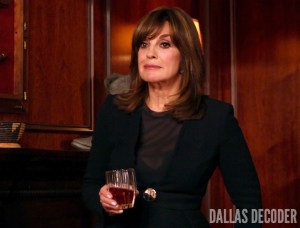
8. Defeating the governor. When Sue Ellen discovers smirktastic Governor McConaughey suppressed evidence that would exonerate the Ewings in the investigation into their rig explosion, she glides into his office, pours a drink and announces she’s going to expose his malfeasance. McConaughey is not pleased. “You can never trust a drunk,” he seethes. Sue Ellen agrees, but says that’s beside the point as she places the glass on his desk and slides it toward him. “This drink, governor, is for you. You’re going to need it. Because now that I have the goods on you, you’re going to do what I want.” Dayum! Our gal really did learn at the feet of the master, didn’t she?
Dallas, Linda Gray, Sue Ellen Ewing

Clean and sober

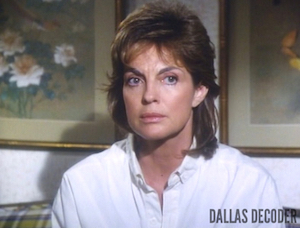
7. On the couch. After Sue Ellen hits rock bottom, J.R. once again commits her to a sanitarium, where she receives treatment from tough-love therapist Dr. Gibson (the terrific Bibi Besch). In an insightful exchange, Sue Ellen tries to blame her drinking problem on her parents and J.R. — until the good doctor sets her straight: “Sue Ellen, I don’t think it matters whose fault it is. What matters is where you go from here.” When Besch delivers this line, watch Gray’s eyes; it’s almost as if you can see the light go on inside Sue Ellen’s head. This moment marks the beginning of one of “Dallas’s” most satisfying storylines: Sue Ellen’s journey of self-discovery. Too bad it turned out to be Pam’s dream.
Dallas, J.R. Returns, Linda Gray, Sue Ellen Ewing

She’s the boss

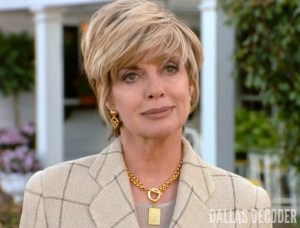
6. Joining the oil business. After a five-year absence, J.R. returns to Dallas and stages an elaborate scheme (does he do any other kind?) to persuade Bobby to buy back Ewing Oil from Cliff. The plan works like a charm … but wait! Baby brother has a trick up his sleeve too: He sells half the company to his new business partner — Sue Ellen, who can’t resist needling her ex-husband when she reveals her new career to him. “I was thinking about all the fun pillow talks we’ll have … about gushers and dry holes,” Sue Ellen says with a wink. The master is justifiably impressed. As she walks away, he turns to John Ross and says, “Your mama’s a hell of a woman.” We couldn’t agree more.
Dallas, Linda Gray, Mandy Winger, Deborah Shelton, Sue Ellen Ewing

You tell her, honey

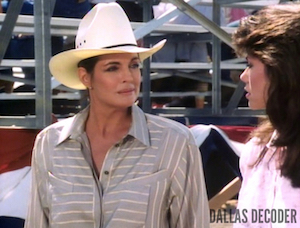
5. Schooling Mandy. At the Ewing Rodeo, a newly sober Sue Ellen turns a corner — literally and figuratively — when she runs into Mandy Winger (Deborah Shelton), J.R.’s latest extra-marital squeeze. Sue Ellen treats Mandy with compassion, urging her to get away from J.R. before he destroys her. When Mandy refuses to listen and turns to leave, Sue Ellen grabs her by the arm and delivers a hard truth: “Isn’t it strange how the mistress always thinks she’s smarter than the wife? If she’s so smart, why is she the mistress?” In the hands of another actress, this scene might have come off like another catty soap opera confrontation, but Gray infuses the material with power and poignancy.
Dallas, Linda Gray, Rock Bottom, Sue Ellen Ewing

Oh, Sue Ellen

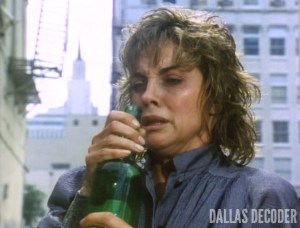
4. Hitting bottom. Sue Ellen tries to comfort J.R. after Bobby’s funeral, but he responds with devastating cruelty, sending her on her worst bender ever. Over the course of the next day or so, Sue Ellen’s purse, car and wedding ring are stolen, leaving her wandering the streets. She winds up in a cheap motel, where she catches a glimpse of herself in the mirror and shouts, “J.R. is right. They’re all right. You are disgusting. I hate you!” Finally, she stumbles into an alley, where she’s so desperate for a sip of booze that she accepts a swig from a bag lady’s bottle. I love how Sue Ellen’s outfit symbolically unravels along with her identity, but more than anything, I love Gray’s riveting, no-holds-barred performance.
Dallas, J.R. Ewing, Linda Gray, Larry Hagman, New Beginnings, Sue Ellen Ewing

Union of equals

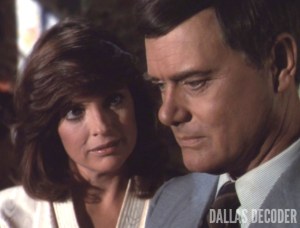
3. A night to remember. Not long after recovering from his shooting, J.R. comes home and finds Sue Ellen asleep in the Southfork nursery, having dozed off while rocking John Ross. The couple put their son to bed and retreat to their own room, where they quietly reminisce about the early days of their courtship, reminding each other why they fell in love in the first place. Besides serving as a rare moment of peace for two characters who are usually at war, this scene shows how Gray is Hagman’s equal in every way. Think about it: It’s one thing to see J.R. and Sue Ellen lobbing insults at each other, but to make their love feel authentic and believable? That takes real talent. Lucky for us, Gray and Hagman had it in spades.
Dallas, Linda Gray, Sue Ellen Ewing, Who Done It?, Who Shot J.R.?

Triumph!

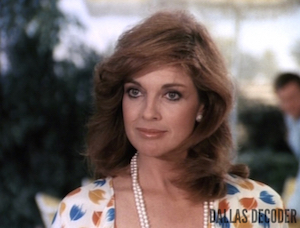
2. Catching Kristin. When Sue Ellen is arrested for shooting J.R., the Ewings toss her off Southfork — but our heroine refuses to give up. Sue Ellen gets out of jail, figures out she’s being framed and heads to the ranch to reveal the truth to J.R. As it turns out, the real culprit is visiting the ranch too — and when Sue Ellen spots her, Gray delivers the most famous line in “Dallas” history: “It was you, Kristin, who shot J.R.” Eighty-three million viewers watched this scene on the night it debuted. It was the cliffhanger resolution the world had been waiting for, but more importantly, it was the moment Sue Ellen returned to Southfork and to J.R.’s side — the place she always belonged.
Dallas, J.R.'s Masterpiece, Linda Gray, TNT

She is us

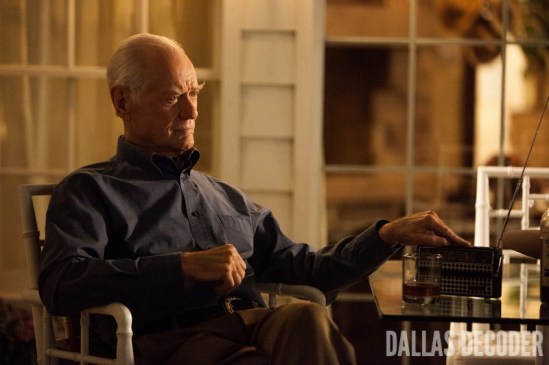
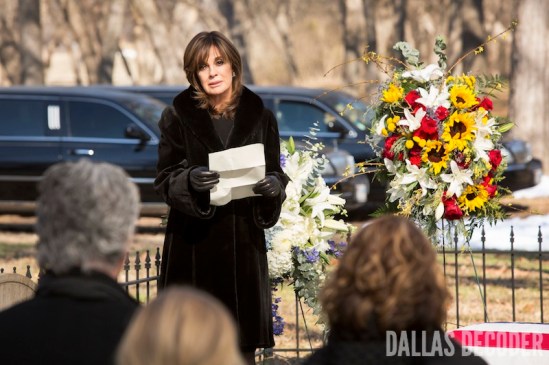
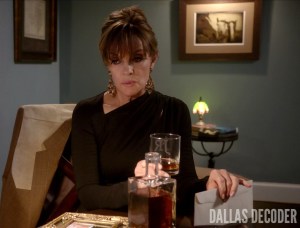
1. Mourning J.R. No one takes J.R.’s death harder than the woman he loved more than any other. On the night before his funeral, Sue Ellen goes into his bedroom, caresses a framed photograph from their wedding and drowns her sorrows with glass after glass of his bourbon, ending two decades of sobriety. The next day, when the Ewings gather at the cemetery to bury J.R., Sue Ellen confesses her relapse and delivers a haunting eulogy for the man she calls “the love of my life.” Gray is mesmerizing in these scenes, which draw upon the remarkable 35-year history between J.R. and Sue Ellen. Her deeply moving, Emmy-caliber performance also unites “Dallas” fans in shared catharsis. Through her, we were able to express the grief we felt after the death of our hero. It’s the moment Sue Ellen became our avatar. Then again, isn’t that what she’s always been?

Now it’s your turn. Share your choices for Sue Ellen’s most memorable moments below and read more “Dal-Lists.”
Critique: ‘Dallas’ Episode 117 — ‘The Ewing Blues’

Dallas, Ewing Blues, J.R. Ewing, Larry Hagman

Don’t box him in

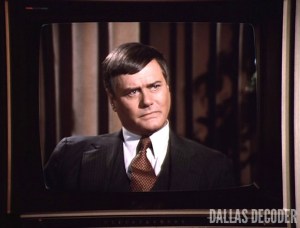
“The Ewing Blues” includes one of “Dallas’s” cleverest scenes. J.R. appears on a local TV talk show to tout his new chain of cut-rate gas stations, which is turning him into a hero in the eyes of the public. Cliff is watching the interview from the living room of his new townhouse, where a deliveryman arrives with the Chinese takeout he ordered. As Cliff reaches for his wallet, the man notices what’s playing on Cliff’s TV. “That’s J.R. Ewing, ain’t it?” he asks. “I tell ya, if he ran for president tomorrow, I’d vote for him! I would!” Cliff is left shaking his head and muttering, “So much for the intelligence of the average voter.”

With this scene, “Dallas” has a little fun with its audience. For years, viewers — present company included — had been treating J.R. like a hero. Now fictional fans like Cliff’s deliveryman were doing the same thing. The line about voting for J.R. even brings to mind the “J.R. for President” buttons and bumper stickers that cropped up during the summer of 1980, when “Who Shot J.R.?” hysteria was in full swing. (I also wonder if the dialogue reflects the era’s political realities. When “The Ewing Blues” debuted in January 1983, Ronald Reagan’s approval rating had sunk to an astonishing 35 percent, the lowest level of his presidency. In those months before Reagan’s popularity rebounded, perhaps Americans really would have voted to replace him with J.R.)

J.R.’s talk show appearance also offers another reminder of Larry Hagman’s genius. J.R. tells the host, Roy Ralston, that he’s cutting gas prices because he believes the oil industry has gouged consumers for too long. We know J.R. is lying because earlier in “The Ewing Blues,” he tells little John Ross that he has become the oil industry’s version of Robin Hood (“take from the poor and give to the rich”). Yet as J.R. talks to Ralston about how “the American public deserves a better hand than they’ve been dealt,” the sincerity in Hagman’s voice kind of makes us want to believe his character. How did Hagman do that?

More than anything, I love Hagman’s scenes with Linda Gray in “The Ewing Blues,” especially J.R. and Sue Ellen’s exchange in their bedroom. After Ray punches him during a Southfork cocktail hour, J.R. sits on the bed, holding an icepack to his swollen lip as Sue Ellen caresses his face. He tells her that he’s nervous about his talk show appearance in a few days and hints he’d like her to join him — and of course the onetime Miss Texas leaps at the opportunity to take another turn in the spotlight. This might be one of the sweetest gestures J.R. ever makes toward his wife. Think about it: J.R. never loses his confidence. He’s only pretending to be anxious so he’ll have an excuse to invite Sue Ellen on the show and involve her in his life. As he puts it, “We’re partners, aren’t we?”

David Paulsen, who wrote and directed “The Ewing Blues,” doesn’t just show us a softer side of J.R.; he also lets us see Bobby’s edge. To compete with J.R.’s cut-rate gas plan, Bobby wants to uncap the Wellington field, one of the Ewing Oil properties Bobby controls during the contest for the company. The problem: The cartel members are partners in the field, and they want it to remain capped. With help from lawyer Craig Gurney, Bobby tells Jordan and Marilee that he’s prepared to exercise a clause in their contract that requires them to either uncap the field or buy out Bobby at five times market value. “That’s armed robbery!” Jordan huffs. Gurney’s response: “No, that’s Paragraph 17A, Section F.” It’s one of my favorite exchanges during the episode.

The other great scene in “The Ewing Blues” comes at the end, when Ellie and Pam visit Brooks Oliver, the lawyer who agrees to help Ellie try to overturn Jock’s will. Ellie is quite timid at the beginning of the scene, clutching the letters that Jock wrote to her from South America. Oliver predicts their lawsuit will turn ugly and wind up in “the newspapers,” which prompts Pam to rebuke him for upsetting her. “She has to know exactly what she is getting into if she wants to go to court,” Oliver explains. This is when Ellie’s fighting spirit bursts forth. “Mr. Oliver, I don’t want to go to court. I don’t want to do any of this,” she says, slapping her hand on the desk. Besides Barbara Bel Geddes’ dramatic delivery, pay attention to the gentle strings that play in the background of this scene. The score, which helped composer Bruce Broughton win an Emmy in 1983, reminds me a little of the music Rob Cairns delivers on TNT’s “Dallas.”

Finally, some casting notes: Oliver is played by the wonderful character actor Donald Moffat, possessor of the fiercest eyebrows this side of Larry Hagman. Moffat is one of several familiar faces who pop up in “The Ewing Blues.” Gurney is played by Lane Davies, who would later star on the soap opera “Santa Barbara,” while another daytime television veteran, John Reilly (“As the World Turns,” “General Hospital”), plays Ralston, the talk show host. The most significant addition to the cast, though, is John Beck, who joins “Dallas” in this episode and begins a three-season run as Mark Graison. I had forgotten that Mark was introduced as an old Ewing family friend. In one scene, when he calls Southfork and Bobby answers the phone, the two characters chat like old chums. It’s surprising to witness, but I know the glad tidings won’t last long.

Grade: A

_______________________________________________________________________________________________________________________________________________

Barbara Bel Geddes, Dallas, Ewing Blues, Miss Ellie Ewing

Mama means business

‘THE EWING BLUES’

Season 6, Episode 14

Airdate: January 7, 1983

Audience: 21.4 million homes, ranking 4th in the weekly ratings

Writer and Director: David Paulsen

Synopsis: J.R. appears on a TV talk show and is lauded for his efforts to cut gas prices. After J.R. threatens to ruin Harwood Oil if Holly doesn’t cancel her refinery contracts, she turns to Bobby for help. To get the cartel to uncap the Wellington property, Bobby threatens to exercise a legal loophole in Ewing Oil’s contract with the cartel members. Mark Graison gives Brooks, his family’s attorney, permission to take Miss Ellie’s case, and Mark grows smitten with Pam when he meets her. Cliff moves into his new townhouse, while Afton grows frustrated with the way he treats her.

Cast: Tyler Banks (John Ross Ewing), John Beck (Mark Graison), Barbara Bel Geddes (Miss Ellie Ewing), Al Checco (deliveryman), Lois Chiles (Holly Harwood), Roseanna Christiansen (Teresa), Lane Davies (Craig Gurney), Patrick Duffy (Bobby Ewing), Bobbie Ferguson (Terri), Fern Fitzgerald (Marilee Stone), Linda Gray (Sue Ellen Ewing), Larry Hagman (J.R. Ewing), Susan Howard (Donna Krebbs), Steve Kanaly (Ray Krebbs), Ken Kercheval (Cliff Barnes), Audrey Landers (Afton Cooper), Donald Moffat (Brooks Oliver), Timothy Patrick Murphy (Mickey Trotter), Scott Palmer (Farley Criswell), Robert Pinkerton (Elliot), Priscilla Pointer (Rebecca Wentworth), Victoria Principal (Pam Ewing), John Reilly (Roy Ralston), Debbie Rennard (Sly), Danone Simpson (Kendall), Paul Sorensen (Andy Bradley), Don Starr (Jordan Lee), Charlene Tilton (Lucy Ewing), Deborah Tranelli (Phyllis)

“The Ewing Blues” is available on DVD and at Amazon.com and iTunes. Watch the episode and share your comments below.

Drill Bits: DVR Users Give the ‘Dallas’ Finale a Big Boost

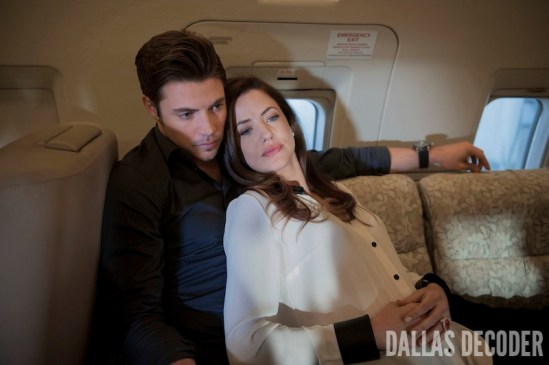
Dallas, John Ross Ewing, Josh Henderson, Julie Gonzalo, Legacies, Pamela Rebecca Barnes, TNT

Flying high

DVR users have been boosting “Dallas’s” ratings all year – and they didn’t disappoint last week.

“Guilt by Association” and “Legacies,” the last two episodes of “Dallas’s” second season, averaged 2.9 million viewers when TNT telecast them back-to-back on April 15. During the next three days, DVR users boosted the combined average for the two episodes to 3.8 million viewers, a 26 percent increase from the previous week.

“Legacies,” which resolved the “Who Killed J.R.?” mystery, performed especially well. When DVR users are included, the episode hit season highs in two important categories: It drew 1.9 million viewers between the ages of 25 and 54, an audience that TNT targets, and 1.5 million adults between 18 and 49, another crucial demographic.

TNT hasn’t announced if it will renew “Dallas” for a third season. Perhaps the cable channel will announce the show’s renewal at its May 15 “upfront,” when executives from TNT and sister station TBS will pitch their programming to advertisers?

Say Uncle

Who is Joaquin, the Mexican mystery man that Elena (Jordana Brewster) visited at the end of “Legacies”? Elena’s Twitter feed offers a clue. Here’s what she tweeted yesterday: “Can’t wait to introduce you all to my uncle Joaquin. He’s quite a character. And a potentially powerful ally.”

Meanwhile, is Ann (Brenda Strong) ready to get out of the Southfork kitchen? Here’s one of her character’s tweets: “I’ve been thinking about venturing away from the ranch, maybe get involved in some Dallas charities or politics. Sue Ellen inspired me.”

Let’s Play ‘Dallas’

When I was a kid, I used to play “Dallas” with my “Star Wars” action figures. Han Solo made a pretty good J.R., while the Bespin-gowned version of Princess Leia was glamorous enough to be Sue Ellen. Now it seems “Dallas” fans like me will be able to collect the real thing: Figures Toy Company has announced plans for a line of classic “Dallas” action figures, beginning with two versions of J.R. – “oil tycoon” and “Who Shot J.R.?”

No word on when the figures will become available. The company encourages fans to “like” its Facebook page for updates. Hopefully we’ll eventually get a Sue Ellen figure – complete with a flask and pearl-handed pistol.

And while we’re on the subject of “Dallas” merchandise: J.R.-branded bourbon will go on sale this fall. Plan accordingly.

“Drill Bits,” a roundup of news about TNT’s “Dallas,” is published regularly. Share your comments below.

‘Who Killed J.R.?’ ‘Dallas’ Solves the Big Mystery

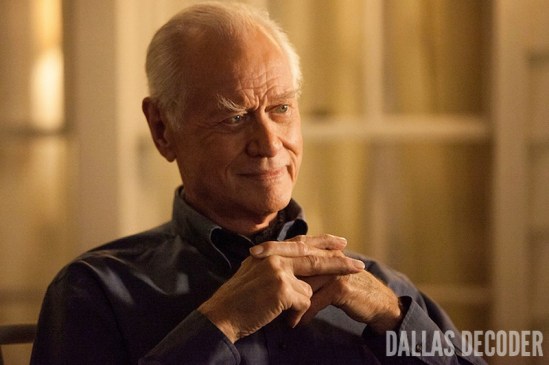
Dallas, J.R. Ewing, Larry Hagman, TNT, Who Killed J.R.?

He done it

We now know who killed J.R. Ewing.

In “Legacies,” “Dallas’s” second-season finale, the Ewings completed the execution of the master plan that J.R. (Larry Hagman) devised before his death. All of our questions were finally answered:

• Christopher (Jesse Metcalfe) learned Pam was diagnosed with pancreatic cancer and went to Abu Dhabi to receive experimental treatments. The treatments failed and Pam died in 1989, but Cliff (Ken Kercheval) paid her doctor, David Gordon (Sam Anderson), to create the illusion that Pam was still alive so Christopher couldn’t inherit her share of Barnes Global.

• The police nabbed Roy Vickers (Alex Fernandez), but Cliff had him murdered in jail before he could reveal Cliff was the mastermind behind the rig explosion. Meanwhile, the police arrested Harris (Mitch Pileggi) after Emma (Emma Bell) exposed his role in the Mexican drug trafficking. (The high heels were made of cocaine!)

• After John Ross (Josh Henderson) discovered Cliff had flown to Nuevo Laredo before J.R.’s death, he decided Cliff must have killed J.R. Bobby confirmed John Ross’s suspicions and revealed the gun that J.R. left for John Ross actually belonged to Cliff. To make sure the police caught Cliff, John Ross and Pamela (Julie Gonzalo) planted J.R.’s belt buckle in his safe deposit box; when the cops discovered it, J.R.’s body was exhumed and investigators determined the slugs found in his chest cavity came from Cliff’s gun. The Mexican police arrested Cliff and hauled him away.

But wait, there’s more!

Bobby went to see Cliff in the Mexican prison and offered him a deal: Confess to blowing up the rig, having Vickers assassinated and his conspiracy against the Ewings and Bobby would help him. But Cliff didn’t bite. “I have never done anything that the Ewings asked me to do – and I’m not going to start today,” he seethed. As Bobby walked away, Cliff asked him who really killed J.R. Bobby’s response: “You’ll never know, Cliff.”

Cut to J.R.’s gravesite, where John Ross and Christopher persuaded Bobby to finally read the letter that J.R. left him. Here’s what J.R. wrote:

“Bobby, Doctors say I’ve only got a few days left. Damn cancer. I should have told you earlier, but you know how I detest pity. The feud Digger Barnes started with our family caused more heartbreak than either of us has time to recount. Well, I guess you do have the time. Use it. Put an end to this feud, once and for all.

“I had Bum steal Cliff’s gun. That malignant little troll Barnes comes to Mexico every year for a marlin fishing competition. I’m going to damn well stay alive long enough to be here when he arrives. Carlos del Sol will smooth out the rough edges in Mexico for you. And talk to Bum. He’s the final and most important piece of the puzzle. And the best friend I didn’t deserve to have.

“So remember the time that you got grounded for ‘borrowing’ Daddy’s favorite shotgun? You swore up and down it wasn’t you but Daddy said there was no point in lying because he found those extra shells in your room. Well, we both know it was me who planted those shells. Now it’s time to play that card again.

“I can never make up for all the terrible, hurtful things I did to you, Bobby. And I have no excuses either one of us will believe. But I hope in the quiet place in your heart, where the truth lives, that my jealousy – as powerful as it was – was nothing compared to my love for you. Goodbye, baby brother. I guess I’ll be duck hunting with Daddy. I’ll tell him I was the one who borrowed his gun.”

After the letter was read, John Ross asked who actually pulled the trigger. Bum filled in the blanks: “I shot your father, John Ross. He only had a few days left and he asked me to do it. He said that’s the way it had to be. It was the hardest thing I’ve ever had to do. Please believe that J.R.’s last act was an act of love. For his family. And for you.”

So for those of you keeping score: Yesterday, I suggested a terminally ill J.R. could have arranged his own death and fingered Bum as the person who pulled the trigger, but I ended up naming Cliff as his most likely assailant.

I should have, uh, stuck to my guns. Because like John Ross told Bum, “The only person who could take down J.R. … was J.R.”

What do you think of the resolution to the big mystery? Share your comments below and read more posts on Dallas Decoder’s “Who Killed J.R.?” page.

‘Who Killed J.R.?’ Here’s My Final Theory in ‘Dallas’s’ Mystery

Cliff Barnes, Dallas, J.R. Ewing, Ken Kercheval, Larry Hagman, TNT, Who Killed J.R.? Throughout the “Who Killed J.R.?” mystery, one thing has nagged at me: Is anyone “big” enough to take down the “Dallas” legend? This is why I never considered characters like Carlos del Sol or Carmen Ramos (Castulo Guerra, Marlene Forte) to be serious suspects. Even Harris Ryland (Mitch Pileggi), as important as he’s become to this franchise, hasn’t earned the “right” to go down in history as the man who murdered J.R. Ewing (Larry Hagman).

Frankly, only one character has enough stature to take out J.R. – and that’s J.R. himself. So during the first few weeks of this storyline, I figured we’d eventually discover our hero was secretly suffering from a terminal illness and arranged his own shooting – perhaps J.R.’s loyal private eye Bum (Kevin Page) pulled the trigger – so that his “murder” could be pinned on one of the Ewings’ enemies.

Many of my fellow “Dallas” diehards found the idea of J.R. taking his own life anathema, and I’ve come around to their way of thinking. Also, if the show went the J.R.-arranges-his-own-death route, it could be perceived as a cop-out – and let’s face it, this franchise already pulled a fast one on the audience when it explained away Bobby’s death as a bad dream. Would the people who make the new “Dallas” want to risk alienating fans again?

For awhile, I also theorized J.R. could’ve been done in by an enemy from his past. My suggestion: What if Kristin Shepard (Mary Crosby) was still alive and returned to finish the job she started in 1980? This idea also turned off a lot of fans, who suggested it would be the ultimate retread: It would turn “Who Killed J.R.?” into “Who Shot J.R.?” all over again, right down to the same assailant. I see their point, but I still think it would be cool.

The other great choice from the “old enemies” camp would be Katherine Wentworth (Morgan Brittany), especially if it turned out she faked her death and stole Pam’s identity. I also love the idea that Katherine is somehow connected to Harris, and that she used a Ryland Transport truck to orchestrate the car accident that disfigured Pam and prompted her to flee Southfork in the first place. What a twist that would be! Unfortunately, based on recent comments from Brittany and “Dallas” producer Cynthia Cidre, it doesn’t sound as if Katherine will be returning to the show anytime soon.

This leaves one viable suspect as J.R.’s killer: Cliff Barnes (Ken Kercheval). Think about it: Cliff has become a pretty soulless figure this season. He allowed his “son” Frank Ashkani (Faran Tahir) to kill himself and ordered the bombing of the Ewing Energies rig, even though it put the lives of many people at risk, including his daughter Pamela (Julie Gonzalo), who ended up losing her unborn twins. I have a feeling the worst is yet to come too. Maybe it will turn out Cliff also killed Katherine and somehow kept Pam from returning to Southfork. Perhaps J.R. was about to expose these sins, and that’s why Cliff finally offed his old enemy.

Where does Harris’s Mexican trucking operation and club hostess Rhonda Simmons (Emily Kosloski) fit in? Suppose Carlos and Cliff are in cahoots; Carlos knew his “friend” J.R. was interested in digging into Harris’s past, so he lured J.R. to Nuevo Laredo by leading him to believe Harris was up to something shady south of the border. (Could it be Harris really is transporting nothing more than ugly high heels?) Once J.R. arrived in Nuevo Laredo, Carlos tipped off Cliff, who came to town and shot J.R. (Or maybe Frank isn’t really dead and pulled the trigger on Cliff’s behalf.) Rhonda is part of the scheme and lied to Bobby about Harris’s Nuevo Laredo connection to help Carlos cover his tracks. Before all is said and done, maybe Cliff will even turn on partner-in-crime Harris and try to frame him for J.R.’s death.

Would it be shocking if Cliff turns out to be the killer? No and yes. On the one hand, J.R. is murdered by his oldest adversary? Where’s the surprise in that? On the other hand: Besides Patrick Duffy and Linda Gray, Kercheval is the only original “Dallas” cast member who has a regular presence on the new show. From this standpoint, turning him into a killer would be bold.

Also, consider this: “Who Killed J.R.?” has never been much of a traditional whodunit. From the beginning, this storyline has been about tying up loose ends (“Where in the world is Pam Ewing?”) and settling old scores. Now that J.R. is gone and Cliff has taken control of Ewing Energies, what else is left for him to do?

Besides, it’s not like there isn’t room for a big twist: There’s still the matter of the letter that J.R. left for Bobby. What does it say? Perhaps it will reveal John Ross (Josh Henderson) really is Cliff’s son after all. J.R. faked the paternity test all those years ago to spare his family – and himself – a lot of embarrassment and raised John Ross as his own. This would undoubtedly upset a lot of fans, but it would also add a new shade to J.R.’s character and give new meaning to the famous scene where he holds John Ross for the first time. As for John Ross’s recent nuptials to Pamela, look at it this way: She already married her cousin. Why shouldn’t her brother be next?

I think it’s more likely the letter to Bobby reveals that Christopher (Jesse Metcalfe) is actually J.R.’s son. Perhaps J.R. concealed the truth from Bobby because he knew how much his brother and Pam needed a child of their own. This might explain Bobby’s heartfelt line after he received J.R.’s note after the funeral: “I knew you’d have at least one more left up your sleeve, J.R. It is a good one. I love you brother.”

As for the gun that J.R. left John Ross? Maybe it will turn out to be the gun that Pamela (Julie Gonzalo) used to shoot Tommy and the Ewings will use the weapon as leverage to gain control of Barnes Global. When the Ewings threaten to expose Pamela’s crime, Cliff finally does something selfless and protects his daughter by fessing up to J.R.’s murder, allowing Pamela and John Ross to take control of two-thirds of Barnes Global, with Christopher finally inheriting his mother’s third.

Once the Ewings control Cliff’s company, maybe they can turn Harris out of Ryland Transport, assuming the money Cliff gave Harris last week comes with strings attached to Barnes Global. This might explain J.R.’s cryptic description of the gun in his note to John Ross: “Use what I’ve given you to take from them what they want to take from us.” In other words: They want to take our company from us, so we’ll take theirs from them.

Then again: Knowing this show, there’s a good chance every one of my guesses is wrong. Who knows what twists and turns await us tonight?

Who done it? Share your final theories below and read more posts on Dallas Decoder’s “Who Killed J.R.?” page.

‘Who Killed J.R.?’ Possible Suspects in ‘Dallas’s’ New Mystery

Dallas, J.R. Ewing, Larry Hagman, TNT, Who Killed J.R.?

Who done it?

In “J.R.’s Masterpiece,” we learned Larry Hagman’s iconic character was shot and killed in a Mexican flophouse. The police investigation concluded J.R. was the victim of a burglary, but Bobby told Bum, his brother’s private eye, that J.R. was murdered. Who killed J.R.? Here are some potential suspects.

OLD ENEMIES

Cliff Barnes, Dallas, TNT, Who Killed J.R.?

Pre-emptive shot?

• Cliff Barnes. As J.R.’s oldest enemy, Cliff (Ken Kercheval) automatically earns a spot on this list, although I’m not sure why he’d want J.R. dead at this point. Cliff is now one of the world’s richest men. He has already beaten the Ewings: Cliff took away J.R.’s company at the end of the old show and recently helped his daughter Pamela seize 10 percent of the new Ewing Energies. Then again, maybe Cliff blames J.R. for the death of his adopted son Frank, who recently fell on his sword after betraying Cliff to J.R. Or could Cliff have killed J.R. to prevent him from rising again?

Dallas, Katherine Wentworth, Morgan Brittany, TNT, Who Killed J.R.?

Waiting to strike?

• Katherine Wentworth. There was no love lost between Katherine (Morgan Brittany), Cliff and Pam’s loony half-sister, and J.R. On the old show, she plotted with him to break up Pam’s marriage to Bobby, whom Katherine wanted for herself. When J.R. betrayed her, Katherine went off the deep end and shot Bobby, then tried to poison him before vanishing. (Pam also dreamed she ran over Bobby with her car, killing him.) Later, Katherine stalked Pam in the hospital after her car crash before resuming her life on the run. Could Katherine have been waiting all this time to spring a trap for her ex-partner-in-crime?

NEW NEMESES

Dallas, Harris Ryland, Mitch Pileggi, TNT, Who Killed J.R.?

Protecting secrets?

• Harris Ryland. J.R. ordered his private eye Bum to investigate Ryland (Mitch Pileggi), who has caused lots of problems for the Ewings, including blackmailing Sue Ellen. Could Ryland have gotten wind of Bum’s snooping and killed J.R. to prevent him from uncovering his misdeeds? Perhaps, although “Dallas” has been grooming Pileggi as its new villain so it seems unlikely he’ll turn out to be the killer. But what about Ryland’s overprotective mama Judith? She could be a suspect, although if she were going to kill someone, it would probably be a withering glance, not a gun.

Dallas, Mitch Lobell, Richard Dillard, TNT, Who Killed J.R.?

Disgruntled dad?

• Mitch Lobell. Lobell (Richard Dillard) was the Ewing family lawyer who helped John Ross and Veronica Martinez trick Bobby into selling Southfork to J.R. When Lobell got greedy and demanded millions of dollars in hush money, J.R. and John Ross blackmailed him with incriminating photos that could’ve sent his son Ricky, a recovering drug user, to jail. After J.R. seized control of the ranch, Lobell vanished without a trace. Has he been hiding in the shadows, waiting for the right moment to take his revenge against J.R.? Perhaps, but if he turned out to be the killer, would anyone remember him?

FRENEMY?

Carlos Del Sol, Castulo Guerra, Dallas, TNT, Who Killed J.R.?

Turncoat?

• Carlos del Sol. Carlos (Castulo Guerra) is a billionaire conservationist and one of J.R.’s old friends. When J.R. wanted to join Cliff’s high-stakes poker game in Las Vegas last season, Carlos agreed to front him the money. He’s also the father of the real Marta del Sol, whose identity was stolen by Veronica, the con artist who helped John Ross in his scheme to defraud Bobby. But isn’t it suspicious that Carlos turned up at the Mexican police station when the Ewings gathered there after J.R.’s murder? Even if he didn’t pull the trigger, something tells me Carlos knows more than he’s letting on.

WILD CARDS

Dallas, Pam Ewing, TNT, Victoria Principal

Dead?

• Pam Ewing. At the end of “J.R.’s Masterpiece,” Bum told Christopher that J.R. had been searching for his mother. The backstory: Pam (Victoria Principal) was disfigured in a fiery car crash and ran away from Southfork. Later, the audience learned she had a terminal illness and wanted to spare Bobby and Christopher the pain of having to watch her die. Suppose Pam went into remission and is still alive but, for whatever reason (shame?), doesn’t want to be found? Could she have killed J.R.? It’s extremely doubtful, especially since Pam was such a beloved heroine and Principal recently announced she won’t reprise the role.

Dallas, Kristin Shepard, Mary Crosby, TNT, Who Killed J.R.?

Alive?

Kristin Shepard. Yes, she’s dead – but when has that ever stopped “Dallas”? Kristin (Mary Crosby) famously shot J.R. in 1980, only to later drown in the Southfork swimming pool. What if she somehow faked her death and went into hiding, waiting for the right moment to try another assassination attempt? Suppose J.R. found out Kristin was still alive and was on her trail? Bum told Christopher that J.R. had been tracking down his mother; what if he was referring to biological mama Kristin and not adopted mom Pam? This is my dream scenario; I don’t expect it to come true. But how cool would it be if it did?

Dallas, J.R. Ewing, Larry Hagman, TNT, Who Killed J.R.?

Savior?

• J.R. Ewing. What if J.R. wasn’t murdered? What if his “masterpiece” plan was taking his own life so his death could be pinned on Harris, Cliff or one of his other enemies? I know it appeared someone off camera gunned down J.R. at the end of “The Furious and the Fast.” Could it have been Bum, acting on J.R.’s orders? I don’t love the idea of J.R. killing himself, but I do like the notion of him making a grand sacrifice to save the Ewings from some outside threat. This scenario would also solve the major dilemma with this plot: Who is “big” enough to take down J.R. Ewing – except for maybe J.R. himself?

Who done it? Share your theories below and read more posts on Dallas Decoder’s “Who Killed J.R.?” page.

Goodbye, J.R.

Dallas, J.R. Ewing, Larry Hagman, TNT

R.I.P., J.R.

I don’t know who came up with the idea that J.R. Ewing was the man we loved to hate, but nothing could have been further from the truth. Do you know anyone who hated J.R., ever? He was always the “Dallas” character we cared about most. The “Who Shot J.R.?” hysteria didn’t occur because people thought he got what was coming to him. We didn’t spend seven months trying to guess the identity of J.R.’s assailant because we wanted to shake that person’s hand. We wanted to know who to shake our fist at. Who dare harm our hero?

J.R.’s funeral on tonight’s edition of TNT’s “Dallas” will bring an end to one of the most enduring figures in our popular culture. J.R. arrived in the era of pet rocks; he leaves in the age of Angry Birds. He has been as much a fixture in our living rooms as any president. Jimmy Carter held the office when CBS flung open the doors to J.R.’s white house, Southfork, in 1978. J.R. outlasted him and Reagan and made it halfway through Bush I, then took a break and came back with reunion movies and specials during Clinton and Bush II. Finally, under Obama, J.R. began making weekly visits again.

Like Superman, James Bond and Mr. Spock, J.R. spanned decades. One big difference: Those characters have all been played by multiple actors, but for 35 years there’s been only one J.R.: Larry Hagman. (Yes, Kevin Wixted had a small role as a teenaged J.R. in the 1986 “Dallas: The Early Years” prequel, but Hagman’s appearance at the beginning of that movie is the one we remember.) Hagman logged almost 400 hours of prime-time television inhabiting J.R.’s skin. He appeared in every “Dallas” episode, movie and clip show, plus a few hours of “Knots Landing.” For awhile in the 1980s, Hagman even donned J.R.’s Stetson and hawked BVD underwear in TV commercials. His memorable tag line: “Now where else would I put my personal assets?”

Hagman’s irresistible charisma made it impossible to dislike his character. J.R. did awful things, but Hagman was clearly having so much fun doing them, we couldn’t help but have fun too. J.R. bribed, blackmailed and backstabbed. He cheated on his wives and his mistresses. Most entertainingly, he never bit his tongue when it came to letting his family know how he felt about them. To Pam: “I don’t give a damn about you or your happiness, honey. But I do care about what’s good for me.” To Lucy: “Say, why don’t you have that junior plastic surgeon you married design you a new face – one without a mouth?” To Bobby: “You’re a whole lot dumber than I ever thought a brother of mine could be – with the exception of Ray and Gary, of course.”

As mean as he was, “Dallas” never lost sight of J.R.’s humanity. More than anything, he wanted Daddy to be proud of him, but Jock loved Bobby best. In the beginning, every one of J.R.’s schemes stemmed from his desperate desire to win the old man’s approval. This made J.R. enormously sympathetic. After all, who among us hasn’t felt unloved at some point? There were other flashes of J.R.’s softer side, like the time he recalled falling in love with Sue Ellen and the tears he shed at Bobby’s burial. But nothing made J.R. more relatable than fatherhood. When Jock died, J.R. made John Ross the center of his universe. Every time we saw him doting on that little boy, our hearts melted. Forget Bill Cosby; J.R. Ewing was the best TV dad in the ’80s.

In old age, J.R. became even more complex. He still schemed, but now he was just as likely to use his powers to help others as he was for his own selfish ends. J.R. plotted with John Ross to take over Ewing Energies, but he also blackmailed a smug prosecutor to save Sue Ellen from going to jail and vowed to help Bobby bring down Harris Ryland. We also discovered there were lines that J.R. wouldn’t cross. He stole Southfork from Bobby, then returned it when his conscience revealed itself. And when John Ross wanted to take advantage of one of Bobby’s misfortunes, J.R. put the young man in his place: “You still got a lot to learn, boy. When the family’s in trouble, we don’t take advantage.”

Perhaps most movingly, the elderly J.R. also became a teller of hard truths. To John Ross: “I spent most of your childhood chasing after women I didn’t love and making deals that didn’t really matter.” To Sue Ellen: “The best decision you ever made was the day you walked away from me.” To Bobby: “I love you … and I don’t know who I’d be without you.”

It’s true that daytime soap operas have given us many characters who have endured for decades, but almost no one in prime time can match J.R.’s longevity or evolution. James Arness played Marshal Dillon on “Gunsmoke” for 20 seasons, and even though that character grew less brooding as the show progressed, he was essentially the same good-hearted hero in the last episode that he was in the first. Archie Bunker, immortalized by Hagman’s friend Carroll O’Connor, grew more tolerant during his 11-year run, but frankly that made him a little less interesting. You can’t say the same thing about J.R.’s journey through life.

If Hagman hadn’t died last fall, J.R. would still be here, captivating us. Quite appropriately – and quite courageously, when you think about it – the “Dallas” producers are allowing J.R. to die, sending him off with a brand-new “Who Killed J.R.?” mystery. The character’s death marks the end of an era, although his legacy is plain for all to see. Before “Dallas,” the people who made television drama were afraid to let storylines continue from week to week. They insisted protagonists be good. Now the prime-time landscape is populated with flawed heroes whose stories never end. Don Draper. Walter White. Carrie Mathison. J.R. didn’t just touch the lives of his fans; he helped shape an entire medium.

Maybe you feel differently, but I never loved to hate J.R. I just loved him. The only thing I hate is that now he’s gone.

What are your favorite memories of J.R. Ewing? Share your comments below and read more opinions from Dallas Decoder.

Critique: TNT’s ‘Dallas’ Episode 17 – ‘The Furious and the Fast’

Dallas, Furious and the Fast, J.R. Ewing, Larry Hagman, TNT

One last shot

We know it’s coming, but still it shocks us. “The Furious and the Fast” ends with the murder of J.R. Ewing, or at least what looks like his murder. It’s jarring, chilling, sad. It’s also a technological feat. The producers apparently created the sequence using recycled footage and audio clips, although the Hollywood trickery is probably obvious only to the most eagle-eyed “Dallas” obsessives. Yet as impressive as the scene is, it isn’t the only reason to admire this episode, which is one of the new “Dallas’s” most entertaining hours yet.

The historic final scene: John Ross is alone in the darkened Ewing Energies conference room, a drink in his hand, his shoes propped on the table. He receives a phone call from J.R., who wants an update on their latest plot against Bobby and Christopher. John Ross tells him the scheme failed, but J.R. is nonplussed: “Don’t you worry, son. I’ve got a plan. It’s going to be my masterpiece – because you shouldn’t have to pay for my sins.” John Ross looks puzzled and asks J.R. what he means. Another cryptic response: “Just remember: I’m proud of you. You’re my son, from tip to tail.” John Ross smiles, but when the camera cuts to J.R., the old man looks startled. Cut back to John Ross, who hears two gunshots and leaps to his feet. “Dad! Dad!” he exclaims. Then, finally: “Dad?”

“The Furious and the Fast” was filmed after Larry Hagman’s death last fall, and it appears as though the producers cobbled together J.R.’s final moments using bits and pieces from other recent scenes. The shots of him on the phone come from the “False Confessions” exchange where Frank calls J.R. to inform him that John Ross and Pamela have become lovers. (The original scene took place in J.R.’s bedroom; in the recycled version, the walls have been turned red.) Hagman’s dialogue, in the meantime, seems to have been pulled from a variety of episodes. J.R. delivered the “you shouldn’t have to pay for my sins” line in “The Price You Pay,” while the “masterpiece” bit comes from “Sins of the Father.” “Tip to tail” was memorably heard at the end of “Revelations,” the first-season finale.

I’m sure the “Dallas” producers would’ve preferred to film Hagman’s final performance as J.R. while the actor was still alive, or better yet, to never have occasion to create such a scene at all. This sequence represents their effort to make the best of a sad situation, so I salute them for coming up with something that not only looks and feels convincing, but also offers a fittingly mysterious beginning to the “Who Killed J.R.?” storyline that’s destined to dominate the rest of the season.

It also feels appropriate that J.R.’s final words are for his son since Josh Henderson sells this scene more than anyone. The smile that breaks across John Ross’s face when J.R. announces he’s proud of him is touching. You can also hear the heartbreak in Henderson’s voice when John Ross realizes what’s happening to his father on the other end of the phone. Credit also goes to director Rodney Charters, who pulls back the camera each time John Ross exclaims “Dad!” until we’re finally left with that wide shot of Henderson alone in the dark. The echo created by John Ross’s final “Dad?” is another nice touch.

Of course, even though I admire the audaciousness of trying to recapture the old “Who Shot J.R.?” magic, it’s a little unnerving to see the new “Dallas” shoot yet another character. J.R. is the fourth person on this show to take a bullet during the past eight episodes. It’s also worth noting how different this whodunit is from the one triggered by the 1980 episode “A House Divided.” Back then, J.R.’s shooting capped an hour in which several characters were each given a clear motivation for wanting him dead. This time around, there are no obvious suspects, although I’m sure they’ll emerge soon enough. Still, I wonder: What character in the “Dallas” mythology is big enough for this job? Who has the stature to take down J.R. Ewing?

I’ll save those worries for another day, though, because to focus only on the implications of “The Furious and the Fast’s” final scene would mean overlooking the rest of this excellent episode. Ted Shackelford’s return as Gary Ewing inspires many of the hour’s best moments, including his fun exchanges with Linda Gray. To get Gary to lower his defenses, Sue Ellen flirts shamelessly with him, allowing us to see a side of her that’s been dormant for much too long. How wonderful of “Dallas” to show that a woman in her 70s can still be sexy and playful. I also appreciate how Julia Cohen’s script has Sue Ellen and Gary acknowledge their past battles with the bottle, which seems to be a sly nod to the memorable scene in 1980 when Gary’s attempt to bond with fellow alcoholic Sue Ellen ended in disaster.

More highlights: John Ross’s bratty greeting to Uncle Gary (“Who the hell let you off the cul-de-sac?”) and Gary’s heart-to-heart with Bobby, when he reveals his fall from the wagon and split from Valene. Patrick Duffy and Shackelford slip comfortably into their familiar dynamic of the responsible baby brother and the all-too-human middle sibling. Isn’t it remarkable how two actors who look nothing alike can seem so believable as brothers? In my recent interview with Shackelford, he expressed his willingness to reprise his role beyond the three-episode stint that begins with this episode. Given how easily he interacts with Henderson, Gray and Duffy here, this seems like an idea worth serious consideration.

Indeed, if “The Furious and the Fast” does anything, it demonstrates how important it is to inject fresh blood (or in Shackelford’s case, familiar blood) into a show like this. I was apprehensive when I read last year about the producers’ plans to add newcomers like Kuno Becker and Emma Bell to the cast, fearing they would rob the core cast of screen time, which already feels too scarce. But I was wrong. Bell knocks me out as timid, confused Emma, and I’m completely charmed by Becker, whose effortless chemistry with Jordana Brewster might be the season’s nicest surprise.

Also fascinating: Mitch Pileggi and Judith Light as Harris and Judith Ryland, whose mother/son relationship grows weirder with each episode. (This episode’s best line: Judith’s frigid “Now pick that up” after Harris kicks over the chair in Emma’s bedroom.) Altogether, the “Dallas” cast now includes 11 regular cast members and several recurring guest stars, yet in this episode at least, no one gets shortchanged.

“The Furious and the Fast” also gets a big lift from Charters’ expertly executed racecar sequences, which generate genuine suspense and make the episode feel a little like this generation’s version of a Southfork rodeo. And even though it seems unlikely the city’s transportation chief would award Christopher the fuel contract on the basis of how many laps his methane-powered car can complete, you have to admit: The race offered a clever metaphor for the familial squabbling that is so central to this show. Like the Ewing Energies-sponsored car, John Ross and Christopher sometimes seem to go around in circles with their feuding, yet it rarely gets boring.

When I watched “The Furious and the Fast” for the first time the other night, I kept looking at the clock, expecting to see the show was almost ever. Some of this stemmed from the dread I was feeling, knowing this would be Hagman’s last episode. But my clock-watching was also done with a sense of wonder. This episode was so dense, every scene felt like it was bound to be the last one of the night. By the time those gunshots finally rang out, I was plenty sad, but I was also damn satisfied. J.R.’s final hour turned out to be one of “Dallas’s” finest.

Grade: A

_______________________________________________________________________________________________________________________________________________

Dallas, Furious and the Fast, Gary Ewing, Ted Shackelford, TNT

Return engagement

‘THE FURIOUS AND THE FAST’

Season 2, Episode 7

Telecast: March 4, 2013

Writer: Julia Cohen

Director: Rodney Charters

Audience: 2.8 million viewers on March 4

Synopsis: Gary Ewing returns to Dallas and votes with Bobby to stop drilling on Southfork, which Bobby and Christopher hope will force Sue Ellen to return her share of Ewing Energies to Elena. Sue Ellen flirts with Gary, hoping to break his alliance with Bobby. Harris and Judith try to send Emma back to London, but she runs away to Southfork. At J.R.’s behest, Bum digs for dirt on Harris. Drew and Elena discover there may be oil under the land their father sold to Bobby. Christopher is poised to clinch the city fuel contract after the Ewing Energies car wins a big race. John Ross speaks to J.R. on the phone, but the call is interrupted when it appears J.R. is shot.

Cast: Kuno Becker (Drew Ramos), Emma Bell (Emma Brown), Kenneth Wayne Bradley (Jim West), Jordana Brewster (Elena Ramos), Patrick Duffy (Bobby Ewing), Julie Gonzalo (Pamela Barnes), Linda Gray (Sue Ellen Ewing), Larry Hagman (J.R. Ewing), Cory Hart (Brett Cochran), Josh Henderson (John Ross Ewing), Judith Light (Judith Ryland), Jesse Metcalfe (Christopher Ewing), Kevin Page (Bum), Mitch Pileggi (Harris Ryland), Ricky Rudd (himself), Ted Shackelford (Gary Ewing), Brenda Strong (Ann Ewing), Curtis Wayne (Denny Boyd), Annie Wersching (Alison Jones)

“The Furious and the Fast” is available at DallasTNT.com, Amazon.com and iTunesWatch the episode and share your comments below.

The Dal-List: Classic ‘Dallas’s’ 5 Most Shocking Shootings

Dallas, J.R. Ewing, Larry Hagman, Who Shot J.R.?

The one heard round the world

TNT’s “Dallas” delivered a shocker at the end of “Sins of the Father,” this week’s episode: Ann (Brenda Strong) shot her ex-husband Harris (Mitch Pileggi) and left him bleeding on his den floor. It was the latest example of “Dallas’s” long tradition of using gunplay to throw viewers for a loop. Here’s my list of the five most shocking shootings seen during the original series.

Dallas, Fat Lady Singeth, Linda Gray, Sue Ellen Ewing

She bangs

5. J.R. Ewing (1988). “Dallas’s” 12th season ended with Sue Ellen and boyfriend Nick Pearce (Linda Gray, Jack Scalia) bursting into a high-rise hotel room to confront J.R. (Larry Hagman) over his latest misdeeds. J.R. pulled a gun, Nick lunged at him and before you knew it, studly Mr. Pearce went tumbling over the balcony. That’s when Sue Ellen picked up J.R.’s gun, fired three shots at him and dialed the police to report “a double murder.” Even though this was the fourth (!) time J.R. was shot on the show – and even though there was no doubt he’d survive – you have to admit: Seeing Sue Ellen plug him was pretty surprising.

Dallas, Don Starr, Jordan Lee, Terminus

For whom the booth tolls

4. Jordan Lee. This longtime Ewing frenemy had a penchant for hooking up with shady women – we’re looking at you, Kristin – but when Jordan (Don Starr) got involved with mysterious Sheila Foley (Susan Lucci), he paid the ultimate price. Jordan helped Sheila with her convoluted scheme to masquerade as Bobby’s wife because he believed Sheila merely wanted to make a big speech criticizing OPEC at a Parisian oil conference. When he realized she had deadlier aims, he ducked into a phone booth to call J.R. for help – but before Jordan started dialing, one of Sheila’s goons shot him, ending his 12-year run on the show.

Bobby Ewing, Dallas, End Game, Patrick Duffy

Twist of fake

3. Bobby Ewing. The last episode of “Dallas’s” eighth season felt awfully familiar: The whole world was mad at J.R., and one by one, his enemies were vowing revenge. (Peter Richards: “I swear I’ll kill you!”) As the hour drew to a close, we were given a first-person perspective as someone entered the darkened Ewing Oil suite, walked into J.R.’s office and fired three shots into the back of his chair. A body slumped to the floor, but it wasn’t J.R. – it was Bobby (Patrick Duffy)! Was this a shameless rip-off of the “Who Shot J.R.?” cliffhanger from four years earlier? Absolutely. Was it also one of the show’s best-ever fake-outs? You bet it was.

Dallas, J.R. Ewing, Larry Hagman, No More Mr. Nice Guy Part 1, Who Shot J.R.?

Big shot

2. J.R. Ewing (1980). Hold your fire, fellow fans. I know what you’re thinking: How can this one not be ranked first on a list of shocking “Dallas” shootings? Because CBS spoiled the surprise. Before the network broadcast “A House Divided,” the serial’s most famous cliffhanger, it aired promos that showed J.R. getting shot. As if that wasn’t bad enough, CBS also ran a half-page ad in TV Guide with a screaming headline (“It Had to Happen – J.R. is Shot!”). So yes, even though J.R.’s shooting was a stroke of storytelling genius – and even though it cemented “Dallas’s” spot in the TV Hall of Fame – it wasn’t much of a shock.

April Ewing, Bobby Ewing, Dallas, Patrick Duffy, Sheree J. Wilson, Terminus

French twist

1. April Ewing. Did you see this one coming? I sure didn’t. Like Jordan’s death, this shooting was part of the storyline about Sheila masquerading as Bobby’s kidnapped wife April (Sheree J. Wilson) during their Parisian honeymoon. April was supposed to be released to Bobby’s custody at the OPEC conference – but when gunfire broke out, she got caught in the crossfire. The scene ended with Bobby weeping as he cradled his dead bride’s body. Wilson had become “Dallas’s” leading lady at this point, making this the first time the show had killed off one of its main characters (not counting Jock, of course). Her death remains one of the show’s boldest – and most heartbreaking – plot twists.

Which “Dallas” shootings shocked you most? Share your choices below and read more “Dal-Lists.”

‘Dallas’s’ Second Season Gets Off to a Promising Start

Dallas, John Ross Ewing, Josh Henderson, J.R. Ewing, Larry Hagman, TNT

Lessons learned

At one point during “Dallas’s” second-season premiere, J.R. offers Sue Ellen a sly grin and declares, “I never learn my lesson.” Maybe not, but the people who make “Dallas” seem to have learned theirs. This has been a good show from the beginning, but diehards like me couldn’t help but feel bothered by some of the historical flubs in the first-season plotlines (don’t get us started on those Southfork mineral rights) or the fact that our beloved Linda Gray was missing from two whole episodes.

Thankfully, those days appear to be over. The two-hour premiere, which TNT will telecast Monday, January 28, does a nice job giving “Dallas” devotees the stuff we crave. The first shot of the first scene is none other than Sue Ellen – a signal, I hope, that Gray will have a prominent role this year. The opener also offers the first Southfork swimming pool scene in 22 years, references to two long-unseen “Dallas” characters, and a fleeting-but-much-appreciated mention of an institution that was significant to the old show’s mythology. Someone’s been doing their homework.

Best of all, J.R. gets lots of screen time in the extended premiere, which is actually two one-hour episodes (“Battle Lines” and “Venomous Creatures”) that TNT will telecast back-to-back. Larry Hagman filmed a handful of episodes before his death last November, and in these first two hours, he’s as great as ever. Hagman’s scenes with Patrick Duffy will make you chuckle, while his exchanges with Gray will leave you reaching for the tissues. The magic is still there.

Of course, as much as I love watching my old favorites, it’s also good to see “Dallas” cultivating its next generation of stars. Josh Henderson has become a worthy heir to Hagman’s badassery, although he now has competition from an unexpected source: Julie Gonzalo, who is a hellion in heels as Cliff’s vengeful daughter. I’m also pleased to report the premiere gives Jordana Brewster some meaningful scenes. Brewster remains one of the best actors in this ensemble; she makes Elena feel like the kind of person you might know in real life, which – let’s face it – doesn’t always happen on shows like this. Henderson and Gonzalo might get the juicy lines, but Brewster and Jesse Metcalfe, her equally good leading man, keep “Dallas” grounded.

The premiere also establishes the battle for Ewing Energies as the season’s main story arc and introduces us to the sleek Ewing Energies set, which looks absolutely nothing like the offices seen on the old show. (Please note: This isn’t a complaint.) A nifty subplot focuses on Christopher’s foray into racecar driving, and we also learn Ann’s dark secret, a storyline that has more than a few holes but nonetheless offers a nice showcase for Brenda Strong.

Other highlights include our first glimpse of the mysterious new character Emma Brown, played by Emma Bell, who was so memorable as the doomed Amy on “The Walking Dead.” (I wonder: Does Bell find zombies or Ewings more cannibalistic?) We also meet Harris Ryland’s mother Judith, played to the hilt by Judith Light. Yes, Light is only three years older than Mitch Pileggi, who plays Harris. It’s too early to know if audiences are going to buy this, but if anyone can pull it off, it’s Light.

The real question is how “Dallas” will fare once it runs out of episodes featuring Hagman. This week, TV Guide reported the show will write out its star with a “Who Killed J.R.?” mystery that will echo the old “Dallas’s” most famous cliffhanger. Whether or not this idea is really brilliant or really lousy will depend on the execution, but it’s a good sign the show is bringing back so many favorites for J.R.’s funeral and memorial service. The guest list will include Deborah Shelton, who played J.R.’s longest-running (three seasons!) mistress Mandy, and Cathy Podewell, who portrayed his second wife Cally, along with four characters who require no explanation: Gary (Ted Shackleford), Lucy (Charlene Tilton), Ray (Steve Kanaly) and Cliff (Ken Kercheval).

This group includes some of “Dallas’s” most iconic figures. Watching them come together to mourn – or celebrate – the death of the biggest icon of all is bound to be great television. It will never satisfy all of “Dallas’s” hardcore fans, but you have to hand it to the people who make the show. At least they’re trying.

What do you want to see during “Dallas’s” second season? Share your comments below and read more opinions from Dallas Decoder.