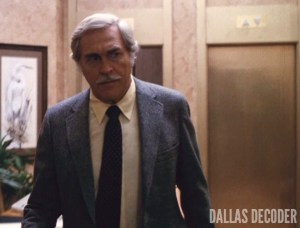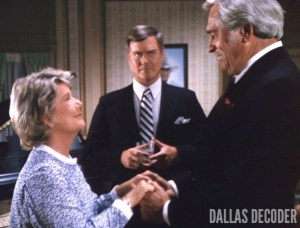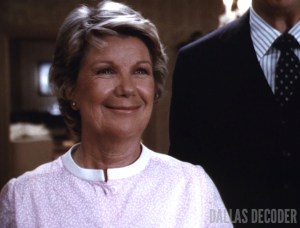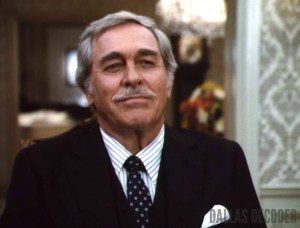
Critique: ‘Dallas’ Episode 150 — ‘Where is Poppa?’

Christopher Atkins, Dallas, J.R. Ewing, Larry Hagman, Peter Richards, Where is Poppa?

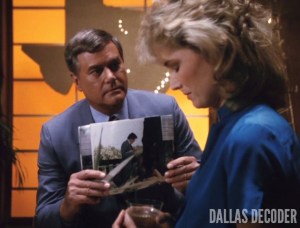
Who’s the daddy?

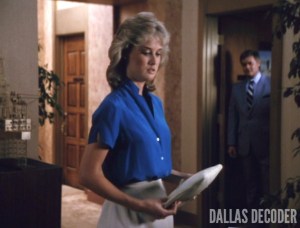
No matter how many times I see the Ewings rush to the hospital when one of their own gets sick or injured, it always moves me. Besides generating drama and suspense, these scenes also remind us that the characters care about each other, despite all their squabbling. Consider what happens in “Where is Poppa?” At the beginning of the episode, J.R. and Sue Ellen have one of their nasty marital spats, but in the fourth act, when he receives word at the office that she’s been struck by a car, he drops everything and races to Dallas Memorial. In moments like this, there’s no doubt this man loves his wife.

“Where is Poppa?” also delivers a nifty twist in the final scene, when the doctor who’s been treating Sue Ellen informs the family that she sustained only minor injuries — although the accident did cause her to suffer a miscarriage. What’s that, you say? You didn’t know Sue Ellen was pregnant? Apparently no one did, including Sue Ellen herself. Of course, “Dallas” has given us plenty of foreshadowing and other clues. Two episodes ago, J.R. told his wife how much he wished they could have another child; in the previous segment, she had breakfast in bed because she felt queasy. Now we know she was probably experiencing morning sickness.

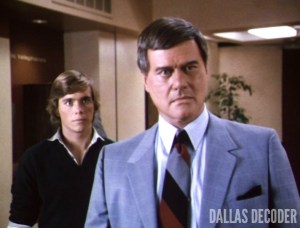
Details like these feel like little rewards for attentive viewers. So does the episode’s final shot. After the doctor reveals Sue Ellen had a miscarriage, J.R. and Peter stand next to each other and wear stunned expressions. This is a clever ending because it leaves us pondering a big mystery — which man was the father of Sue Ellen’s unborn child? — without anyone ever actually asking the question. It’s also one of the few occasions where the audience has more information than J.R. We know Sue Ellen has slept with Peter, but J.R. doesn’t. This lends the scene unexpected poignancy; not only has he lost a child, he’s also lost a wife — metaphorically speaking, that is.

Other highlights of “Where is Poppa?” include Richard Lewis Warren’s score, which adds urgency to the sequence where the news of Sue Ellen’s accident spreads to the various Ewings. I also like the scene where Donna takes Paul Morgan to lunch to see if he knows anything about Edgar Randolph, who she suspects is being blackmailed by J.R. Besides giving the show an excuse to bring back Glenn Corbett, this scene represents another example of “Dallas’s” attention to detail. After all, the show has established that both Edgar and Paul are protégés of Donna’s first husband Sam Culver, so it makes sense that she would turn to Paul for information about Edgar.

Another good scene: J.R. takes Sly to lunch for her birthday and she tells him she used the $10,000 “bonus” she received from Cliff to help her brother start his own machine shop. Since Sly’s brother’s troubles were the reason she got swept up in the corporate espionage game in the first place, I’m glad scriptwriter Arthur Bernard Lewis took the time to give us an update on the brother’s life. It’s a nice touch.

I also appreciate how this episode’s title carries multiple meetings. “Where is Poppa?” refers to the mystery over the father of Sue Ellen’s child, but it can also be seen as a nod to Katherine’s mission to determine if Bobby or Naldo Marchetta is the father of Jenna Wade’s daughter, Charlie. During this episode’s third act, J.R. and Katherine are concluding one of their midday trysts when her private eye calls to let her know that he’s finally tracked down Naldo, who now lives in Los Angeles. Morgan Brittany is terrific in this scene; as Katherine, she shifts effortlessly from being disgusted over having to sleep with J.R. again to being giddy over the news that Naldo has finally been found. Larry Hagman is also a hoot, especially when he delivers one of J.R.’s immortal lines: “You got anything to drink around here? Some orange juice or coffee? Loving always makes me thirsty.”

So “loving” makes J.R. thirsty, huh? No wonder he always has a drink in his hand.

Grade: B

_______________________________________________________________________________________________________________________________________________
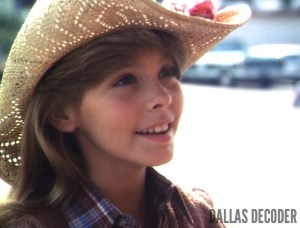
Charlie Wade, Dallas, Shalane McCall, Where is Poppa?

Who’s your daddy?

‘WHERE IS POPPA?’

Season 7, Episode 19

Airdate: February 10, 1984

Audience: 21.2 million homes, ranking 3rd in the weekly ratings

Writer: Arthur Bernard Lewis

Director: William F. Claxton

Synopsis: When Sue Ellen is struck by a car, J.R. and Peter learn she was pregnant and suffered a miscarriage. Edgar goes home from the hospital. Marilee agrees to join Cliff’s bid. Katherine learns Naldo lives in Los Angeles.

Cast: Christopher Atkins (Peter Richards), John Beck (Mark Graison), Barbara Bel Geddes (Miss Ellie Ewing), Fran Bennett (receptionist), Morgan Brittany (Katherine Wentworth), Martin E. Brooks (Edgar Randolph), Anne Gee Byrd (Dr. Jeffries), Roseanna Christiansen (Teresa), Pat Colbért (Dora Mae), Glenn Corbett (Paul Morgan), Patrick Duffy (Bobby Ewing), Fern Fitzgerald (Marilee Stone), Linda Gray (Sue Ellen Ewing), Larry Hagman (J.R. Ewing), Alice Hirson (Mavis Anderson), Susan Howard (Donna Krebbs), Steve Kanaly (Ray Krebbs), Omri Katz (John Ross Ewing), Sherril Lynn Katzman (Jackie Dugan), Howard Keel (Clayton Farlow), Audrey Landers (Afton Cooper), Anne Lucas (Cassie), Shalane McCall (Charlie Wade), Joanna Miles (Martha Randolph), Priscilla Beaulieu Presley (Jenna Wade), Victoria Principal (Pam Ewing), Debbie Rennard (Sly), Donegan Smith (Earl Johnson), Charlene Tilton (Lucy Ewing), Deborah Tranelli (Phyllis)

“Where is Poppa?” is available on DVD and at Amazon.com and iTunes. Watch the episode and share your comments below.
Critique: ‘Dallas’ Episode 149 — ‘Twelve Mile Limit’

Dallas, J.R. Ewing, Larry Hagman, Twelve Mile Limit

What a nice man!

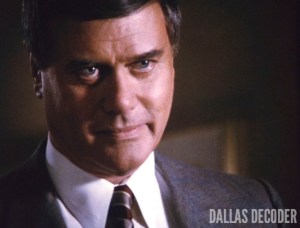
The final scene in “Twelve Mile Limit” begins with a shot of a man in a brown suit carrying a big bouquet of flowers into Edgar Randolph’s hospital room. We don’t see the mystery man’s face until he places the basket on a tray table and the camera pans up, revealing that it’s J.R. “Hello, Edgar. Thought I’d bring a little something to brighten your room,” he says. The words are perfectly innocent, but when Larry Hagman delivers them, they sound positively chilling. This isn’t going to your typical “Dallas” social call, not that such a thing really exists.

Indeed, Edgar is in the hospital because he overdosed on pills and booze to avoid being blackmailed by J.R. What’s J.R. up to? The show hasn’t made that clear. We know J.R. wants Edgar, a high-ranking federal official, to leak him top-secret information about a forthcoming public auction of offshore oil leases. We also know J.R. plans to use this information to get revenge against Cliff, although we’re not entirely sure how. Additionally, J.R. has told Edgar that if he doesn’t cooperate, J.R. will expose a dark secret from his past, although we don’t know what the secret is.

That’s a lot of missing information, and yet the absence of these details does nothing to detract from the power of the hospital scene. Like so many great moments on “Dallas,” this one allows the audience to experience a lot of contradictory emotions at once: We feel sorry for Edgar, but heaven help us, we also get a kick out of watching J.R. exert his power over him. At one point, J.R. tells Edgar that if he tries to kill himself again and succeeds, J.R. will expose his secret to his wife and children anyway. Edgar is horrified. “But why? What purpose would it serve?” he asks. J.R.’s response: “It would testify to the fact that J.R. Ewing always keeps his promises.” My goodness, how mean — and how delicious — is that?

I discussed this scene the other day with Hill Place Blog, who suggested J.R. is so vicious here because Edgar’s sins are so dark; for once, J.R. gets to feel morally superior to somebody. This is an interesting idea, although I’m not sure J.R. cares that much about morality one way or the other. Whatever his character’s motivation may be, I love how Hagman plays off Martin E. Brooks, who is entirely believable as poor, flustered Edgar. After J.R. threatens to expose his secret if he dies, Edgar shouts, “You’re not a human being, you’re scum!” J.R. calmly responds, “Edgar, I know how you feel. But it’s not going to change the way things are. Now don’t make it hard on yourself.” Hagman then takes a beat, smiles and says, “I’m really a nice fellow when I get what I want.” Perfect.

The “scum”/“nice fellow” exchange was one of the first clips shown during last year’s PBS retrospective of the 1980s prime-time soap operas. At the time, I was surprised by the scene’s inclusion — I figured the producers would’ve chosen one of J.R.’s more memorable acts of cruelty, like one of the scenes where he smacks down Cliff Barnes — but now that I’ve seen J.R. and Edgar’s clash with fresh eyes, I appreciate it more. If you’re looking for a singular scene that showcases both J.R.’s villainy and Hagman’s genius, this one is as good as any.

A few more moments in “Twelve Mile Limit” deserve mentioning. In one, Ray and Donna storm into J.R.’s office to accuse him of blackmailing Edgar to win the auction, only to have J.R. tell them he has no intention of bidding. Before you know it, Ray and Donna are essentially apologizing to J.R., who gleefully plays up his indignation. “I sure am glad the wheels of justice are not controlled by people like you,” he says. In another fun scene, Cliff meets Sly in a darkened restaurant so he can reluctantly pay her the money she requested for inside information about J.R.’s dealings. As Cliff reaches inside his jacket to retrieve his checkbook, he says, “Ten thousand dollars, right?” Sly furrows her brow. “Yes, but cash, please.” Debbie Rennard’s oh-so-innocent delivery is downright Hagman-esque.

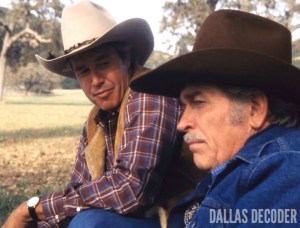
The other standout moment in “Twelve Mile Limit” is a little more sober-minded. At the end of the show’s previous episode, when Miss Ellie tells Clayton about her mastectomy, he embraces her warmly and tells her it doesn’t matter. In “Twelve Mile Limit,” Clayton confesses to Ray that he’s not as comfortable as he let on. “It bothered me, and I’m not proud about that. Why does a man have to feel that way about something like that?” Clayton says. His confession is a bit surprising, but it also feels very honest. I would imagine a lot of men who find themselves in these situations in real life struggle with the same kinds of feelings.

I also like how Howard Keel never makes Clayton feel like anything less than a gentleman. If another actor was playing this character, we might think Clayton was a lout for saying he was afraid to see Miss Ellie without her clothes on; the character could also come off as weak or namby-pamby. Not with Keel, who strikes the perfect balance between strength and sensitivity in this scene and so many others. If anything, Clayton’s willingness to give voice to feelings he isn’t “proud” of makes him feel even stronger.

In fact, the only thing that gives me pause about this scene comes at the end, when Ray tells Clayton, “Well, I just got this feeling that when the time comes, it’s all going to turn out fine.” I certainly hope not! What fun would that be?

Grade: A

_______________________________________________________________________________________________________________________________________________

Clayton Farlow, Dallas, Ray Krebbs, Steve Kanaly, Twelve Mile Limit

Real men

‘TWELVE MILE LIMIT’

Season 7, Episode 18

Airdate: February 3, 1984

Audience: 22.4 million homes, ranking 1st in the weekly ratings

Writer: David Paulsen

Director: Patrick Duffy

Synopsis: Clayton harbors private reservations about having sex with Miss Ellie. J.R. learns Clayton may have killed his first wife to collect the insurance money. When Edgar tries to commit suicide, Ray and Donna suspect he was being blackmailed by J.R. Sly tells Cliff that J.R. plans to bid on three offshore leases. Mark proposes to Pam, but she tells him she needs time to think about it. While Afton is out of town, Cliff sleeps with Marilee. Katherine comes closer to finding Naldo.

Cast: John Beck (Mark Graison), Barbara Bel Geddes (Miss Ellie Ewing), Morgan Brittany (Katherine Wentworth), Martin E. Brooks (Edgar Randolph), James L. Brown (Detective Harry McSween), Danone Camden (Kendall), Patrick Duffy (Bobby Ewing), Fern Fitzgerald (Marilee Stone), Ray Girardin (Richard Stevens), Linda Gray (Sue Ellen Ewing), Larry Hagman (J.R. Ewing), Susan Howard (Donna Krebbs), Steve Kanaly (Ray Krebbs), Sherril Lynn Katzman (Jackie Dugan), Howard Keel (Clayton Farlow), Ken Kercheval (Cliff Barnes), Audrey Landers (Afton Cooper), Joanna Miles (Martha Randolph), Priscilla Beaulieu Presley (Jenna Wade), Victoria Principal (Pam Ewing), Deborah Rennard (Sly), Donegan Smith (Earl Johnson)

“Twelve Mile Limit” is available on DVD and at Amazon.com and iTunes. Watch the episode and share your comments below.
Critique: ‘Dallas’ Episode 148 — ‘Eye of the Beholder’

Barbara Bel Geddes, Clayton Farlow, Dallas, Eye of the Beholder, Howard Keel, Miss Ellie Ewing

The natural

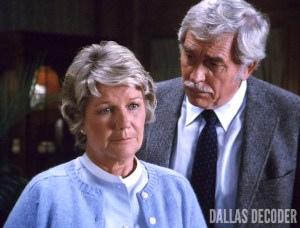
At the end of “Eye of the Beholder,” Miss Ellie tearfully tells Clayton that she had breast cancer and underwent a mastectomy years earlier. It’s another moving performance from Barbara Bel Geddes, although when I try to explain why she excels in scenes like this one, I always come up short. Is it her ability to summon tears whenever the script calls for it? Is it her halting delivery, which mimics the way people tend to talk in real life? Or is it some magical, Hagman-esque quality that can’t be described? Whatever the reason, Bel Geddes always makes me forget I’m watching a world of make-believe. She’s amazing.

To be fair, Bel Geddes gets plenty of help from “Eye of the Beholder” scriptwriter Arthur Bernard Lewis, whose unsentimental dialogue ensures Ellie isn’t seen as a figure of self-pity. Here’s how she tells Clayton about her ordeal: “Clayton, I had surgery. I’ve had a mastectomy. The doctor found cancer. They cut off my breast.” This series of clipped, matter-of-fact pronouncements reminds me of Bel Geddes’ wonderful monologue in “Return Engagements,” when Ellie acknowledges her failure to help Gary keep his family together. (“I should’ve fought them. I didn’t. I did nothing.”) Only one line in Ellie’s “Eye of the Beholder” speech gives me pause. After she tells Clayton about her mastectomy, she says, “It affects how I feel about myself, and I know it’s got to be harder for you.” This seems like another example of “Dallas’s” pervasive sexism — and maybe it is — but like it or not, I suspect this is how a lot of women from Ellie’s generation felt.

Regardless, I continue to marvel at “Dallas’s” acknowledgment that Ellie and Clayton, two characters who are supposed to be in their 60s or 70s, are capable of sexual intimacy. Besides “The Golden Girls,” which debuted a year after this episode aired, I can’t think of another show that did more more than “Dallas” to dispel the myth that people stop having sex with they get old. I also appreciate how sensitively “Dallas” handles this material. At the end of the scene, Clayton tells Ellie the mastectomy doesn’t matter to him and sweeps her into his arms. The final freeze frame shows him holding her tightly as Richard Lewis Warren’s soft piano music plays in the background. There’s no big cliffhanger, just two characters expressing their love and commitment to each other. What other prime-time soap opera from this era would be willing to end an episode on such a quiet, dignified note?

Above all, I love how Ellie and Clayton’s storyline mines “Dallas’s” history. “Eye of the Beholder” arrived four seasons after the show’s classic “Mastectomy” episodes, which broke ground by making Ellie one of the first major characters in prime time to get cancer. In “Eye of the Beholder,” the show doesn’t just mention her disease, it turns it into a major subplot and reveals Ellie is still struggling with the same feelings of inadequacy that she did in 1979. Her tearful scene with Clayton harkens to the memorable moment in “Mastectomy, Part 2,” when she comes home after her surgery and breaks down (“I’m deformed”) upon discovering her dresses no longer fit the way they once did.

The show’s history can also be felt in “Eye of the Beholder’s” third act, when Clayton tells Sue Ellen that Ellie has called off the wedding without telling him why. Sue Ellen gently quizzes Clayton and realizes he and Ellie haven’t been intimate with each other. “Don’t give up on her. I don’t think she’s told you everything,” Sue Ellen says. I love this scene for a lot of reasons, beginning with Linda Gray, whose expression lets the audience know that Sue Ellen has it all figured out. This also feels like a moment of growth for Gray’s character. Think back to “Mastectomy, Part 2,” when Sue Ellen reacts to Ellie’s cancer diagnosis by suggesting Jock will reject his wife after her surgery. Four years later, Sue Ellen is wiser, less cynical and more compassionate. When you think about it, if it wasn’t for Sue Ellen encouraging Clayton to not give up on Ellie, Ellie might not have opened up to him and given their relationship another chance. In many ways, Sue Ellen rescues this couple.

“Eye of the Beholder” contains several other nods to “Dallas’s” past, including the warm scene where Bobby and Pam share lunch at the Oil Baron’s Club and reminisce about their wedding. Besides showcasing Patrick Duffy and Victoria Principal’s sparkling chemistry, the scene fills in some blanks for “Dallas” diehards. For example, “Digger’s Daughter” opens with Bobby and Pam stopping at a gas station not long after their spur-of-the-moment wedding in New Orleans. I always wondered: Were the newlyweds coming straight from the chapel? It turns out they weren’t: In “Eye of the Beholder,” we learn the couple spent their wedding night in a motel while making their way back to Southfork. It’s also nice to know “When the Saints Go Marching In” was their wedding music. If that’s not a fitting theme for these two, I don’t know what is.

The other great scenes in “Eye of the Beholder” include Bobby forcing J.R. to sign the paperwork to buy Travis Boyd’s company, which ends with J.R. saying, “I don’t like doing business this way.” Bobby’s response: “Well, I’ll continue your delicate sensibilities some other time, all right?” I also like the scene that introduces Barry Jenner as Jerry Kenderson, Mark Graison’s doctor and confidante; Jenner and John Beck have an easy rapport, making the friendship between their characters feel believable. “Eye of the Beholder” also marks Bill Morey’s first appearance as Barnes-Wentworth’s longtime controller Leo Wakefield, whose weary demeanor makes him a worthy foil for Ken Kercheval’s hyperkinetic Cliff. (Morey previously popped up as a judge in the fifth-season episode “Gone But Not Forgotten.”)

Two more moments, both showcasing Larry Hagman’s comedic talents, deserve mentioning. In the first, J.R. enters the Southfork living room, where Sue Ellen is offering Peter a drink. J.R. accuses his wife of “trying to corrupt that young man,” until he finds out Peter has arrived to escort Lucy to a party. “Oh, in that case you’re going to need a drink,” J.R. says. In Hagman’s other great scene, J.R. takes Edgar Randolph to lunch, where he tells Edgar he wants him to reveal the high bidder in the offshore drilling auction so J.R. can beat the bid. Edgar resists, saying he doesn’t want to cheat the government, but J.R. points out the government will make more money under his scheme. “J.R., you have the amazing ability to make a crooked scheme sound noble,” Edgar says. J.R.’s response: “Edgar, that’s part of my charm.”

For once, he isn’t lying.

Grade: A

_______________________________________________________________________________________________________________________________________________

Bobby Ewing, Dallas, Eye of the Beholder, Pam Ewing, Patrick Duffy, Victoria Principal

On the march

‘EYE OF THE BEHOLDER’

Season 7, Episode 17

Airdate: January 27, 1984

Audience: 22 million homes, ranking 2nd in the weekly ratings

Writer: Arthur Bernard Lewis

Director: Leonard Katzman

Synopsis: Miss Ellie tells Clayton she doesn’t want to marry him because she had a mastectomy, but he tells her it doesn’t matter. Cliff agrees to sleep with Marilee if she’ll join his offshore drilling venture. J.R. tells Edgar he wants to see the offshore proposals so he can bid higher. Pam realizes Bobby and Jenna are sleeping together.

Cast: Denny Albee (Travis Boyd), Christopher Atkins (Peter Richards), John Beck (Mark Graison), Barbara Bel Geddes (Miss Ellie Ewing), Morgan Brittany (Katherine Wentworth), Martin E. Brooks (Edgar Randolph), Roseanna Christiansen (Teresa), Pat Colbért (Dora Mae), Patrick Duffy (Bobby Ewing), Eric Farlow (Christopher Ewing), Fern Fitzgerald (Marilee Stone), Linda Gray (Sue Ellen Ewing), Larry Hagman (J.R. Ewing), Susan Howard (Donna Krebbs), Barry Jenner (Dr. Jerry Kenderson), Sherril Lynn Katzman (Jackie Dugan), Howard Keel (Clayton Farlow), Ken Kercheval (Cliff Barnes), Audrey Landers (Afton Cooper), Anne Lucas (Cassie), Kevin McBride (George), Bill Morey (Leo Wakefield), Priscilla Beaulieu Presley (Jenna Wade), Victoria Principal (Pam Ewing), Debbie Rennard (Sly), Donegan Smith (Earl Johnson), Charlene Tilton (Lucy Ewing)

“Eye of the Beholder” is available on DVD and at Amazon.com and iTunes. Watch the episode and share your comments below.
Critique: ‘Dallas’ Episode 147 — ‘Some Do … Some Don’t’

Barbara Bel Geddes, Clayton Farlow, Dallas, Howard Keel, Miss Ellie Ewing, Some Do ... Some Don't

Limited engagement

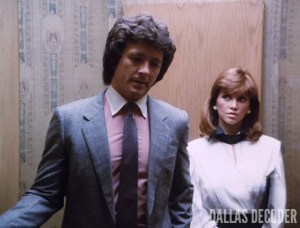
The first scene in “Some Do … Some Don’t:” Donna and Lucy are making muffins in the Southfork kitchen and listening to Miss Ellie and Clayton tease each other about their recent misadventures in Jamaica. Clayton recalls taking Ellie to a French restaurant, where she mistakenly ordered a head of veal instead of a veal chop but ate the whole thing because she was too stubborn to admit her error. Ellie, in the meantime, describes how Clayton accidentally lost his swim trunks on the beach in front of a group of New Jersey schoolteachers. “I would imagine I’m quite famous in Paramus,” he says.

The last scene in “Some Do … Some Don’t:” Clayton brings Ellie home after escorting her to the opening of Jenna Wade’s boutique. The mood is as light and as jovial as the earlier kitchen scene — until Clayton suggests he’d like to stay over so he and Ellie can spend their “first night together.” Suddenly, Ellie becomes rattled, begins to cry and calls off their wedding. “I can’t marry you. I can’t marry anyone,” she says as she runs upstairs. In the freeze frame, Clayton stands at the bottom of the steps, looking more than a little bewildered.

The two sequences serve as the emotional bookends in “Some Do … Some Don’t,” the strongest episode yet from “Dallas’s” seventh season. The opening scene does nothing to advance the show’s storylines, but it’s essential to the episode because it showcases the warm, effortless chemistry between Barbara Bel Geddes and Howard Keel. Together, these actors have charm to spare, and watching their characters gently chide each other allows the audience to feel emotionally invested in their relationship. By the time the hour is over and Ellie has called off the wedding, we can’t help but feel concerned for them.

I also love how “Dallas” doesn’t shy away from the idea that Ellie and Clayton, who are probably supposed to be in their late 60s or early 70s, are capable of having an intimate relationship. I find this subplot even more provocative than Sue Ellen’s May/December romance with Peter Richards. (Frankly, I’m also a little surprised Clayton wanted to sleep with Ellie before their wedding. Who knew the old chap was so modern?) When I watched these episodes when I was younger, I’m sure it never occurred to me to think of Ellie and Clayton as sexual beings, but now it’s not such a hard thing to wrap my head around. Bel Geddes was still a beautiful, vibrant woman when this episode was filmed in 1983, retaining more than a hint of the sauciness she exhibited in her early film roles. Meanwhile, Keel was dashing as ever. In this episode’s final shot, when Clayton stands at the bottom of the Southfork staircase with his hand on his hip, I’m reminded of Clark Gable striking a similar pose in “Gone With the Wind.” I’m sure this was intentional.

Indeed, “Some Do … Some Don’t” is full of flourishes like this. This comes as no surprise: This episode is helmed by Larry Hagman, who always brings an eye for detail to the director’s chair. For example, in one of the Ewing Oil scenes, Bobby tells J.R. about a company he wants to buy. Hagman could easily have started the exchange with J.R. seated in his office, but instead, he opens the sequence with a shot of Kendall at the reception desk, answering a phone call. In the background, J.R. steps off the elevator and walks through the room, stopping by Sly’s desk to pick up his phone messages. As he heads into his office, Phyllis buzzes Bobby on the intercom to let him know that J.R. has arrived, and then Bobby pops into J.R.’s office to tell him about the potential purchase. Maybe this was Hagman’s way of making sure the actresses who played the Ewing Oil secretaries each got a few lines in this episode — too often these performers toil silently in the background — but it nonetheless makes Ewing Oil feel like a real, functional workplace.

More details: The scene where Pam and Mark visit Cliff and Afton at their townhouse begins with Cliff sitting on the sofa, playing a videogame. It’s another small point, but isn’t it just like Cliff to get so wrapped up in a game that he would ignore his guests? (Also: Notice how John Beck seems to be limping as Mark crosses the living room, a subtle throwback to the previous episode, when the character pulled a muscle while playing tennis with Pam.) Additionally, I love when Cliff arrives at the dive bar for another clandestine meeting with Sly and steals the fries off her plate. In another great restaurant scene, J.R. brings Edgar Randolph to lunch at his favorite French eatery, where J.R. threatens to ruin Edgar’s life in one breath and enthusiastically orders him the bouillabaisse in the next. “Oh, you’re just going to love it. It’s really good,” J.R. says with a smile. I dare you to watch this scene without doing the same thing.

The scene where J.R. and Katherine sleep together for the first time is more wicked fun, and so is Pam’s confrontation with Marilee Stone. Pam is clearly out of line when she orders Marilee to stay away from Cliff, but who cares? Isn’t it nice to see Pam exhibit a little backbone and do something besides whine about being torn between Bobby and Mark? It also turns out that Pam and Marilee make good sparring partners. What a shame Victoria Principal and Fern Fitzgerald don’t have more scenes together on this show.

Surprisingly, I also like Sue Ellen and Peter’s scenes in “Some Do … Some Don’t.” Their once promising storyline took a turn for the ridiculous in the two episodes that preceded this one, but heaven help me, I find the couple’s outing to the ice rink kind of charming. I also like when Sue Ellen and Peter run into his classmates from the university and they mistake Sue Ellen for his mother. This feels like the kind of thing that might happen to a woman who dates a younger man, and Sue Ellen and Peter’s reactions to the situation ring true. Sue Ellen, ever the lady, is aghast at the thought that Peter’s friends are gossiping about them, while Peter couldn’t care less. I still have trouble believing Sue Ellen’s attraction to Peter, but at least it’s nice to see the show bring the couple back to a place that resembles reality.

Some more thoughts about Sue Ellen and Peter’s encounter with his friends: Besides Linda Gray, the actor who impresses me most during the scene is Lee Montgomery, who plays Peter’s pal Jerry Hunter. Watch Montgomery’s sly smile when Jerry spots Sue Ellen and Peter; it’s very subtle, but it lets us know he realizes there’s more to their relationship than meets the eye. It’s also worth noting this scene’s two young actresses, who both became science-fiction stars: Kate Vernon played Ellen Tigh on “Battlestar Galactica,” while Claudia Christian was Ivanova on “Babylon 5.” According to IMDb.com, Vernon and Christian are slated to appear together in a forthcoming film called “Chicanery” along with three other “Dallas” actresses: Colleen Camp, who originated the role of Kristin Shepard in 1979; Patty McCormack, who played Mitch Cooper’s friend Evelyn Michaelson during Season 5; and Michelle Scarabelli, who appeared during the 11th season as Connie, Ray’s stalker.

I have a lot of fun finding these connections. I’ve always appreciated how “Dallas” offered steady work to older performers like Barbara Bel Geddes and Howard Keel, but until I started this website, I didn’t realize how many young actors appeared on the show at the beginning of their careers. None of these up-and-comers have become as famous as Brad Pitt, who appeared on “Dallas” a few times in 1987 and will probably always be its most famous alumnus, but it’s impressive to see how so many actors who got their start on the show continue to find work.

This realization has made me watch TNT’s sequel series in a whole other light. Pay attention to all the actors who appear in small roles on the new show. Chances are some of them will still be entertaining us years from now.

Grade: A

_______________________________________________________________________________________________________________________________________________

Dallas, Linda Gray, Some Do ... Some Don't, Sue Ellen Ewing

Not the mama

‘SOME DO … SOME DON’T’

Season 7, Episode 16

Airdate: January 20, 1984

Audience: 22 million homes, ranking 5th in the weekly ratings

Writer: Leonard Katzman

Director: Larry Hagman

Synopsis: J.R. sleeps with Katherine, allows Cliff to steal another deal from Ewing Oil and continues to pressure Edgar to unseal the offshore oil lease bids. Jenna celebrates the opening of her boutique by sleeping with Bobby. Clayton suggests he wants to be intimate with Miss Ellie, who is rattled and calls off their wedding. Mark checks into the hospital for tests without telling Pam.

Cast: Denny Albee (Travis Boyd), Christopher Atkins (Peter Richards), John Beck (Mark Graison), Barbara Bel Geddes (Miss Ellie Ewing), Morgan Brittany (Katherine Wentworth), Martin E. Brooks (Edgar Randolph), Claudia Christian (Peter’s friend), Patrick Duffy (Bobby Ewing), Eric Farlow (Christopher Ewing), Linda Gray (Sue Ellen Ewing), Larry Hagman (J.R. Ewing), Susan Howard (Donna Krebbs), Steve Kanaly (Ray Krebbs), Omri Katz (John Ross Ewing), Sherril Lynn Katzman (Jackie Dugan), Howard Keel (Clayton Farlow), Ken Kercheval (Cliff Barnes), Audrey Landers (Afton Cooper), Anne Lucas (Cassie), Shalane McCall (Charlie Wade), Lee Montgomery (Jerry Hunter), Priscilla Beaulieu Presley (Jenna Wade), Victoria Principal (Pam Ewing), Debbie Rennard (Sly), Danone Simpson (Kendall), Charlene Tilton (Lucy Ewing), Deborah Tranelli (Phyllis), Kate Vernon (Peter’s friend)

“Some Do … Some Don’t” is available on DVD and at Amazon.com and iTunes. Watch the episode and share your comments below.
Critique: ‘Dallas’ Episode 146 — ‘Offshore Crude’

Christopher Atkins, Dallas, Linda Gray, Offshore Crude, Peter Richards, Sue Ellen Ewing

Wrong turn, darlin’

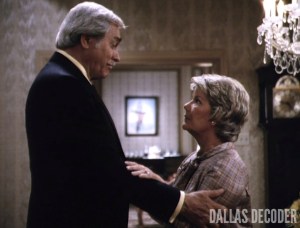
The “Offshore Crude” scene where Sue Ellen goes to Peter’s apartment to break up with him is one of “Dallas’s” sillier moments. When she arrives, Peter is wearing nothing but a towel and a face full of shaving cream, so he excuses himself and returns to the bathroom to finish freshening up. While he’s at the sink, Sue Ellen stands with her back to him and pours out her heart, explaining why the two of them can no longer see each other. She finishes her speech and is surprised to see Peter is unfazed, until she realizes he didn’t hear a word she said because the water was running. Sue Ellen, who apparently is too drained to repeat herself, allows the none-the-wiser Peter to hug her tightly and gush about how important she is to him. “I love you. I really do love you,” he says.

Oh, good grief. Linda Gray and Christopher Atkins do their best to sell this scene, but there’s only so much they can do. Sue Ellen’s confession that she only slept with Peter to persuade him to go back to college isn’t credible, and I don’t believe she’d deliver such important news while he’s shaving and she’s facing the other direction. Frankly, I’m even a little surprised to discover the baby-faced Peter shaves. Like Bobby and Pam’s breakup at the beginning of “Dallas’s” seventh season, this is another example of how the writers rely on misunderstanding and miscommunication to drive their storytelling. Sometimes this show has more in common with “Three’s Company” than I care to admit.

Nothing else about “Offshore Crude” is quite this fatuous, except for the shots that depict the Ewings spending a leisurely Saturday afternoon by the Southfork swimming pool. These scenes were filmed on “Dallas’s” Hollywood soundstage, where the pool is noticeably smaller than its real-life Texas counterpart. So why does the show concoct a race between Bobby, Ray and Peter? It only takes Patrick Duffy, Steve Kanaly and Atkins a few strokes each to go from one end of the pool to the other. Bradford May, the show’s seventh-season cinematographer, makes the outdoor sets look a little more convincing than they did in previous seasons, although there’s still no mistaking them for the real thing. Scenes like this make me so happy the new “Dallas” films its exterior scenes outdoors.

The rest of “Offshore Crude” is standard-issue, mid-1980s “Dallas.” J.R. and Sue Ellen have a couple of good fight scenes, including one where he enters her bedroom and wonders if she’s avoiding Peter because she’s afraid his acne is contagious. I love how Gray hisses Sue Ellen’s response: “Your jokes aren’t funny. They are disgusting and boring.” (I predict I’ll spend the next week quoting that line to anyone who will listen.) Larry Hagman is also wonderfully diabolical in “Offshore Crude’s” final scene, when J.R. summons Edgar Randolph to his office and tells him he’s glad Edgar rejected his recent attempt to bribe him: “If my money can’t buy you, nobody else’s can either.” No matter how much time I spend with J.R., he always manages to surprise me.

I also like the scene where Cliff and Marilee sneak off to a bar on a Saturday night to plot their latest business deal. Fern Fitzgerald delivers another one of her delicious performances as the wine-sipping Marilee, who is clearly savoring this opportunity to mix business with pleasure. I also love seeing Cliff trade in his flashy suit for that nifty electric blue shirt. “Offshore Crude” also includes a fun scene between Miss Ellie and Clayton, who skip the usual family dinner at Southfork to take in a meal at the Oil Baron’s Club. The conversation is mostly designed to lay the groundwork for the arrival of his sister Jessica at the end of the season, but it also plays on the charming rapport between Barbara Bel Geddes and Howard Keel and ends with Clayton asking for the check so he can whisk Ellie away to the city’s last big-band dance club.

This turns out to be the only time Bel Geddes and Keel appear in “Offshore Crude.” What a shame. I’d much rather see Ellie and Clayton on the dance floor than watch the rest of the Ewings frolicking around that tiny pool.

Grade: B

_______________________________________________________________________________________________________________________________________________

Dallas, Edgar Randolph, J.R. Ewing, Larry Hagman, Martin E. Brooks, Offshore Crude

Unbought

‘OFFSHORE CRUDE’

Season 7, Episode 15

Airdate: January 13, 1984

Audience: 20.3 million homes, ranking 6th in the weekly ratings

Writer: David Paulsen

Director: Ray Danton

Synopsis: Cliff decides to bid on the offshore oil leases after Sly lies and tells him that J.R. is planning to bid too. J.R. lets Edgar know he has damaging information about him. Peter tells Sue Ellen he loves her. After failing to find Naldo in Rome, Katherine returns to Dallas.

Cast: Mary Armstrong (Louise), Christopher Atkins (Peter Richards), John Beck (Mark Graison), Barbara Bel Geddes (Miss Ellie Ewing), Morgan Brittany (Katherine Wentworth), Martin E. Brooks (Edgar Randolph), Roseanna Christiansen (Teresa), Patrick Duffy (Bobby Ewing), Eric Farlow (Christopher Ewing), Fern Fitzgerald (Marilee Stone), Linda Gray (Sue Ellen Ewing), Larry Hagman (J.R. Ewing), Susan Howard (Donna Krebbs), Steve Kanaly (Ray Krebbs), Omri Katz (John Ross Ewing), Sherril Lynn Katzman (Jackie), Howard Keel (Clayton Farlow), Ken Kercheval (Cliff Barnes), Audrey Landers (Afton Cooper), Anne Lucas (Cassie), Shalane McCall (Charlie Wade), Alberto Morin (Armando Sidoni), Priscilla Beaulieu Presley (Jenna Wade), Victoria Principal (Pam Ewing), Debbie Rennard (Sly), Charlene Tilton (Lucy Ewing)

“Offshore Crude” is available on DVD and at Amazon.com and iTunes. Watch the episode and share your comments below.
Critique: ‘Dallas’ Episode 145 — ‘Peter’s Principles’

Christopher Atkins, Dallas, Peter Richards, Peter's Principles

What principles?

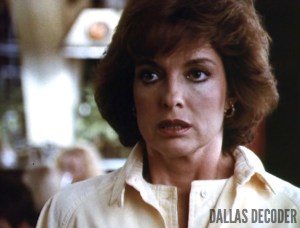
Since I began re-watching “Dallas’s” seventh season for the first time in years, I’ve been surprised by how interesting I find Sue Ellen’s affair with college student Peter Richards. I used to dismiss their romance as hopelessly gimmicky — J.R.’s wife chases a younger man! — but now that I’m older and hopefully a little wiser, the relationship makes perfect sense. I can see how Sue Ellen might turn to a man like Peter to regain her confidence after all those years of being mistreated by J.R. Or at least that’s how I felt before “Peter’s Principles.” This is the episode where Sue Ellen and Peter sleep together for the first time, but instead of illuminating the reasons these characters are attracted to each other, the love scene reveals the storyline’s flaws. It turns out there are quite a few.

When “Peter’s Principles” begins, Sue Ellen is worried because the Ewings haven’t heard from Peter in several days. She suspects he is upset because she recently told him their flirtation can’t continue, so she contacts one of his classmates and learns Peter has dropped out of school. When Sue Ellen finally tracks down Peter, he doesn’t want to speak to her, but she doesn’t give up on him. She goes to his apartment the next day and urges him not to abandon his studies. Peter tells Sue Ellen that if he can’t have her, college no longer matters to him. She hesitates for a moment, then says, “If I were with you, if we saw each other, would you go back to the university?” Peter’s response: “Yes, it would all be completely different then.” Before you know it, Sue Ellen is kissing Peter as he lays her down on the bed.

Groan. Until this scene, which is the last one in “Peter’s Principles,” I liked how Arthur Bernard Lewis’s script depicted Sue Ellen as a woman with determination and purpose. She works hard to find Peter and persuade him to go back to school, displaying the kind of gumption we haven’t seen from her since “The Oil Baron’s Ball,” the episode where she treats J.R. like a sexual plaything. By the end of “Peter’s Principles,” though, Sue Ellen has reverted back to her old habit of allowing men to dominate her. When she asks Peter if he’ll go back to school if she starts a relationship with him, what does she expect him to say? Sue Ellen doesn’t just allow Peter to pull her strings; she puts the controls in his hand.

Besides undermining Linda Gray’s character, the scene suggests “Dallas” is chickening out on the entire storyline. For a show dominated by alpha males, Sue Ellen and Peter’s relationship has been refreshingly different. The last time “Dallas” depicted a May/December romance, an aging man (Jock Ewing) became involved with a younger woman (Julie Grey). This time around, the gender roles are reversed: Sue Ellen, who is in her 40s, flirts with Peter, who is in his 20s. But instead of showing her going to bed with him merely to fulfill her own sexual desires, Lewis’s script tries to cast Sue Ellen’s choice as some kind of noble sacrifice. She essentially tells Peter, “OK, I’ll have sex with you if you promise to go back to school and study hard.” Why can’t Sue Ellen have a carefree fling like the men on this show?

I suppose all of this can be viewed as another example of Sue Ellen’s self-delusion. Maybe she can’t bring herself to admit her attraction to Peter, so she fools herself into believing she’s merely providing him with the incentive he needs to get an education. But then what are we to make of the fact that we never see these characters in bed together? In the final shot, as Peter moves Sue Ellen onto the bed, the screen goes black and the closing credits flash, making this one of the few times “Dallas” skips its traditional freeze frame. It’s as if the producers can’t quite bring themselves to showing this relationship being consummated.

Then again: Maybe we’ve seen enough. Leonard Katzman, “Dallas’s” executive producer, once called this storyline the show’s “biggest mistake” because Christopher Atkins looked too young to play Peter. It’s not fair to lay the blame at Atkins’ feet, although the actor was too boyish to be believable as Sue Ellen’s lover. Don’t get me wrong: Atkins is a good actor who does a nice job conveying his character’s awkward transition into adulthood. Peter can be charming one minute and petulant the next, just like a lot of real-life college students. Atkins’ youthfulness also works well in his scenes with Larry Hagman, where Peter is the fair-haired Luke Skywalker to J.R.’s black-hearted Darth Vader. But whenever the script calls for Peter and Sue Ellen to share a romantic moment, I can’t help but wish he looked a little older.

But even if Sue Ellen and Peter’s love scene in “Peter’s Principles” worked better, it still wouldn’t be the most provocative moment in this episode. No, that distinction belongs to the wonderful exchange where Miss Ellie admits to Donna that she’s nervous about marrying Clayton because she hasn’t “been” with a man since Jock died. This conversation, which takes place while Ellie and Donna are exercising in the Southfork fitness room, lets us know Ellie remains a sexual creature. This would be a progressive idea for television to address today, so I can only imagine how extraordinary it must have seemed 30 years ago. Both actors are quite good here: Barbara Bel Geddes conveys Ellie’s quiet anxiety without sacrificing the character’s dignity, while Susan Howard’s gentle responses signal Donna’s respect for the Ewing matriarch. I especially like when Ellie says that she and Clayton “never had any real physical contact … beyond a kiss and a hug,” and Donna responds, “Yes, ma’am. I understand.” This is exactly how I would expect Donna to treat a woman like Ellie.

“Peter’s Principles” also shows Clayton confiding in Ray his own unease about marrying Ellie and moving onto “another man’s ranch and into another man’s house.” This marks the beginning of Clayton and Ray’s friendship, a relationship that makes a lot of sense given the outsider status both men occupy in the family Ewing. I also like the “Peter’s Principles” scene where Bobby and Pam have dinner because it makes them seem like two mature people who have remained friends despite the fact they are ex-spouses. This exchange is also useful because it helps the audience understand how much risk is involved in Cliff’s offshore oil venture, which is one of the major subplots in the coming episodes. As Bobby explains to Pam, it can cost as much as $300,000 to tow a rig to a drilling site, $40,000 a day to rent the rig and $20,000 a day to operate it. These numbers boggle my mind today; imagine how big they must have seemed three decades ago.

There’s also a lot of humor in “Peter’s Principles,” beginning with J.R.’s quips about Clayon’s son (“Dusty or Steve or what the hell ever that rodeo rider calls himself nowadays”) and Ray’s wife (“You sure married a winner”). I also like when Clayton announces he’s taking Ellie to see a revival of “Camelot” — a sly reference to one of Howard Keel’s famous stage roles. Other funny moments are unintentional: The exterior shot of Peter’s apartment is the same one used for Mitch Cooper’s residence during the fourth season; look closely and you’ll even see Mitch’s Mustang parked near the curb. Also, as much as I love Ellie and Donna’s scene in the fitness room, I can’t help but notice that despite all of Howard’s huffing and puffing while doing her character’s leg lifts, there’s no weight on the bar.

Poor Donna. Perhaps she would benefit from some professional training at Pam’s aerobics studio. Come to think of it, whatever became of that place?

Grade: B

_______________________________________________________________________________________________________________________________________________

Dallas, Peter's Principles, Philip Capice

Fade to black

‘PETER’S PRINCIPLES’

Season 7, Episode 14

Airdate: January 6, 1984

Audience: 21.3 million homes, ranking 1st in the weekly ratings

Writer: Arthur Bernard Lewis

Director: Patrick Duffy

Synopsis: Sue Ellen learns Peter has dropped out of school but persuades him to return by sleeping with him. J.R. continues digging for dirt on Clayton and confirms a dark secret about Edgar. Clayton and Ellie harbor private reservations about marrying each other. Marilee expresses interest in joining Cliff’s offshore oil venture and comes between him and Afton. Bobby and Pam have dinner, upsetting Jenna and Mark.

Cast: Christopher Atkins (Peter Richards), John Beck (Mark Graison), Barbara Bel Geddes (Miss Ellie Ewing), Martin E. Brooks (Edgar Randolph), James L. Brown (Detective Harry McSween), Pat Colbért (Dora Mae), Roseanna Christiansen (Teresa), Patrick Duffy (Bobby Ewing), Al Dunlap  (decorator), Fern Fitzgerald (Marilee Stone), David Gale (Melvin), Linda Gray (Sue Ellen Ewing), Larry Hagman (J.R. Ewing), Susan Howard (Donna Krebbs), Steve Kanaly (Ray Krebbs), Omri Katz (John Ross Ewing), Sherril Lynn Katzman (Jackie), Howard Keel (Clayton Farlow), Ken Kercheval (Cliff Barnes), Audrey Landers (Afton Cooper), Anne Lucas (Cassie), Lee Montgomery (Jerry Hunter), Louis R. Plante (Robert)Priscilla Beaulieu Presley (Jenna Wade), Victoria Principal (Pam Ewing), Julie Ronnie (student), Don Starr (Jordan Lee), Charlene Tilton (Lucy Ewing)

“Peter’s Principles” is available on DVD and at Amazon.com and iTunes. Watch the episode and share your comments below.
Critique: ‘Dallas’ Episode 144 — ‘Past Imperfect’

Clayton Farlow, Dallas, Howard Keel, Past Imperfect

Bull run

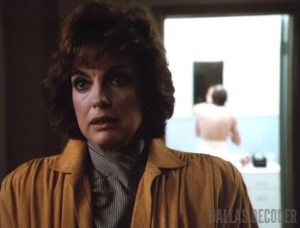
In “Past Imperfect’s” best scene, Clayton Farlow storms off the elevator at Ewing Oil, barges into J.R.’s office and shoves him onto the sofa. Clayton, who is newly engaged to Miss Ellie, has just discovered J.R. has been poking into his past — and he’s none too pleased about it. “When are you going to get it through that thick skull of yours that I love your mother and all I want is a chance to make her happy?” he says. J.R. looks a little rattled as Clayton stomps away, but a big grin soon breaks across his face. He turns to a shaken Sly and says, “A man who gets that angry over a little snooping must have something interesting to hide. I wonder what that is?”

Larry Hagman steals this scene with his smile, but the sequence also demonstrates why Howard Keel was an ideal successor to Jim Davis. This requires a somewhat lengthy explanation, so hang with me. First, consider the dilemma “Dallas” faced when Davis died at the end of the fourth season. The producers could have gone in several directions, including recasting Jock with another actor. Wisely, they decided instead to kill off the character and give the audience time to adjust to life without the show’s beloved patriarch. Then, in Season 6, “Dallas” began testing possible love interests for Ellie, including Dale Robertson’s Frank Crutcher, who was just as crusty as Jock but not nearly as intimidating. I also get the impression the show toyed with the idea of turning Donald Moffatt’s character, regal lawyer Brooks Oliver, into a beau for Ellie, which would have represented a total departure from Davis.

Finally, the producers turned Clayton into Ellie’s new mate. Perhaps they realized Keel offered the best of all options: He’s a big, commanding presence like Davis, but he’s also gentlemanly enough to ensure Clayton will never be accused of being a clone of the crotchety Jock. Since joining the show a few years earlier, Keel — a onetime star of MGM musicals — had become one of “Dallas’s” most reliable utility players, dutifully fulfilling whatever role the writers assigned to Clayton: Sue Ellen’s father figure/suitor, J.R.’s business adversary, Rebecca Wentworth’s gentleman caller. Clayton eventually became Ellie’s friend, which offered the first hint of the warm rapport that Keel and Barbara Bel Geddes would perfect as their on-screen relationship progressed.

Clayton also became a strong character in his own right, as we see in the wonderful scene in “Past Imperfect” where he summons J.R., Bobby and Ray to the Oil Baron’s Club — not to get their permission to wed Ellie, but to give them an opportunity to air any grievances they may have with him before the nuptials take place. Keel’s exchange with Steve Kanaly in this scene, when Clayton confidently assuring Ray that his opinion matters too, is especially good. But never forget: No matter how well Clayton got along with Ellie, Ray or anyone else, “Dallas” was J.R.’s show, and so Keel’s chemistry with Hagman mattered most of all. And since J.R. was destined to despise any man who courts his mama, the producers needed to fill this role with an actor who could play off Hagman. In Keel, they found their man.

This is why J.R. and Clayton’s confrontation in “Past Imperfect” is so crucial: It establishes that Clayton is no pushover. In the scene, Keel is fire and Hagman is ice; it’s not unlike the dynamic that exists between Hagman and Victoria Principal when Pam gets riled up. Perhaps not coincidentally, Clayton, like Pam, is an outsider who isn’t afraid to stand up to J.R., which earns Clayton instant respect from the audience — and perhaps from J.R. himself. Keel’s physical stature doesn’t hurt (the actor stood well over 6 feet, so he can look Hagman in the eye), but his booming baritone matters even more. In “Past Imperfect,” when Clayton tells J.R., “You are a liar!” the line sounds like it should be accompanied by a lightning bolt. Can you imagine Frank Crutcher or Brooks Oliver pulling off a scene like this?

J.R. and Clayton’s confrontation is a technical achievement too. Hagman, who directed “Past Imperfect,” films Keel coming off the elevator and marching into J.R.’s office in a single, continuous shot. This kind of camerawork requires a lot of coordination: Keel must deliver his lines while in motion — when Sly tells Clayton he can’t enter J.R.’s office, Clayton exclaims, “The hell I can’t!” — and the dialogue must be timed so Keel and Deborah Rennard complete their lines before Keel rounds the corner and begins his exchange with Hagman. We don’t see a lot of complicated shots like this on the original “Dallas,” but when they pop up, they’re often in episodes helmed by Hagman or Patrick Duffy. Why do actors make such inventive directors?

There are also quite a few comedic scenes in “Past Imperfect,” a reflection, perhaps, of Hagman’s sitcom roots. The best of these moments occurs when Clayton sweeps into the Southfork living room during cocktail hour to present Ellie with an engagement ring. He faces her and J.R. stands between them, with Jock’s portrait looming over J.R.’s shoulder — a harbinger of the two obstacles Ellie and Clayton will have to overcome on their way to the altar. The funny part comes when Keel takes the drink out of Bel Geddes’ hand and hands it to Hagman; Ellie and Clayton never take their eyes off each other, and the sneer on J.R.’s face makes it clear he doesn’t appreciate Clayton treating him like a servant.

Hagman also showcases Ken Kercheval’s comedic timing throughout “Past Imperfect.” In one scene, Cliff is talking about offshore oil leases at dinner with Pam and Mark when Afton asks him when he’s going to take a break and taste his meal. Cliff ignores her and keeps talking, so she gracefully sticks a forkful of food into his mouth. The blabbing continues, but after a few moments, Cliff finally realizes what happened. “Oh, this is good. Afton, it’s terrific,” he says. In another scene, Cliff interrupts a romantic moment between Pam and Mark with another monologue about the offshore oil deal he’s pitching to them. They ignore him and walk away. “Well, I thought I was talking to somebody,” he says.

I like how Hagman frames the latter scene, with Pam and Mark facing each other and Cliff in the middle, looking at both of them. (It echoes the earlier cocktail scene with Ellie, Clayton and J.R.) Hagman delivers several other nifty shots in “Past Imperfect,” including one where Sue Ellen drops off John Ross on his first day of school and watches workers raising the Texas flag in front of the building. Hagman opens with a tight, stationary close-up of the flag; as the flag rises out of the frame, it reveals Peter Richards leaning against his jeep in the distance, waiting for Sue Ellen. It’s a cool effect, although it also illustrates how stalkerish Peter is becoming.

Speaking of John Ross’s first day of school: “Past Imperfect” seems to confirm what I suspected — that the beginning of “Dallas’s” seventh season takes place in the summertime. This makes sense, since John Ross attends a day camp in these episodes, and that’s the kind of thing kids do in the summer. But if we assume John Ross’s school year begins on the first Tuesday of September, how do we explain the scenes in this episode that take place one day earlier, when J.R., Bobby and their secretaries are shown going about their business during a typical day at the office? You don’t suppose J.R. was heartless enough to make everyone work on Labor Day, do you?

Grade: A

_______________________________________________________________________________________________________________________________________________

Barbara Bel Geddes, Clayton Farlow, Dallas, Howard Keel, J.R. Ewing, Larry Hagman, Miss Ellie Ewing, Past Imperfect

Four’s a crowd

‘PAST IMPERFECT’

Season 7, Episode 13

Airdate: December 23, 1983

Audience: 20.1 million homes, ranking 1st in the weekly ratings

Writer: David Paulsen

Director: Larry Hagman

Synopsis: Clayton tells the Ewing brothers he wants to make Miss Ellie happy, but he becomes angry when he finds out J.R. has been snooping into his past. Cliff, believing J.R. wants to bid on offshore oil leases, approaches Mark about bidding too, but Mark is skittish. After Sue Ellen breaks up with Peter, Lucy learns he’s dropped out of school. Bobby buys a boutique for Jenna to run. In Rome, Katherine searches for Naldo Marchetta, Jenna’s ex-husband.

Cast: Christopher Atkins (Peter Richards), John Beck (Mark Graison), Barbara Bel Geddes (Miss Ellie Ewing), Morgan Brittany (Katherine Wentworth), James L. Brown (Detective Harry McSween), Roseanna Christiansen (Teresa), Pat Colbért (Dora Mae), Patrick Duffy (Bobby Ewing), Eric Farlow (Christopher Ewing), Linda Gray (Sue Ellen Ewing), Michael Griswold (Thomas Hall), Larry Hagman (J.R. Ewing), Susan Howard (Donna Krebbs), Steve Kanaly (Ray Krebbs), Omri Katz (John Ross Ewing), Howard Keel (Clayton Farlow), Ken Kercheval (Cliff Barnes), Audrey Landers (Afton Cooper), Alberto Morin (Armando Sidoni) Priscilla Beaulieu Presley (Jenna Wade), Victoria Principal (Pam Ewing), Debbie Rennard (Sly), Danone Simpson (Kendall), Paul Sorensen (Andy Bradley), Don Starr (Jordan Lee), Charlene Tilton (Lucy Ewing), Deborah Tranelli (Phyllis)

“Past Imperfect” is available on DVD and at Amazon.com and iTunes. Watch the episode and share your comments below.
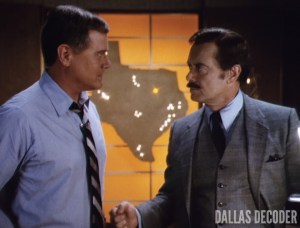
Critique: ‘Dallas’ Episode 143 — ‘Barbecue Four’

Barbara Bel Geddes, Barbecue Four, Dallas, Miss Ellie Ewing

The return

Mama’s back! In “Barbecue Four,” Barbara Bel Geddes returns to “Dallas” after being absent from the previous 11 episodes. In real life, the actress was recovering from heart surgery, so the producers temporarily wrote her out of the show by having Clayton whisk Miss Ellie away so she could distance herself from J.R. and Bobby’s bitter battle for Ewing Oil. I’m glad “Dallas” gave Bel Geddes time off, but I wish the writers had come up with a better excuse for her character’s absence. Ellie is so emotionally fragile, she had to run away? That’s not the mama I know.

Regardless, it’s good to have Bel Geddes back. She is the original “Dallas’s” best actress, bringing warmth and grace to a show that could always use a little more of both. Bel Geddes makes Ellie feel like the kind of person you might know in real life, which can’t be said about a lot of other “Dallas” characters, no matter how much we love them. I didn’t realize how much I missed her until she pops up again in “Barbecue Four.” (On the other hand, Bel Geddes’ time away did offer a bright spot: It allowed Sue Ellen to finally fulfill her dream of becoming the lady of the manor. It’s fun to see her take charge of planning the annual Ewing Barbecue in this episode and the previous one, and I like how the writers use Sue Ellen to fill the void left by Southfork’s original nurturer-in-chief. In “The Quality of Mercy,” for example, we see Sue Ellen give Lucy advice on coping with Mickey’s paralysis. If Bel Geddes had been around, I suspect Ellie would have been the one dispensing wisdom to Lucy.)

I also appreciate how “Barbecue Four” scriptwriter Arthur Bernard Lewis and director Leonard Katzman give Bel Geddes a dramatic entrance. It begins with the Ewings gathered in the Southfork dining room, where J.R. is lobbing one sly insult after another at his relatives. (My favorite: “That’s right, Ray. You sit where Gary used to. You two have so much in common.”) When J.R. raises his glass in tribute to “Ewing traditions,” we hear a woman’s familiar voice off-screen: “May we join you in that toast?” The camera cuts to Bel Geddes and Howard Keel standing in the doorway as Katzman zooms in on Ellie; soon all the Ewings are on their feet, hugging and kissing their beaming mama. It’s another reminder of why Bel Geddes is so essential to “Dallas.” When she’s around, these characters feel like a family.

Of course, the cozy atmosphere doesn’t last long. After the Ewings have welcomed Ellie home, she sits at the table and invites Clayton to join the family for dinner. He silently takes a place across from her, sliding into the seat Jock once occupied. Ellie smiles nonchalantly, but Bobby and Ray appear unnerved and J.R. looks positively stricken. What I like best about this moment is how it plays on the audience’s familiarity with “Dallas’s” customs. No mention of Jock is made, but none is needed. Katzman and Lewis trust the viewer to recognize what a momentous occasion it is to see another man sitting in Jock’s seat. I feel sorry for Clayton — the poor chap doesn’t know what he’s getting into, does he? — but no matter how you feel about Keel’s character, the fact that “Dallas” is able to create a dramatic moment out of someone sitting down is impressive.

“Barbecue Four” also includes a lot of other fun scenes, including the sequence where J.R. drops by Pam’s house to invite her, Cliff and their significant others to the Ewings’ annual barbecue. The only thing that amuses me more than seeing J.R. pretend to be nice to the Barneses is seeing how Cliff and Pam seem to buy his Mr. Nice Guy act. Then again, Larry Hagman almost convinces me that J.R. is being sincere. The barbecue scenes are also a kick. These events always yield a dramatic moment or two, and this one is no exception: Bobby has a tense confrontation with Mark, Sue Ellen sneaks off to the barn to see Peter and Pam runs into Charlie Wade, who doesn’t seem to hold a grudge against Pam for swiping her doll during the second season.

Lewis’s script seems to contain a couple of inside jokes too. In one scene, Peter and Lucy exit a movie theater after seeing a sci-fi flick. He bemoans the plot and declares, “It’ll drive me right back to TV.” Is this a nod to Christopher Atkins’ own film career? (A few weeks before “Barbecue Four” debuted, the actor’s latest film, “A Night in Heaven,” was released. He played an exotic dancer who fell for an older woman.) Later, Afton watches Cliff stuffing himself with food at the barbecue and compares him to a squirrel getting ready for winter. His response: “Baby, this is going to be the best winter ever. It’s going to be Christmas every day.” Is it a coincidence that Cliff refers to the holiday in this episode, which debuted nine days before Christmas 1983?

Finally, some casting trivia. “Barbecue Four” introduces Pat Colbért as Dora Mae, the hostess at the Oil Baron’s Club, while Peyton E. Park once again plays Larry, the Ewings’ caterer, who also appeared in the two previous barbecue-themed episodes. Most notably, Mitch Pileggi makes his “Dallas” debut in “Barbecue Four.” The actor, who now stars on TNT’s “Dallas” as Harris Ryland, had a few small roles on the original series, beginning with a part in this episode as a rowdy cowboy who harasses Jenna while she’s waiting tables. In the scene, Bobby tries to rescue Jenna, but she sends him away and says she can take care of herself as Pileggi flashes his wicked grin at Patrick Duffy. Who knew these two were just getting warmed up?

Grade: B

_______________________________________________________________________________________________________________________________________________

Barbecue Four, Clayton Farlow, Dallas, Howard Keel

Changing of the guard

‘BARBECUE FOUR’

Season 7, Episode 12

Airdate: December 16, 1983

Audience: 22 million homes, ranking 3rd in the weekly ratings

Writer: Arthur Bernard Lewis

Director: Leonard Katzman

Synopsis: Miss Ellie returns home and announces her engagement to Clayton. With J.R.’s blessing, Sly feeds Cliff information about a lucrative deal, which Cliff steals. Ray and Donna entertain her friend Edgar Randolph, a federal government official who is overseeing the auction of offshore oil leases. Peter accepts Lucy’s invitation to the Ewing Barbecue, where he sneaks off with Sue Ellen and professes his love for her. Katherine travels to Italy and obtains a copy of Charlie’s birth certificate, which lists Bobby as the father.

Cast: Christopher Albee (Travis Boyd), Christopher Atkins (Peter Richards), John Beck (Mark Graison), Barbara Bel Geddes (Miss Ellie Ewing), Morgan Brittany (Katherine Wentworth), Martin E. Brooks (Edgar Randolph), Roseanna Christiansen (Teresa), Pat Colbért (Dora Mae), Patrick Duffy (Bobby Ewing), Eric Farlow (Christopher Ewing), Linda Gray (Sue Ellen Ewing), Larry Hagman (J.R. Ewing), Susan Howard (Donna Krebbs), Steve Kanaly (Ray Krebbs), Omri Katz (John Ross Ewing), Howard Keel (Clayton Farlow), Ken Kercheval (Cliff Barnes), Audrey Landers (Afton Cooper), Anne Lucas (Cassie), Shalane McCall (Charlie Wade), Alberto Morin (Armando Sidoni), Peyton E. Park (Larry), Mitch Pileggi (bar patron), Priscilla Beaulieu Presley (Jenna Wade), Victoria Principal (Pam Ewing), Peter Renaday (Rigsby), Debbie Rennard (Sly), Charlene Tilton (Lucy Ewing), Deborah Tranelli (Phyllis)

“Barbecue Four” is available on DVD and at Amazon.com and iTunes. Watch the episode and share your comments below.
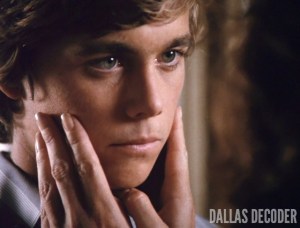
Critique: ‘Dallas’ Episode 142 — ‘To Catch a Sly’

Dallas, Debbie Rennard, J.R. Ewing, Larry Hagman, Sly Lovegren, To Catch a Sly

Spy another day

One of the reasons J.R. Ewing is so entertaining is because he’s always a few steps ahead of the “Dallas” audience. We watch him plot and scheme, never knowing what trick he’s going to pull out of his sleeve next. That’s why the show’s seventh-season corporate espionage storyline is so unusual. From the beginning, viewers know Cliff Barnes is blackmailing J.R.’s secretary Sly into leaking Ewing Oil secrets, but J.R. is in the dark. Interestingly, this never makes Larry Hagman’s character seem weak or even vulnerable. In fact, it has almost the opposite effect, because we know once J.R. finds out who’s betraying him, there’s going to be hell to pay.

Indeed, that’s pretty much what happens in “To Catch a Sly.” When the episode begins, J.R. has just learned Cliff has a spy at Ewing Oil but he doesn’t know who it is, so he goes to work trying to root out the fink. He finally discovers Sly is the culprit in the fourth act, and in the closing moments, he confronts her. This scene begins with Sly at her desk at the end of a workday, getting ready to go home. J.R. appears in his office doorway and summons her inside. She swallows hard before entering the room, where J.R. makes small talk and begins opening a bottle of wine. “You know, you’ve been looking a little peaked lately, Sly,” he says. She tells him she’s been having “some personal problems,” adding that “it’s nothing serious.” J.R. turns toward her, hands her the glass of wine he just poured and says, “If it’s the problem I’m thinking of, it’s very serious indeed.” Uh-oh.

What follows is one of the great “Dallas” moments. Sly sits in one of J.R.’s guest chairs as he walks to his desk and retrieves a stack of photos that show her and Cliff during some of their secret meetings. The director, Michael Preece, keeps Debbie Rennard in the foreground as Hagman hovers in the distance, holding the pictures aloft. With this shot, Preece encapsulates the whole storyline: Here’s J.R., the businessman who’s been betrayed; Sly, the secretary who’s been forced to double-cross her boss; and Cliff, the smarmy enemy who’s stooped to a new low in his never-ending quest for vengeance. As soon as I saw how Preece framed this scene, I knew it would be the image that accompanied this critique.

As the sequence continues, J.R. slowly shuffles through the photos, showing them to Sly one by one. “You recognize anybody in these pictures?” he asks. She stares at the floor in silence. “Sure, you do,” he says. “This is you, and this is Cliff Barnes.” Hagman’s voice is calm, soft, almost melodic. It reminds me of Mister Rogers addressing an audience of children, although when J.R. speaks this way, it’s anything but reassuring. Preece, who has been focusing on the pictures in a tight close-up, pans upward and allows Hagman’s face to fill the frame. Finally, J.R. poses the question he’s been waiting to ask: “Sly, why did you betray me to that man?”

The line alleviates the tension because it suggests J.R. is going to stop torturing Sly with politeness and cut to the chase. He listens as she tearfully explains how Cliff pressured her to sneak him advanced information about J.R.’s business dealings by threatening to prevent her jailed brother from being paroled. In a clever touch, Rennard doesn’t make eye contact with Hagman until Sly says, “J.R., I love my brother. I couldn’t pass up a chance to help him.” Preece cuts to a reaction shot from J.R., whose face displays a flicker of recognition. He knows a thing or two about brotherly love, after all.

Indeed, this is the moment we know J.R. is going to show Sly mercy. He tells her that he’s pleased she didn’t try to “cover up” when he confronted her with the pictures, and then Hagman lifts the corners of his mouth, ever so slightly. You can practically see the wheels turning inside J.R.’s head. He suggests he’s going to turn Sly into a double agent, using her to feed Cliff bad information. “You’re going to set him up?” she asks. J.R. shakes his head no. “He set himself up,” he says. “What I’m going to do is bring him down — and bring him down very, very hard.”

The episode ends there, leaving us with plenty to ponder. For starters: How twisted is it that J.R. turns out to be pleased by this turn of events? He now has an excuse to go after Cliff with gusto, not that he needs one; batting around Cliff has always been J.R.’s favorite sport. For a moment, I also wondered if J.R.’s vow to “bring him down” reflected paternal feelings toward Sly. In other words: Does he want to avenge her honor after Cliff took advantage of her? Ultimately, I decided that’s not what’s happening here. I have no doubt J.R. has affection for Sly, but if he really cared about her, would he turn her into a double agent? Isn’t he treating her like a pawn, just like Cliff did?

Regardless, Rennard does a nice job conveying Sly’s shame and guilt, as well as the character’s paranoia in her earlier scenes in “To Catch a Sly,” when Sly realizes J.R. is closing in on her. This episode also reminds us how much Hagman’s performance has evolved over the years. Remember: This isn’t the first time one of J.R.’s secretaries has betrayed him. In “Spy in the House,” the show’s third episode, Julie Grey sneaks a copy of Ewing Oil’s notorious “red file” to Cliff. When J.R. discovers Julie double-crossed him, he looks devastated, but Hagman offers no hint that J.R. feels personally wounded by Sly’s treachery. At this point during “Dallas’s” run, the actor had long since honed J.R.’s killer instincts, and that’s what he gives the audience here.

David Paulsen’s sharp script gives us lots to consider besides this final scene. For example, when J.R. drops by Cliff’s office and plants the recording device in his phone, I wondered: Would Cliff really be foolish enough to allow J.R. to use his office when he isn’t there? I decided he would be. I’ve always believed Cliff doesn’t want to beat J.R. as much as he wants to be J.R. Cliff mimics his enemy as far back as the second-season episode “For Love or Money,” when he uses one of J.R.’s own lines to break up with Sue Ellen. Cliff also emulates him when he blackmails Sly, tossing around the word “baby” the way J.R. does “darlin’.” So in “To Catch a Sly,” when J.R. shows up on Cliff’s doorstep to congratulate him on his recent victories over Ewing Oil, I can buy that Cliff is so blinded by the idea that J.R. is impressed with him that he lets down his guard and leaves him alone in his office. Besides, just because Cliff is devious doesn’t mean he’s smart.

“Dallas’s” various romantic entanglements also take interesting twists in “To Catch a Sly.” The episode opens with the newly divorced Pam awakening after sleeping with Mark for the first time, while Bobby continues to resist bedding Jenna, even though she says she wants to have sex with him. Did you ever expect to see a Ewing man insist on taking things slowly with a woman? Meanwhile, Sue Ellen’s ongoing May/December flirtation with Peter Richards leaves me feeling a little cold, at least in this episode. Until now, I’ve been intrigued by Sue Ellen and Peter’s connection, but he seems a little bratty — not to mention stalkerish — when he follows her to her appointment with hairdresser Mr. David. (By the way: Mr. David has evidently moved to new digs since the exterior of his salon doesn’t match the building used in the previous season. And where’s the valet parking?)

Finally, a few words about the technology displayed in “To Catch a Sly.” This episode seems to offer more than the usual share of gadgets and gizmos that were considered cutting-edge in 1983 and now seem hopelessly dated. Examples: J.R. wears a pager on his belt when he visits Cliff’s office, and after he bugs his phone, he listens to the recorded conversations on what appears to be a Sony Walkman. (How, exactly, does the little device that J.R. drops into Cliff’s receiver yield audiocassette recordings of Cliff’s calls?) Later, when Katherine goes to the library to dig up dirt on Jenna, she looks up old newspaper articles on microfiche. Finally, when J.R. brings John Ross to the Ewing Oil offices, the little boy pounds on the keyboard attached to Sly’s computer, which has a monitor that seems to display graphics in two colors: white and blue.

Look closely and you’ll also see the logo of the company that made the machine: Texas Instruments. What else would you expect from the Ewings?

Grade: A

_______________________________________________________________________________________________________________________________________________

Dallas, Debbie Rennard, J.R. Ewing, Larry Hagman, Sly Lovegren, To Catch a Sly

Busted

‘TO CATCH A SLY’

Season 7, Episode 11

Airdate: December 9, 1983

Audience: 23 million homes, ranking 3rd in the weekly ratings

Writer: David Paulsen

Director: Michael Preece

Synopsis: J.R. discovers Sly is spying on him for Cliff and decides to turn her into a double agent. Bobby is bothered when he discovers Pam slept with Mark. Katherine noses around in Jenna’s past. Sue Ellen begins planning the annual Ewing Barbecue and feels envious when Lucy expresses interest in dating Peter.

Cast: Mary Armstrong (Louise), Christopher Atkins (Peter Richards), John Beck (Mark Graison), Morgan Brittany (Katherine Wentworth), James L. Brown (Detective Harry McSween), Patrick Duffy (Bobby Ewing), Eric Farlow (Christopher Ewing), Linda Gray (Sue Ellen Ewing), Larry Hagman (J.R. Ewing), Susan Howard (Donna Krebbs), Steve Kanaly (Ray Krebbs), Omri Katz (John Ross Ewing), Sherril Lynn Katzman (Jackie Dugan), Ken Kercheval (Cliff Barnes), Lisa LeMole (Judy Baker), Edward Mallory (Stanger), Shalane McCall (Charlie Wade), Priscilla Beaulieu Presley (Jenna Wade), Victoria Principal (Pam Ewing), Debbie Rennard (Sly), Danone Simpson (Kendall), Charlene Tilton (Lucy Ewing), Deborah Tranelli (Phyllis)

“To Catch a Sly” is available on DVD and at Amazon.com and iTunes. Watch the episode and share your comments below.
Critique: ‘Dallas’ Episode 141 — ‘The Buck Stops Here’

Bobby Ewing, Dallas, Pam Ewing, Patrick Duffy, Victoria Principal

Round and round

“The Buck Stops Here” memorably ends with Pam Ewing and Jenna Wade competing against each other in a mechanical bull-riding competition. It’s an appropriate metaphor for these characters, whose lives go up and down but rarely move forward. For example, during the course of this episode, we learn Pam is still hung up on ex-husband Bobby, even though she’s also in a relationship with Mark Graison. Meanwhile, Jenna has returned to town after a long absence and rekindled her romance with Bobby, but he upsets her when he asks if he’s the father of her daughter Charlie. If it feels like you’ve seen both of these stories before, it’s because you have.

Let’s start with Pam. She spends most of “Dallas’s” previous season trying to choose between Bobby and Mark, a storyline that makes her seem more than a little wishy-washy. Once Pam divorces Bobby, the writers begin to rehabilitate her character, even giving her a promising new career in the oil industry. It’s the return of the smart, confident Pam that Victoria Principal played exceedingly well during “Dallas’s” early years. Too bad it doesn’t last. In “The Buck Stops Here,” Principal’s character is back where she was a year earlier, torn between Bobby and Mark.

At least Arthur Bernard Lewis’s script makes Pam aware that she’s emotionally stuck. In the first act, Pam confides her conflicted feelings to Katherine, a scene that is probably meant to make Pam seem introspective but instead makes her seem whiny and not in control of her own emotions. At one point, Katherine tells her, “You know, sometimes I don’t understand you at all.” Pam’s response: “Sometimes I don’t understand myself at all.” The exchange brings to mind “Dallas’s” fifth season, when Pam was unable to explain the erratic behavior she exhibited before her mental breakdown — a storyline I’d just as soon not be reminded of.

The weak plotting leaves me feeling bad for Principal, an enormously appealing actress who deserves better material. Don’t get me wrong: I want Bobby and Pam back together as much as anyone, but if the show was going to insist on breaking them up, at least give Pam something better to do than to pine after her ex-husband. On the other hand: I’ll confess I get a kick out of seeing Pam and Jenna shoot daggers at each other throughout the charity rodeo and the mechanical bull-riding competition. There’s also the terrific scene where Jenna compliments Pam on her performance, telling she’s going to be “a tough act” to follow. “I am a tough act to follow,” Pam responds. On this show, have truer words been spoken?

“Dallas” struggles to come up with a fresh angle for Jenna too. The show introduces the character in the second-season episode “Old Acquaintance,” when Jenna — played by Morgan Fairchild — is depicted as a scheming heiress who tries to break up Bobby and Pam by insinuating Charlie is Bobby’s daughter. Eventually, Pam confronts Jenna and forces her to admit that Jenna’s ex-husband is the little girl’s father. In Season 3, Jenna — now played by Francine Tacker — returns briefly and once again tempts Bobby, except this time Charlie’s paternity isn’t part of the equation. So why is Bobby suddenly pestering Jenna about the issue in “The Buck Stops Here”? My guess is the producers figured audiences wouldn’t remember this subplot was resolved years earlier, although I have no idea why they think “who is Charlie’s father?” is such a compelling storyline in the first place.

At least Jenna comes off as a little more clear-eyed than Pam. The character has felt more down-to-earth and interesting since Priscilla Presley took over the role three episodes ago. Some of this comes from the writing — Jenna has lost her fortune and is now working as a waitress to pay the bills — but some of it also comes from Presley, who instills her character with much more backbone than I remembered. In one of “The Buck Stops Here’s” best scenes, Katherine tries to bribe Jenna into moving to Houston and leaving Bobby alone. Katherine pretends she’s acting in Pam’s interest, but Jenna is savvy enough to realize Katherine wants Bobby for herself. I also like the scene where Bobby takes Jenna to dinner at the Oil Baron’s Club (which makes its debut in this episode) and asks her if she misses being rich. “Damn right I do,” she says. Isn’t it kind of refreshing to see the working class depicted as something other than noble?

Besides recycling old storylines, “The Buck Stops Here” demonstrates the sexism that pervades this era of “Dallas.” At the beginning of the episode, when Pam and Katherine have their heart-to-heart talk, Katherine is aghast to learn Pam and Mark have never had sex. “You can’t expect a man to wait forever. This isn’t the 19th century,” she says. It also seems like every man on this show has at least two women interested in him: Mark is romancing Pam while being chased by snooty socialite Tracy Anders, while Pam, Jenna and Katherine are all in love with Bobby.

(Frankly, everyone’s interest in Patrick Duffy’s character mystifies me a little, at least in “The Buck Stops Here.” Notice how Bobby cheerfully tells Katherine all about his wonderful afternoon with Jenna, even though Katherine confessed her own unrequited romantic feelings for Bobby during the previous episode. Likewise, isn’t it kind of crass of Bobby to plant such a passionate kiss on Jenna at the end of this episode, knowing that his ex-wife is watching them? Where’s the sweet, sensitive Bobby that we all know and love?)

Amid all the complications and sexism that characterize Bobby and Pam’s love lives, Sue Ellen’s May/December romance with camp counselor Peter Richards feels like a breath of fresh air. At least this is a love triangle where one woman (Sue Ellen) is the object of affection for two men (J.R. and Peter). The previous episode ended with Sue Ellen and Peter sharing a brief kiss, but in “The Buck Stops Here,” she meets Peter for lunch — the restaurant’s name isn’t shown, but I’d recognize the inside of a 1980s Pizza Hut anywhere — and wisely tells him that their relationship can’t go any further. It’s nice to see Sue Ellen grow as a character, even as some of her “Dallas” sisters struggle to move forward.

Of course, even though I like seeing the Ewing and Barnes women take center stage for a change, I can’t help but feel bad for J.R., who doesn’t have much to do in “The Buck Stops Here” except to stand by helplessly as Cliff steals another deal from him. In fact, Larry Hagman is completely absent from the episode’s fourth act, an extreme rarity on this show. It’s no fun to watch our hero get beat, but but I’m heartened by the scene where J.R. summons Harry McSween to his office to help him set a trap for his enemy. “I want that little insect to bite — and bite hard,” J.R. says. The line leaves me rubbing my hands in glee. J.R. vowing to exterminate Cliff? Oh, this is going to be fun!

Grade: B

_______________________________________________________________________________________________________________________________________________

Bobby Ewing, Dallas, Jenna Wade, Patrick Duffy, Priscilla Presley

Busy Bobby

‘THE BUCK STOPS HERE’

Season 7, Episode 10

Airdate: December 2, 1983

Audience: 22.3 million homes, ranking 3rd in the weekly ratings

Writer: Arthur Bernard Lewis

Director: Leonard Katzman

Synopsis: Peter tells Sue Ellen he loves her, but she insists it’s merely an infatuation. Pam sleeps with Mark after she spots Bobby kiss Jenna passionately. After J.R. loses another deal to Cliff, he realizes Ewing Oil has a mole.

Cast: Christopher Atkins (Peter Richards), Mary Armstrong (Louise), John Beck (Mark Graison), Tye Bell (Buzz), Morgan Brittany (Katherine Wentworth), James L. Brown (Detective Harry McSween), Jack Collins (Russell Slater), Joe Dorsey (Ben Kesey), Patrick Duffy (Bobby Ewing), Eric Farlow (Christopher Ewing), Linda Gray (Sue Ellen Ewing), Larry Hagman (J.R. Ewing), Susan Howard (Donna Krebbs), Steve Kanaly (Ray Krebbs), Omri Katz (John Ross Ewing), Ken Kercheval (Cliff Barnes), Audrey Landers (Afton Cooper), Roy McAdams (rodeo announcer), Andrea McCall (Tracy Anders), Shalane McCall (Charlie Wade), Priscilla Beaulieu Presley (Jenna Wade), Victoria Principal (Pam Ewing), Debbie Rennard (Sly), Danone Simpson (Kendall), Don Wood (Dan Fuller)

“The Buck Stops Here” is available on DVD and at Amazon.com and iTunes. Watch the episode and share your comments below.