One Year Later, Larry Hagman’s Legacy Lives

Dallas, J.R. Ewing, Larry Hagman, TNT

Remember the titan

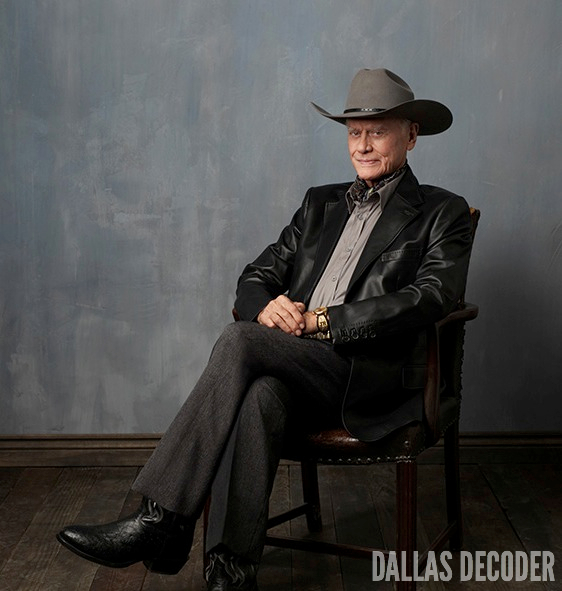
The first anniversary of Larry Hagman’s death is November 23, although to me, he never really went away. Hagman’s old “Dallas” episodes run on a seemingly endless loop in my house. I watch him all the time, and that would probably be true even if I didn’t write and edit this website. Larry Hagman still brings me joy. The other day, I re-visited the 1983 segment where J.R. goes to the Oil Baron’s Ball and slyly insults every relative seated near him. With each gleeful quip, Hagman’s smile couldn’t be contained. Neither could mine.

Do I wish Hagman were still around, filming new episodes of TNT’s “Dallas” revival? Of course, although given the remarkable body of work he left behind (more than 380 appearances as J.R. in the various “Dallas” shows, spinoffs and sequels), to want more from him feels almost greedy. Likewise, while I’ll always regret that I never met my hero, I did get to speak to him on the phone once. How lucky am I? By most accounts, Hagman was a hell of a guy — joyful, generous, wise, progressive, amusingly eccentric — and so one year after his death, whatever sadness I feel is reserved for the people who knew him best. As a fan, I lost an actor whose work I admired from afar. But Hagman’s family and friends? They lost a real, special man.

Don’t get me wrong: Hagman’s death upset me a year ago. He died on the day after Thanksgiving, giving Black Friday a whole other meaning. Now the timing feels kind of cosmic. The anniversary of his death will always come two days after the anniversary of the “Who Shot J.R.?” revelation and around Thanksgiving, reminding us to feel grateful for the wonderful performances he gave us. We can also feel thankful to the people who help keep Hagman’s memory alive, including the folks who run his Facebook page, which offers a treasure trove of rare photographs and other mementos. For that matter, we should also give thanks to the “Dallas” producers and cast members,  who have done an impressive job honoring their show’s biggest star. The episode where Hagman’s alter ego is laid to rest, “J.R.’s Masterpiece,” lived up to its title, but the tributes haven’t stopped there. Showrunner Cynthia Cidre has promised to keep Hagman’s name atop the production call sheets for the duration of the series, reminding the cast and crew that “Dallas” is the house Hagman built.

There are also hints that J.R. will figure into next season’s storylines, wheeling and dealing from beyond the grave, and a recent tweet from the set suggests Josh Henderson will sport his on-screen daddy’s signature wristwatch and belt buckle. If the producers are looking for one more way to honor Hagman, “Dallas” fan Joe Siegler has a nifty suggestion: Instead of continuing to have the cast take turns delivering each episode’s “Previously on ‘Dallas’” voiceover, why not use Hagman’s version exclusively? This would be a small gesture, but I can’t imagine a better way to start each new hour of “Dallas” than by hearing J.R.’s voice.

Of course, Hagman’s legacy extends beyond the show he made famous. We live in a golden age of television drama, populated by antiheroes like Walter White and Don Draper. None of them would exist if J.R. Ewing hadn’t come first. What a shame so many TV critics neglect to mention that. Even more shameful: Hagman’s omission from the special tributes during this year’s Emmy broadcast and his snub in the dramatic supporting actor race. Few performers deserved Emmy recognition more than Hagman this year — and not just because he didn’t receive a trophy during the original “Dallas’s” heyday. Hagman did some of the best work of his career on the TNT series. One example: last year’s “Family Business” episode, which showcased his powerful, poignant portrait of the aging J.R.

On the other hand: Who needs Emmys? If the past year has taught me anything, it’s how much affection “Dallas” fans have for Hagman. Our love for him is deep and real, and it will sustain his legacy for a long time to come. It’s another reason I don’t feel a strong sense of loss as the anniversary of his death approaches. The truth is, Larry Hagman isn’t really gone; he just lives in our hearts now.

How will you remember Larry Hagman and J.R. Ewing? Share your comments below and read more opinions from Dallas Decoder.

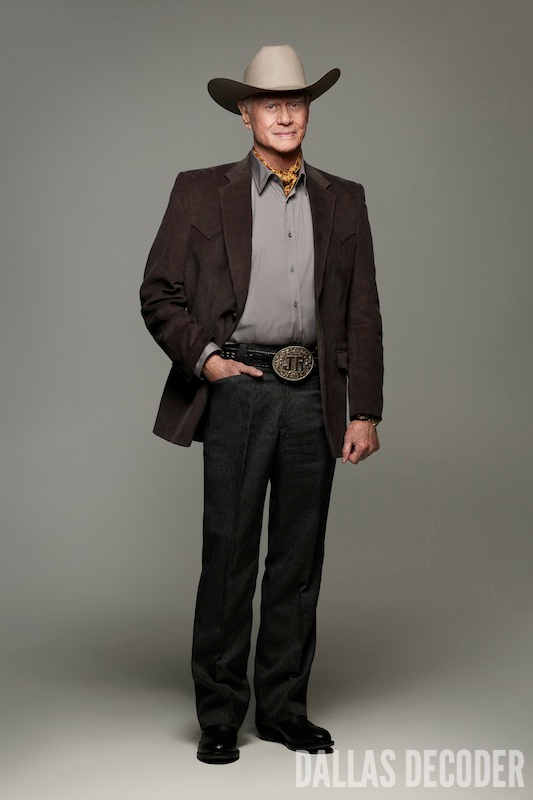
Who Snubbed J.R.? Emmy, That’s Who

Dallas, Larry Hagman, J.R. Ewing, TNT, Venomous Creatures

Give the devil his due

Emmy has always been one of the few gals capable of resisting J.R.’s charms, so it should come as no surprise to learn Larry Hagman won’t be honored with a special tribute during this year’s ceremony. And yet it does. I’m shocked, actually.

I figured if anyone would receive extra recognition during the Emmy broadcast’s traditional “In Memoriam” segment, it would be Hagman. His death last fall ended a five-decade television career that includes two of the medium’s most enduring franchises, “Dallas” and “I Dream of Jeannie,” and one of pop culture’s defining moments: the “Who Shot J.R.?” phenomenon.

But I was wrong. Yesterday, the producers of this year’s Emmy show, which CBS will air Sunday, announced they’ll highlight four performers during the memorial segment — James Gandolfini, Cory Monteith, Jean Stapleton and Jonathan Winters — along with Gary David Goldberg, who created and produced “Family Ties.”

I have no problem with these five people receiving special treatment. I’ve enjoyed their work. But why couldn’t Hagman be honored too? Presumably, he’ll be included in a clip reel of other notable deaths from the past year — but that’s not enough. He deserves much more.

This wouldn’t be so galling if it wasn’t part of an unfortunate pattern with the Academy of Television Arts and Sciences, which seems to go out of its way to ignore Hagman. He was nominated twice for his role as J.R. during the 1980s, losing both times. This year, Hagman was a contender for a supporting actor nomination for his work on TNT’s “Dallas” revival, but he failed to make the cut.

And now Emmy has snubbed him again.

I’ve written before about how much Hagman has meant to me, but that’s not what this is about. I don’t need to see him win a trophy or receive an awards show tribute to validate my affection for him.

No, this is about what Hagman has meant to television. When J.R. Ewing entered our living rooms in 1978, prime-time dramas were populated with characters like Kojak, Quincy and Pa Ingalls. J.R. was unlike anyone we had encountered before, and Hagman did a masterful job capturing all of the character’s complexities and contradictions. His performance taught the industry that the good guys needn’t always win, that audiences could find immense satisfaction in stories about humanity’s darker impulses.

So isn’t it a shame that on the night the industry comes together to celebrate its achievements, Hagman’s contributions will probably be reduced to a few seconds during a clip reel?

Earlier this week, as I watched the latest episode of “Breaking Bad” — as thrilling an hour of television as any I’ve witnessed — I thought: This is “Dallas’s” legacy. I’m not suggesting J.R. ever came close to being as monstrous as Walter White. J.R. was a scoundrel; Walt is a sociopath. But do you doubt for a minute that Walt would exist if J.R. hadn’t come first?

From what I’ve read, Hagman wasn’t much bothered by the fact that he never won an Emmy. But I am, and so I hope the academy’s bigwigs will change their minds and add a special tribute to him during the Emmy show. For that matter, I also hope they’ll induct Hagman into the academy’s Hall of Fame next year.

I mean, come on. Isn’t it time for Emmy to finally give J.R. a shot?

Do you feel Larry Hagman deserves Emmy recognition? Share your comments below and read more opinions from Dallas Decoder.
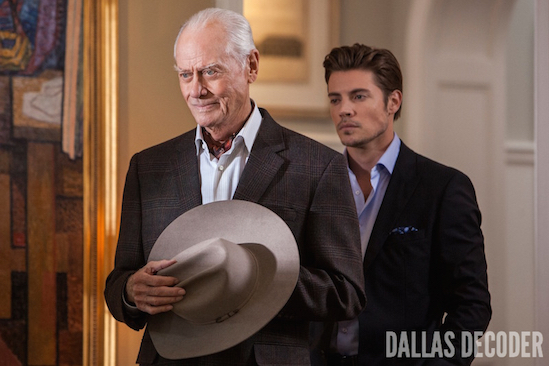
Goodbye, J.R.

Dallas, J.R. Ewing, Larry Hagman, TNT

R.I.P., J.R.

I don’t know who came up with the idea that J.R. Ewing was the man we loved to hate, but nothing could have been further from the truth. Do you know anyone who hated J.R., ever? He was always the “Dallas” character we cared about most. The “Who Shot J.R.?” hysteria didn’t occur because people thought he got what was coming to him. We didn’t spend seven months trying to guess the identity of J.R.’s assailant because we wanted to shake that person’s hand. We wanted to know who to shake our fist at. Who dare harm our hero?

J.R.’s funeral on tonight’s edition of TNT’s “Dallas” will bring an end to one of the most enduring figures in our popular culture. J.R. arrived in the era of pet rocks; he leaves in the age of Angry Birds. He has been as much a fixture in our living rooms as any president. Jimmy Carter held the office when CBS flung open the doors to J.R.’s white house, Southfork, in 1978. J.R. outlasted him and Reagan and made it halfway through Bush I, then took a break and came back with reunion movies and specials during Clinton and Bush II. Finally, under Obama, J.R. began making weekly visits again.

Like Superman, James Bond and Mr. Spock, J.R. spanned decades. One big difference: Those characters have all been played by multiple actors, but for 35 years there’s been only one J.R.: Larry Hagman. (Yes, Kevin Wixted had a small role as a teenaged J.R. in the 1986 “Dallas: The Early Years” prequel, but Hagman’s appearance at the beginning of that movie is the one we remember.) Hagman logged almost 400 hours of prime-time television inhabiting J.R.’s skin. He appeared in every “Dallas” episode, movie and clip show, plus a few hours of “Knots Landing.” For awhile in the 1980s, Hagman even donned J.R.’s Stetson and hawked BVD underwear in TV commercials. His memorable tag line: “Now where else would I put my personal assets?”

Hagman’s irresistible charisma made it impossible to dislike his character. J.R. did awful things, but Hagman was clearly having so much fun doing them, we couldn’t help but have fun too. J.R. bribed, blackmailed and backstabbed. He cheated on his wives and his mistresses. Most entertainingly, he never bit his tongue when it came to letting his family know how he felt about them. To Pam: “I don’t give a damn about you or your happiness, honey. But I do care about what’s good for me.” To Lucy: “Say, why don’t you have that junior plastic surgeon you married design you a new face – one without a mouth?” To Bobby: “You’re a whole lot dumber than I ever thought a brother of mine could be – with the exception of Ray and Gary, of course.”

As mean as he was, “Dallas” never lost sight of J.R.’s humanity. More than anything, he wanted Daddy to be proud of him, but Jock loved Bobby best. In the beginning, every one of J.R.’s schemes stemmed from his desperate desire to win the old man’s approval. This made J.R. enormously sympathetic. After all, who among us hasn’t felt unloved at some point? There were other flashes of J.R.’s softer side, like the time he recalled falling in love with Sue Ellen and the tears he shed at Bobby’s burial. But nothing made J.R. more relatable than fatherhood. When Jock died, J.R. made John Ross the center of his universe. Every time we saw him doting on that little boy, our hearts melted. Forget Bill Cosby; J.R. Ewing was the best TV dad in the ’80s.

In old age, J.R. became even more complex. He still schemed, but now he was just as likely to use his powers to help others as he was for his own selfish ends. J.R. plotted with John Ross to take over Ewing Energies, but he also blackmailed a smug prosecutor to save Sue Ellen from going to jail and vowed to help Bobby bring down Harris Ryland. We also discovered there were lines that J.R. wouldn’t cross. He stole Southfork from Bobby, then returned it when his conscience revealed itself. And when John Ross wanted to take advantage of one of Bobby’s misfortunes, J.R. put the young man in his place: “You still got a lot to learn, boy. When the family’s in trouble, we don’t take advantage.”

Perhaps most movingly, the elderly J.R. also became a teller of hard truths. To John Ross: “I spent most of your childhood chasing after women I didn’t love and making deals that didn’t really matter.” To Sue Ellen: “The best decision you ever made was the day you walked away from me.” To Bobby: “I love you … and I don’t know who I’d be without you.”

It’s true that daytime soap operas have given us many characters who have endured for decades, but almost no one in prime time can match J.R.’s longevity or evolution. James Arness played Marshal Dillon on “Gunsmoke” for 20 seasons, and even though that character grew less brooding as the show progressed, he was essentially the same good-hearted hero in the last episode that he was in the first. Archie Bunker, immortalized by Hagman’s friend Carroll O’Connor, grew more tolerant during his 11-year run, but frankly that made him a little less interesting. You can’t say the same thing about J.R.’s journey through life.

If Hagman hadn’t died last fall, J.R. would still be here, captivating us. Quite appropriately – and quite courageously, when you think about it – the “Dallas” producers are allowing J.R. to die, sending him off with a brand-new “Who Killed J.R.?” mystery. The character’s death marks the end of an era, although his legacy is plain for all to see. Before “Dallas,” the people who made television drama were afraid to let storylines continue from week to week. They insisted protagonists be good. Now the prime-time landscape is populated with flawed heroes whose stories never end. Don Draper. Walter White. Carrie Mathison. J.R. didn’t just touch the lives of his fans; he helped shape an entire medium.

Maybe you feel differently, but I never loved to hate J.R. I just loved him. The only thing I hate is that now he’s gone.

What are your favorite memories of J.R. Ewing? Share your comments below and read more opinions from Dallas Decoder.
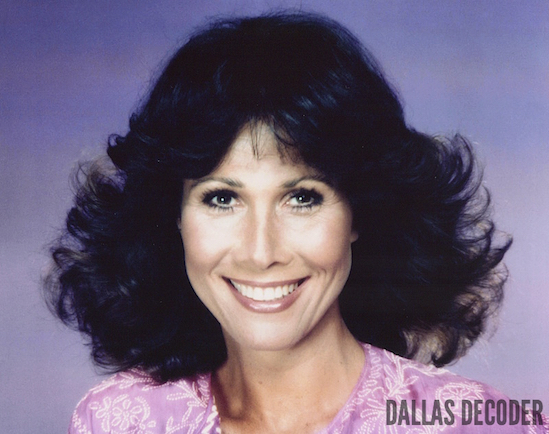
‘Dallas’s’ Second Season Gets Off to a Promising Start

Dallas, John Ross Ewing, Josh Henderson, J.R. Ewing, Larry Hagman, TNT

Lessons learned

At one point during “Dallas’s” second-season premiere, J.R. offers Sue Ellen a sly grin and declares, “I never learn my lesson.” Maybe not, but the people who make “Dallas” seem to have learned theirs. This has been a good show from the beginning, but diehards like me couldn’t help but feel bothered by some of the historical flubs in the first-season plotlines (don’t get us started on those Southfork mineral rights) or the fact that our beloved Linda Gray was missing from two whole episodes.

Thankfully, those days appear to be over. The two-hour premiere, which TNT will telecast Monday, January 28, does a nice job giving “Dallas” devotees the stuff we crave. The first shot of the first scene is none other than Sue Ellen – a signal, I hope, that Gray will have a prominent role this year. The opener also offers the first Southfork swimming pool scene in 22 years, references to two long-unseen “Dallas” characters, and a fleeting-but-much-appreciated mention of an institution that was significant to the old show’s mythology. Someone’s been doing their homework.

Best of all, J.R. gets lots of screen time in the extended premiere, which is actually two one-hour episodes (“Battle Lines” and “Venomous Creatures”) that TNT will telecast back-to-back. Larry Hagman filmed a handful of episodes before his death last November, and in these first two hours, he’s as great as ever. Hagman’s scenes with Patrick Duffy will make you chuckle, while his exchanges with Gray will leave you reaching for the tissues. The magic is still there.

Of course, as much as I love watching my old favorites, it’s also good to see “Dallas” cultivating its next generation of stars. Josh Henderson has become a worthy heir to Hagman’s badassery, although he now has competition from an unexpected source: Julie Gonzalo, who is a hellion in heels as Cliff’s vengeful daughter. I’m also pleased to report the premiere gives Jordana Brewster some meaningful scenes. Brewster remains one of the best actors in this ensemble; she makes Elena feel like the kind of person you might know in real life, which – let’s face it – doesn’t always happen on shows like this. Henderson and Gonzalo might get the juicy lines, but Brewster and Jesse Metcalfe, her equally good leading man, keep “Dallas” grounded.

The premiere also establishes the battle for Ewing Energies as the season’s main story arc and introduces us to the sleek Ewing Energies set, which looks absolutely nothing like the offices seen on the old show. (Please note: This isn’t a complaint.) A nifty subplot focuses on Christopher’s foray into racecar driving, and we also learn Ann’s dark secret, a storyline that has more than a few holes but nonetheless offers a nice showcase for Brenda Strong.

Other highlights include our first glimpse of the mysterious new character Emma Brown, played by Emma Bell, who was so memorable as the doomed Amy on “The Walking Dead.” (I wonder: Does Bell find zombies or Ewings more cannibalistic?) We also meet Harris Ryland’s mother Judith, played to the hilt by Judith Light. Yes, Light is only three years older than Mitch Pileggi, who plays Harris. It’s too early to know if audiences are going to buy this, but if anyone can pull it off, it’s Light.

The real question is how “Dallas” will fare once it runs out of episodes featuring Hagman. This week, TV Guide reported the show will write out its star with a “Who Killed J.R.?” mystery that will echo the old “Dallas’s” most famous cliffhanger. Whether or not this idea is really brilliant or really lousy will depend on the execution, but it’s a good sign the show is bringing back so many favorites for J.R.’s funeral and memorial service. The guest list will include Deborah Shelton, who played J.R.’s longest-running (three seasons!) mistress Mandy, and Cathy Podewell, who portrayed his second wife Cally, along with four characters who require no explanation: Gary (Ted Shackleford), Lucy (Charlene Tilton), Ray (Steve Kanaly) and Cliff (Ken Kercheval).

This group includes some of “Dallas’s” most iconic figures. Watching them come together to mourn – or celebrate – the death of the biggest icon of all is bound to be great television. It will never satisfy all of “Dallas’s” hardcore fans, but you have to hand it to the people who make the show. At least they’re trying.

What do you want to see during “Dallas’s” second season? Share your comments below and read more opinions from Dallas Decoder.
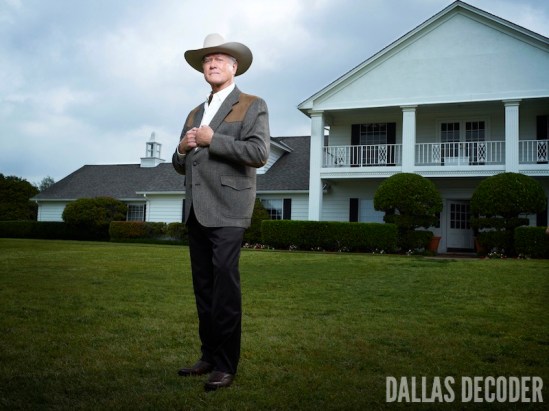
Oh, ‘Pioneers’! Soaps Tribute is a Sprint Down Memory Lane

Knots Landing, Michele Lee, PBS

Along came Polly

“There’s not a show on right now, at this moment, that isn’t soap,” Joan Van Ark declares during PBS’s “Pioneers of Television” tribute to the nighttime soap operas of the 1980s. She’s referring to the emergence of serialization as the dominant form of storytelling in prime time, and so she has a point. Carrie and Brody, Walt and Jesse, Don and Peggy. On television, no one’s story ends anymore.

This would seem to be the most enduring legacy of the ’80s soaps, but Van Ark’s trenchant observation is the closest “Pioneers” comes to addressing it. The 52-minute retrospective, which most PBS stations will air tomorrow night, recalls three shows – “Dallas,” “Dynasty” and “Knots Landing” (sorry “Falcon Crest” fans) – through the usual mix of talking heads and old clips. But with lots of ground to cover and so little time to do it, the interviews become sound bites and the clips become snips. This is a sprint down memory lane.

“Dallas” fans will appreciate the prominence given to Larry Hagman, who recorded his interview before his death last fall. We also get to hear from Patrick Duffy, Linda Gray and Charlene Tilton, although some of their stories and the scenes that accompany them will be all-too-familiar to “Dallas” diehards. Prepare to see Kristin pump J.R. full of lead for the umpteenth time, and to hear again how that bogus Irish Spring commercial provided the cover to film the dead Bobby’s reanimation in Pam’s shower. Isn’t it time to let the “Dallas” cast reminisce about something other than the show’s cliffhangers?

There are a few surprises. I had forgotten how Hagman’s role as a slick Texas businessman in the 1974 flick “Stardust” helped him slide into J.R.’s boots four years later. It’s also fun to see photos of the young, dreamy Hagman, and to hear him recall how he and Joan Collins dated as teenagers. Wisely, the “Pioneers” producers also give Hagman the last word, and his too-humble assessment of his performance as J.R. allows the program to end on a graceful, poignant note.

The most interesting moment overall comes when narrator Ryan Seacrest (yes, him) points out the ’80s soap were “among the whitest shows on television.” “Dynasty” is justly praised for casting Diahann Carroll in a starring role, and we’re reminded that “Knots Landing” once moved an African American family, the Williamses, onto the cul-de-sac, only to shift the characters to the backburner. Lynne Moody, who played Pat Williams, recalls how she grew frustrated with her lack of screen time and asked the “Knots Landing” producers to let her out of her contract. They agreed. Her tone suggests she regrets that decision a little now.

Unfortunately, “Pioneers” ignores the influence the soaps had on television’s depiction of women, which is probably the genre’s other significant legacy. Victoria Principal’s Pam Ewing was one of the medium’s first sexually liberated heroines, and “Dynasty” and “Knots Landing” deserve credit for showing women could be every bit as savvy as men in the world of big business. But “Pioneers” breezes past all that and instead gives us the usual blather about shoulder pads and catfights. At least we get to hear Michele Lee’s “Pollyanna speech” from “Knots Landing,” which feels more resonant today than it did two decades ago.

It might also have been nice if the producers had invited some of the stars of today’s prestige serials to comment on the ’80s soaps, the way Tina Fey paid tribute to Mary Tyler Moore and Lucille Ball during last week’s “Pioneers” tribute to comedic women. If nothing else, PBS should have let us hear from some of the stars of its own hit soap, “Downton Abbey.” After all, if it wasn’t for Bobby and Pam, would there be a Matthew and Mary?

Most PBS stations will broadcast “Pioneers of Television: Primetime Soaps” on Tuesday, January 22, at 8 p.m. Eastern. Watch the show, share your comments below and read more opinions from Dallas Decoder.
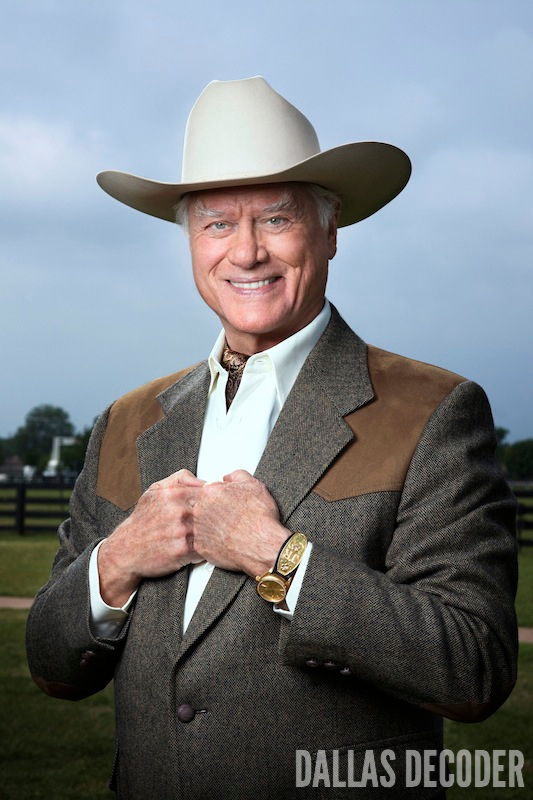
Dallas Decoder’s Man of the Year: Larry Hagman

Dallas, J.R. Ewing, Larry Hagman, TNT

The man

A few days after Larry Hagman’s November 23 death, his son Preston told a television interviewer that his father’s work on TNT’s new “Dallas” series extended Hagman’s life during his struggle with cancer. I believe it. I also believe the relationship between star and show was mutually beneficial. “Dallas” kept Hagman alive, but he kept “Dallas” alive too.

Two thousand twelve was the year “Dallas” became a hit all over again, and no one was more responsible for its success than Larry Hagman. The actor long ago established J.R. Ewing as one of television’s most fascinating characters, but on TNT’s “Dallas,” Hagman made J.R. even more complex. In old age, J.R. was often downright demonic, but he could also be shockingly vulnerable and at times even sweet. It was the performance of Hagman’s career.

Critics loved it, finally giving Hagman the acclaim he deserved but didn’t receive during the original “Dallas’s” heyday. Viewers embraced J.R. too, including a new generation that discovered him for the first time. More than 8 million people watched TNT’s “Dallas” opener within a week of its June 13 debut. The full 10-hour season averaged 6.1 million weekly viewers. I’m convinced Hagman is what kept people coming back. Even in the episodes where J.R. only had a scene or two, Hagman’s presence loomed large. “Dallas” was still his show.

To be fair, the actor received plenty of support from the new “Dallas’s” creative team, which gave J.R. some of his best-ever material. (“Family Business,” the first season’s penultimate episode, written by Bruce Rasmussen and directed by Michael M. Robin, is one the finest hours of “Dallas” ever made.) Hagman also got a boost from longtime friends and costars Patrick Duffy and Linda Gray, with whom his chemistry remains unrivaled, as well as from Josh Henderson, who held his own against the actor and made John Ross a terrific partner in crime for J.R.

I’m naming Hagman Dallas Decoder’s first man of the year in recognition of his crucial contributions to the “Dallas” franchise in 2012. This won’t my last tribute to the actor, either. Before Hagman’s death, he completed a handful of episodes of the new “Dallas’s” second season, which TNT will begin showing Monday, January 28. Something tells me his final performances as J.R. will be every bit as good as what we saw in 2012.

My goal is to make my man or woman of the year selection an annual tradition. Twelve months from now, I hope to honor someone else who has made a Hagman-sized contribution to “Dallas.” And make no mistake: As much as I love Hagman and J.R., “Dallas” is bigger than both of them. The themes David Jacobs established when he created the Ewings 35 years ago – family, loyalty, ambition – are timeless. If the storytelling is good, the show can go on.

In thinking about “Dallas’s” future, I keep coming back to the classic scene from the fifth-season episode “Head of the Family.” J.R., depressed over Jock’s recent death, tells his youngest brother, “It’ll never be the same, Bob.” Bobby’s response: “Maybe it won’t. [But] if this family quits just because he’s gone, he didn’t leave us very much, did he?”

My guess is these words describe how many of us feel today. We know “Dallas” won’t be the same without J.R., but we also know how much the show meant to the great actor who portrayed him. Larry Hagman kept “Dallas” alive, and now it’s up to all of us – fans and the people who make the show alike – to continue the tradition. In the end, that might be the best tribute we can offer him.

Share your comments about Larry Hagman and J.R. Ewing below and read more opinions from Dallas Decoder.

J.R. Ewing, Larry Hagman and Me

Dallas, J.R. Ewing, Larry Hagman, TNT

My hero

Like his famous alter ego, Larry Hagman dodged death so many times, I assumed he was going to live forever. Waking up to the news last Saturday morning that Hagman was suddenly gone left me feeling a little dazed. Without putting much thought into it, I grabbed an old J.R. Ewing publicity shot, scanned it and reached for my laptop to tap out a quick tribute for Dallas Decoder.

As fate would have it, my previous post was a transcription of the next-to-last scene from “The Search,” the “Dallas” episode where Jock is presumed dead. When I logged into my site, I was greeted by a shot of Bobby standing in the Southfork dining room, breaking the news to Miss Ellie that Daddy isn’t coming home. In that instant, I wondered: Where is Patrick Duffy right now, and does he look as heartbroken as he does in this old picture?

That’s when I lost it.

I couldn’t believe what was happening. I was weeping over the death of a television actor, a man I’d never met. Yes, I’m a “Dallas” fanatic, but I’m not much of a crier. So as I sat on my sofa shedding tears, I kept telling my husband Andrew how silly I felt. He held my hand and told me I shouldn’t feel embarrassed.

I see now that Andrew was right. Whether or not I knew Larry Hagman wasn’t the point. What mattered is that he had touched my life. Maybe J.R. Ewing wasn’t a real person, but the sense of loss I felt at that moment was very real.

It took me a few days to figure all this out and find the words to express it. The breakthrough came when I realized J.R. has been part of my world almost from the beginning. I don’t remember when I watched “Dallas” for the first time, but it must have been in the spring or summer of 1980, when the show was 2 and I was 6. I didn’t always understand the stories I saw on “Dallas,” but I couldn’t get enough of the glamorous trappings – the ranch, the offices, the cars. Mostly, though, I loved the rapscallion at the heart of it all.

J.R. Ewing was my hero. I can remember spending Saturday afternoons “playing ‘Dallas’” with Joanna, the girl who lived next door. Together, we would recreate the scenes I had watched on the show the night before. In our backyard world of make-believe, I always cast myself as J.R. Joanna was assigned all the other roles: Sue Ellen, Kristin, Cliff.

In middle school, my love of “Dallas,” “Knots Landing” and the era’s other prime time soaps was one of the things that made me realize I was different from the other boys. The other boys realized this too, and they made my life miserable. That’s when my appreciation for J.R. deepened. Even though I saw him do a lot of bad things each Friday night, I so admired how he carried himself. No one pushed J.R. around. Words never stung him. It was the kind of power I wanted for myself.

I used to fantasize about silencing my sixth-grade tormentors with clever, J.R.-style ripostes. Sometimes I’d imagine staging fiendish acts of revenge to make the mean kids sorry for picking on me. What these imaginary ploys entailed, I cannot recall. I couldn’t have been older than 11 or 12 at the time, so how devious could my maneuvers have been? Was I going to frame one of my bullies by making it look like he’d copied his homework?

I eventually outgrew my secret desire to plot and scheme like J.R., but I never outgrew my admiration for his swagger. J.R. never apologized for who he was, and eventually, I learned to be proud of who I am. Don’t get me wrong: I’m not the kind of person who brims with self-confidence. I’ll never have J.R.’s moxie. But I did learn a lot from him about standing up for yourself and having the courage to go after the things that matter to you.

Since I started Dallas Decoder and began re-watching the original series with fresh eyes, I’ve found myself thinking about Larry Hagman as much as I do J.R. What a phenomenal talent. Much has been made in recent days about Hagman’s gifts. There’s not much I can add here, except to say this: Larry Hagman wasn’t an actor. Larry Hagman was a wizard. He didn’t perform. He made magic.

People who knew Hagman have talked a lot this week about how the lines that distinguish him from J.R. blurred with time. I don’t doubt it. But I also believe there was a part of Hagman that was just plain Larry.

I thought about this a few days ago, when I watched the “Dallas Reunion: The Return to Southfork” retrospective. At the end of the special, Hagman and his longtime co-stars are sitting in front of an audience, reminiscing. At one point, the camera cuts to a shot of Hagman laughing. He’s so tickled, his eyes crinkle. This isn’t J.R.’s mischievous chuckle. It’s Larry’s hearty guffaw. It made me think: I know J.R. and I love him, but I wish I could have known Larry too.

I was lucky enough to have one encounter with Hagman. It happened during the fall of 2004, when I was working as a newspaper reporter. CBS announced a conference call for journalists to interview Hagman and Linda Gray about that “Return to Southfork” special, which was going to air in a few days. My editors weren’t interested in a story about a “Dallas” clip show, but I sure as hell wasn’t going to let that stop me from participating in the call. This was my chance to finally speak to my hero.

When the time came, I sat at my desk in the newsroom, dialed the number on the press release and listened to the moderator’s instructions. Each reporter would be allowed to pose a single question to Hagman and Gray. Fair enough. Except when it was my turn, I didn’t ask a question. Not really. I gushed. I went into full-fledged fanboy mode, telling Hagman and Gray how much I loved them, their characters and all things “Dallas.” At one point, I acknowledged I sounded like a sycophant. Hagman chuckled and called me “sickie.” J.R. Ewing took a shot at me! I was over the moon.

I’ve thought about that call a lot this week. I cherish the memory, but I also wish I could get a do-over. I wouldn’t gush this time, and I wouldn’t ask Hagman a question. I’d simply thank him.

What did Larry Hagman mean to you? Share your comments below and read more opinions from Dallas Decoder.
Linda Gray is Speaking Up — Just Like Sue Ellen Would

Dallas, Linda Gray, Sue Ellen Ewing, TNT

Still our girl

Atta girl, Linda Gray.

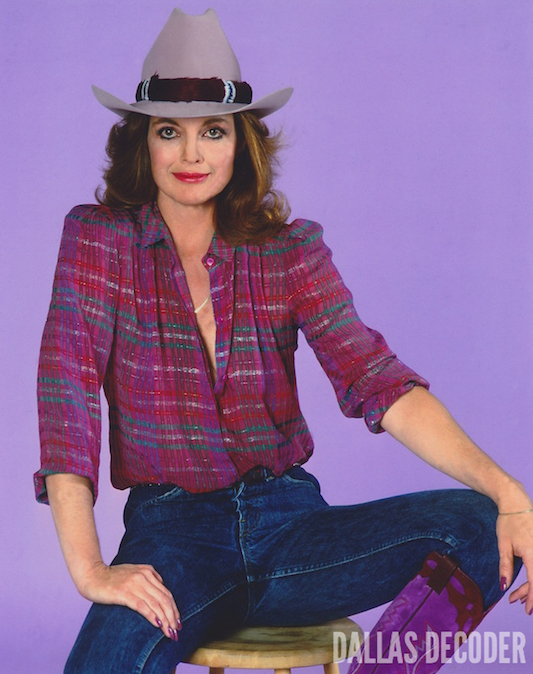
In a candid interview with Ultimate Dallas last week, the actress expressed her disappointment with the amount of screen time her character, the indomitable Sue Ellen Ewing, has received on TNT’s “Dallas” revival. The cable channel has telecast five hours so far, and Gray has been missing from two of them.

“I’m not happy not to be in an episode. I’m not a happy camper,” Gray told the fan site, adding viewers should “go and rattle cages” if they want to see more of Sue Ellen.

Let’s be clear: Gray doesn’t sound at all angry during the interview. In fact, she seems pretty enthusiastic about the show overall. (In addition to a transcript, Ultimate Dallas has posted an audio recording of its conversation with the actress.)

Still, I suspect it took more than a little courage for Gray to admit she’d like to be given more to do. We’ve all seen Hollywood sideline older actresses, and I’m sure there are plenty of people in the entertainment industry who will look at Gray and think she should be happy to have a steady gig, even if she isn’t getting as many scenes as she’d like.

That’s why I’m proud of the actress. Gray is demonstrating she’s learned a thing or two from her “Dallas” alter ego, who has always had to fight to make her own way in the world.

Think about it: Sue Ellen has been part of our popular culture since the Carter era, and in that time she’s gone from an alcoholic Stepford wife to a confident, independent woman. In the history of prime-time television, few characters have endured as long as Sue Ellen, and fewer still have changed as much.

‘Dallas’s’ Secret Weapon

Make no mistake: “Dallas” is Sue Ellen’s story as much as it is J.R. and Bobby’s – and Linda Gray has always been the show’s secret weapon.

Since I began re-watching the original series for Dallas Decoder, I’ve been struck by the quiet power of Gray’s performances. I marvel at her work in classic early episodes like “John Ewing III, Part 2,” when Sue Ellen confesses her affair with Cliff in a heartbreaking, four-and-a-half-minute monologue. Her work later in the series, particularly during the unfairly maligned “dream season,” blows me away too.

Most surprisingly, Gray dominates the famous “Who Shot J.R.?” episodes, more so than Larry Hagman. She is mesmerizing in “A House Divided,” the season-ending cliffhanger where J.R. is shot, and she absolutely owns “Who Done It?” the most-watched “Dallas” episode ever.

Gray still impresses me. She hasn’t been given much to do on TNT’s “Dallas,” but when she appears, she lights up the screen. With the exception of Hagman, no one on the new show is as charismatic as Gray.

Sue Ellen is Us

Of course, I’ve had a soft spot for Sue Ellen since I was a kid. I’ve come to see the character as an avatar for the gay rights movement, but the truth is, Sue Ellen serves as a stand-in for anyone who has ever had to stand up for themselves. In other words: Sue Ellen is us.

I think that’s why she’s always been a fan favorite. Remember, “Dallas” was prime-time television’s 26th most popular series until the 1989-90 season, when Gray left and it plunged to 43rd.

To be fair, because Sue Ellen is so beloved – and because she’s changed so much over the years –I would imagine the character is tough to write for. I wish TNT’s writers had made more of an effort during the new show’s early episodes, but as we head into the first season’s home stretch, Sue Ellen seems poised to get more screen time.

The character is featured in several pivotal scenes in “The Enemy of My Enemy,” the episode TNT will telecast tomorrow night. As audiences will see, some of Sue Ellen’s old habits endure, a revelation I welcome. I’m glad Sue Ellen has changed with the times, but it’s also good to see she’s still human.

And as much as I appreciate Gray’s suggestion that fans “rattle cages” and demand to see more Sue Ellen in the future, I don’t believe television scripts should be crowd-sourced. Cynthia Cidre, the creative force behind TNT’s “Dallas,” has a vision for the series, and she deserves an opportunity to fulfill it.

But let’s face it: Unless that vision includes Sue Ellen, it won’t really be “Dallas.”

Do you want to see more of Sue Ellen on “Dallas”? Share your comments below and read more opinions from Dallas Decoder.
TNT’s ‘Dallas,’ a Good Show Poised for Greatness

Once and future kings

Once and future kings

TNT’s “Dallas” is a good show on the verge of becoming a great one. It has the potential to surpass the original “Dallas” in overall quality, much like “Star Trek: The Next Generation” is now more highly regarded than its 1960s precursor. Of course, it took Captain Picard and his crew awhile to hit their stride, and this new brood of Ewings is going to need time to find their bearings, too.

TNT has produced 10 one-hour “Dallas” episodes and will show them on Wednesday nights, beginning June 13. I’ve seen the first seven entries and was impressed with all of them, especially the pilot, “Changing of the Guard,” which beautifully captures the old “Dallas” spirit.

The episodes that follow are more of a mixed bag. Each one is solidly entertaining, with good performances and gorgeous cinematography (Rodney Charters, get your Emmy submission ready), but the pacing is a bit frenetic. The new show moves at the speed of Twitter, offering a torrent of plot twists that are genuinely surprising but leave the audience little time to get to know the characters.

Hagman Still Has It

Hands down, the best thing about the new show is the man who was the best thing about the old one: Larry Hagman, whose return as J.R. Ewing is everything I hoped it would be. The actor is now in his 80s and looks every bit of it, but as viewers will discover, Hagman still has it. Yes, the hair is thinner, the voice is raspier and the eyebrows are out of control, but the twinkle in Hagman’s eye hasn’t dimmed a bit.

To its credit, TNT doesn’t try to conceal Hagman’s age. In fact, the show seems to embrace it. In one scene in “Changing of the Guard,” director Michael M. Robin allows the camera to linger for a moment on J.R.’s wrinkled hands. It’s a small gesture, but at a time when television seems more obsessed with youth than ever, it’s downright bold.

In later episodes, the show deals with J.R.’s age rather playfully. At one point, the character begins using a walker – not because he needs it, but because he wants to make Bobby feel sorry for him. In another scene, we see J.R. shuffling around the Southfork kitchen in a cardigan sweater, making breakfast for Bobby and Ann, Bobby’s new wife. It seems like a warm moment, until you stop and realize the cuddly old man dishing up scrambled eggs is secretly plotting against everyone at the table.

Patrick Duffy, who returns as Bobby, uses his more “mature” appearance to his advantage, too. Duffy’s silver hair imbues Bobby with instant authority, allowing the actor to command every scene he’s in. Duffy has always been “Dallas’s” unsung hero, but now his gravitas is readily apparent. He makes a worthy heir to Jim Davis’s spot at the head of the Ewing dinner table.

The real revelation, though, is Linda Gray, who once again plays Sue Ellen. She doesn’t have nearly enough to do in TNT’s first seven episodes, but when Gray appears, she lights up the screen. The show has cast Sue Ellen in the role of elder stateswoman, but the truth is, Gray is still “Dallas’s” leading lady, even if the producers haven’t realized it yet.

Mr. Henderson, Presented

Among the new cast, no actor will be watched more closely than Josh Henderson, who portrays John Ross, J.R. and Sue Ellen’s son. I’m not going to make the inevitable comparisons to Hagman because, hey, there’s only one of him. Instead, I prefer to ponder Henderson’s similarities to another young actor who got his start at Southfork: Brad Pitt, who played a long-forgotten teenage character on “Dallas” a quarter century ago.

Henderson reminds me a lot of Pitt, not during his “Dallas” days but a little later, when he was making movies like “Thelma & Louise.” Like Pitt in that film, Henderson has an effortless, seductive charm. He is boyish and dangerous at once, and even when he’s up to no good, you can’t help but find him alluring. Maybe comparisons to Hagman aren’t so unfair after all.

I’m also impressed with the other members of TNT’s ensemble: Jesse Metcalfe, who delivers several moving performances as Christopher, Bobby’s strong-but-sensitive son; Brenda Strong, who is casually elegant as Ann; and Julie Gonzalo, who does a nice job keeping the audience on its toes in her role as Rebecca, Christopher’s mysterious fiancée.

My favorite newcomer, though, is Jordana Brewster, who plays Elena, the young geologist torn between John Ross and Christopher. Brewster carries herself with the same kind of confidence and youthful wisdom Victoria Principal did during the original “Dallas’s” earliest episodes. Brewster makes me care about Elena, even when the role is underwritten. This show is lucky to have her.

People Before Plots

While “Dallas’s” new actors are good, their characters need a little work. For example, I’m not sure why John Ross is so antagonistic, aside from the fact that’s what the narrative demands.

This is the classic trap soap operas fall into: The writers allow the plots to dictate the characters’ behavior, something the original “Dallas” skillfully avoided. Think about it: Unless you’re a “Dallas” diehard, you probably don’t remember the specifics of J.R.’s schemes, but chances are you haven’t forgotten about his relationships with his family.

The new show hasn’t quite figured out viewers care more people than plots. The twist-a-minute storytelling style doesn’t give the new characters time to become knowable, relatable people. It also leaves little room for warmth, which was such an important part of the fabric of the original series.

Bobby always forgave J.R. for stabbing him in the back because, well, they were brothers, and that’s what brothers do (on TV, at least). The new show emphasizes the rivalry between cousins John Ross and Christopher, but I never get the impression they feel anything for each other but animosity.

Honoring the Past

Cynthia Cidre, the creative force behind TNT’s “Dallas, has pledged to honor the original show’s history, and she mostly follows through. Cidre seems to understand the “Dallas” mythology, with its emphasis on the conflicts between conservation and capitalism and its depiction of modern people defending old values like land and family.

Cidre also upholds many of the longtime “Dallas” traditions. During the first few episodes, for example, we see a Southfork wedding, a Ewing barbecue and a black-tie ball. I’m also pleased to hear so many references to Principal’s character Pam, “Dallas’s” original heroine, as well as Jock and Miss Ellie (although I’m no fan of the cheap-looking portrait of Jim Davis and Barbara Bel Geddes that now hangs in the Southfork living room).

At other times, I wonder how closely this show’s writers watched the old “Dallas” episodes before they began cranking out their scripts. The TNT show’s major storyline revolves around John Ross’s fight to drill on Southfork’s Section 18, which we learn in the pilot is brimming with oil. Fine, but why not make it a battle over oil-soaked Section 40, which has been rooted in “Dallas” lore since the original show’s second season?

Mostly, the small stuff trips up the writers. Duffy’s character is referred to as “Robert James Ewing,” not “Bobby James Ewing,” as he was known throughout the original series. I’m the first to admit the overwhelming majority of viewers won’t notice or care, but details like this matter to me – especially when you consider the character’s name is the first line of the first episode of the first “Dallas” series. (Pam: “Bobby James Ewing, I don’t believe you!”).

And yes, I know the original “Dallas” didn’t always honor its own continuity, either. This is the show that infamously wrote off an entire season as Pam’s dream, after all. But this is also why TNT’s “Dallas” should work harder to avoid flubs. The new series shouldn’t be content to be as good as the old one. It should strive to be better.

My gut tells me that’ll happen, and I’m sure I’ll one day remember TNT’s “Dallas” as fondly as I recall the show that spawned it. But first, the writers need to slow things down and pay a little more attention to their characters – and for goodness sakes, learn their names!

Are you looking forward to “Dallas’s” debut? Share your comments below and read more opinions from Dallas Decoder.

Dallas Isn’t ‘Brokeback Southfork,’ But It’s Pretty Gay

Dallas, Linda Gray, Sue Ellen Ewing

You go, girl

By today’s standards, “Dallas” isn’t a “gay” show. Southfork never hosts a “Brokeback Mountain”-esque love story. There are no same-sex office romances at Ewing Oil. Dusty Farlow wears ascots to keep dust out of his face, not because he’s fabulous.

Yet “Dallas” is very much a show with gay sensibilities. It regularly explores themes – empowerment, identity, gender roles – that resonate with gay audiences, and often in ways that are surprisingly smart.

I didn’t catch a lot of this while watching the show in the 1980s, when I was a pretty confused gay kid. But when I think about those years now, I wonder if “Dallas’s” gay subtext helps explain its appeal to me. Maybe my middle-school gaydar was stronger than I realized.

Kit, But Not Much Kaboodle

“Dallas” makes subtle references to homosexuality in early episodes like “Election,” when J.R. questions Cliff’s close relationship with his male campaign manager, and “Call Girl,” when J.R. creates a scandal by making it look like Pam is involved in a three-way relationship with a man and another woman.

The show stops dancing around the issue in “Royal Marriage,” the 1979 episode where Kit Mainwaring, an oil-and-cattle heir who is secretly gay, breaks his engagement to Lucy and comes out of the closet. This episode, which reflects the ’70s trend toward “socially conscious” television (see also: “All in the Family,” “Lou Grant,” et. al.), is handled with surprising sophistication, making Kit one of prime-time television’s breakthrough gay characters.

Kit is also a footnote: “Dallas” ran 14 seasons and produced 357 episodes, yet he is the only character whose homosexuality is ever acknowledged on the show.

There are only fleeting gay allusions in later episodes. During the sixth season, Lucy wonders if John Ross’s camp counselor Peter Richards is gay because he doesn’t want to date her (she doesn’t realize Peter is in love with Sue Ellen), but the show never again identifies a character as being gay.

This isn’t altogether surprising. Prime-time television mostly retreated to the closet during the AIDS hysteria in the 1980s. Also, once “Dallas” became television’s most-watched show, it embraced its escapist bent and pretty much stopped doing “issues” stories. Both factors probably explain why the producers notoriously dropped plans to make villainess Angelica Nero a lesbian during the 1985-86 season.

Sue Ellen: Icon – and Avatar

The absence of gay characters on “Dallas” doesn’t mean the show lacks characters and storylines gay audiences could identify with. Consider Sue Ellen, whose boozing, philandering and sharp tongue make her an icon among gay fans who love camp.

But Sue Ellen shouldn’t be treated only as a joke. If you consider her arc during the course of the series, she makes an ideal avatar for gay audiences.

When “Dallas” begins, Sue Ellen is the show’s most sexually repressed character. In the first-season episode “Spy in the House,” she tries to spark J.R.’s interest with a sexy negligee, only to have him cast it aside and accuse her of being unladylike. J.R.’s rejection sends Sue Ellen into the shadows, where she finds sexual fulfillment with other men and develops her drinking problem. This double life must have felt familiar to gay men and women who spent the ’70s and ’80s trapped in the closet.

By the end of the Reagan era, when AIDS was galvanizing gay people and giving the gay rights movement new momentum, Sue Ellen finally begins pulling herself together. She quits drinking, embarks on a successful business career and leaves J.R. for good.

During Linda Gray’s final appearance on the show in 1989, Sue Ellen turns the tables on J.R. and tells him off, one last time (“You will be the laughingstock of Texas.”). All “Dallas” fans cheered this moment, but for gay viewers, I suspect it had special meaning. Sue Ellen was standing up to her oppressor at a time when many gay Americans were beginning to do the same – in the voting booth, in the workplace, in the streets.

There’s Something About Gary

“Dallas’s” gay viewers might see themselves in other characters, too.

The series often explores the theme of confused identities. Two notable examples: Pam and Ray each learn they were raised by people who aren’t their biological fathers, and for both characters, this discovery triggers a lot of angst.

“Dallas’s” recurring theme of estranged fathers and sons is probably familiar to a lot of gay men. At various points, Jock has tense relations with each of the Ewing boys, especially Gary.

In fact, the dialogue during Gary’s homecoming in the second-season “Reunion” episodes makes me wonder if the producers were considering making the character gay. Pam points out Gary is “different.” Bobby calls him “gentle.” Lucy says she hopes Val will “straighten” him out. Was this coded language, dropped into the scripts to lay the groundwork for Gary’s eventual coming out?

Maybe, maybe not. But a gay Ewing is an interesting idea to contemplate.

Are you listening, TNT?

Do you consider “Dallas” a gay-friendly show? Share your comments below and read more opinions from Dallas Decoder.