The Dal-List: Kristin Shepard’s 13 Greatest Moments

Dallas, Kristin Shepard, Mary Crosby

Thanks for the memories, darlin’

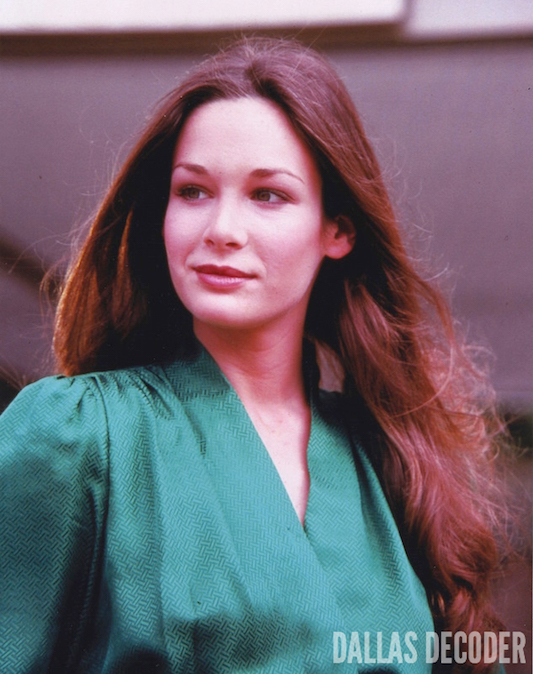
Dallas Decoder kicks off its newest periodic feature, “The Dal-List,” with a look back at the 13 most memorable moments featuring “Dallas” vixen Kristin Shepard, played by the magnificent Mary Crosby.
Dallas, Kristin Shepard, Mary Crosby, Rudy Millington, Terry Lester

Clothes call

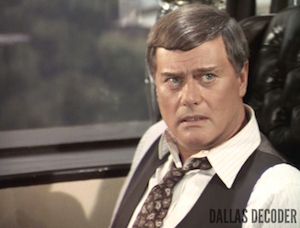
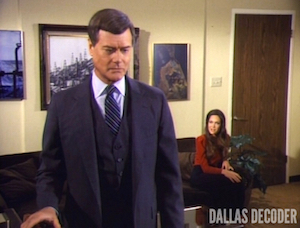
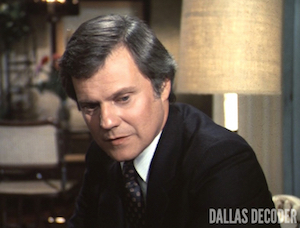
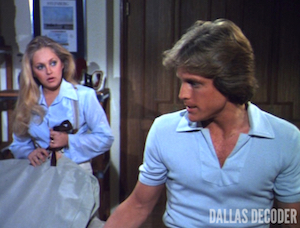
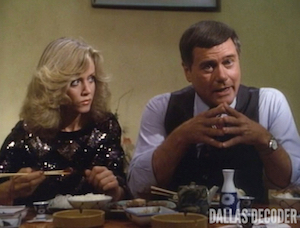
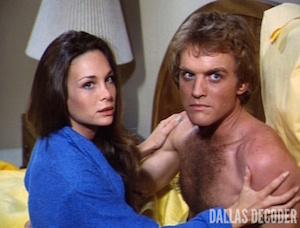
13. Leaving Rudy. Feeling neglected by J.R. (Larry Hagman), Kristin turned to old flame Rudy Millington (Terry Lester) – and for a moment, it looked like she was going to allow him to make an honest woman of her. Then J.R. showed up, interrupting their post coital bliss. Before this embarrassing scene was over, Kristin had chosen J.R., leaving poor Rudy with a broken heart, no job – and possibly no pants. (“Return Engagements”)
Conundrum, Dallas, Kristin Shepard, Mary Crosby

Of vice and men

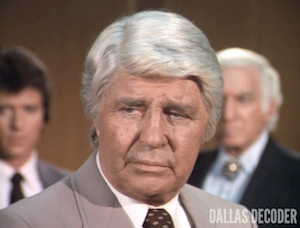
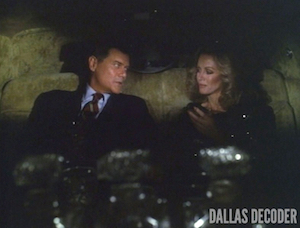
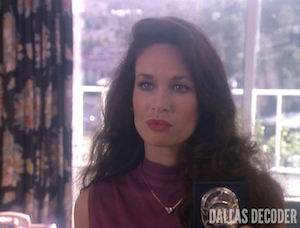
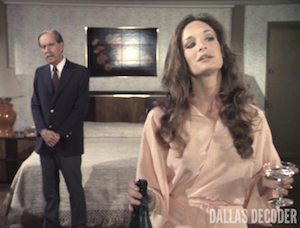
12. Scamming Judge Smith. A decade after Kristin’s death, an “angel” showed J.R. what life would have been like if he had never been born, including the revelation that Kristin became a cop. J.R. watched her bust grandfatherly Judge Smith (James T. Callahan) for solicitation – but it turned out the badge was fake: Kristin was really a con artist who preyed on powerful men. Guess she was destined to be bad. (“Conundrum”)
Dallas, Don Starr, Jordan Lee, Kristin Shepard, Mary Crosby

Daddy day scare

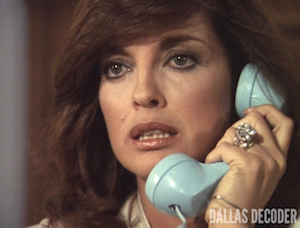
11. Bilking Jordan. After giving birth in California, Kristin sashays back to Dallas and makes a phone call. “The baby … looks just like you,” she coos. The audience is led to believe the person on the other end of the line is J.R. – so imagine our surprise when it turns out to be rival oilman Jordan Lee (Don Starr). It seems Kristin lied to Jordan, telling him he was her child’s father – just so she could bilk him for hush money. (“Full Circle”)
Bobby Ewing, Colleen Camp, Dallas, Kristin Shepard, Sue Ellen's Sister

Buckle up, Bob

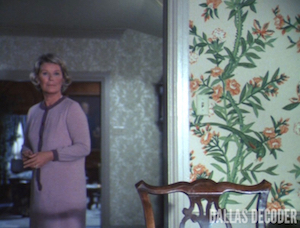
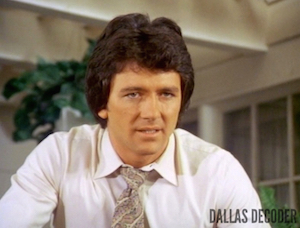
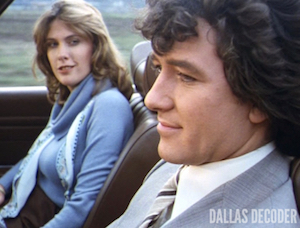
10. Charming Bobby. Kristin (Colleen Camp) paid her first visit to Southfork just as Bobby and Pam (Patrick Duffy, Victoria Principal) were hitting a rough patch – so J.R. naturally encouraged his wife’s little sister to seduce his baby brother. Kristin obliged, charming Bobby with her clever wit and tight sweaters. Then Bobby and Pam made up, leaving Kristin free to pursue the brother she wanted all along. (“Sue Ellen’s Sister”)
Dallas, Kristin Shepard, Mary Crosby, Power Play

See what develops

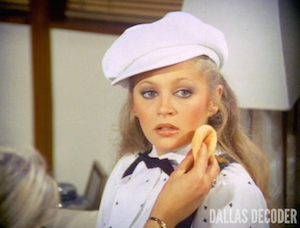
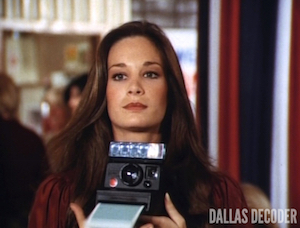
9. Exposing Lucy. The only person Kristin despised more than Lucy (Charlene Tilton) was J.R.’s protégé Alan Beam (Randolph Powell), so when Kristin saw Lucy and Alan canoodling at a roller disco, she did what came naturally: She reached for the nearest Polaroid and started snapping pictures. Kristin hoped exposing Lucy and Alan’s secret affair would get them in trouble. It didn’t work out that way, but it still caused lots of drama. (“Power Play”)
Dallas, Knots Landing, Krisitn Shepard, Joan Van Ark, Mary Crosby, Valene Ewing

Lap it up, Val

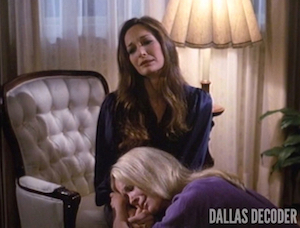
8. Befriending Val. After wearing out her welcome in Dallas, Kristin headed to Knots Landing, where she got busy wrecking the marriage of those nice young suburbanites, Kenny and Ginger Ward (James Houghton, Kim Lankford). Soon, Valene (Joan Van Ark) was confronting Kristin, who confessed she was pregnant and afraid for her future. It was a rare and moving glimpse into Kristin’s soul. Who knew she even had one? (“Kristin”)
Dallas, Kristin Shepard, Linda Gray, Mary Crosby, Silent Killer

Sister, sister

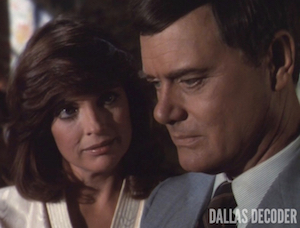
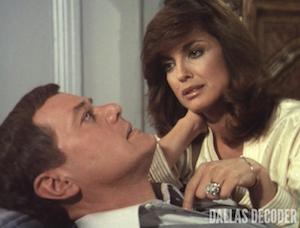
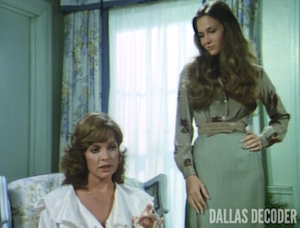
7. Taunting Sue Ellen. Sue Ellen (Linda Gray) was suffering major post-partum depression when Kristin started flirting with J.R. So you couldn’t blame big sis for being suspicious when Kristin popped into her bedroom one evening to see if she’d be joining the rest of the family for dinner. “Were you thinking of occupying my chair?” Sue Ellen seethed. “Somebody will if you don’t pull yourself together,” Kristin sneered. (“The Silent Killer”)
Dallas, Divorce Ewing Style, Kristin Shepard, Linda Gray, Mary Crosby, Sue Ellen Ewing

Spill life

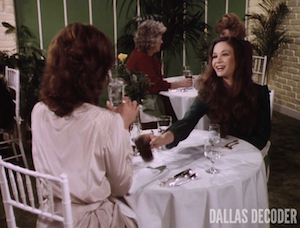
6. Drenching Sue Ellen. Oh, look: Sue Ellen and Kristin are in a posh restaurant, toasting their renewed friendship. Nice to see them getting along, isn’t it? Whoops, klutzy Kristin just spilled her cocktail in Sue Ellen’s lap. If she’s not careful, the Ewings are going to smell the booze and begin to suspect Sue Ellen has fallen off the wagon. Wait, what’s that you say? That was Kristin’s plan all along? What a hussy! (“Divorce, Ewing Style”)
Dallas, J.R. Ewing, Kristin Shepard, Larry Hagman, Mary Crosby

If smirks could kill

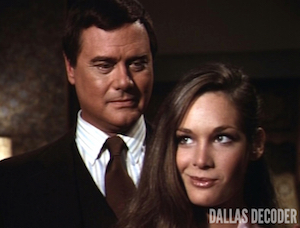
5. Seducing J.R. Once J.R. hired Kristin as his new secretary, it didn’t take her long to figure out his scheme to secretly mortgage Southfork. She threatened to spill the beans to Jock and Bobby – unless J.R. slept with her. Turns out she didn’t need to ask twice. “Kristin,” J.R. said as he took her in his arms, “with your mind and your body, it just might take me a lifetime to figure you out.” Cost him his life is more like it. (“The Kristin Affair”)
Dallas, Kristin Shepard, Mary Crosby, Nightmare

Move over, Florence Nightingale

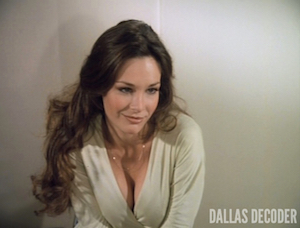
4. Mocking J.R. While recovering in the hospital from his shooting, J.R. was surprised to receive a visit from Kristin, who was still in town after his goons failed to run her off. “Don’t you worry, Kristin. When I get out of here, you’ll get yours,” J.R. warned. “I know I will,” she smirked as she looked his paralyzed body up and down. “But not from you. That’s for sure.” J.R.’s under-his-breath response after she left the room: “Bitch.” (“Nightmare”)
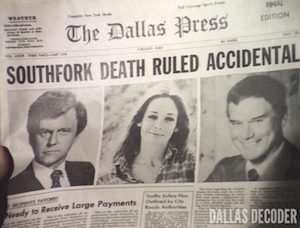
Cliff Barnes, Dallas, Gone But Not Forgotten, J.R. Ewing, Ken Kercheval, Kristin Shepard, Larry Hagman, Mary Crosby

Is it really that black and white?

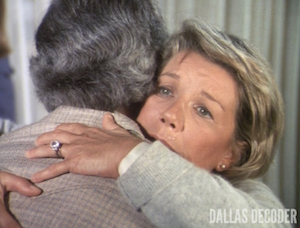
3. Scandalizing J.R. After giving birth to the son she claimed was J.R.’s, Kristin showed up at Southfork demanding more “child support.” Next thing you know, Cliff was fishing her dead body out of the swimming pool and claiming J.R. had murdered her. Before all was said and done, J.R. was being hauled into court to prove his innocence. Even in death, Kristin was still causing him trouble. That’s our girl! (“Gone But Not Forgotten”)
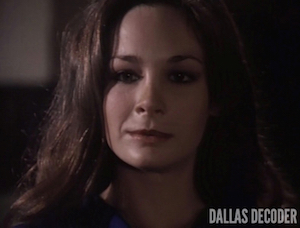
Dallas, Kristin Shepard, Mary Crosby, Who Done It?, Who Shot J.R.?

She bangs

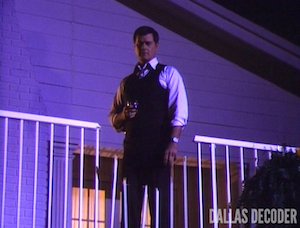
2. Shooting J.R. No one knew whodunit when J.R. was gunned down in his office. Then the weapon was discovered in his bedroom closet. The cops arrested Sue Ellen, who figured out Kristin was framing her and made little sister confess. Of course, Kristin had a get-out-of-jail card: She was pregnant with J.R.’s love child. Fed up with her drama, J.R. finally exiled Kristin to California. Too bad she didn’t stay there. (“Who Done It?”)
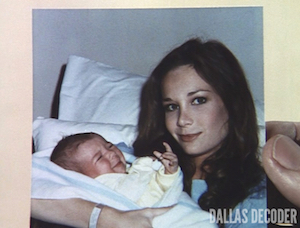
Dallas, Kristin Shepard, Mary Crosby

Wait ’til you see him grown up!

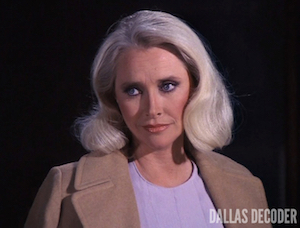
1. Birthing Christopher. OK, we never actually saw this on screen, but so what? After miscarrying J.R.’s baby, Kristin got pregnant by sleazy Jeff Farraday (Art Hindle), who sold their child, Christopher, to Bobby after Miss Shepard took her deadly dive into the Southfork swimming pool. So when you think about it, Kristin is responsible for giving us Jesse Metcalfe on TNT’s “Dallas.” If that’s not a crowning achievement, I don’t know what is.

What do you consider Kristin Shepard’s greatest moments? Share your choices below and read more “Dal-Lists.”
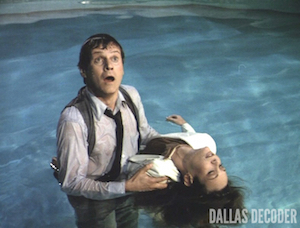
Critique: ‘Dallas’ Episode 78 – ‘Missing Heir’

Drowned and out

Drowned and out

In “Missing Heir,” “Dallas’s” fifth-season opener, we learn the dead woman floating in the Southfork swimming pool is Kristin, who notoriously shot J.R. one year earlier. This gives Mary Crosby the distinction of being the central figure in the two most-watched cliffhangers in “Dallas” history.

But “Who’s in the Pool?” proves much less satisfying than “Who Shot J.R.?” To begin with, there’s hardly any suspense here: It took “Dallas” four episodes to reveal Kristin as J.R.’s assailant, but she’s identified as the floating corpse just 65 seconds into “Missing Heir.” And while J.R.’s shooter could have plausibly turned out to be any number of suspects, was there ever any question who would turn out to be the brunette doing the dead woman’s float? (You didn’t really think it would be Sue Ellen or Pam, did you?)

The main reason I dislike this cliffhanger’s resolution is because killing off Kristin feels so shortsighted. The character appeared on “Dallas” for three seasons, and during that time she shifted effortlessly from ugly duckling kid sister to husband-stealing hussy to homicidal ex-mistress to con artist. Her death means the show has lost its most malleable character. What a shame.

Of course, “Missing Heir” isn’t a total washout. Having Cliff acknowledge the parallels between Kristin’s death and Julie Grey’s demise is a nice touch, and by dispensing so quickly with the cliffhanger’s resolution, the show is able to get down to the business of unspooling its fifth-season plot threads (even though one of them – Pam’s renewed obsession with having a baby – is a third-season retread).

“Missing Heir” also offers several nice examples of character development, including scenes where Afton comforts a heartbroken Mitch and Lucy and Donna each turn to Bobby for advice – presaging the wise head-of-the-family role Patrick Duffy does such a fine job filling on TNT’s “Dallas.” There’s also a moving moment where J.R., in a show of genuine compassion, breaks the news of Kristin’s death to Sue Ellen.

I also appreciate “Missing Heir’s” climax, when Sherriff Washburn suggests J.R. might be arrested for Kristin’s murder. I’m sure the “Dallas” producers don’t expect us to believe J.R. really killed his sister-in-law/ex-mistress, but isn’t it comforting to know Kristin is still capable of causing him trouble, even after she’s dead and gone?

Grade: B

_______________________________________________________________________________________________________________________________________________

Presumed guilty

Presumed guilty

‘MISSING HEIR’

Season 5, Episode 1

Airdate: October 9, 1981

Audience: 26 million homes, ranking 1st in the weekly ratings

Writer: Arthur Bernard Lewis

Director: Irving J. Moore

Synopsis: The police question J.R. after Kristin’s dead body is discovered in the Southfork swimming pool. Sue Ellen, who now lives with John Ross at the Farlows’ Southern Cross ranch, rejects J.R.’s plea to come home. Pam’s mood swings worry Bobby. Donna frets over Ray’s burgeoning business career. Lucy tells Mitch their marriage is over.

Cast: Barbara Babcock (Liz Craig), James L. Brown (Harry McSween), Barry Corbin (Sherriff Fenton Washburn), Mary Crosby (Kristin Shepard), Patrick Duffy (Senator Bobby Ewing), Linda Gray (Sue Ellen Ewing), Larry Hagman (J.R. Ewing), Susan Howard (Donna Krebbs), Harlan Jordan (Sheriff Bull Hawkins), Steve Kanaly (Ray Krebbs), Sherril Lynn Katzman (Jackie), Howard Keel (Clayton Farlow), Ken Kercheval (Cliff Barnes), Audrey Landers (Afton Cooper), Bill Lucking (Deputy Matland), Jared Martin (Dusty Farlow), Leigh McCloskey (Mitch Cooper), Priscilla Pointer (Rebecca Wentworth), Victoria Principal (Pam Ewing), Herbert Rudley (Howard Barker), Charlene Tilton (Lucy Cooper), Deborah Tranelli (Phyllis)

“Missing Heir” is available on DVD and at Amazon.com and iTunes. Watch the episode and share your comments below.

The Best & Worst of Dallas: Season 4

“Dallas’s” fourth season was the show’s most-watched. Is it also the best?

Performances

Dallas, J.R. Ewing, Larry Hagman

Lows and highs

In Season 4, J.R. recovers from an assassination attempt, learns to walk again and suffers a humiliating exile from Ewing Oil. Through it all, Larry Hagman never misses a beat. The actor takes us deeper into J.R.’s psyche, revealing vulnerabilities we never dreamed the character was capable of. If you love Hagman’s complex performance on TNT’s “Dallas,” re-watch the classic show’s fourth season. This is where those seeds are planted.

Storylines

Dallas, J.R. Ewing, Larry Hagman, Leslie Stewart, Susan Flannery

Blonde ambition

“Who Shot J.R.?” turned “Dallas” into a global phenomenon, so you might expect the show to spend Season 4 playing it safe. Instead, it takes a creative risk by tackling sexism. This theme is best personified by pioneering PR whiz Leslie Stewart, but the gender wars are also seen when Miss Ellie calls out chauvinistic Jock, Lucy gets a career and Donna emerges as the top choice for a state senate seat. Who says “Dallas” isn’t progressive?

Season 4’s weakest subplot: Mr. Ewing goes to Austin. I love the idea of “Dallas” delving into politics, but Bobby’s conduct as a member of the state senate strains credibility. Shouldn’t Senator Ewing have recused himself from the legislature’s hearings into his parents’ fight over the Takapa Lake development – or its inquiry into J.R.’s foreign affairs? Where’s an ethics committee when you need one?

Episodes

Dallas, Jim Davis, Jock Ewing, Ray Krebbs, Steve Kanaly

Here comes the son

“The Fourth Son” is one of the finest hours of “Dallas” ever made. The episode, beautifully written by Howard Lakin (his first script for the show) and directed by Irving J. Moore, officially brings Ray into the Ewing fold and reminds us why Jock is such a revered figure in the “Dallas” mythos. Father-son relationships are integral to “Dallas” – especially on the TNT series – and no episode explores that theme better than this one.

To demonstrate how uneven episodic television can be, one week after “The Fourth Son” debuted, “Dallas” gave us “Trouble at Ewing 23,” which is easily my least-favorite Season 4 entry. I never know what’s worst: the cringe-inducing special effects when the oil field goes up in flames – or the fact Luther Gillis sheds not a single drop of blood after J.R.’s hired guns pump him full of lead.

Scenes

Dallas, J.R. Ewing, Larry Hagman, Linda Gray, Sue Ellen Ewing

Scene from a marriage

How do you know when a “Dallas” scene is classic? When you only need one or two lines of dialogue to describe it. By that standard, the show’s fourth year probably offers more great moments than any other season: “It was you, Kristin, who shot J.R.” “He’s not your daddy. I am.” “You are my mother.” “Real power is something you take.” “Don’t make me see myself in your eyes.” “Mama, you didn’t take any licorice.”

Any one of these scenes qualifies for “best of” honors, but my sentimental favorite remains the “New Beginnings” moment when J.R. and Sue Ellen reminisce about their courtship. Next to J.R. and Bobby’s sibling rivalry, J.R. and Sue Ellen’s love affair is “Dallas’s” most enduring relationship. If you want to understand why these two can’t stay away from each other, watch this scene.

Supporting Players

Dallas, Leslie Stewart, Susan Flannery

Pioneer woman

No surprise here: I love Leslie. The oh-so-cool Susan Flannery was the ideal choice to play the character, whose business savvy, scheming ways and unapologetic sexuality make her J.R.’s equal and the template for prime-time divas like Abby Cunningham and Alexis Carrington. “Dallas’s” writers seemed to lose interest in Leslie after awhile, but before her storyline peters out, no character in Season 4 is more fascinating.

At the other end of the spectrum lie Alex Ward and Clint Ogden, the utterly forgettable characters who romance Pam and Sue Ellen during the second half of the season. Don’t blame Joel Fabiani and Monte Markham, who are both fine actors; blame the writers, who colored Alex and Clint in shades of plain vanilla.

Costumes

As much as I love the iconic dresses Sue Ellen wears in “Who Done It?,” nothing compares to Jock’s lion’s head medallion, the perfect accessory to symbolize Jim Davis’s role as father of the Ewing pride.

Some might consider Pam’s perm to be Season 4’s worst fashion choice – but those people are wrong because that ’do is awesome.

Quips

Best: “If you were on the side of the angels, you wouldn’t need Leslie Stewart.” – Leslie’s droll observation during the well-written scene where she persuades J.R. to hire her.

Worst: “My own son, letting some little no-account alley cat swing you by your big toe.” – The most memorable line during the tongue-lashing Jock gives J.R. after Leslie costs Ewing Oil a big deal. Watch it, Jock! That’s our Leslie you’re talking about.

What do you love and loathe about “Dallas’s” fourth season? Share your comments below and read more “Best & Worst” reviews.

Critique: ‘Dallas’ Episode 77 – ‘Ewing-Gate’

He done it?

He done it?

In “Ewing-Gate,” J.R. finally beds hard-to-get Leslie Stewart, but the experience turns out to be less than he expected. “It wasn’t worth the wait,” J.R. tells her in a flash of post coitus candor. After watching this episode, I know how he feels.

Although “Dallas’s” fourth season is much better than I remembered overall, the “Ewing-Gate” finale is a letdown – and the resolution to Leslie’s storyline is one reason why. Susan Flannery’s midseason debut was smashing, but somewhere along the line, the show’s writers seemed to lose interest in her character. This is a real shame: Leslie’s combination of business smarts and unapologetic sexuality made her a television breakthrough; she deserved a better sendoff.

“Ewing-Gate” has other flaws, including the scene where J.R. is hauled before the state senate committee investigating his Asian coup. It’s not just the ridiculous notion that the Texas legislature has jurisdiction over what happens in a foreign country. Or that Bobby wouldn’t be asked to recuse himself from a hearing into his brother’s activities. Or that Cliff, Bobby’s aide, would be allowed to sit on the panel and question the witnesses.

No, it’s also the length of this scene: It clocks in at a little more than 13 minutes – consuming almost the whole third act. Perhaps audiences found this more interesting in the years after Watergate, when televised government hearings were still a novelty, but the scene plays today like “Bad C-SPAN Theatre.” (Along these lines, “Ewing-Gate’s” title probably seemed clever three decades ago, before the press wore out the practice of attaching “gate” to every scandal.)

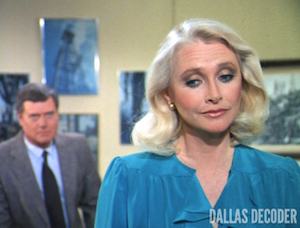
More gripes: “Ewing-Gate” marks the first time Kristin faces J.R. since she confessed to shooting him at the beginning of the season – yet their eagerly awaited reunion is flat. Also, even though the confrontation occurs in J.R.’s office, no one bothers to note this is Kristin’s return to the scene of the crime. Not giving Mary Crosby and Linda Gray a scene together represents another missed opportunity.

My biggest “Ewing-Gate” complaint has to do with the episode’s final sequence, when Cliff discovers the dead woman’s body in the Southfork swimming pool. Although the scene is nicely produced – thanks in large measure to Richard Lewis Warren’s driving score – the cliffhanger feels like something the producers tacked on at the last minute. The contrast couldn’t be sharper with the previous season finale, “A House Divided,” which rhythmically built toward J.R.’s climactic shooting.

And is there any doubt whose body Cliff discovers? The woman’s dark hair suggests it could be one of three characters – Sue Ellen, Pam or Kristin – yet even when I saw “Ewing-Gate” as a child, I was smart enough to know two of those suspects could be ruled out. While watching the episode more recently, I also noticed the unfamiliar car in the Southfork driveway when Cliff arrives – another clue the victim floating in the pool a few feet away is a visitor to the ranch.

So even though I appreciate the nifty symmetry this episode offers – one year after “Dallas” leaves us asking who shot J.R., we’re left to ponder who J.R. might’ve killed – there’s no denying the fact “Ewing-Gate” isn’t a cliffhanger as much as it is an exercise in poetic justice.

Grade: B

_______________________________________________________________________________________________________________________________________________

Together again

Together again

‘EWING-GATE’

Season 4, Episode 23

Airdate: May 1, 1981

Audience: 25.6 million homes, ranking 1st in the weekly ratings

Writer and Director: Leonard Katzman

Synopsis: Afton helps J.R. sneak a peek at Cliff’s evidence against him, allowing J.R. to persuade the state senate to clear him of wrongdoing in the Asian coup. J.R. also sleeps with Leslie, refuses to give into Kristin’s extortion scheme, kicks Sue Ellen off Southfork and vows revenge when Pam takes John Ross to his mother. Cliff arrives at the ranch and finds a dead woman floating in the swimming pool.

Cast: Tyler Banks (John Ross Ewing), Barbara Bel Geddes (Miss Ellie Ewing), Len Birman (Claude Brown), William Boyett (Gibson), James L. Brown (Harry McSween), Mary Crosby (Kristin Shepard), Patrick Duffy (Senator Bobby Ewing), Fern Fitzgerald (Marilee Stone), Susan Flannery (Leslie Stewart), Tom Fuccello (Senator Dave Culver), Meg Gallagher (Louella), Linda Gray (Sue Ellen Ewing), Larry Hagman (J.R. Ewing), John Hart (Senator Carson), David Healy (Senator Harbin), James Hong (Ambassador Lanh Thon), Susan Howard (Donna Krebbs), Steve Kanaly (Ray Krebbs), Sherril Lynn Katzman (Jackie), Howard Keel (Clayton Farlow), Ken Kercheval (Cliff Barnes), Audrey Landers (Afton Cooper), Jared Martin (Dusty Farlow), Leigh McCloskey (Mitch Cooper), Byron Morrow (Emmett Walsh), Victoria Principal (Pam Ewing), William Smithers (Jeremy Wendell), Don Starr (Jordan Lee), Charlene Tilton (Lucy Cooper), Deborah Tranelli (Phyllis), Jay Varela (Senator Arvilla), Joseph Warren (Senator Dickson), Morgan Woodward (Punk Anderson)

“Ewing-Gate” is available on DVD and at Amazon.com and iTunes. Watch the episode and share your comments below.

Critique: ‘Dallas’ Episode 76 – ‘Full Circle’

Look Mom, no grudges

Look Mom, no grudges

The famous scene from “Full Circle” – when Cliff tearfully offers his estranged mother a bowl of licorice, her favorite candy – is one of my earliest “Dallas” memories. I was 7 when this episode debuted, and I remember watching it and feeling sorry for Cliff. All these years later, the moment still moves me.

Ken Kercheval has called Cliff and Rebecca’s reconciliation his favorite “Dallas” scene, and it’s easy to see why he likes it. Kercheval is always fascinating to watch, but during the course of this four-and-a-half-minute sequence, he’s called upon to convey a whole spectrum of emotion: from nervousness to rage to mercy. The actor hits every note with precision.

The most impressive part of Kercheval’s performance might be how he seems to avoid looking at Priscilla Pointer. When I interviewed Kercheval in the summer, he talked about another of his favorite scenes – this one with Barbara Bel Geddes – and mentioned how helpful it is for actors to maintain eye contact so they can take “cues” from each other. Kercheval doesn’t appear to do that with Pointer during the “licorice scene.” This probably made the performance more challenging, but it lends the scene power. Seeing how difficult it is for Cliff to look Rebecca in the eye helps us realize how hard it is for him to face the truth about her shortcomings.

Michael Preece’s direction here is terrific – I especially like how he has Kercheval jump to his feet when Cliff calls out Rebecca’s sins – as well as Bruce Broughton’s lush score, which swells when mother and son finally embrace.

Then there’s Arthur Bernard Lewis’s clever dialogue. At the end of the scene, Lewis could have given Kercheval a straightforward line to signal Cliff’s last-minute change of heart – something like, “Wait, Mom, don’t go” – but instead, Lewis has Cliff offer her the licorice. Why? I think the line achieves two things: Having Cliff refer to candy – something so closely associated with childhood – reminds us how long it’s been since he last saw Rebecca. More importantly, the licorice symbolizes how Cliff in many ways is still the wounded little boy whose mother abandoned him.

If any other character was given a line like this (imagine J.R. or Bobby saying it), it might seem childish, but with Cliff, it’s flat-out moving. Cliff is the most revenge-prone character in “Dallas” history, yet for once in his life, he’s willing to set aside his animus. This is a moment of genuine growth for Cliff.

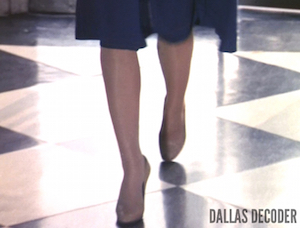
I also love the “Full Circle” sequence where Preece’s camera follows Mary Crosby’s legs as Kristin marches across a hotel lobby to Bruce Broughton’s jaunty score. This is a fun scene, but it’s also a little prophetic: The confidence in Crosby’s stride makes her look buoyant – and as we now know, this won’t be the last time we see Kristin float.

Grade: A

_______________________________________________________________________________________________________________________________________________

Walk to remember

Walk to remember

‘FULL CIRCLE’

Season 4, Episode 22

Airdate: April 17, 1981

Audience: 24.4 million homes, ranking 1st in the weekly ratings

Writer: Arthur Bernard Lewis

Director: Michael Preece

Synopsis: Cliff forgives Rebecca and presents Bobby’s committee with evidence linking J.R. to the counter-revolution in Asia. Kristin returns and extorts money from Jordan Lee, who believes he is the father of her newborn son. Sue Ellen runs into Dusty, who is learning to walk again. Pam is devastated to learn she cannot bear children. Lucy leaves Mitch.

Cast: Tyler Banks (John Ross Ewing), Barbara Bel Geddes (Miss Ellie Ewing), Ellen Bry (Jean), Gerald Castillo (Luis Hernandez), Mary Crosby (Kristin Shepard), Patrick Duffy (Senator Bobby Ewing), Susan Flannery (Leslie Stewart), Meg Gallagher (Louella), Linda Gray (Sue Ellen Ewing), Larry Hagman (J.R. Ewing), John Hart (Senator Carson), David Healy (Senator Harbin), Susan Howard (Donna Krebbs), Steve Kanaly (Ray Krebbs), Sherril Lynn Katzman (Jackie), Ken Kercheval (Cliff Barnes), Jared Martin (Dusty Farlow), Leigh McCloskey (Mitch Cooper), Priscilla Pointer (Rebecca Wentworth), Victoria Principal (Pam Ewing), John Randolph (Lincoln Hargrove), William Smithers (Jeremy Wendell), Don Starr (Jordan Lee), Christopher Stone (Dave Stratton), Charlene Tilton (Lucy Cooper), Jay Varela (Senator Arvilla), Joseph Warren (Senator Dickson), Morgan Woodward (Punk Anderson)

“Full Circle” is available on DVD and at Amazon.com and iTunes. Watch the episode and share your comments below.

Critique: ‘Dallas’ Episode 75 – ‘New Beginnings’

War and remembrance

War and remembrance

Sometimes “Dallas” is more than entertaining – it’s damn near magical. This happens when everything that goes into making the show – the writing, the acting, the music and so on – comes together in ways that are so pitch-perfect, you can’t help but feel you’re witnessing something special. The final scene in “New Beginnings” is one of these moments.

It begins when J.R. comes home late and finds Sue Ellen asleep in John Ross’s darkened nursery, having dozed off while rocking him. She awakens and helps J.R. put the boy in his crib, and then the couple moves into their bedroom, where they reminisce about their courtship.

The exchange that follows is extraordinary. J.R. and Sue Ellen spend much of their lives at war with each other, but in this scene we finally see them take off their armor, which director Irving J. Moore symbolizes by putting Linda Gray in a bathrobe and having Larry Hagman remove his suit jacket and necktie as they deliver their dialogue.

The conversation itself, written by Arthur Bernard Lewis, paints a lovely picture of what J.R. and Sue Ellen were like when their love was new. With Richard Lewis Warren’s soft piano music playing in the background, we listen to J.R. describe seeing Sue Ellen for the first time, during the Miss Texas beauty pageant, and we envision how poised she must have looked on that stage. We then hear Sue Ellen recall how “frightened” she was when J.R. brought her to Southfork to meet Jock and Miss Ellie, and we imagine a sweeter, shyer Sue Ellen walking into that big house on the arm of a younger, beaming J.R.

Lewis’s dialogue is also poetic in the way it captures the unique qualities Hagman and Gray bring to their roles. Here’s how Sue Ellen remembers J.R.’s eyes: “They always seemed to be hiding secrets. Things you knew about the world that no one else knew.” And here’s how he recalls her beauty pageant performance: “All those pretty young girls were prancing around and trying to look sexy. And then, there you were, Sue Ellen. Not trying to do anything. Just looking more sexy than any of them. And you had something else. You looked like a lady.” Have better descriptions of these characters ever been written?

It’s also worth considering the context in which J.R. and Sue Ellen’s conversation takes place. Earlier in “New Beginnings,” J.R. visits Leslie’s apartment, where he vows to end his marriage so he can make Leslie his new wife. “I’m filing against Sue Ellen,” he says. Do hearing the words aloud prompt the nostalgic wave that engulfs J.R. at the end of the episode?

And what is Sue Ellen’s frame of mind at the end of “New Beginnings”? In the episode’s first act, Clint’s wife Alisha tells Sue Ellen she is willing to share her husband if that’s what it takes to hold onto him. The conversation leads a guilty Sue Ellen to break up with Clint, but does Alisha’s devotion also inspire Sue Ellen to give her own marriage another chance?

This is what makes the final moments of “New Beginnings” so heartbreaking. Just when it seems like J.R. and Sue Ellen are about to reignite their old spark, the phone rings. She answers and after hearing the voice on the other end, we see her face fall and her posture stiffen. “It’s Kristin, calling from California,” Sue Ellen announces somberly. “She just gave birth to a baby boy. You have another son.”

What a punch to the gut! The words remind us that the past doesn’t just hold memories for J.R. and Sue Ellen to cherish – it also holds mistakes that will haunt them forever.

Grade: A

_______________________________________________________________________________________________________________________________________________

Wake-up call

Wake-up call

‘NEW BEGINNINGS’

Season 4, Episode 21

Airdate: April 10, 1981

Audience: 23.3 million homes, ranking 1st in the weekly ratings

Writer: Arthur Bernard Lewis

Director: Irving J. Moore

Synopsis: Jock and Miss Ellie depart for a second honeymoon. Sue Ellen ends her affair with Clint after his wife confronts her. Jeremy vows revenge when J.R. backs out of his promise to sell him Ewing Oil. Cliff sleeps with Afton and pumps her for information about J.R. Kristin calls Sue Ellen and tells her she’s given birth to J.R.’s son.

Cast: Tyler Banks (John Ross Ewing), Barbara Bel Geddes (Miss Ellie Ewing), Stephanie Braxton (Alisha Ogden), Jim Davis (Jock Ewing), Richard Derr (Howard), Patrick Duffy (Senator Bobby Ewing), Susan Flannery (Leslie Stewart), Meg Gallagher (Louella), Linda Gray (Sue Ellen Ewing), Larry Hagman (J.R. Ewing), Susan Howard (Donna Culver Krebbs), Steve Kanaly (Ray Krebbs), Sherril Lynn Katzman (Jackie), Ken Kercheval (Cliff Barnes), Audrey Landers (Afton Cooper), Monte Markham (Clint Ogden), Leigh McCloskey (Mitch Cooper), Priscilla Pointer (Rebecca Wentworth), Victoria Principal (Pam Ewing), William Smithers (Jeremy Wendell), Craig Stevens (Greg Stewart), Christopher Stone (Dave Stratton), Charlene Tilton (Lucy Cooper), Morgan Woodward (Punk Anderson)

“New Beginnings” is available on DVD and at Amazon.com and iTunes. Watch the episode and share your comments below.

Critique: ‘Dallas’ Episode 74 – ‘Ewing vs. Ewing’

Davis rules

Davis rules

Jim Davis makes his last appearance as Jock in “Dallas’s” 75th hour, “New Beginnings,” but it’s more of a cameo than anything else. His final, “real” performance comes at the end of “Ewing vs. Ewing,” and no matter how many times I watch it, it never fails to move me.

Davis was diagnosed with inoperable cancer during the show’s fourth season, and when you watch these episodes, you can see him physically deteriorate, bit by bit. By the time “Ewing vs. Ewing” was filmed, the actor’s face had puffed up and his voice had been reduced to a rasp. It’s painful to witness.

Yet it’s also damned inspiring. Davis famously soldiered on despite his illness, and producer Leonard Katzman allowed him to continue to play Jock because he knew it was important to keep the actor’s spirits up. Barbara A. Curran’s book “Dallas: The Complete Story of the World’s Favorite Prime-Time Soap” includes an anecdote about how Katzman even gave Davis a peek at the scripts being prepared for the fifth season, just so the actor could see Jock would still be part of the show.

Of course, Jock never appeared during Season 5. Davis died 23 days after the broadcast of “Ewing vs. Ewing,” an uneven episode (Bobby’s use of “personal funds” to settle his senate committee’s debate over the Takapa project is an eye-roller) that nonetheless remains a sentimental favorite on the basis of that touching final scene, when Jock and Miss Ellie finally reconcile after spending half the season at war.

My favorite moment comes when Ellie admits she’s treated Jock unfairly and asks if he can forgive her. Davis delivers Jock’s response (“Nothing to forgive.”) with the same tender conviction he memorably exhibited during the third-season “Mastectomy” episodes.

Barbara Bel Geddes, who is absolutely perfect throughout “Ewing vs. Ewing” and especially in this final scene, gets the episode’s last line – “I love you, Jock” – and as I watch her deliver it, I have no doubt the tears in her eyes are real. I also know Bel Geddes isn’t just speaking for her character. She’s speaking for all of us.

Grade: B

_______________________________________________________________________________________________________________________________________________

Hug it out, Mama

Hug it out, Mama

‘EWING VS. EWING’

Season 4, Episode 20

Airdate: April 3, 1981

Audience: 23.3 million homes, ranking 2nd in the weekly ratings

Writer: Leah Markus

Director: Irving J. Moore

Synopsis: Bobby forges a compromise in the Takapa fight. Jock and Miss Ellie reconcile. J.R. continues his plann to sell Ewing Oil to Wendell. Cliff meets Afton and Pam tells him their mother is alive.

Cast: Tyler Banks (John Ross Ewing), Cherie Beasley (Tootie Smith), Barbara Bel Geddes (Miss Ellie Ewing), Jim Davis (Jock Ewing), Patrick Duffy (Senator Bobby Ewing), Susan Flannery (Leslie Stewart), Meg Gallagher (Louella), Linda Gray (Sue Ellen Ewing), Larry Hagman (J.R. Ewing), John Hart (Senator Carson), Morgan Hart (Jenny Smith), David Healy (Senator Harbin), Susan Howard (Donna Krebbs), Steve Kanaly (Ray Krebbs), Sherril Lynn Katzman (Jackie), Ken Kercheval (Cliff Barnes), Audrey Landers (Afton Cooper), Monte Markham (Clint Ogden), Leigh McCloskey (Mitch Cooper), George O. Petrie (Harv Smithfield), Priscilla Pointer (Rebecca Wentworth), Victoria Principal (Pam Ewing), John Randolph (Lincoln Hargrove), William Smithers (Jeremy Wendell), Craig Stevens (Greg Stewart), Christopher Stone (Dave Stratton), Charlene Tilton (Lucy Cooper), Jay Varela (Senator Arvilla), Joseph Warren (Senator Dickson), Morgan Woodward (Punk Anderson)

“Ewing vs. Ewing” is available on DVD and at Amazon.com and iTunes. Watch the episode and share your comments below.

Critique: ‘Dallas’ Episode 73 – ‘The Gathering Storm’

Scene from a marriage

Scene from a marriage

I’ve always considered Charlene Tilton one of “Dallas’s” charismatic actresses, although I haven’t always been a fan of her character. In “The Gathering Storm,” Lucy stands up for herself in the face of husband Mitch’s sexism, which makes me want to stand up and cheer her on. This episode makes me love Lucy.

The character’s big moment comes in the second act, when Lucy comes home late after a lengthy photo shoot. Mitch is angry, not so much because his wife missed dinner, but because she now brings home a bigger paycheck than him.

“It’s not my money, and it’s not your money. It’s ours,” Lucy says. “What difference does it make who earns it?”

“It makes all the difference in the world,” Mitch snaps.

This is “The Gathering Storm’s” best scene, thanks to Tilton and Leigh McCloskey’s convincing performances and scriptwriter Robert J. Shaw’s realistic dialogue. Lucy and Mitch’s argument sounds like the kind of fight a real-life couple might have had in the early 1980s, when more women were moving into the work force and men like Mitch were learning to adjust.

I’m pretty sure “Dallas” wants us to “side” with Lucy during the argument, although the show goes out of its way to not vilify Mitch’s sexist attitude. In one scene, he says the reason he and Lucy are fighting is because they have “totally different values.” That’s true, but casting the character’s chauvinism as a “value” makes it seem nobler than it deserves.

Still, the dissolution of Mitch and Lucy’s marriage feels credible, based on what we know about these characters. This is true for Jock and Miss Ellie too. It’s difficult to watch them argue in “The Gathering Storm,” but I believe Ellie when she says she’s tired of Jock’s lack of sensitivity, just like I believe him when he expresses his frustration with her stubborn idealism.

Of course, the sadness I feel seeing Jock and Ellie separate is nothing compared to the pain that comes from watching Jim Davis’s performance in “The Gathering Storm.” The cancer-stricken actor’s health was deteriorating when this episode was filmed – and it shows. Like this episode’s title suggests, dark clouds are moving over “Dallas,” and not just in front of the camera.

Grade: B

_______________________________________________________________________________________________________________________________________________

Runaway husband

Runaway husband

‘THE GATHERING STORM’

Season 4, Episode 19

Airdate: March 27, 1981

Audience: 25 million homes, ranking 1st in the weekly ratings

Writer: Robert J. Shaw

Director: Michael Preece

Synopsis: The Takapa fight continues: Jock moves out of Southfork and J.R. offers to sell the company to rival oil baron Jeremy Wendell to prevent it from being dragged into his parents’ looming divorce. Cliff begins snooping into the counter-revolution in Asia and receives a visit from Rebecca, who doesn’t reveal she’s his mother.

Cast: Tyler Banks (John Ross Ewing), Cherie Beasley (Tootie Smith), Barbara Bel Geddes (Miss Ellie Ewing), Ellen Bry (Jean Hallinan), Jim Davis (Jock Ewing), Patrick Duffy (Senator Bobby Ewing), Susan Flannery (Leslie Stewart), Linda Gray (Sue Ellen Ewing), Larry Hagman (J.R. Ewing), Morgan Hart (Jenny Smith), Susan Howard (Donna Krebbs), Steve Kanaly (Ray Krebbs), Ken Kercheval (Cliff Barnes), Audrey Landers (Afton Cooper), Monte Markham (Clint Ogden), Leigh McCloskey (Mitch Cooper), Hortense Petra (Maggie) Priscilla Pointer (Rebecca Wentworth), Victoria Principal (Pam Ewing), William Smithers (Jeremy Wendell), Christopher Stone (Dave Stratton), Charlene Tilton (Lucy Cooper), Deborah Tranelli (Phyllis)

“The Gathering Storm” is available on DVD and at Amazon.com and iTunes. Watch the episode and share your comments below.

Critique: ‘Knots Landing’ Episode 30 – ‘Designs’

Stick it to him

Stick it to him

In “Designs,” J.R. once again visits “Knots Landing” and once again, the results are disappointing. These crossover episodes are almost never as good as they should be.

On paper, occasionally sending “Dallas” characters to Seaview Circle makes perfect sense. “Dallas” was television’s most-watched series in the early 1980s, when “Knots Landing” was still struggling to find an audience. CBS, the network that aired both shows, probably encouraged the “Knots Landing” producers to make room for “Dallas” characters a few times each season to goose the spinoff’s ratings.

Since Bobby and Lucy are on friendly terms with “Knots Landing’s” Gary and Valene, it was plausible to have them show up in the cul-de-sac from time to time. But J.R. despises his Southern California relatives, which meant the “Knots Landing” writers had to keep coming up with excuses to bring him to town.

In “Designs,” J.R. offers to patent the cleaner car engine Sid Fairgate has been developing in his spare time. Yes, J.R. does business with part-time garage inventors. This surprises you?

To be fair, Diana Gould and Robert W. Gilmer’s script has J.R. tell Sid’s wife Karen he’s interested in the engine because “money is money. I don’t care whether it comes from burning oil or saving it.” It seems more likely J.R. wants to seize Sid’s project so he can kill it, but this is never made clear. I don’t mind a little ambiguity now and then, but since car engines are so far outside J.R.’s realm, it would be nice to have a better idea of what he’s up to.

The script also requires J.R. to spend almost all his time with the Fairgates, whom he barely knows and who aren’t exactly his kind of people to begin with. “Designs” also offers several scenes between J.R. and Sid’s scheming sister Abby, and like J.R. and Abby’s scenes in “A Family Matter,” their “Designs” alliance isn’t as much fun as you might expect. Donna Mills and Larry Hagman make a fine couple, but I’d still rather see J.R. fight with Val than fawn over Abby. Unfortunately, Hagman and Joan Van Ark share no scenes in this episode. Talk about your missed opportunities.

Given how much I love Hagman’s “Knots Landing” debut in the first-season episode “Community Spirit,” I’m as surprised as anyone to find his subsequent visits so lacking. For J.R., maybe one trip out west was enough.

Grade: C

_______________________________________________________________________________________________________________________________________________

Backseat affair

Backseat affair

‘DESIGNS’

“Knots Landing” Season 2, Episode 17

Airdate: March 26, 1981

Audience: 16.3 million homes, ranking 18th in the weekly ratings

Writers: Diana Gould and Robert W. Gilmer

Director: Nicholas Sgarro

Synopsis: Sid rejects J.R.’s offer to patent his design for a cleaner car engine. Abby sneaks a copy of the design to J.R., but she makes him sign a contract that protects her brother’s interest in the project. J.R. and Abby consummate their deal by having sex.

Cast: Tonya Crowe (Olivia Cunningham), Larry Hagman (J.R. Ewing) James Houghton (Kenny Ward), Bobby Jacoby (Brian Cunningham), Barry Jenner (Jeff Cunningham), Kim Lankford (Ginger Ward), Michele Lee (Karen Fairgate), Claudia Lonow (Diana Fairgate), Constance McCashin (Laura Avery), Donna Mills (Abby Cunningham), Don Murray (Sid Fairgate), John Pleshette (Richard Avery), Arthur Rosenberg (Dr. Harper), Ted Shackelford (Gary Ewing), Steve Shaw (Eric Fairgate), Joan Van Ark (Valene Ewing), John Volstad (bellhop)

Watch “Designs” on DVD and share your comments below.

Critique: ‘Dallas’ Episode 72 – ‘The Mark of Cain’

Mr. Ethics

Mr. Clean

In the Bible, God physically marks Cain to warn the world of the man’s sinful nature. In “The Mark of Cain,” Bobby discovers he bears a similar – albeit metaphorical – stain when his new colleagues in the state senate wonder if his family ties will compromise his integrity.

Bobby is assigned to the senate committee that will decide the fate of the proposed development at Takapa Lake, a project that has divided the Ewings. Jock and Ray are investors in the development, while Miss Ellie and Donna are leading the fight to preserve the land.

At first blush, it might seem unfair for Bobby’s fellow senators to be suspicious of him, but let’s face it: Senator Ewing has a glaring conflict of interest. In real life, there’s no way he would be permitted to be involved with any Takapa-related dealings in the statehouse. But this is “Dallas,” so Bobby refuses to recuse himself, casting his decision as an example of his Capra-esque idealism. “I promised the people in my district that I’d represent them. I’m not going to back out of this committee just because it’s unpleasant,” Senator Ewing tells his colleagues.

Despite this credibility stretch, Bobby’s move into politics shows promise. His new role as a senator plops him in the middle of the Takapa storyline, one of the most sweeping narratives in “Dallas” history. Several major characters are now involved in the fight over the project (interestingly, J.R. isn’t one of them), which allows “Dallas” to return to one of its most resilient themes: the conflict between conservation and capitalism.

I’m also happy to see Lucy experience some professional success in “The Mark of Cain.” Her new modeling gig makes her seem more adult and adds strain to her marriage to Mitch, a storyline I appreciate more now than I did when I watched “Dallas” in my youth.

Of course, it’s worth noting Lucy gets the job mainly because she’s a Ewing. So like Uncle Bobby, she also bears the mark of Cain – but for her, it isn’t a curse.

Grade: B

_______________________________________________________________________________________________________________________________________________

Model wife

Model wife

‘THE MARK OF CAIN’

Season 4, Episode 18

Airdate: March 6, 1981

Audience: 25.1 million homes, ranking 1st in the weekly ratings

Writer: Leah Markus

Director: Larry Hagman

Synopsis: Bobby is assigned to the senate committee that will decide the fate of the Takapa project and resists pressure to quit the post. Jock and Ellie continue fighting. Leslie tells J.R. she wants him, but only after he divorces Sue Ellen. Rebecca, now widowed, moves to Dallas. Lucy’s newfound fame as a model rankles Mitch.

Cast: Barbara Bel Geddes (Miss Ellie Ewing), Joel Brooks (Larry), Ellen Bry (Jean), Jeff Cooper (Dr. Simon Elby), Jim Davis (Jock Ewing), Patrick Duffy (Senator Bobby Ewing), Susan Flannery (Leslie Stewart), Meg Gallagher (Louella), Linda Gray (Sue Ellen Ewing), Larry Hagman (J.R. Ewing), John Hart (Senator Carson), David Healy (Senator Harbin), Susan Howard (Donna Krebbs), Steve Kanaly (Ray Krebbs), Sherril Lynn Katzman (Jackie), Ken Kercheval (Cliff Barnes), Monte Markham (Clint Ogden), Leigh McCloskey (Mitch Cooper), George O. Petrie (Harv Smithfield), Priscilla Pointer (Rebecca Wentworth), Victoria Principal (Pam Ewing), Don Starr (Jordan Lee), Charlene Tilton (Lucy Cooper), Deborah Tranelli (Phyllis), Jay Varela (Senator Arvilla), Joseph Warren (Senator Dickson), Morgan Woodward (Punk Anderson)

“The Mark of Cain” is available on DVD and at Amazon.com and iTunes. Watch the episode and share your comments below.