Critique: TNT’s ‘Dallas’ Episode 29 — ‘Lifting the Veil’

Dallas, John Ross Ewing, Josh Henderson, Lifting the Veil, Linda Gray, Sue Ellen Ewing, TNT

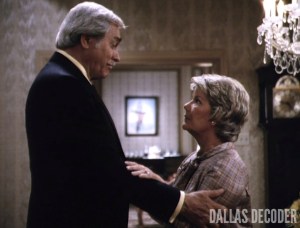
Long time coming

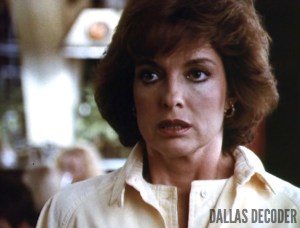
“Lifting the Veil” reveals new truths about several “Dallas” characters, beginning with John Ross. We’ve always known he was as ambitious and as charming as J.R., but in the scene where Sue Ellen confronts him about his infidelity and he treats her cruelly, we discover the son can also be as mean as the father. This episode offers fresh insight into Sue Ellen’s psyche as well. It’s clear now that she’s having trouble letting go of the past, although to be fair, every time she takes a nip from her flask, we’re reminded that the past has a pretty firm grip on her too.

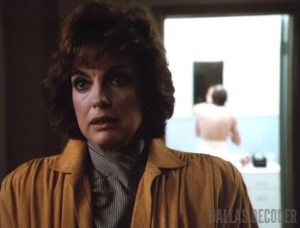
The confrontation between mother and son is the hands-down highlight of “Lifting the Veil,” an hour that brims with history and heartache. The scene begins when Sue Ellen enters John Ross’s bedroom while he’s getting ready for his wedding and tells him she knows he’s been cheating with Emma. John Ross dismisses the relationship as “just business,” which only disgusts Sue Ellen further. “Just like your daddy, finding a way to explain infidelity,” she says. John Ross responds by pointing out the smell of alcohol on his mother’s breath, but she doesn’t back down and threatens to tell Pamela about his affair. John Ross is nonplussed. He brushes past Sue Ellen and delivers his lowest blow yet: “You have looked the other way you’re whole life, Mama. One more time’s not going to hurt.”

Josh Henderson does a nice job bringing John Ross’s dark side into the light, just like Larry Hagman used to do with J.R. For Henderson, though, this amounts to a creative risk: Until now, he’s played John Ross as a (mostly) likable rapscallion, but in this scene, the actor shows us he’s equally adept at making his character seem like an unapologetic jerk. Henderson makes John Ross’s ever-growing hubris feel believable throughout this episode (including during his pre-wedding visit to the brothel), but especially in this scene. Linda Gray, in the meantime, is as magnificent as ever. You can feel Sue Ellen’s pain when Gray delivers that “just like your daddy” line; it’s the character’s saddest moment since her graveside eulogy for her ex-husband in “J.R.’s Masterpiece.” In some ways, “Lifting the Veil” serves as a kind of companion piece to the funeral episode. The first one shows Sue Ellen grieving the loss of J.R.; in the second, she mourns his “return” through the sinful nature of their son.

I also like how Bethany Rooney, a first-time “Dallas” director, stages John Ross and Sue Ellen’s confrontation. The conversation unfolds while he’s fastening his cuff links and putting on his jacket; the casualness of his actions makes his words seem even more devastating. This is one of those times I wish TNT’s Southfork sets more closely resembled those used on the original “Dallas.” J.R. and Sue Ellen’s old bedroom was such a battleground; how cool would it have been to see John Ross and Sue Ellen clash in that setting? On the other hand: the newer bedroom has become a consequential place in its own right. This is where Sue Ellen once slapped J.R. and where she got drunk on the night before his funeral. It’s where John Ross defended his relationship with Pamela to his father and now, it’s where he defends his unfaithfulness to her to his mother.

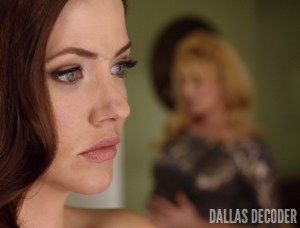
Speaking of Pamela: I also like the “Lifting the Veil” scene where John Ross pleads with her to go through with their wedding, despite the fact that he was missing for much of the day. Henderson is so heartfelt, it almost inoculates John Ross from the anger we feel toward him after he’s mean to his mama. (Emphasis on “almost.”) Julie Gonzalo makes Pamela’s disappointment palpable, and I like how Taylor Hamra’s script gives her a line where she notes how much John Ross’s apologies sound like the ones Cliff used to offer her. It’s a subtle reminder that Pamela is still haunted by her daddy, just like John Ross is haunted by his.

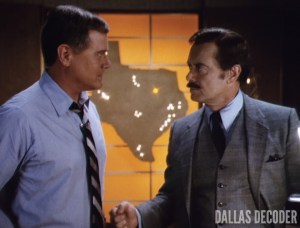
This brings me to a gripe: I wish “Lifting the Veil” played up the old Barnes/Ewing feud a little more. The wedding of J.R.’s son and Cliff’s daughter is a moment of consequence to students of “Dallas” mythology; I’m glad Rooney gave us a glimpse of the framed photograph of J.R., but I would’ve also loved a shot of Cliff, stewing in his Mexican jail cell, knowing his daughter was marrying a Ewing back home. Likewise, “Dallas” does such a nice job of incorporating Audrey Landers into the narrative whenever she guest stars — Sue Ellen and Afton’s bitchy exchange was a special treat for longtime fans — so I can’t help but wonder why the show seems to struggle to find meaningful things for Steve Kanaly and Charlene Tilton to do when Ray and Lucy visit.

Additionally, it’s worth noting this episode takes place in a single day — you’d have to dig deep into “Dallas’s” past, all the way back to 1978’s “Barbecue,” to find another — although I wish the focus remained on the doings at Southfork the way it does in the early episode. I could do without most of the “Lifting the Veil” scenes set at the brothel (the fanciest little whorehouse in Texas?), especially the silly bit with the railroad commissioner and his canine fetish. The revelation that Judith Ryland is the madam is also a bit much, especially when you consider the show has already established her as a drug smuggler. Does Mother Ryland rob banks too? On the other hand: I like the twist that Harris is secretly working with John Ross’s secretary, Candace, although I’m not wild about his scheme to use her to collect, uh, DNA evidence from John Ross in order to frame him for a sex crime.

My reservations about the Rylands aside, you’ve got to love Judith Light’s 1980s lion’s–mane hair in her brothel scene, as well each actor’s pitch-perfect look at the wedding. Since interviewing “Dallas” costume designer Rachel Sage Kunin and hairstylist Charles Yusko, I’ve developed a much greater appreciation for how crucial the wardrobe and hair teams are to establishing each character’s persona. To see what I mean, go watch the wedding scenes at the end of the new show’s first episode, “Changing of the Guard.” Notice how much more sophisticated and womanly Gonzalo’s character looks in “Lifting the Veil” when compared to the earlier wedding? The two sequences were filmed just two years apart, so the change in the actress’s appearance is achieved mostly through Yusko and Kunin’s magic.

In a show that has more than its share of big stars, it’s always worth remembering that some of the brightest work behind the scenes.

Grade: B

_______________________________________________________________________________________________________________________________________________
Afton Cooper, Audrey Landers, Dallas, Julie Gonzalo, Lifting the Veil, Pamela Rebecca Barnes Ewing, TNT

Like father, like husband

‘LIFTING THE VEIL’

Season 3, Episode 4

Telecast: March 17, 2014

Audience: 1.8 million viewers on March 17

Writer: Taylor Hamra

Director: Bethany Rooney

Synopsis: John Ross blackmails a Texas land-use commissioner into giving him a permit to drill on Southfork, while Harris tells Judith he’s secretly working with Ewing Energies secretary Candace, who’s going to help Harris frame John Ross so he can blackmail him and reclaim his files. Sue Ellen confronts John Ross about his affair with Emma, but John Ross dismisses his mother’s concerns and exchanges vows with Pamela. Christopher returns from Mexico and warns Elena that Nicolas is married, but Nicolas assures Elena he’s getting a divorce. Later, Lucia arrives in Dallas and threatens to expose secrets from Nicolas’s past if he doesn’t reconcile with her, while Christopher and Heather make love.

Cast: Kuno Becker (Drew Ramos), Emma Bell (Emma Ryland), Jordana Brewster (Elena Ramos), Angélica Celaya (Lucia Treviño), Candace (Jude Demorest), Juan Pablo Di Pace (Nicolas Treviño), Patrick Duffy (Bobby Ewing), Julie Gonzalo (Pamela Ewing), Currie Graham (Commissioner Stanley Babcock), Linda Gray (Sue Ellen Ewing), Josh Henderson (John Ross Ewing), Steve Kanaly (Ray Krebbs), Audrey Landers (Afton Cooper), Judith Light (Judith Ryland), AnnaLynne McCord (Heather), Jesse Metcalfe (Christopher Ewing), Mitch Pileggi (Harris Ryland), Brenda Strong (Ann Ewing), Charlene Tilton (Lucy Ewing), Denyse Tontz (Chastity), Erika Page White (Sapphire)

“Lifting the Veil” is available at DallasTNT.com, Amazon.com and iTunes. Watch the episode and share your comments below.
Critique: TNT’s ‘Dallas’ Episode 28 — ‘Playing Chicken’

Bobby Ewing, Patrick Duffy, Playing Chicken, TNT

Always the winner

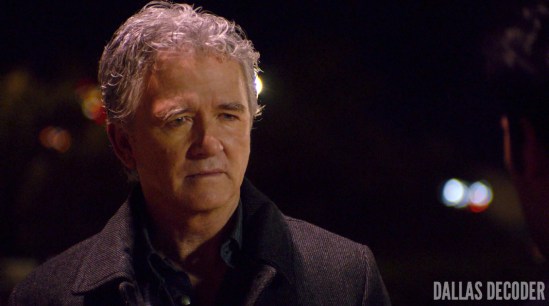
Bobby Ewing plays two games of chicken in “Playing Chicken,” and of course he wins both. First, Bobby uses — forgive me for this — fowl means to foil John Ross’s latest scheme to drill on Southfork. Later, when Nicolas tries to prove the Ewings framed Cliff for J.R.’s “murder,” Bobby faces off against the younger man and forces him to blink first. Both scenes are a kick, reminding us how essential Patrick Duffy is to “Dallas.” They also demonstrate Duffy’s versatility; no matter what the script calls for, this man always delivers — and he always looks damn cool doing it.

The scene with John Ross opens with Josh Henderson’s character giving his crew of ranch-hands-turned-roughnecks a pep talk when a cheerful Uncle Bobby shows up toting a cage with a big bird inside. Bobby proceeds to give his ambitious nephew a lesson on the plight of the “lesser prairie chicken,” explaining how it’s an endangered species whose presence on Southfork means the government will deny John Ross’s request for a drilling permit, lest he disturb the creature’s natural habitat. John Ross fumes; Bobby smiles. “He is awful cute, though, isn’t he?” Bobby asks, motioning toward the cage.

I love this scene mostly because it’s nice to see “Dallas” lighten up, but also because it recalls all the times Bobby bested J.R. with a wink and a grin. The role of happy warrior has always suited Duffy well, and his timing here is as sharp as ever. Everyone else seems to get into the spirit too: Henderson shows he can deadpan with the best of them, while director Jesse Bochco delivers a whimsical shot of John Ross from inside the chicken’s cage. (Shades of the “horse-cam” used to shoot Emma Bell last year.) Even composer Rob Cairns has a little fun with this scene; his underscore is noticeably jauntier than usual.

Bobby’s other big scene begins with Nicolas arriving in a darkened parking lot to meet Rhonda Simmons, the club hostess whose testimony helped convict Cliff. Nicolas believes Rhonda is going to turn against the Ewings; when he finds her standing near her car, he congratulates her and tells her she’s made “the right decision.” Suddenly, the passenger door opens and out steps … Bobby, who makes it clear Rhonda isn’t changing her story after all. This would be a triumphant moment no matter which Ewing had emerged from Rhonda’s car, but the fact that it’s Bobby makes it especially satisfying. He’s always been our white knight, and frankly he’s the only Ewing with the moral authority to make framing Cliff for murder seem like the right thing to do.

But even though Patrick Duffy is the indisputable man of the hour in “Playing Chicken,” Gail Gilchriest’s terrific script ensures no one gets shortchanged. It’s especially nice to see lots of scenes with the always wonderful Brenda Strong, whose character gets to demonstrate a little personal growth. When Sue Ellen confides in Ann her fears about John Ross and Emma, I expect Ann to dismiss the suggestion outright. Instead, she says, “I know I’ve been defensive about Emma’s behavior in the past. You were right about her drug use. Maybe you’re right this time too.” Strong always makes Ann feel like one of the grownups in the room, but the job is easier when she has smart writing like this to work with.

It’s also interesting to see Ann turn to Harris to help reign in Emma. I love Duffy and Strong together, but there’s also no denying the actress’s chemistry with Mitch Pileggi. Does this scene suggest Ann is softening toward her ex-husband? Or is the show merely using Ann to smooth Harris’s rough edges? During their conversation, Ann urges Harris to come clean to Emma about his connection to the CIA; he rejects that suggestion, but he nonetheless reveals a little humility: “I never meant to put the people that I love in danger, Annie. As awful as you think I am, I do love our daughter.” Who knew the “l” word was in Harris’s vocabulary? Also, notice how he says “the people that I love.” Does that include Ann?

Other highlights: Sue Ellen’s masterful manipulation of Bum, as well as the scene where he shows up on her doorstep and confesses his deception. I’m delighted “Dallas” is exploring the relationship between these characters, not just because they have such an opposites attract charm — the uptown lady and the downtown private eye — but also because Kevin Page might be the only actor on this show who comes close to matching Linda Gray’s soulfulness. I have no idea where Sue Ellen and Bum are headed, but whether they remain friends or become something more, I hope we keep seeing a lot of scenes between them.

I’m a little less enthralled with the romance that develops in “Playing Chicken” between Elena and Nicolas, especially since we’ve been told their characters grew up thinking of each other as siblings. On the other hand, I’m more impressed than ever with Juan Pablo Di Pace: Nicolas is so suave and charming in his first two “Dallas” appearances, but in “Playing Chicken,” there are times he seems downright sinister. At the end of this episode, we learn Nicolas has a wife — Angélica Celaya makes an intriguing debut as Lucia Treviño — and I have no doubt we’re going to learn he’s hiding even more.

I also like “Playing Chicken’s” scenes of Christopher sleuthing around Mexico, as well as the fun Gilchriest has with John Ross’s complicated love life. No one delivers oh-no-she-didn’t moments better than Bell: What makes us despise Emma Ryland more, when she accompanies Pamela on the shopping trip and brags about her lover’s sexual prowess, or when she shows up at John Ross’s office wearing the same emerald corset that Pamela is planning to surprise him with? Fans are directing a lot of venom at Bell’s character on social media these days, and I hope the actress is wearing it as a badge of honor. She’s doing a fantastic job making Emma a vixen we love to hate.

I’m also left pondering the scene where John Ross rejects Pamela’s romantic overtures. Is this an attack of conscience, or is he beginning to realize Emma is dangerous? Whatever the reason, John Ross’s personal entanglements are probably going to be the least of his worries. In “Playing Chicken’s” most chilling scene, Harris tells Judith that the files in his safe — which include “unflattering” information about her — are now in John Ross’s possession. Says Judith: “I’m sure we can find something to compromise young Mr. Ewing enough to convince him to return those files. And by ‘we,’ of course I mean ‘me.’” If you were John Ross, what would make your heart drop more — hearing Judith say she wants to “convince” you of something or hearing her earlier statement that she thinks you’re “a nice-looking young man.” Shudder.

More than anything, this episode demonstrates how “Dallas” is finding a new rhythm in its third season. The first hour, “The Return,” took its time establishing the year’s themes and plotlines; the second episode, “Trust Me,” delivered the twists and turns we’ve come to expect from the TNT series (Judith does coke! Harris is CIA!); and “Playing Chicken” slows down the action once more to allow the audience to catch its breath. If the pattern holds, does that mean the next installment will be another roller coaster? I wouldn’t bet against it, especially now that we know Judith Ryland has John Ross in her crosshairs. Let the battle of the “J.R.s” begin.

Grade: A

_______________________________________________________________________________________________________________________________________________

Emma Bell, Emma Ryland, Playing Chicken, TNT

Good at being bad

‘PLAYING CHICKEN’

Season 3, Episode 3

Telecast: March 10, 2014

Audience: 1.9 million viewers on March 10

Writer: Gail Gilchriest

Director: Jesse Bochco

Synopsis: Christopher investigates Nicolas in Mexico, where he meets Lucia, Nicolas’s wife. Bobby foils John Ross’s attempt to drill on Southfork and Nicolas’s attempt to turn Rhonda against the Ewings. Later, Nicolas reveals long-hidden feelings to Elena and they have sex. Bum admits to Sue Ellen that John Ross is sleeping with Emma. When Harris tells Judith that Emma gave damaging files about her to John Ross, Judith vows to “convince” John Ross to give back the documents. Bobby promises Ann he’ll keep her and Emma safe following Harris’s revelation that he’s working with the CIA to bring down the drug cartel.

Cast: Emma Bell (Emma Ryland), Donny Boaz (Bo McCabe), Jordana Brewster (Elena Ramos), Angélica Celaya (Lucia Treviño), Juan Pablo Di Pace (Nicolas Treviño), Patrick Duffy (Bobby Ewing), Julie Gonzalo (Pamela Ewing), Currie Graham (Commissioner Stanley Babcock), Linda Gray (Sue Ellen Ewing), Josh Henderson (John Ross Ewing), Ken Kercheval (Cliff Barnes), Emily Kosloski (Rhonda Simmons), Judith Light (Judith Ryland), Jesse Metcalfe (Christopher Ewing), Scott Mullins (Nate), Kevin Page (Bum), Mitch Pileggi (Harris Ryland), Geoffrey Rivas (shopkeeper), Aaron Spivey-Sorrells (ranch hand), Brenda Strong (Ann Ewing), Michael Swanner (Dewey Templeton)

“Playing Chicken” is available at DallasTNT.com, Amazon.com and iTunes. Watch the episode and share your comments below.
Critique: TNT’s ‘Dallas’ Episode 27 — ‘Trust Me’

Dallas, Harris Ryland, Judith Light, Judith Ryland, Mitch Pileggi, TNT, Trust Me

Snow job

Is “Trust Me” the most audacious episode in “Dallas” history? It’s hard to think of another one that shocked me more. Judith Ryland seals a deal with a Mexican drug lord by snorting a few lines of coke, Harris Ryland is revealed as a CIA informant — these are not the kinds of things we’re used to seeing on this show. Some fans are upset with the producers for taking our beloved franchise in such wild directions, but you’ll hear no complaints from me. “Dallas” measures its longevity in decades; at this point, I’d be disappointed if the people in charge weren’t exploring fresh storytelling terrain.

Besides, it’s not like the twists and turns come from out of nowhere. Both scenes fit with the theme of “Trust Me,” which shows how the characters deal with the people who doubt them — and how they deal with their doubts about themselves. The word “trust” pops up repeatedly: Harris tells Judith that Emma can’t be trusted. Elena and Nicolas each tell Carmen to trust their choice to work against the Ewings. Elena tells Christopher to trust her ability to handle Nicolas. Bobby wonders if the old Southfork seismographs can be trusted. Even when “trust” isn’t used, it’s implied: Witness the scene where John Ross stands in front of Pamela, raises his right hand and swears he isn’t cheating with his new secretary. Talk about splitting hairs.

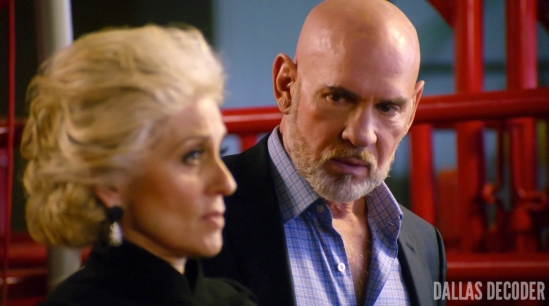
And then there’s Judith’s coke-snorting scene. It’s inexplicably staged in some kind of dirt-floored equestrian arena, where the Mexican drug lord Luis is surrounded by an entourage that includes a young man holding a golden box of cocaine, several thugs toting big guns and two costumed rodeo performers who stand on horses, twirling lassos. A setting like this wouldn’t feel out of place in a Tarantino film. Judith and Harris arrive to meet with Luis, and before you know it, she’s putting Luis’s hands all over her body and talking about the importance of trust in business relationships. Judith implies the point of her self-directed pat down is to prove she’s not wearing a wire, but does anyone doubt she’s also seeking cheap thrills? For that matter, isn’t she also telegraphing a message about her mettle to Harris, who stands next to her, his mouth agape?

The scene continues with Judith shrewdly explaining how she’s going to use shell companies, wastewater trucks and unmapped roads to smuggle Luis’s drugs into Texas — and then we get to the moment that sent “Dallas” fans into a tweeting frenzy on the night “Trust Me” debuted. Judith leans into Luis’s cocaine box, snorts, throws back her head and delivers her hashtag-ready exclamation: “Hot damn! Mama like.” She even rubs a little coke on her gums for good measure. I suppose this is another way for Judith to prove her trustworthiness to the cartel, but let’s not kid ourselves: “Dallas” is trying to shock us — not that there’s anything wrong with that. I love this show’s insistence on being unpredictable. If this scene does nothing else, it demonstrates how eager the people who make “Dallas” are to entertain us. How can you not appreciate that?

As much as I admire Judith Light’s fearlessness in this scene, I have to hand it to Mitch Pileggi, whose reaction shots are priceless. (Director Millicent Shelton, who also helmed last season’s Harris-centric “Let Me In,” is smart enough to keep cutting back to him throughout Judith’s antics in the arena.) I also love how Light and Pileggi play off each other in their other scene in “Trust Me,” when Judith returns to the Ryland roost and announces she’s taking charge of the family trucking — er, transportation — business. Bruce Rasmussen’s script gives Light one delicious line after another, including an allegory that could have rolled off the silver tongue of J.R. Ewing: “Money and morality are like two cars on a one-lane road. When they meet, morality’s going to end up in the ditch.” Light savors every syllable, and once again, Pileggi holds his own. I think it’s telling that after I saw “Trust Me,” I spent more time quoting one of Harris’s lines (“You think you know what you’re getting into, but you don’t”) than any of Judith’s. I don’t know what I love more: Pileggi’s Texas accent, or the way he snarls his dialogue.

It’s also worth noting how much “Trust Me” humanizes Harris Ryland. In the scene where Judith negotiates the new deal with the cartel, notice how Harris doesn’t say a word until Luis implies he’ll hurt Emma if the Rylands don’t hold up their end of the bargain. “My daughter has nothing to do with this!” he says. For that matter, notice how Harris keeps a framed photograph of Ann with baby Emma in his office. This is a man who cares about the women in his life, even if he sometimes calls them names. (Pileggi’s other great line in this episode describes Emma: “She’s a little monster who put me in jail.”)

This also explains why I welcome the episode-ending revelation about Harris’s connection to the CIA, which requires more than a little trust on Bobby and Ann’s behalf. Like Larry Hagman, Pileggi is such a charismatic actor you can’t help but root for his character, no matter how wicked he becomes. I was having a hard time cheering for Harris, though, knowing that he was a drug trafficker. Now I’m glad I can cast those concerns aside. (I can cast them aside, right “Dallas”?) I don’t think there’s any danger of Harris turning into a white knight, but I’m glad to know there are lines he won’t cross.

Of course, as much as the Rylands fascinate me, I would be remiss if I didn’t point out how good the rest of “Trust Me” is. The Southfork barbecue scenes evoke the spirit — if not the down-home grandeur — of Ewing shindigs from days gone by. It’s fun to see John Ross rankle all the women in his life — mother, wife, mistress — by chatting up the other pretty ladies. (One is played by “Survivor” contestant Andrea Boehlke, who is Josh Henderson’s girlfriend in real life.) The only thing I enjoy more is Pamela’s hot dance with the ever-intriguing Nicolas Treviño — not just because it’s good to see Pamela give her flirtatious husband a taste of his own medicine, but also because it demonstrates why the magnetic Juan Pablo Di Pace is such a smart addition to this show. Di Pace enlivens every scene he appears in; as one of my fellow fans pointed out on Twitter the other night, he has chemistry with everyone, including Jesse Metcalfe’s Christopher, whose tête-à-tête with Nicolas over a couple of Miller Lites is another barbecue highlight.

Rasmussen’s script allows “Dallas’s” supporting performers to shine too. No one impresses me more than Kevin Page, whose character Bum has become the conscience of this show. Besides Judith Light’s dialogue, Page has the episode’s most memorable line when he shows John Ross the pictures he took of him and Emma and says, “Grow into your father’s greatness, not his weakness.” Bum’s mysterious-but-strong connection to J.R. makes him the only character on this show who can get away with putting John Ross in his place; he could become an even more effective surrogate father than Uncle Bobby. It’s tempting to chastise Bum for deceiving Sue Ellen about John Ross’s adultery, except there’s no doubt he’s only trying to spare her heartache. And am I the only one who wants to see more scenes between Page and Linda Gray?

This episode’s other M.V.P.: Marlene Forte, who has two great scenes. In the first, Carmen is aghast to learn Elena is working against the family to whom Carmen has pledged her loyalty; in the second, Carmen comes face to face with Nicolas, a boy she helped raise who is now Elena’s partner in crime. I love when Carmen touches the medal around Nicolas’s neck and tells him, “If even for a moment I sense that you are leading either of my children into the darkness, not even St. Christopher will be able to save you.” I’ve always believed Carmen has the potential to become one of this show’s moral centers, and now it looks like that might be happening.

It’s true that Nicolas’s backstory with the Ramoses is a little odd: I suppose we’re meant to believe Carmen and her husband raised him in Mexico but left him behind when they moved to Texas with their biological children, which is why Nicolas isn’t familiar to the Ewings. It’s another example of how the details on this show are sometimes fuzzy, although I’ve learned it’s not worth sweating the small stuff because the new “Dallas” almost always gets the big picture right. Will I still feel that way at the end of this season? Who knows? I have no idea where this series is headed next, but after watching its first 27 hours, I have faith in the people who make it. They’ve earned my respect — and my trust.

Grade: A

_______________________________________________________________________________________________________________________________________________

Bum, Dallas, Kevin Page, TNT, Trust Me

Independent lens

‘TRUST ME’

Season 3, Episode 2

Telecast: March 3, 2014

Audience: 1.9 million viewers on March 3

Writer: Bruce Rasmussen

Director: Millicent Shelton

Synopsis: At Sue Ellen’s request, Bum follows John Ross, but Bum lies and tells her there’s no evidence her son is cheating on Pamela. At the Ewing Barbecue, Christopher and Heather grow closer and Pamela arouses John Ross’s jealousy by dancing with Nicolas. Elena snoops around Bobby’s laptop and discovers an email that connects him and Carlos to Rhonda. Judith takes over Harris’s drug trafficking operation and negotiates a new deal with the cartel. When Bobby and Ann begin investigating Harris’s release from jail, Harris reveals the truth to them: He’s secretly working with the CIA to bring down the cartel.

Cast: John Athas (U.S. Attorney Ellis Larsen), Emma Bell (Emma Ryland), Andrea Boehlke (barbecue guest), Jordana Brewster (Elena Ramos), Christian Clemenson (Howard Rieder), Candace (Jude Demorest), Juan Pablo Di Pace (Nicolas Treviño), Akai Draco (Sherriff Derrick), Patrick Duffy (Bobby Ewing), Julie Gonzalo (Pamela Ewing), Linda Gray (Sue Ellen Ewing), Josh Henderson (John Ross Ewing), Antonio Jaramillo (Luis), Judith Light (Judith Ryland), AnnaLynne McCord (Heather), Jesse Metcalfe (Christopher Ewing), Kevin Page (Bum), Gino Anthony Pesi (George Tatangelo), Mitch Pileggi (Harris Ryland), Brenda Strong (Ann Ewing)

“Trust Me” is available at DallasTNT.com, Amazon.com and iTunes. Watch the episode and share your comments below.
Critique: TNT’s ‘Dallas’ Episode 26 – ‘The Return’

Dallas, John Ross Ewing, Josh Henderson, Return, TNT

That smile

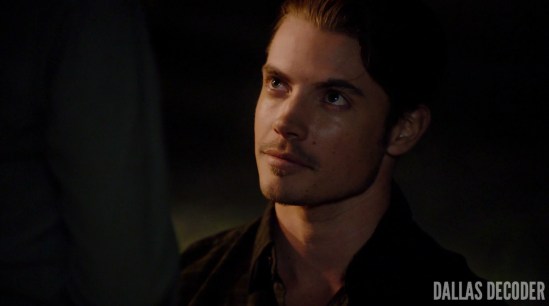
Now that “Dallas” fans know who killed J.R., we can turn our attention to a much trickier question: Who’ll be J.R.? We all realize Larry Hagman is irreplaceable, but we also understand TNT’s sequel series needs a character who can keep the plots — and on this show, that means the plottin’ and the schemin’ — moving forward the way J.R. did. Last year, the producers seemed to toy with several possible successors — even white-knight father/son duo Bobby and Christopher got in touch with their inner J.R.s — but in “The Return,” John Ross emerges as Daddy’s true heir. It’s the obvious choice. It’s also the smart one.

I’ve been a fan of Josh Henderson’s sly performance from the beginning, even comparing him to “Dallas’s” most famous alum, Brad Pitt, in my first review of the TNT series. Most of what I wrote then remains true: Henderson still has an effortless, seductive charm, and even when John Ross is up to no good, you still find him alluring. But it’s no longer accurate to call Henderson or his character “boyish,” as I did two years ago. Maybe it’s the fact that John Ross is now married and a big-shot oilman in his own right — or maybe it’s the fact that Henderson’s pecs have seemingly grown three cup sizes, as Entertainment Weekly cheekily pointed out last week — but John Ross is now much more man than boy.

Wisely, “The Return” wastes no time establishing him as “Dallas’s” new J.R., who turns out be a lot like the old one. John Ross frolics with his mistress in a hotel room, comes home and lies to his wife about his whereabouts (he says he was in Houston, buying her a “proper” engagement ring), sweet talks his mama when she frets about his ambition, clashes with Bobby over Southfork’s future (To remodel or not to remodel? To drill or not to drill?) and wheels and deals in the boardroom, where he enthusiastically declares Ewing Global is going to be “bigger than Exxon and BP combined.” (Shades of J.R.’s oft-repeated vow to make Ewing Oil the “biggest independent oil company in the state of Texas.”) John Ross even sports J.R.’s wristwatch and belt buckle, and even though the latter looks kind of big on him, is that so bad? I see it as a symbol of how carrying J.R.’s legacy will always be a burden for John Ross, no matter how muscular he gets.

What impresses me most about Henderson — in this episode and others — is how he evokes Hagman’s spirit without ever resorting to imitating the actor. Like Hagman, Henderson possesses one of the great smiles in television, but he uses it differently than the way Hagman used his. Whereas J.R.’s smile often concealed his intentions, John Ross’s lets us know what’s going on inside his head. In “The Return,” Henderson arches his eyebrow and smirks when he’s sparring with Patrick Duffy, but when John Ross is on bended knee proposing to Pamela, watch how the actor’s whole face lights up. This is a smile to melt your heart, reminding us that there’s a sensitive soul beneath all that bravado.

Of course, even though Henderson has become the new face of this franchise, “Dallas” remains a group effort, as “The Return” makes clear. This episode gives almost every member of the ensemble a nice moment or two, although special mention goes to Jordana Brewster, who is such a good actress, she makes Elena’s overnight transformation — literally — into a Ewing enemy seem believable, if not altogether reasonable. (Is Elena unaware of Cliff’s role in blackmailing Drew into blowing up the rig last season?) Brewster’s character has become the latest in a long line of “Dallas” heroines to do Cliff’s dirty work, and I love how the actress holds her own against Ken Kercheval, who is as electric as ever in Cliff’s jailhouse scenes.

I also applaud the introduction of Juan Pablo Di Pace, who makes one of the all-time great “Dallas” debuts when the oh-so-suave Nicolas Treviño sweeps into the Ewing Global boardroom and upsets the family’s apple cart. Treviño has the potential to become an altogether different kind of “Dallas” villain: richer than Jeremy Wendell and Carter McKay and every bit as calculating, but also a heck of a lot hotter. (No offense, William Smithers and George Kennedy.) I’ll never understand how the Ewings lack the “supermajority” they need to sell a division in their own company — just like the whole matter about the Southfork surface rights seems like a bunch of hooey — but let’s face it: “Dallas” has always existed in a universe where the legal realities bear little resemblance to our own.

Besides, I’d rather focus on the other ways in which “The Return” lives up to its title. This episode marks a return to many of the “Dallas” hallmarks that so many of us love, beginning with the revival of the classic three-way split-screen title sequence, which has received widespread acclaim from fans. Under Steve Robin’s direction, “The Return’s” pacing also feels a little more deliberate; there are more old-school, quiet scenes like the one where the women of Southfork sit around the patio and plan Pamela’s wedding; and there are more sequences set outdoors on the ranch, which cinematographer Rodney Charters always showcases in all of its high-definition, green-grass/blue-sky glory. No matter where the characters go on Southfork — whether it’s to the wood-chopping pile or to the “shale formation” where the cattle graze — Charters makes us feel like we’re right there with them.

I also appreciate how this episode’s script, written by co-executive producers Cynthia Cidre and Robert Rovner, is sprinkled with dialogue that pays homage to classic “Dallas” themes. One example: The tension between moving forward and clinging to old traditions has always been central to the “Dallas” mythology, which we see in Bobby and John Ross’s argument over remodeling Southfork. “It’s about time you learn to respect the past, boy,” Bobby says. John Ross’s cutting response: “The past is what holds us back, Uncle Bobby.” If I heard that line a season or two ago, I might worry it signaled this franchise was going to abandon its history, except the people in charge have long since demonstrated their commitment to preserving “Dallas’s” heritage, even if they sometimes play a little loose with the continuity.

Nothing demonstrates this better than all the references to J.R. in “The Return.” I counted at least 13 instances where he’s mentioned by name, and that doesn’t include lines like the one where Sue Ellen catches John Ross sneaking out of Emma’s bedroom and says, “What’s the matter, Mama? You look like you just seen a ghost.” There are also plenty of visual reminders: the wristwatch, the belt buckle, the gravestone and most importantly, the much-improved portrait hanging in the background at Ewing Global, which makes it seem like J.R. is always peering over someone’s shoulder.

Indeed, as tempting as it is to think of “Dallas’s” third season as the beginning of the post-Hagman era, is such a thing even possible? “The Return” keeps our hero’s memory alive, not that it was in any danger of fading in the first place.

Grade: B

_______________________________________________________________________________________________________________________________________________

Dallas, Elena Ramos, Jordana Brewster, Return, TNT

Look who’s lurking

‘THE RETURN’

Season 3, Episode 1

Telecast: February 24, 2014

Audience: 2.7 million viewers on February 24

Writers: Cynthia Cidre and Robert Rovner

Director: Steve Robin

Synopsis: Elena forms a secret alliance with Cliff, takes a job at the newly renamed Ewing Global and recruits Nicolas Treviño, a childhood friend who is now a billionaire, to serve as Cliff’s proxy. Emma, Ryland Transport’s new chief executive, gives John Ross control of the company’s drilling and cargo ships so Ewing Global can tap oil and methane reserves in the Arctic. When Nicolas tries to scuttle the Arctic deal, John Ross suggests drilling on Southfork to finance the project, but Bobby disagrees. The Mendez-Ochoa cartel bribes a judge to get Harris out of jail and threatens to kill Emma if Harris doesn’t resume his drug shipments. Christopher meets Heather, a spirited ranch hand.

Cast: Amber Bartlett (Jill), Emma Bell (Emma Ryland), Donny Boaz (Bo McCabe), Jordana Brewster (Elena Ramos), Juan Pablo Di Pace (Nicolas Treviño), Patrick Duffy (Bobby Ewing), Marlene Forte (Carmen Ramos), Julie Gonzalo (Pamela Ewing), Linda Gray (Sue Ellen Ewing), Josh Henderson (John Ross Ewing), Ken Kercheval (Cliff Barnes), AnnaLynne McCord (Heather), Jesse Metcalfe (Christopher Ewing), Kevin Page (Bum), Mitch Pileggi (Harris Ryland), Brenda Strong (Ann Ewing)

“The Return” is available at DallasTNT.com, Amazon.com and iTunes. Watch the episode and share your comments below.
Critique: ‘Dallas’ Episode 151 — ‘When the Bough Breaks’

Dallas, Linda Gray, Sue Ellen Ewing, When the Bough Breaks

The goodbye girl

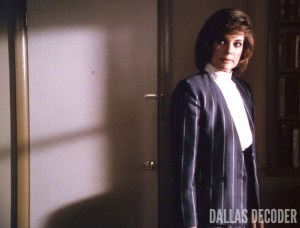
“When the Bough Breaks” marks another turning point in the life of Sue Ellen Ewing. In the episode’s final scene, Peter tells Sue Ellen how sorry he is about her recent miscarriage; he believes he was the unborn child’s father, and he had hoped they could raise it together. When Sue Ellen hears this, she’s horrified. She suddenly realizes how naïve Peter is — and how wrong she was to begin a relationship with him. After declaring their affair over, she begins to walk away, and then she stops, looks back at him and says, “Oh, I know the pain you must be going through right now because I’ve been there. But it passes. It always does. You just stay out of my life.”

The scene brings back memories of the second-season classic “For Love or Money,” when Cliff dumps Sue Ellen because he’s afraid their affair will hurt his political career, although I suspect that’s not the comparison Leonard Katzman had in mind when he wrote “When the Bough Breaks.” My guess is Katzman wanted the audience to see Sue Ellen’s breakup with Peter as another example of how she’s becoming more like J.R. This is one of the underlying themes of “Dallas’s” seventh season, going back to “The Oil Baron’s Ball,” when Sue Ellen treats J.R. like a sexual plaything. Now she’s walking away from a disillusioned young lover, just like J.R. did with Julie, Kristin, Afton and so many others.

Sue Ellen’s emulation of her husband becomes a source of professional success during “Dallas’s” later seasons, but in these seventh-season episodes, it’s fascinating to watch her mimic him in a quest for personal empowerment. Of course, the “old” Sue Ellen is still present too. In “When the Bough Breaks,” her snobbish tendencies are on display when Peter suggests they could have raised the child together; looking around his tiny apartment, she says, “You expect me to leave Southfork, J.R., for you? To raise a child and live here?” It’s also worth pointing out that unlike J.R., who dumps his mistresses when he tires of them, Sue Ellen leaves Peter because she believes it’s what’s best for him. Indeed, her parting words to him reflect both her sense of compassion (“I’ve been there”) and her cynicism (“It passes; it always does”).

As clever as Katzman’s writing is, what impresses me most about this scene is how Linda Gray fills in the blanks in his script. For example, Sue Ellen breaks up with Peter when she realizes how misguided he is, but Katzman never gives her a line to this effect. So how do we know what Sue Ellen is feeling? Because Gray conveys it through her eyes, which widen with the sad realization that she’s led this young man astray. It’s a subtle moment, demonstrating why Gray is such a great actress.

I wish I could say something similar about Gray’s co-star. Christopher Atkins is an appealing performer, and he’s quietly effective in scenes like the one where Peter visits Sue Ellen in the hospital and kisses her while she sleeps. But anytime the script calls for Atkins and Gray to profess their love for each other, I’m reminded how badly miscast he is. It’s not just that Atkins looks too young; he acts too young. In the breakup scene, when he discovers Sue Ellen and J.R. still sleep together on occasion, he breaks into a full-fledged pout. Moments later, Sue Ellen tells him, “Peter, I have very strong feelings for you.” I can’t help but think: Why?

“When the Bough Breaks” includes two more scenes I like. In the first, Cliff persuades Pam to join him in the offshore oil auction by appealing to her sense of family. “The main reason I dislike the Ewings so much is because they’ve always been this big family that stood together … and all we ever had was each other,” he says. This is a revealing moment. I’ve always believed that a lot of Cliff’s hatred is rooted in jealousy. The man who was abandoned by his mother as a child doesn’t long for the Ewings’ power and possessions as much as he longs for the close bond they share. In the episode’s other great scene, J.R. takes Marilee to dinner and tries to plant seeds of doubt in her mind about her partnership with Cliff. Larry Hagman is as sly as ever, but don’t overlook Fern Fitzgerald, who has the tougher task. She must signal to the audience that J.R. has rattled her character without letting J.R. himself know. She does it nicely.

“When the Bough Breaks” includes a few head scratchers too. The doctor who treats Sue Ellen after her miscarriage is quiet a blabbermouth: Not only does she announce Sue Ellen’s miscarriage to everyone in the waiting room, she also suggests there’s nothing keeping J.R. and his wife from trying again to have another child. So much for doctor-patient confidentiality. I also roll my eyes when Bobby once again presses Jenna to tell him if he’s Charlie’s biological father and she once again refuses to discuss the subject. Can someone explain Jenna’s rationale? If Bobby’s father, doesn’t he have a right to know? If he’s not, why does she refuse to put his mind at ease?

More than ever, I want Bobby to dump wishy-washy Jenna and patch things up with Pam. Maybe that’s the point?

Grade: B

_______________________________________________________________________________________________________________________________________________

Christopher Atkins, Dallas, Linda Gray, Peter Richards, Sue Ellen Ewing, When the Bough Breaks

Death to smoochy

‘WHEN THE BOUGH BREAKS’

Season 7, Episode 20

Airdate: February 17, 1984

Audience: 22 million homes, ranking 1st in the weekly ratings

Writer: Leonard Katzman

Director: Nick Havinga

Synopsis: Sue Ellen comes home from the hospital and breaks up with Peter. While J.R. tries to undermine Marilee and Cliff’s partnership, Cliff persuades Pam to join him in the offshore oil auction. In Malibu, Katherine meets Naldo, who tells her the identity of Charlie’s father. Clayton rejects Bobby’s invitation to do business with Ewing Oil. Ray and Donna continue snooping into Edgar’s past.

Cast: Christopher Atkins (Peter Richards), John Beck (Mark Graison), Barbara Bel Geddes (Miss Ellie Ewing), Morgan Brittany, Anne Gee Byrd (Dr. Jeffries), Roseanna Christiansen (Teresa), Pat Colbért (Dora Mae), Glenn Corbett (Paul Morgan), Patrick Duffy (Bobby Ewing), Fern Fitzgerald (Marilee stone), Linda Gray (Sue Ellen Ewing), Larry Hagman (J.R. Ewing), Susan Howard (Donna Krebbs), Steve Kanaly (Ray Krebbs), Sherril Lynn Katzman (Jackie Dugan), Howard Keel (Clayton Farlow), Ken Kercheval (Cliff Barnes), Anne Lucas (Cassie), Shalane McCall (Charlie Wade), Daniel Pilon (Renaldo Marchetta), Priscilla Beaulieu Presley (Jenna Wade), Victoria Principal (Pam Ewing), Donegan Smith (Earl Johnson), Charlene Tilton (Lucy Ewing)

“When the Bough Breaks” is available on DVD and at Amazon.com and iTunes. Watch the episode and share your comments below.
Critique: ‘Dallas’ Episode 150 — ‘Where is Poppa?’

Christopher Atkins, Dallas, J.R. Ewing, Larry Hagman, Peter Richards, Where is Poppa?

Who’s the daddy?

No matter how many times I see the Ewings rush to the hospital when one of their own gets sick or injured, it always moves me. Besides generating drama and suspense, these scenes also remind us that the characters care about each other, despite all their squabbling. Consider what happens in “Where is Poppa?” At the beginning of the episode, J.R. and Sue Ellen have one of their nasty marital spats, but in the fourth act, when he receives word at the office that she’s been struck by a car, he drops everything and races to Dallas Memorial. In moments like this, there’s no doubt this man loves his wife.

“Where is Poppa?” also delivers a nifty twist in the final scene, when the doctor who’s been treating Sue Ellen informs the family that she sustained only minor injuries — although the accident did cause her to suffer a miscarriage. What’s that, you say? You didn’t know Sue Ellen was pregnant? Apparently no one did, including Sue Ellen herself. Of course, “Dallas” has given us plenty of foreshadowing and other clues. Two episodes ago, J.R. told his wife how much he wished they could have another child; in the previous segment, she had breakfast in bed because she felt queasy. Now we know she was probably experiencing morning sickness.

Details like these feel like little rewards for attentive viewers. So does the episode’s final shot. After the doctor reveals Sue Ellen had a miscarriage, J.R. and Peter stand next to each other and wear stunned expressions. This is a clever ending because it leaves us pondering a big mystery — which man was the father of Sue Ellen’s unborn child? — without anyone ever actually asking the question. It’s also one of the few occasions where the audience has more information than J.R. We know Sue Ellen has slept with Peter, but J.R. doesn’t. This lends the scene unexpected poignancy; not only has he lost a child, he’s also lost a wife — metaphorically speaking, that is.

Other highlights of “Where is Poppa?” include Richard Lewis Warren’s score, which adds urgency to the sequence where the news of Sue Ellen’s accident spreads to the various Ewings. I also like the scene where Donna takes Paul Morgan to lunch to see if he knows anything about Edgar Randolph, who she suspects is being blackmailed by J.R. Besides giving the show an excuse to bring back Glenn Corbett, this scene represents another example of “Dallas’s” attention to detail. After all, the show has established that both Edgar and Paul are protégés of Donna’s first husband Sam Culver, so it makes sense that she would turn to Paul for information about Edgar.

Another good scene: J.R. takes Sly to lunch for her birthday and she tells him she used the $10,000 “bonus” she received from Cliff to help her brother start his own machine shop. Since Sly’s brother’s troubles were the reason she got swept up in the corporate espionage game in the first place, I’m glad scriptwriter Arthur Bernard Lewis took the time to give us an update on the brother’s life. It’s a nice touch.

I also appreciate how this episode’s title carries multiple meetings. “Where is Poppa?” refers to the mystery over the father of Sue Ellen’s child, but it can also be seen as a nod to Katherine’s mission to determine if Bobby or Naldo Marchetta is the father of Jenna Wade’s daughter, Charlie. During this episode’s third act, J.R. and Katherine are concluding one of their midday trysts when her private eye calls to let her know that he’s finally tracked down Naldo, who now lives in Los Angeles. Morgan Brittany is terrific in this scene; as Katherine, she shifts effortlessly from being disgusted over having to sleep with J.R. again to being giddy over the news that Naldo has finally been found. Larry Hagman is also a hoot, especially when he delivers one of J.R.’s immortal lines: “You got anything to drink around here? Some orange juice or coffee? Loving always makes me thirsty.”

So “loving” makes J.R. thirsty, huh? No wonder he always has a drink in his hand.

Grade: B

_______________________________________________________________________________________________________________________________________________

Charlie Wade, Dallas, Shalane McCall, Where is Poppa?

Who’s your daddy?

‘WHERE IS POPPA?’

Season 7, Episode 19

Airdate: February 10, 1984

Audience: 21.2 million homes, ranking 3rd in the weekly ratings

Writer: Arthur Bernard Lewis

Director: William F. Claxton

Synopsis: When Sue Ellen is struck by a car, J.R. and Peter learn she was pregnant and suffered a miscarriage. Edgar goes home from the hospital. Marilee agrees to join Cliff’s bid. Katherine learns Naldo lives in Los Angeles.

Cast: Christopher Atkins (Peter Richards), John Beck (Mark Graison), Barbara Bel Geddes (Miss Ellie Ewing), Fran Bennett (receptionist), Morgan Brittany (Katherine Wentworth), Martin E. Brooks (Edgar Randolph), Anne Gee Byrd (Dr. Jeffries), Roseanna Christiansen (Teresa), Pat Colbért (Dora Mae), Glenn Corbett (Paul Morgan), Patrick Duffy (Bobby Ewing), Fern Fitzgerald (Marilee Stone), Linda Gray (Sue Ellen Ewing), Larry Hagman (J.R. Ewing), Alice Hirson (Mavis Anderson), Susan Howard (Donna Krebbs), Steve Kanaly (Ray Krebbs), Omri Katz (John Ross Ewing), Sherril Lynn Katzman (Jackie Dugan), Howard Keel (Clayton Farlow), Audrey Landers (Afton Cooper), Anne Lucas (Cassie), Shalane McCall (Charlie Wade), Joanna Miles (Martha Randolph), Priscilla Beaulieu Presley (Jenna Wade), Victoria Principal (Pam Ewing), Debbie Rennard (Sly), Donegan Smith (Earl Johnson), Charlene Tilton (Lucy Ewing), Deborah Tranelli (Phyllis)

“Where is Poppa?” is available on DVD and at Amazon.com and iTunes. Watch the episode and share your comments below.
Critique: ‘Dallas’ Episode 149 — ‘Twelve Mile Limit’

Dallas, J.R. Ewing, Larry Hagman, Twelve Mile Limit

What a nice man!

The final scene in “Twelve Mile Limit” begins with a shot of a man in a brown suit carrying a big bouquet of flowers into Edgar Randolph’s hospital room. We don’t see the mystery man’s face until he places the basket on a tray table and the camera pans up, revealing that it’s J.R. “Hello, Edgar. Thought I’d bring a little something to brighten your room,” he says. The words are perfectly innocent, but when Larry Hagman delivers them, they sound positively chilling. This isn’t going to your typical “Dallas” social call, not that such a thing really exists.

Indeed, Edgar is in the hospital because he overdosed on pills and booze to avoid being blackmailed by J.R. What’s J.R. up to? The show hasn’t made that clear. We know J.R. wants Edgar, a high-ranking federal official, to leak him top-secret information about a forthcoming public auction of offshore oil leases. We also know J.R. plans to use this information to get revenge against Cliff, although we’re not entirely sure how. Additionally, J.R. has told Edgar that if he doesn’t cooperate, J.R. will expose a dark secret from his past, although we don’t know what the secret is.

That’s a lot of missing information, and yet the absence of these details does nothing to detract from the power of the hospital scene. Like so many great moments on “Dallas,” this one allows the audience to experience a lot of contradictory emotions at once: We feel sorry for Edgar, but heaven help us, we also get a kick out of watching J.R. exert his power over him. At one point, J.R. tells Edgar that if he tries to kill himself again and succeeds, J.R. will expose his secret to his wife and children anyway. Edgar is horrified. “But why? What purpose would it serve?” he asks. J.R.’s response: “It would testify to the fact that J.R. Ewing always keeps his promises.” My goodness, how mean — and how delicious — is that?

I discussed this scene the other day with Hill Place Blog, who suggested J.R. is so vicious here because Edgar’s sins are so dark; for once, J.R. gets to feel morally superior to somebody. This is an interesting idea, although I’m not sure J.R. cares that much about morality one way or the other. Whatever his character’s motivation may be, I love how Hagman plays off Martin E. Brooks, who is entirely believable as poor, flustered Edgar. After J.R. threatens to expose his secret if he dies, Edgar shouts, “You’re not a human being, you’re scum!” J.R. calmly responds, “Edgar, I know how you feel. But it’s not going to change the way things are. Now don’t make it hard on yourself.” Hagman then takes a beat, smiles and says, “I’m really a nice fellow when I get what I want.” Perfect.

The “scum”/“nice fellow” exchange was one of the first clips shown during last year’s PBS retrospective of the 1980s prime-time soap operas. At the time, I was surprised by the scene’s inclusion — I figured the producers would’ve chosen one of J.R.’s more memorable acts of cruelty, like one of the scenes where he smacks down Cliff Barnes — but now that I’ve seen J.R. and Edgar’s clash with fresh eyes, I appreciate it more. If you’re looking for a singular scene that showcases both J.R.’s villainy and Hagman’s genius, this one is as good as any.

A few more moments in “Twelve Mile Limit” deserve mentioning. In one, Ray and Donna storm into J.R.’s office to accuse him of blackmailing Edgar to win the auction, only to have J.R. tell them he has no intention of bidding. Before you know it, Ray and Donna are essentially apologizing to J.R., who gleefully plays up his indignation. “I sure am glad the wheels of justice are not controlled by people like you,” he says. In another fun scene, Cliff meets Sly in a darkened restaurant so he can reluctantly pay her the money she requested for inside information about J.R.’s dealings. As Cliff reaches inside his jacket to retrieve his checkbook, he says, “Ten thousand dollars, right?” Sly furrows her brow. “Yes, but cash, please.” Debbie Rennard’s oh-so-innocent delivery is downright Hagman-esque.

The other standout moment in “Twelve Mile Limit” is a little more sober-minded. At the end of the show’s previous episode, when Miss Ellie tells Clayton about her mastectomy, he embraces her warmly and tells her it doesn’t matter. In “Twelve Mile Limit,” Clayton confesses to Ray that he’s not as comfortable as he let on. “It bothered me, and I’m not proud about that. Why does a man have to feel that way about something like that?” Clayton says. His confession is a bit surprising, but it also feels very honest. I would imagine a lot of men who find themselves in these situations in real life struggle with the same kinds of feelings.

I also like how Howard Keel never makes Clayton feel like anything less than a gentleman. If another actor was playing this character, we might think Clayton was a lout for saying he was afraid to see Miss Ellie without her clothes on; the character could also come off as weak or namby-pamby. Not with Keel, who strikes the perfect balance between strength and sensitivity in this scene and so many others. If anything, Clayton’s willingness to give voice to feelings he isn’t “proud” of makes him feel even stronger.

In fact, the only thing that gives me pause about this scene comes at the end, when Ray tells Clayton, “Well, I just got this feeling that when the time comes, it’s all going to turn out fine.” I certainly hope not! What fun would that be?

Grade: A

_______________________________________________________________________________________________________________________________________________

Clayton Farlow, Dallas, Ray Krebbs, Steve Kanaly, Twelve Mile Limit

Real men

‘TWELVE MILE LIMIT’

Season 7, Episode 18

Airdate: February 3, 1984

Audience: 22.4 million homes, ranking 1st in the weekly ratings

Writer: David Paulsen

Director: Patrick Duffy

Synopsis: Clayton harbors private reservations about having sex with Miss Ellie. J.R. learns Clayton may have killed his first wife to collect the insurance money. When Edgar tries to commit suicide, Ray and Donna suspect he was being blackmailed by J.R. Sly tells Cliff that J.R. plans to bid on three offshore leases. Mark proposes to Pam, but she tells him she needs time to think about it. While Afton is out of town, Cliff sleeps with Marilee. Katherine comes closer to finding Naldo.

Cast: John Beck (Mark Graison), Barbara Bel Geddes (Miss Ellie Ewing), Morgan Brittany (Katherine Wentworth), Martin E. Brooks (Edgar Randolph), James L. Brown (Detective Harry McSween), Danone Camden (Kendall), Patrick Duffy (Bobby Ewing), Fern Fitzgerald (Marilee Stone), Ray Girardin (Richard Stevens), Linda Gray (Sue Ellen Ewing), Larry Hagman (J.R. Ewing), Susan Howard (Donna Krebbs), Steve Kanaly (Ray Krebbs), Sherril Lynn Katzman (Jackie Dugan), Howard Keel (Clayton Farlow), Ken Kercheval (Cliff Barnes), Audrey Landers (Afton Cooper), Joanna Miles (Martha Randolph), Priscilla Beaulieu Presley (Jenna Wade), Victoria Principal (Pam Ewing), Deborah Rennard (Sly), Donegan Smith (Earl Johnson)

“Twelve Mile Limit” is available on DVD and at Amazon.com and iTunes. Watch the episode and share your comments below.
Critique: ‘Dallas’ Episode 148 — ‘Eye of the Beholder’

Barbara Bel Geddes, Clayton Farlow, Dallas, Eye of the Beholder, Howard Keel, Miss Ellie Ewing

The natural

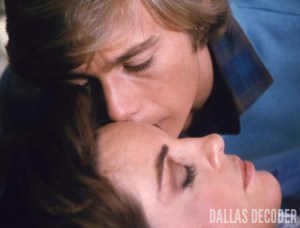
At the end of “Eye of the Beholder,” Miss Ellie tearfully tells Clayton that she had breast cancer and underwent a mastectomy years earlier. It’s another moving performance from Barbara Bel Geddes, although when I try to explain why she excels in scenes like this one, I always come up short. Is it her ability to summon tears whenever the script calls for it? Is it her halting delivery, which mimics the way people tend to talk in real life? Or is it some magical, Hagman-esque quality that can’t be described? Whatever the reason, Bel Geddes always makes me forget I’m watching a world of make-believe. She’s amazing.

To be fair, Bel Geddes gets plenty of help from “Eye of the Beholder” scriptwriter Arthur Bernard Lewis, whose unsentimental dialogue ensures Ellie isn’t seen as a figure of self-pity. Here’s how she tells Clayton about her ordeal: “Clayton, I had surgery. I’ve had a mastectomy. The doctor found cancer. They cut off my breast.” This series of clipped, matter-of-fact pronouncements reminds me of Bel Geddes’ wonderful monologue in “Return Engagements,” when Ellie acknowledges her failure to help Gary keep his family together. (“I should’ve fought them. I didn’t. I did nothing.”) Only one line in Ellie’s “Eye of the Beholder” speech gives me pause. After she tells Clayton about her mastectomy, she says, “It affects how I feel about myself, and I know it’s got to be harder for you.” This seems like another example of “Dallas’s” pervasive sexism — and maybe it is — but like it or not, I suspect this is how a lot of women from Ellie’s generation felt.

Regardless, I continue to marvel at “Dallas’s” acknowledgment that Ellie and Clayton, two characters who are supposed to be in their 60s or 70s, are capable of sexual intimacy. Besides “The Golden Girls,” which debuted a year after this episode aired, I can’t think of another show that did more more than “Dallas” to dispel the myth that people stop having sex with they get old. I also appreciate how sensitively “Dallas” handles this material. At the end of the scene, Clayton tells Ellie the mastectomy doesn’t matter to him and sweeps her into his arms. The final freeze frame shows him holding her tightly as Richard Lewis Warren’s soft piano music plays in the background. There’s no big cliffhanger, just two characters expressing their love and commitment to each other. What other prime-time soap opera from this era would be willing to end an episode on such a quiet, dignified note?

Above all, I love how Ellie and Clayton’s storyline mines “Dallas’s” history. “Eye of the Beholder” arrived four seasons after the show’s classic “Mastectomy” episodes, which broke ground by making Ellie one of the first major characters in prime time to get cancer. In “Eye of the Beholder,” the show doesn’t just mention her disease, it turns it into a major subplot and reveals Ellie is still struggling with the same feelings of inadequacy that she did in 1979. Her tearful scene with Clayton harkens to the memorable moment in “Mastectomy, Part 2,” when she comes home after her surgery and breaks down (“I’m deformed”) upon discovering her dresses no longer fit the way they once did.

The show’s history can also be felt in “Eye of the Beholder’s” third act, when Clayton tells Sue Ellen that Ellie has called off the wedding without telling him why. Sue Ellen gently quizzes Clayton and realizes he and Ellie haven’t been intimate with each other. “Don’t give up on her. I don’t think she’s told you everything,” Sue Ellen says. I love this scene for a lot of reasons, beginning with Linda Gray, whose expression lets the audience know that Sue Ellen has it all figured out. This also feels like a moment of growth for Gray’s character. Think back to “Mastectomy, Part 2,” when Sue Ellen reacts to Ellie’s cancer diagnosis by suggesting Jock will reject his wife after her surgery. Four years later, Sue Ellen is wiser, less cynical and more compassionate. When you think about it, if it wasn’t for Sue Ellen encouraging Clayton to not give up on Ellie, Ellie might not have opened up to him and given their relationship another chance. In many ways, Sue Ellen rescues this couple.

“Eye of the Beholder” contains several other nods to “Dallas’s” past, including the warm scene where Bobby and Pam share lunch at the Oil Baron’s Club and reminisce about their wedding. Besides showcasing Patrick Duffy and Victoria Principal’s sparkling chemistry, the scene fills in some blanks for “Dallas” diehards. For example, “Digger’s Daughter” opens with Bobby and Pam stopping at a gas station not long after their spur-of-the-moment wedding in New Orleans. I always wondered: Were the newlyweds coming straight from the chapel? It turns out they weren’t: In “Eye of the Beholder,” we learn the couple spent their wedding night in a motel while making their way back to Southfork. It’s also nice to know “When the Saints Go Marching In” was their wedding music. If that’s not a fitting theme for these two, I don’t know what is.

The other great scenes in “Eye of the Beholder” include Bobby forcing J.R. to sign the paperwork to buy Travis Boyd’s company, which ends with J.R. saying, “I don’t like doing business this way.” Bobby’s response: “Well, I’ll continue your delicate sensibilities some other time, all right?” I also like the scene that introduces Barry Jenner as Jerry Kenderson, Mark Graison’s doctor and confidante; Jenner and John Beck have an easy rapport, making the friendship between their characters feel believable. “Eye of the Beholder” also marks Bill Morey’s first appearance as Barnes-Wentworth’s longtime controller Leo Wakefield, whose weary demeanor makes him a worthy foil for Ken Kercheval’s hyperkinetic Cliff. (Morey previously popped up as a judge in the fifth-season episode “Gone But Not Forgotten.”)

Two more moments, both showcasing Larry Hagman’s comedic talents, deserve mentioning. In the first, J.R. enters the Southfork living room, where Sue Ellen is offering Peter a drink. J.R. accuses his wife of “trying to corrupt that young man,” until he finds out Peter has arrived to escort Lucy to a party. “Oh, in that case you’re going to need a drink,” J.R. says. In Hagman’s other great scene, J.R. takes Edgar Randolph to lunch, where he tells Edgar he wants him to reveal the high bidder in the offshore drilling auction so J.R. can beat the bid. Edgar resists, saying he doesn’t want to cheat the government, but J.R. points out the government will make more money under his scheme. “J.R., you have the amazing ability to make a crooked scheme sound noble,” Edgar says. J.R.’s response: “Edgar, that’s part of my charm.”

For once, he isn’t lying.

Grade: A

_______________________________________________________________________________________________________________________________________________

Bobby Ewing, Dallas, Eye of the Beholder, Pam Ewing, Patrick Duffy, Victoria Principal

On the march

‘EYE OF THE BEHOLDER’

Season 7, Episode 17

Airdate: January 27, 1984

Audience: 22 million homes, ranking 2nd in the weekly ratings

Writer: Arthur Bernard Lewis

Director: Leonard Katzman

Synopsis: Miss Ellie tells Clayton she doesn’t want to marry him because she had a mastectomy, but he tells her it doesn’t matter. Cliff agrees to sleep with Marilee if she’ll join his offshore drilling venture. J.R. tells Edgar he wants to see the offshore proposals so he can bid higher. Pam realizes Bobby and Jenna are sleeping together.

Cast: Denny Albee (Travis Boyd), Christopher Atkins (Peter Richards), John Beck (Mark Graison), Barbara Bel Geddes (Miss Ellie Ewing), Morgan Brittany (Katherine Wentworth), Martin E. Brooks (Edgar Randolph), Roseanna Christiansen (Teresa), Pat Colbért (Dora Mae), Patrick Duffy (Bobby Ewing), Eric Farlow (Christopher Ewing), Fern Fitzgerald (Marilee Stone), Linda Gray (Sue Ellen Ewing), Larry Hagman (J.R. Ewing), Susan Howard (Donna Krebbs), Barry Jenner (Dr. Jerry Kenderson), Sherril Lynn Katzman (Jackie Dugan), Howard Keel (Clayton Farlow), Ken Kercheval (Cliff Barnes), Audrey Landers (Afton Cooper), Anne Lucas (Cassie), Kevin McBride (George), Bill Morey (Leo Wakefield), Priscilla Beaulieu Presley (Jenna Wade), Victoria Principal (Pam Ewing), Debbie Rennard (Sly), Donegan Smith (Earl Johnson), Charlene Tilton (Lucy Ewing)

“Eye of the Beholder” is available on DVD and at Amazon.com and iTunes. Watch the episode and share your comments below.
Critique: ‘Dallas’ Episode 147 — ‘Some Do … Some Don’t’

Barbara Bel Geddes, Clayton Farlow, Dallas, Howard Keel, Miss Ellie Ewing, Some Do ... Some Don't

Limited engagement

The first scene in “Some Do … Some Don’t:” Donna and Lucy are making muffins in the Southfork kitchen and listening to Miss Ellie and Clayton tease each other about their recent misadventures in Jamaica. Clayton recalls taking Ellie to a French restaurant, where she mistakenly ordered a head of veal instead of a veal chop but ate the whole thing because she was too stubborn to admit her error. Ellie, in the meantime, describes how Clayton accidentally lost his swim trunks on the beach in front of a group of New Jersey schoolteachers. “I would imagine I’m quite famous in Paramus,” he says.

The last scene in “Some Do … Some Don’t:” Clayton brings Ellie home after escorting her to the opening of Jenna Wade’s boutique. The mood is as light and as jovial as the earlier kitchen scene — until Clayton suggests he’d like to stay over so he and Ellie can spend their “first night together.” Suddenly, Ellie becomes rattled, begins to cry and calls off their wedding. “I can’t marry you. I can’t marry anyone,” she says as she runs upstairs. In the freeze frame, Clayton stands at the bottom of the steps, looking more than a little bewildered.

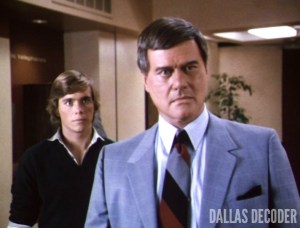
The two sequences serve as the emotional bookends in “Some Do … Some Don’t,” the strongest episode yet from “Dallas’s” seventh season. The opening scene does nothing to advance the show’s storylines, but it’s essential to the episode because it showcases the warm, effortless chemistry between Barbara Bel Geddes and Howard Keel. Together, these actors have charm to spare, and watching their characters gently chide each other allows the audience to feel emotionally invested in their relationship. By the time the hour is over and Ellie has called off the wedding, we can’t help but feel concerned for them.

I also love how “Dallas” doesn’t shy away from the idea that Ellie and Clayton, who are probably supposed to be in their late 60s or early 70s, are capable of having an intimate relationship. I find this subplot even more provocative than Sue Ellen’s May/December romance with Peter Richards. (Frankly, I’m also a little surprised Clayton wanted to sleep with Ellie before their wedding. Who knew the old chap was so modern?) When I watched these episodes when I was younger, I’m sure it never occurred to me to think of Ellie and Clayton as sexual beings, but now it’s not such a hard thing to wrap my head around. Bel Geddes was still a beautiful, vibrant woman when this episode was filmed in 1983, retaining more than a hint of the sauciness she exhibited in her early film roles. Meanwhile, Keel was dashing as ever. In this episode’s final shot, when Clayton stands at the bottom of the Southfork staircase with his hand on his hip, I’m reminded of Clark Gable striking a similar pose in “Gone With the Wind.” I’m sure this was intentional.

Indeed, “Some Do … Some Don’t” is full of flourishes like this. This comes as no surprise: This episode is helmed by Larry Hagman, who always brings an eye for detail to the director’s chair. For example, in one of the Ewing Oil scenes, Bobby tells J.R. about a company he wants to buy. Hagman could easily have started the exchange with J.R. seated in his office, but instead, he opens the sequence with a shot of Kendall at the reception desk, answering a phone call. In the background, J.R. steps off the elevator and walks through the room, stopping by Sly’s desk to pick up his phone messages. As he heads into his office, Phyllis buzzes Bobby on the intercom to let him know that J.R. has arrived, and then Bobby pops into J.R.’s office to tell him about the potential purchase. Maybe this was Hagman’s way of making sure the actresses who played the Ewing Oil secretaries each got a few lines in this episode — too often these performers toil silently in the background — but it nonetheless makes Ewing Oil feel like a real, functional workplace.

More details: The scene where Pam and Mark visit Cliff and Afton at their townhouse begins with Cliff sitting on the sofa, playing a videogame. It’s another small point, but isn’t it just like Cliff to get so wrapped up in a game that he would ignore his guests? (Also: Notice how John Beck seems to be limping as Mark crosses the living room, a subtle throwback to the previous episode, when the character pulled a muscle while playing tennis with Pam.) Additionally, I love when Cliff arrives at the dive bar for another clandestine meeting with Sly and steals the fries off her plate. In another great restaurant scene, J.R. brings Edgar Randolph to lunch at his favorite French eatery, where J.R. threatens to ruin Edgar’s life in one breath and enthusiastically orders him the bouillabaisse in the next. “Oh, you’re just going to love it. It’s really good,” J.R. says with a smile. I dare you to watch this scene without doing the same thing.

The scene where J.R. and Katherine sleep together for the first time is more wicked fun, and so is Pam’s confrontation with Marilee Stone. Pam is clearly out of line when she orders Marilee to stay away from Cliff, but who cares? Isn’t it nice to see Pam exhibit a little backbone and do something besides whine about being torn between Bobby and Mark? It also turns out that Pam and Marilee make good sparring partners. What a shame Victoria Principal and Fern Fitzgerald don’t have more scenes together on this show.

Surprisingly, I also like Sue Ellen and Peter’s scenes in “Some Do … Some Don’t.” Their once promising storyline took a turn for the ridiculous in the two episodes that preceded this one, but heaven help me, I find the couple’s outing to the ice rink kind of charming. I also like when Sue Ellen and Peter run into his classmates from the university and they mistake Sue Ellen for his mother. This feels like the kind of thing that might happen to a woman who dates a younger man, and Sue Ellen and Peter’s reactions to the situation ring true. Sue Ellen, ever the lady, is aghast at the thought that Peter’s friends are gossiping about them, while Peter couldn’t care less. I still have trouble believing Sue Ellen’s attraction to Peter, but at least it’s nice to see the show bring the couple back to a place that resembles reality.

Some more thoughts about Sue Ellen and Peter’s encounter with his friends: Besides Linda Gray, the actor who impresses me most during the scene is Lee Montgomery, who plays Peter’s pal Jerry Hunter. Watch Montgomery’s sly smile when Jerry spots Sue Ellen and Peter; it’s very subtle, but it lets us know he realizes there’s more to their relationship than meets the eye. It’s also worth noting this scene’s two young actresses, who both became science-fiction stars: Kate Vernon played Ellen Tigh on “Battlestar Galactica,” while Claudia Christian was Ivanova on “Babylon 5.” According to IMDb.com, Vernon and Christian are slated to appear together in a forthcoming film called “Chicanery” along with three other “Dallas” actresses: Colleen Camp, who originated the role of Kristin Shepard in 1979; Patty McCormack, who played Mitch Cooper’s friend Evelyn Michaelson during Season 5; and Michelle Scarabelli, who appeared during the 11th season as Connie, Ray’s stalker.

I have a lot of fun finding these connections. I’ve always appreciated how “Dallas” offered steady work to older performers like Barbara Bel Geddes and Howard Keel, but until I started this website, I didn’t realize how many young actors appeared on the show at the beginning of their careers. None of these up-and-comers have become as famous as Brad Pitt, who appeared on “Dallas” a few times in 1987 and will probably always be its most famous alumnus, but it’s impressive to see how so many actors who got their start on the show continue to find work.

This realization has made me watch TNT’s sequel series in a whole other light. Pay attention to all the actors who appear in small roles on the new show. Chances are some of them will still be entertaining us years from now.

Grade: A

_______________________________________________________________________________________________________________________________________________

Dallas, Linda Gray, Some Do ... Some Don't, Sue Ellen Ewing

Not the mama

‘SOME DO … SOME DON’T’

Season 7, Episode 16

Airdate: January 20, 1984

Audience: 22 million homes, ranking 5th in the weekly ratings

Writer: Leonard Katzman

Director: Larry Hagman

Synopsis: J.R. sleeps with Katherine, allows Cliff to steal another deal from Ewing Oil and continues to pressure Edgar to unseal the offshore oil lease bids. Jenna celebrates the opening of her boutique by sleeping with Bobby. Clayton suggests he wants to be intimate with Miss Ellie, who is rattled and calls off their wedding. Mark checks into the hospital for tests without telling Pam.

Cast: Denny Albee (Travis Boyd), Christopher Atkins (Peter Richards), John Beck (Mark Graison), Barbara Bel Geddes (Miss Ellie Ewing), Morgan Brittany (Katherine Wentworth), Martin E. Brooks (Edgar Randolph), Claudia Christian (Peter’s friend), Patrick Duffy (Bobby Ewing), Eric Farlow (Christopher Ewing), Linda Gray (Sue Ellen Ewing), Larry Hagman (J.R. Ewing), Susan Howard (Donna Krebbs), Steve Kanaly (Ray Krebbs), Omri Katz (John Ross Ewing), Sherril Lynn Katzman (Jackie Dugan), Howard Keel (Clayton Farlow), Ken Kercheval (Cliff Barnes), Audrey Landers (Afton Cooper), Anne Lucas (Cassie), Shalane McCall (Charlie Wade), Lee Montgomery (Jerry Hunter), Priscilla Beaulieu Presley (Jenna Wade), Victoria Principal (Pam Ewing), Debbie Rennard (Sly), Danone Simpson (Kendall), Charlene Tilton (Lucy Ewing), Deborah Tranelli (Phyllis), Kate Vernon (Peter’s friend)

“Some Do … Some Don’t” is available on DVD and at Amazon.com and iTunes. Watch the episode and share your comments below.
Critique: ‘Dallas’ Episode 146 — ‘Offshore Crude’

Christopher Atkins, Dallas, Linda Gray, Offshore Crude, Peter Richards, Sue Ellen Ewing

Wrong turn, darlin’

The “Offshore Crude” scene where Sue Ellen goes to Peter’s apartment to break up with him is one of “Dallas’s” sillier moments. When she arrives, Peter is wearing nothing but a towel and a face full of shaving cream, so he excuses himself and returns to the bathroom to finish freshening up. While he’s at the sink, Sue Ellen stands with her back to him and pours out her heart, explaining why the two of them can no longer see each other. She finishes her speech and is surprised to see Peter is unfazed, until she realizes he didn’t hear a word she said because the water was running. Sue Ellen, who apparently is too drained to repeat herself, allows the none-the-wiser Peter to hug her tightly and gush about how important she is to him. “I love you. I really do love you,” he says.

Oh, good grief. Linda Gray and Christopher Atkins do their best to sell this scene, but there’s only so much they can do. Sue Ellen’s confession that she only slept with Peter to persuade him to go back to college isn’t credible, and I don’t believe she’d deliver such important news while he’s shaving and she’s facing the other direction. Frankly, I’m even a little surprised to discover the baby-faced Peter shaves. Like Bobby and Pam’s breakup at the beginning of “Dallas’s” seventh season, this is another example of how the writers rely on misunderstanding and miscommunication to drive their storytelling. Sometimes this show has more in common with “Three’s Company” than I care to admit.

Nothing else about “Offshore Crude” is quite this fatuous, except for the shots that depict the Ewings spending a leisurely Saturday afternoon by the Southfork swimming pool. These scenes were filmed on “Dallas’s” Hollywood soundstage, where the pool is noticeably smaller than its real-life Texas counterpart. So why does the show concoct a race between Bobby, Ray and Peter? It only takes Patrick Duffy, Steve Kanaly and Atkins a few strokes each to go from one end of the pool to the other. Bradford May, the show’s seventh-season cinematographer, makes the outdoor sets look a little more convincing than they did in previous seasons, although there’s still no mistaking them for the real thing. Scenes like this make me so happy the new “Dallas” films its exterior scenes outdoors.

The rest of “Offshore Crude” is standard-issue, mid-1980s “Dallas.” J.R. and Sue Ellen have a couple of good fight scenes, including one where he enters her bedroom and wonders if she’s avoiding Peter because she’s afraid his acne is contagious. I love how Gray hisses Sue Ellen’s response: “Your jokes aren’t funny. They are disgusting and boring.” (I predict I’ll spend the next week quoting that line to anyone who will listen.) Larry Hagman is also wonderfully diabolical in “Offshore Crude’s” final scene, when J.R. summons Edgar Randolph to his office and tells him he’s glad Edgar rejected his recent attempt to bribe him: “If my money can’t buy you, nobody else’s can either.” No matter how much time I spend with J.R., he always manages to surprise me.

I also like the scene where Cliff and Marilee sneak off to a bar on a Saturday night to plot their latest business deal. Fern Fitzgerald delivers another one of her delicious performances as the wine-sipping Marilee, who is clearly savoring this opportunity to mix business with pleasure. I also love seeing Cliff trade in his flashy suit for that nifty electric blue shirt. “Offshore Crude” also includes a fun scene between Miss Ellie and Clayton, who skip the usual family dinner at Southfork to take in a meal at the Oil Baron’s Club. The conversation is mostly designed to lay the groundwork for the arrival of his sister Jessica at the end of the season, but it also plays on the charming rapport between Barbara Bel Geddes and Howard Keel and ends with Clayton asking for the check so he can whisk Ellie away to the city’s last big-band dance club.

This turns out to be the only time Bel Geddes and Keel appear in “Offshore Crude.” What a shame. I’d much rather see Ellie and Clayton on the dance floor than watch the rest of the Ewings frolicking around that tiny pool.

Grade: B

_______________________________________________________________________________________________________________________________________________

Dallas, Edgar Randolph, J.R. Ewing, Larry Hagman, Martin E. Brooks, Offshore Crude

Unbought

‘OFFSHORE CRUDE’

Season 7, Episode 15

Airdate: January 13, 1984

Audience: 20.3 million homes, ranking 6th in the weekly ratings

Writer: David Paulsen

Director: Ray Danton

Synopsis: Cliff decides to bid on the offshore oil leases after Sly lies and tells him that J.R. is planning to bid too. J.R. lets Edgar know he has damaging information about him. Peter tells Sue Ellen he loves her. After failing to find Naldo in Rome, Katherine returns to Dallas.

Cast: Mary Armstrong (Louise), Christopher Atkins (Peter Richards), John Beck (Mark Graison), Barbara Bel Geddes (Miss Ellie Ewing), Morgan Brittany (Katherine Wentworth), Martin E. Brooks (Edgar Randolph), Roseanna Christiansen (Teresa), Patrick Duffy (Bobby Ewing), Eric Farlow (Christopher Ewing), Fern Fitzgerald (Marilee Stone), Linda Gray (Sue Ellen Ewing), Larry Hagman (J.R. Ewing), Susan Howard (Donna Krebbs), Steve Kanaly (Ray Krebbs), Omri Katz (John Ross Ewing), Sherril Lynn Katzman (Jackie), Howard Keel (Clayton Farlow), Ken Kercheval (Cliff Barnes), Audrey Landers (Afton Cooper), Anne Lucas (Cassie), Shalane McCall (Charlie Wade), Alberto Morin (Armando Sidoni), Priscilla Beaulieu Presley (Jenna Wade), Victoria Principal (Pam Ewing), Debbie Rennard (Sly), Charlene Tilton (Lucy Ewing)

“Offshore Crude” is available on DVD and at Amazon.com and iTunes. Watch the episode and share your comments below.